Depressed Because of Debts? Here Is What Can Be Done
Debt-related depression is real, it is common, and it is not a sign of weakness. If debt is making it hard to get through the day, this guide is for you what to do right now, both for your mental health and for the debt itself.

Mohit Juneja
Reviewed by FREED India, Debt Resolution Specialists
 4.7/5
4.7/5 ₹3,200Cr+
 20,000+
 20,00,000+4.7/5₹3,200Cr+20,000+20,00,000+
Key Takeaways

Debt-related depression is one of the most common and least discussed mental health experiences in India.
The shame and isolation that debt creates often makes both the financial and emotional situation worse.
The most important first step is to stop carrying it alone tell one trusted person, or speak to a FREED counsellor who has heard this before and will not judge you.
The debt itself is solvable. Depression does not have to be permanent. Both can be addressed separately and together.
If you are in crisis right now, please call iCall at 9152987821 or Vandrevala Foundation at 1860-2662-345. Both are free and confidential.
Why Debt Causes Depression
There is a reason debt and depression so often appear together. It is not coincidence. It is how sustained, unresolved financial pressure works on the human mind.
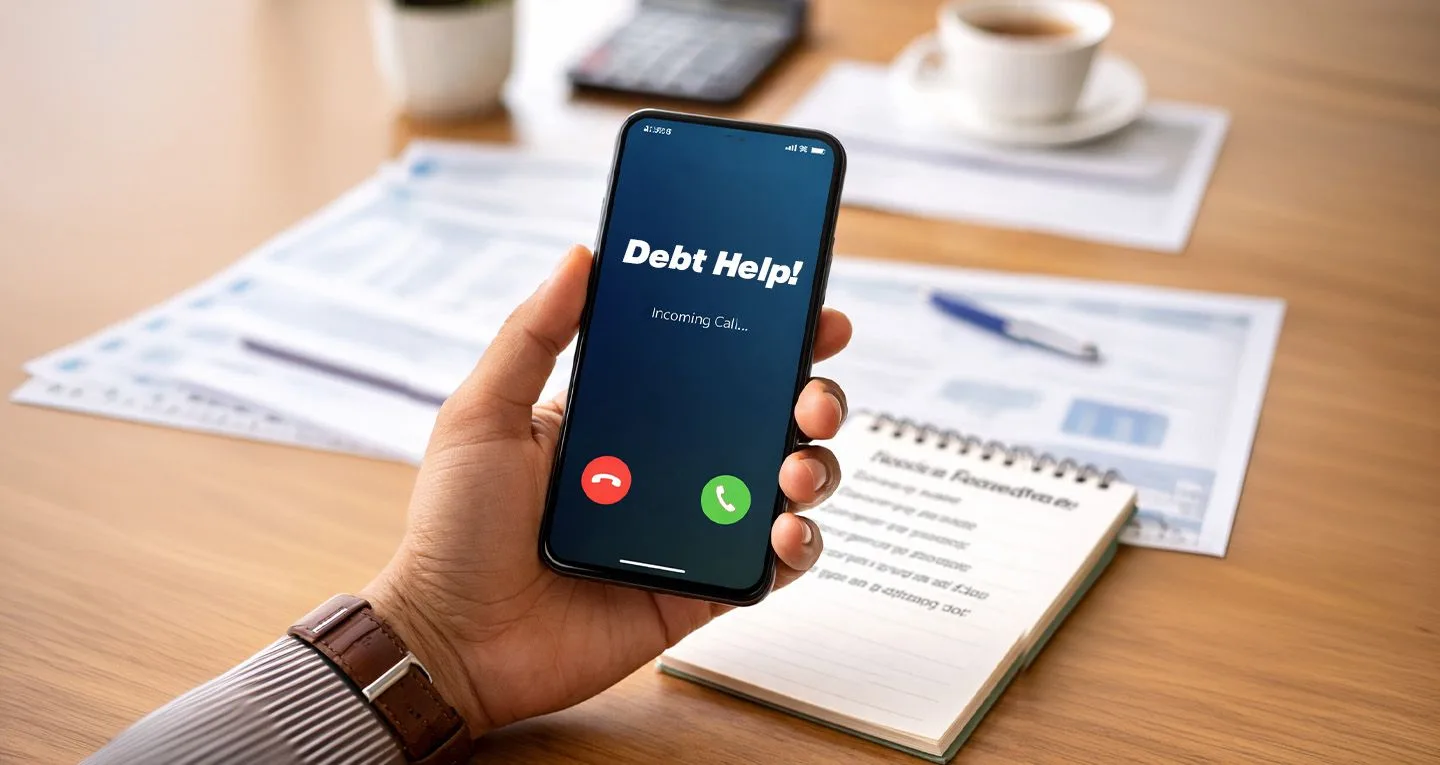
When someone is in debt they cannot repay, the stress is not occasional. It is constant. It is there in the morning when the phone shows a missed call from an unknown number. It is there at the dinner table when the conversation touches money. It is there at night when sleep does not come. It is there in the gap between what a person earns and what they owe a gap that feels, in the worst moments, like it will never close.
This kind of sustained stress has documented psychological effects. It erodes the sense of agency the feeling that one can affect the outcome of one's own life. It produces shame, which is one of the most isolating emotions a person can carry. It narrows the future. And when the future feels closed, the present becomes very heavy.
Research consistently links significant financial stress to higher rates of anxiety, depression, sleep disruption, and in severe cases, thoughts of self-harm. This is not weakness. It is a predictable psychological response to a situation that feels impossible.
The first thing to understand is that the situation is not impossible. It feels that way but feeling and reality are different things. People in far worse debt situations than yours have found a way through. The path exists. Finding it requires being able to think clearly enough to take the first step.

Debt and the stress around it becoming too much?
Talk to a FREED Expert It's Free. No judgment.
Connect with FREED ExpertHow to Recognise When Debt Stress Has Become Something More Serious
Stress about debt is normal. But there is a point where the stress becomes something that deserves more direct attention.
Signs that debt-related stress may have moved into depression include persistent low mood that does not lift even when not actively thinking about money; withdrawal from family, friends, or activities that previously brought enjoyment; difficulty concentrating or making decisions even small ones; physical symptoms including disrupted sleep, loss of appetite, or persistent fatigue; and a growing sense that things will not improve regardless of what is done.
If any of these are present alongside debt stress, the emotional dimension deserves as much attention as the financial one. Both can be addressed. Neither should be ignored.
If you are experiencing thoughts of ending your life or harming yourself because of debt or financial stress, please reach out immediately. iCall: 9152987821. Vandrevala Foundation: 1860-2662-345. Both are free, confidential, and available in multiple Indian languages. Financial problems are solvable. Please reach out.
What to Do Right Now If You Are in Crisis
If you are in a moment of acute distress, not thinking clearly, feeling hopeless, or having thoughts of self-harm, the first priority is not the debt. It is you.
Call iCall at 9152987821 or Vandrevala Foundation at 1860-2662-345. These are free, trained, confidential mental health helplines. They exist for exactly this moment.
Tell one person you trust, a family member, a friend, anyone, what you are carrying. Not the full financial picture necessarily. Just that you are not doing well. Isolation amplifies every difficult emotion. Saying it out loud to one safe person begins to reduce that isolation.
The debt will still be there tomorrow. The options will still be there tomorrow. Right now, take care of the person who is going to solve the debt problem, which is you.
Are You in a Loan Trap? Quick Check
Move the slider to your total EMIs as a % of monthly salary. See your debt stress level instantly.
EMIs as % of Monthly Salary
Where to Get Mental Health Support in India
If debt-related depression has reached a level where professional support would help, these free resources are available:
iCall Free psychological counselling by trained professionals. Phone: 9152987821. Available Monday to Saturday, 8 AM to 10 PM.
Vandrevala Foundation Free 24-hour helpline. Phone: 1860-2662-345. Available in multiple Indian languages.
iDream (Government of India initiative) Free mental health support available through some district hospitals and community health centres.
Employee Assistance Programmes Many larger employers in India provide free, confidential counselling through EAPs. Check with your HR department.
These resources exist regardless of financial situation. Access to mental health support is not conditional on income or ability to pay.
What to Do Right Now If You Are in Crisis
If you are in a moment of acute distress, not thinking clearly, feeling hopeless, or having thoughts of self-harm, the first priority is not the debt. It is you.
Call iCall at 9152987821 or Vandrevala Foundation at 1860-2662-345. These are free, trained, confidential mental health helplines. They exist for exactly this moment.
Tell one person you trust, a family member, a friend, anyone, what you are carrying. Not the full financial picture necessarily. Just that you are not doing well. Isolation amplifies every difficult emotion. Saying it out loud to one safe person begins to reduce that isolation.
The debt will still be there tomorrow. The options will still be there tomorrow. Right now, take care of the person who is going to solve the debt problem, which is you.
Step 1: Stop Carrying It Alone
The most damaging thing about debt-related depression is not the debt itself. It is the silence around it.
In India, debt carries social stigma that is disproportionate to how common the experience is. Millions of ordinary people are in financial difficulty at any given time because of job loss, medical costs, irresponsible lending, or simply the quiet compounding of interest on obligations that seemed manageable when they were taken on. But the shame keeps it invisible. And invisible problems cannot be solved.
Telling one person, a spouse, a sibling, a close friend does not solve the debt. But it does something important: it breaks the isolation. The problem does not change, but you are no longer carrying it entirely alone. And that changes what is possible.
If there is no one in your life it feels safe to tell, a FREED counsellor is a starting point. The first call is free, confidential, and carries no obligation. Many people describe the first FREED call as the first time they said the full number out loud to another human being and found that the world did not end when they did.

FREED Note:
Every person who calls FREED is treated with dignity and without judgment. Our counsellors have heard situations like yours before. They are not there to assess whether you deserve help. They are there to tell you what the options are and what the realistic path forward looks like.
Talk to a FREED CounsellorStep 2: Look at the Situation Clearly Once
One of the effects of debt-related depression is avoidance. The statements go unopened. The calls go unanswered. The total number is not looked at because looking feels like it will make things worse.
In reality, the opposite is true. The number does not get larger because you look at it. The number grows because interest compounds and charges accumulate while avoidance continues. And not knowing the real number, relying on a rough, probably underestimated sense of what is owed, means the anxiety is being fed by imagination rather than fact.
Choose one moment not today if it is not the right day, but soon, to sit down and write the real numbers. Total outstanding on every loan. Total outstanding on every credit card. Total monthly income. Total fixed monthly obligations.
Do this once. Write it down. You do not have to do anything with it immediately. Just know the actual situation.
This act alone seeing the real numbers in one place, typically reduces rather than increases anxiety. Because the imagination of debt is almost always worse than the reality. And the reality, however difficult, is something that can be planned around.
Step 3: Take One Small Financial Action
Depression makes everything feel impossibly large. The path to addressing it is not to tackle everything at once. It is to take one small, concrete action and let that action create a tiny sense of forward movement.
One small action might be calling the bank to ask for an account statement. It might be looking up the FREED website to understand what debt resolution involves. It might be writing down all your debts on a piece of paper. It might be telling one family member about the situation.
None of these actions solves the debt. But each one is a step away from paralysis and toward agency. And agency the sense that you are doing something rather than being done to is the single most important psychological shift in recovering from debt-related depression.

Legal Note:
Under RBI guidelines, banks are prohibited from using abusive or threatening language during recovery. Recovery agents cannot call before 8 AM or after 7 PM. They cannot contact your family members or employer to embarrass you. If you are experiencing harassment that is worsening your mental state, document it and contact FREED's Shield service or the RBI Banking Ombudsman at bankingombudsman.rbi.org.in. You have legal protection.
Know your rights as a borrowerStep 4: Address the Debt Itself
Once there is enough emotional stability to engage with the financial situation, the debt can be addressed. This is not as impossible as it feels.
For people whose debt is manageable relative to income, a structured repayment plan the debt avalanche or snowball method provides a clear path. For people whose debt has grown beyond what income can realistically service, consolidation or settlement through a platform like FREED provides a path to actually being debt-free within a defined timeline.
FREED's free consultation begins with a complete assessment of the full situation income, total outstanding, creditors, and what the realistic options are. From this, the right pathway is recommended and executed on the borrower's behalf.
Most people who call FREED believing their situation is hopeless discover within one conversation that it is not. Not easy. Not quick. But resolvable with a clear timeline, a defined outcome, and professional support through every step.
The financial pressure that is contributing to the depression can be reduced. As it reduces, the depression typically begins to lift. The two are deeply connected. Addressing one helps the other.
Where to Get Mental Health Support in India
If debt-related depression has reached a level where professional support would help, these free resources are available:
iCall Free psychological counselling by trained professionals. Phone: 9152987821. Available Monday to Saturday, 8 AM to 10 PM.
Vandrevala Foundation Free 24-hour helpline. Phone: 1860-2662-345. Available in multiple Indian languages.
iDream (Government of India initiative) Free mental health support available through some district hospitals and community health centres.
Employee Assistance Programmes Many larger employers in India provide free, confidential counselling through EAPs. Check with your HR department.
These resources exist regardless of financial situation. Access to mental health support is not conditional on income or ability to pay.
Debt is making every day feel heavy.
You do not have to face this alone. FREED is free, confidential, and has helped 60,000 Indians find a way through. Talk to a FREED Expert Free, no pressure.
Connect Now
Mohit Juneja
Mohit Juneja writes educational content at FREED on debt management, credit scores, loan repayment, and borrowing best practices. His content is shaped by expert insights and industry knowledge, helping readers better understand their financial options and make informed decisions.
mohit.juneja@freed.care

FREED is India's trusted loan management platform. Founded in 2020 and headquartered in Gurugram, FREED has counselled 20 lakh+ people on personal loans, credit cards, and app loans. FREED charges fees only on successful settlement, not upfront. FREED does not handle secured loans (home loans, car loans, gold loans).
Media Mentions