KreditBee Loan Recovery: What Happens If You Miss EMIs
KreditBee loan recovery is the process a lender follows when a KreditBee EMI is not paid on time. It starts with reminders and calls. It can move to a recovery agent, credit report updates, and a legal notice. RBI rules cover what they can do at each step. You missed an EMI on a loan app, and now the calls have started. You want to know who is calling, what they are allowed to say, and what happens next. This blog explains who is actually collecting, the stages, your rights and how to complain. For the full rule set, read RBI guidelines on recovery agents.
Mohit Juneja
Reviewed by FREED India, Debt Resolution Specialists
 4.7/5
 ₹3,200Cr+
 20,000+
 20,00,000+4.7/5₹3,200Cr+20,000+20,00,000+
Key Summary

KreditBee is an app. The loan comes from an RBI-registered NBFC or partner lender named in your agreement.
Reminders come first. Agents, credit report marks, and notices follow only if dues stay unpaid.
Calls are allowed only between 8 AM and 7 PM. Threats and shaming are not allowed.
You can complain to the app, then the lender’s grievance officer, then RBI.
Who Lends the Money When You Take a KreditBee Loan?
KreditBee is an app. The app helps you find a loan and serves you through it. But in most app loans, the money does not come from the app itself. It comes from a lender named in your loan agreement. That lender is an RBI-registered NBFC (a non-banking financial company) or a partner lender.
RBI calls the app a lending service provider. In plain words, it is the app that finds and serves you. It shows you the offer, collects your documents, and sends reminders.
The lender is the one that gives the loan and holds your account. Your loan agreement and your Key Fact Statement (KFS) name it. The KFS is a one-page summary of your loan terms, which a lender must give you before you accept.
Why does this matter when you miss an EMI? It decides three things.
- Who calls you for repayment.
- Who holds your personal data.
- Who answers your complaint.
Under RBI’s Digital Lending Directions 2025, the lender is responsible for how its app partners and recovery agents behave. A harsh call from the app is the lender’s problem too.
So before you reply to any call, find out who the lender is. The next section shows how.

Want to See How Your Loans Show on Your Credit Report?
Credit Insights shows your score, what is affecting it, and the steps to improve it. Anyone can subscribe.
Check My Credit InsightsHow Do You Find Your Real Lender? A Quick Checker
You do not need any tool or login for this. Your own papers have the answer. Follow these four steps.
- Open your loan agreement or KFS. You can usually find both in your email or in the app.
- Find the line “Lender” or “Regulated entity”. This is the company that gave you the loan.
- Note the grievance officer’s name and email. They are in the same document.
- Match the name. Is the name in your agreement the same as the name on your repayment SMS?
Your lender is the name in your agreement. Complain to them as well as the app.
If the name in your agreement does not match the name in your repayment messages, take a screenshot of both. Ask the app, in writing, to explain.
If you cannot find any lender name at all, be careful. An app that hides its lender may not be registered. In that case, read how to complain about fake loan app harassment. This page treats KreditBee as a regulated lending app, so the steps here assume your agreement names a registered lender.

FREED Expert Tip
Check the lender name in your agreement before replying to any call. Many borrowers complain to the app but never write to the lender.
Know Your RightsWho Collects When You Miss an EMI: the App, the NBFC or a Partner Lender?
Up to four parties can be involved in your loan. Each does a different job. Here is who does what.
Party | What it does | What you can ask it |
|---|---|---|
The app | Shows offers, sends reminders, takes payments | Payment status, how to pay, app complaints |
The NBFC or lender named in your agreement | Gives the loan, holds your account, reports to credit bureaus | Statement, dues, grievance officer |
A partner lender, if one is named | May fund the loan under an arrangement | Check your agreement for its role |
A recovery agency | Collects on behalf of the lender | Its name, the agent’s ID, and who appointed it |
Most borrowers hear from the app first. After some days of non-payment, a call may come from a number you do not know. It may be the lender’s own team, or an outside agency.
RBI’s rules say you must be told the agent’s details before they contact you. Ask for the agent’s name, the agency and the lender they work for.
Do not discuss the loan with an unknown caller until they identify themselves. Ask them to send details by SMS or email. You can then check them against your agreement.
To learn how to check an agent, read how to verify a recovery agent’s IIBF certificate.
What Happens When You Miss a KreditBee EMI?
Missing a KreditBee EMI can trigger repayment reminders, collection calls, and other recovery measures, depending on the lender’s policies. Although RBI defines standard categories for classifying overdue loans, these categories do not prescribe a fixed timeline for recovery calls, agent involvement, or legal notices. Recovery action may begin before a loan becomes a non-performing asset (NPA). SMA means a special mention account. NPA means a loan marked as bad.
Days overdue | RBI stage | What usually happens |
|---|---|---|
Day 1 | Overdue begins | Auto-debit fails; SMS and app reminder |
Days 2 to 30 | SMA-0 | Calls and emails |
Days 31 to 60 | SMA-1 | More follow-up |
Days 61 to 90 | SMA-2 | The stage before the loan is called bad |
Over 90 days | NPA | The lender can mark the loan as bad |
On the first day, you will see a failed auto-debit and a reminder. Many people just forgot, or had too little balance. A quick payment often ends it.
In the first month, the app and the lender call and email. This is allowed, within the hours RBI sets.
As the days pass, the tone may become firmer. But the rules do not change. Abuse and threats are not allowed at any stage.
Late fees and charges apply. Their amounts are in your loan agreement. Check it for the exact terms.
After 90 days, the lender can mark the loan as bad. This is a serious step. It can also lead to a legal notice. To learn more about these stages, read NPA classification and SMA recovery stages.
Not Sure How Heavy Your EMIs Are?
Check your EMI score to see how much of your income goes to repayments each month.
Check My EMI ScoreHow Does a Missed KreditBee EMI Show on Your Credit Report?
Your lender reports your loan to credit bureaus. These are companies that keep your credit history. Banks and apps check this history when you ask for a new loan.
A late payment can be reported. Each late stage can lower your score. A payment that is 30 days late looks milder than one that is 90 days late.
The report shows days past due for each month. It also shows the status of the account. A loan marked as bad stays on the report and can hurt your score for a long time.
Paying the overdue amount quickly may limit the damage. The late entries can stay, but the account is no longer growing more overdue.
The first step is to look at your own report. You are entitled to a free report from each bureau once a year. Check that the dates and amounts match your records. If you find an error, raise a dispute with the bureau.
For ideas on rebuilding a score, read loan apps for low CIBIL scores.
Finding It Hard to Repay in Full?
Share your situation and see which options exist. FREED charges a success-based fee, and the evaluation fee is non-refundable.
Settle My LoansWhat Can KreditBee Recovery Agents Do and Not Do?
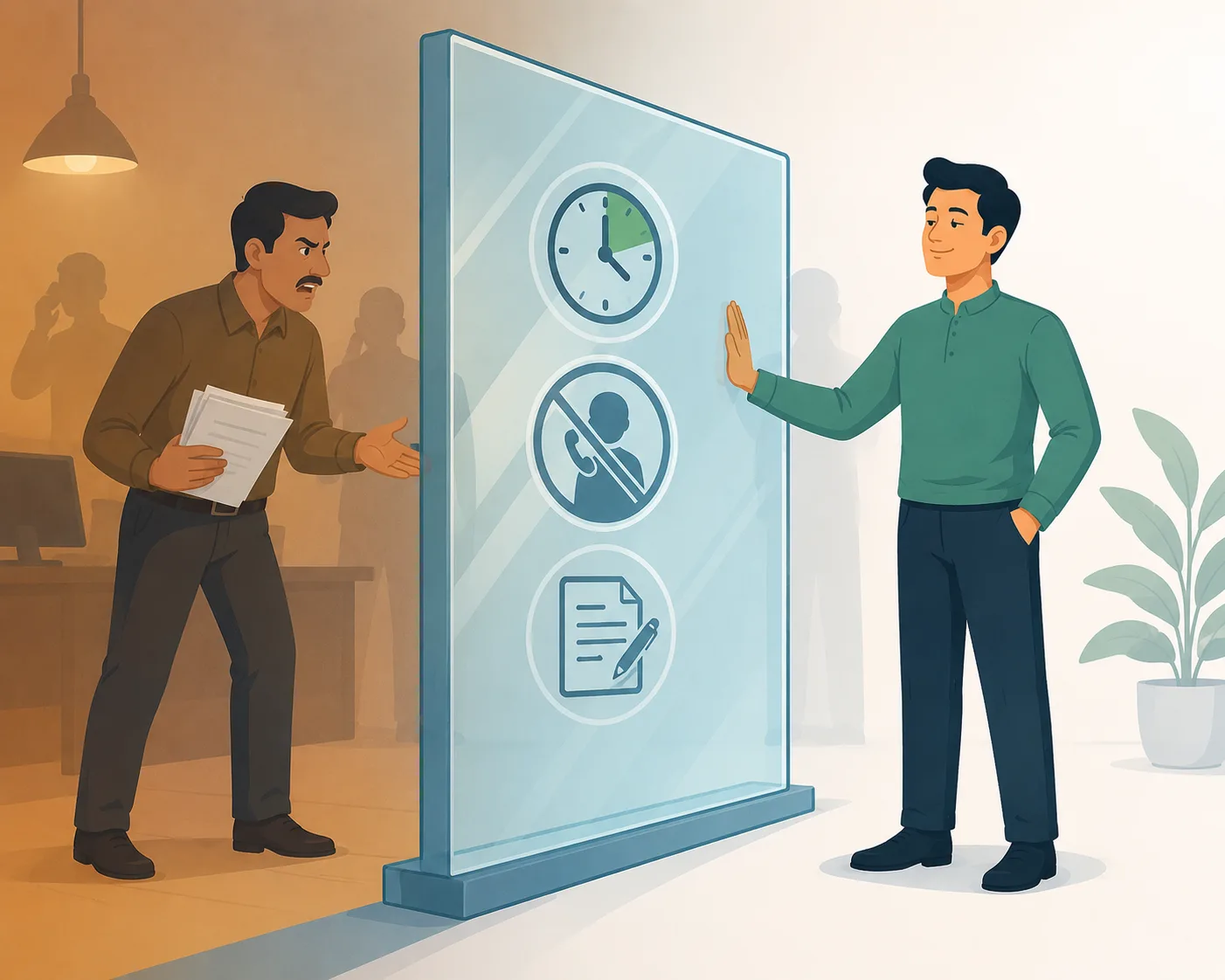
RBI draws clear lines for anyone collecting a loan. The lender is answerable for its agents.
Allowed
- Polite calls and messages between 8 AM and 7 PM.
- A visit that follows protocol.
- Asking you to pay.
Not allowed
- Threats or abusive language.
- Shaming you in front of others.
- Calls at odd hours.
- Contacting people who are not guarantors.
Agents must carry ID. The lender must tell you the agent’s details before contact. If an agent does not give you these, you can refuse to talk and ask the lender to confirm.
A genuine agent will not mind being asked. A caller who gets angry at a simple request for ID is a warning sign.
Never pay an agent in cash. Never pay to a personal UPI ID. Pay only through the app or the lender’s official account. Keep the receipt.
Write down every call. Note the date, time, number, and what was said. Save screenshots of messages. This record helps if you complain.
Can KreditBee Call Your Family or Contacts?
Many borrowers fear this the most. A call to a relative, a friend, or an employer is a way to shame you. RBI rules do not allow it.
Agents should contact only you. The exception is a guarantor. A guarantor is a person who agreed in writing to pay if you do not. Even then, the call must be polite.
Apps also have limits on your data. Under RBI’s digital lending rules, an app cannot read your contacts or your call log.
So how do agents sometimes get family numbers? You may have shared a number as a reference. Or some apps that do not follow the rules may have taken data they should not have. If this happens, write down the details.
If someone from your family gets such a call, ask them not to argue. Ask them to note the number, the time, and what was said. Then complain using the steps below.
Telling your employer or neighbours about your debt breaks the rules. It can also hurt your reputation, and RBI takes it seriously. Do not ignore it.
What Rights Do You Have as an App Loan Borrower?
App borrowers have clear rights. Here are the main ones.
Your right | What it means |
|---|---|
Lender is responsible | The NBFC is responsible for its app and agents |
Agent details in advance | You are told who may contact you |
No contact or call log access | Apps cannot read them, except one-time KYC with consent |
Cooling-off period | At least 1 day to exit a fresh loan |
The cooling-off period lets you exit a fresh loan. You return the principal and the interest for the days you held it. The exact length is in your KFS and is at least one day.
From 1 January 2027, not yet in force: RBI’s new recovery directions add more protections. Agents must have an IIBF certificate. Calls are recorded, the borrower is told, and records are kept for at least six months. Recovery messages show the grievance officer’s details. Until that date, earlier instructions apply.
For the new rules in detail, read RBI recovery agent rules 2026.

What the Law Says
RBI’s Digital Lending Directions 2025 make the lender responsible for the conduct of its app partners and recovery agents. Recovery contact is allowed between 8 AM and 7 PM unless you agree otherwise.
Know Your RightsHow to Complain About KreditBee Recovery, Step by Step
A complaint works best when you follow the right order. Here is the ladder.
- Write down the facts. Note the date, time, phone number, and agent name. Save screenshots.
- Raise it in the app. Use the help or grievance option.
- Write to the app’s grievance officer. Then write to the NBFC’s grievance officer. The name is in your agreement.
- Go to RBI. If there is no reply in 30 days, file at cms.rbi.org.in, or call 14448. Do this within 90 days of the reply or of the end of the 30-day wait. It is free.
- Contact the police for a safety threat. If someone threatens your safety, do not wait.
A complaint does not cancel your dues. It deals with conduct only. The loan amount stays payable.
Keep copies of everything you send. Send emails, not only calls, so there is a record.
For the full process, read loan recovery agent harassment: the RBI complaint process. For a template, see how to file a complaint against recovery agents.
Facing Threats or Odd-Hour Calls?
If a recovery call turns abusive or threatening, or an agent visits without following the correct protocol, FREED Shield is open to everyone.
Get FREED Shield SupportWhat Can You Do If You Cannot Pay Your KreditBee EMI?
If you know you will miss an EMI, speak up early. A borrower who writes first is easier for a lender to work with than one who goes silent.
- Reply in writing. Use email or the app’s chat. Explain in two or three lines why you are late.
- Ask for a new date or a revised schedule. Say what you can pay and when.
- Keep proof of every message. Screenshots are enough.
- Pay through official channels. Use the app or the lender’s account, never a personal UPI ID.
Do not take a new loan from another app just to pay this one. It can pile up the debt and add fees. If the load is already heavy, look for help before it grows.
A lender may agree to a short delay or a new schedule, but it is not guaranteed. Whatever you agree, get it in writing.
Some borrowers need a deeper plan. If you want to know how settlement works for this lender, read KreditBee loan settlement.
Struggling With Several EMIs at Once?
See whether combining your loans into one EMI could ease the monthly load.
Reduce My EMIWhat If You Get a Legal Notice From KreditBee or Its Lender?
A legal notice is a written demand. It is not a court order. It says what the lender claims you owe and by when you must pay.
Read the notice with care. Check these things.
- Who sent it. It should name the lender, or a lawyer for the lender.
- The amount it claims.
- The deadline.
- What it says will happen if you do not pay.
Do not ignore it. A notice can be the step before a case. But do not panic either. Many notices are routine.
Check that it is real. Some fake notices are sent by people with no right to collect. Look for a lender name that matches your agreement and a clear address.
A reply in writing is often wise. Say that you received it, ask for a statement of account and describe your plan. Keep a copy.
To learn more, read legal notice for loan recovery. If a notice becomes a court summons, see loan default notice and court summons.
Got a Legal Notice and Unsure If It Is Real?
Talk to FREED’s team about your notice and what to do next. This support covers the stage before any court case is filed.
Settle My Loans
Mohit Juneja
Mohit Juneja is FREED’s Content & Communication Lead with 12+ years of experience across content, media, advertising and digital communications. He holds a postgraduate diploma in Communications from Xavier Institute of Communications, Mumbai, and has worked with organisations including NDTV, The Indian Express, McCann Worldgroup and NABARD.
At FREED, he leads content and communication across loan management, debt resolution, debt consolidation and financial well-being. His work combines research, storytelling and consumer-focused communication to make complex financial topics easier to understand and act on. He has also scripted and produced 11 documentaries on rural development and agriculture for NABARD, with film's selected for the Mumbai International Film Festival.
mohit.juneja@freed.care

FREED is India's trusted loan management platform. Founded in 2020 and headquartered in Gurugram, FREED has counselled 20 lakh+ people on personal loans, credit cards, and app loans. FREED charges fees only on successful settlement, not upfront. FREED does not handle secured loans (home loans, car loans, gold loans).
Media Mentions