Loan Default Notice and Court Summons: What Each One Means
A loan default notice is a written warning from your bank or NBFC that EMIs are overdue and a legal step may follow. A court summons is different. It is an order from a court, after a case is filed, asking you to appear and reply. One is a warning. The other is a legal process.

Mohit Juneja
Reviewed by FREED India, Debt Resolution Specialists
 4.7/5
 ₹3,200Cr+
 20,000+
 20,00,000+4.7/5₹3,200Cr+20,000+20,00,000+
KEY TAKEAWAYS

A loan default notice is a written warning. It is not a court order and not a case.
A court summons means a case is already filed. Ignoring it can lead to a one-sided order against you.
A bounced cheque EMI can trigger Section 138 of the NI Act: a criminal complaint is possible, with up to 2 years in jail or a fine up to 2x the cheque amount. NACH/ECS bounces take a different legal path, but banks can still act.
Loan default alone is usually a civil matter. Criminal action needs a separate trigger such as a bounced cheque or fraud.
A notice gives you time to respond. Check it first, then reply in writing.
What Is a Loan Default Notice and What Does It Mean?
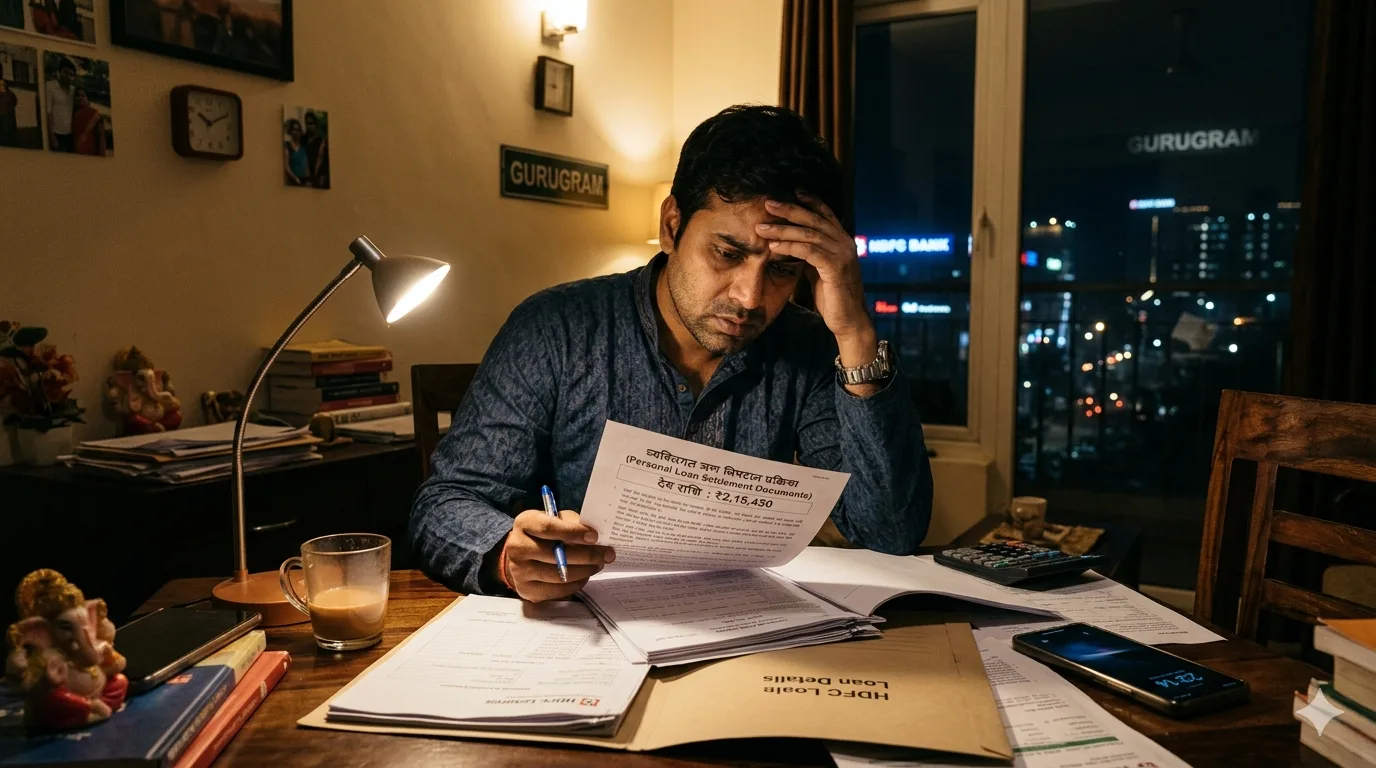
Receiving a loan default notice can be stressful, particularly if missed EMIs are linked to a job change, medical expenses or delayed salary payments. Understanding whether the document is a lender's demand, a legal notice or a court summons can help you identify the next step. This guide explains in plain words what a loan default notice is, how it differs from a legal notice and a court summons, and what you can do at each stage.
A letter or email arrives from your bank, and the word "default" is printed near the top. Your stomach drops. This reaction is common, and it does not mean you did anything shameful.
A loan default notice is a written warning from your bank or NBFC (a non-bank finance company). It says that your EMIs are overdue. It also says that a further legal step may follow if the dues stay unpaid. This is the warning stage. It is not a court order, and it is not a final decision about you.
Most notices carry the same four things:
The overdue amount. This is what the lender says you owe today. It often includes late charges and interest.
A date to respond by. This deadline tells you how much time you have, so read it twice.
A line saying further action may follow. This is standard wording in almost every notice.
Your loan account number. Quote it every time you write back to the bank.
"Default" simply means that payments were missed. Banks usually mark a loan as bad (called an NPA) after EMIs stay unpaid for about 90 days. A notice can reach you before or after that mark, so do not treat the date as a fixed rule.
Here is a worked example. Say you took a loan of ₹3 lakh with an EMI of ₹9,800. If you miss 3 EMIs, ₹29,400 is overdue before any late charges. The notice may show a slightly higher figure. The extra amount is usually late fees and interest, and you can ask the bank for the breakup.
Your rights do not end the day you miss an EMI. Banks still have to follow rules on how they speak to you and what they can do next. You can read more about this in our guide to understanding your rights as a borrower, even if you default. Next, let us look at why these notices get sent in the first place.

Got a Notice and Not Sure What It Means?
Talk to a FREED counsellor about your situation.
Book My CallWhy Did I Get a Loan Default Notice After Missing EMIs?
You missed one or more EMIs, and the bank's system flagged your account. That is the usual trigger. The reasons behind the missed EMIs are almost always real: a job loss, a medical bill, a delayed salary or a family emergency. A notice is the bank's formal way of recording that the dues are pending.
Banks usually follow a sequence before they take a legal step. It often looks like this:
Reminder calls or SMS. The bank or its collection team reminds you that an EMI is overdue.
A written reminder or demand notice. This is the loan default notice. It states the amount and a date to respond.
A legal notice from the bank's advocate. This is a stronger letter sent by a lawyer on the bank's behalf.
A court case or another legal step. This happens only if the dues stay unpaid and earlier steps get no response.
Banks do not always follow every step in this exact order. Some skip a step, and some send two letters close together. So treat the order above as a common pattern, not a promise.
Time limits also differ from one document to the next. The response deadline depends on the notice, the underlying agreement and any applicable legal requirements. Read the date stated in the document and respond promptly. If the deadline is unclear, seek advice from a qualified legal professional rather than relying on a general estimate. The date printed on your own notice is the one that counts, so follow it.
The notice also tells you something useful. It means the bank is still choosing to write to you before going further. That gap is your chance to explain your situation and ask for a plan. You can read how banks are expected to behave in our guide on personal loan recovery rules.
But how is a default notice different from a legal notice, and from a court summons? The next section puts all three side by side.
Loan Default Notice vs Legal Notice vs Court Summons: What Is the Difference?
Three different documents often get called "a notice". They look similar in your hands, but they do very different things.
Document | Who sends it | Court order? | What you should do | Typical time you have |
|---|---|---|---|---|
Loan default notice | Bank or NBFC | No | Check the amount, reply in writing | Stated in the notice, often 7 to 15 days |
Legal notice | Bank's advocate | No | Verify it, reply in writing | Often 15 to 30 days |
Section 138 cheque bounce notice | Payee or their advocate | No, but a complaint can follow | Pay within the window or reply | 15 days after receipt |
Court summons | Court | Yes | Appear, file a written reply, take legal help | Usually 30 days for a written reply, up to 90 with the court's permission |
Rates and ranges shown are indicative. Final terms decided by the bank. FREED is not a Loan Provider. No outcome is guaranteed. Please verify directly with your bank.
In practice, the first two rows are letters. They ask you to act, but nobody has yet decided anything against you. The last row is different. A summons is an order that a case exists, and the court expects you to turn up and reply. In a summary suit (a fast-track case for money claims), the time to appear can be as short as 10 days.
The Section 138 row applies only when a cheque given for the loan bounced. The payee must send a demand notice within 30 days of the cheque coming back, and you then get 15 days after receiving it to pay.
Secured loans may involve additional recovery procedures. Where the Securitisation and Reconstruction of Financial Assets and Enforcement of Security Interest (SARFAESI) Act applies, the lender may issue statutory notices and take further steps subject to the Act's requirements. The process and available remedies depend on the loan, the notice and the applicable law. If you receive a SARFAESI notice, seek legal advice promptly. You can read about it in our guide to SARFAESI Section 13 notices.
Under Section 138 of the NI Act, the payee must send a demand notice within 30 days of cheque return. You get 15 days to pay.

What the Law Says
Under Section 138 of the NI Act, the payee must send a demand notice within 30 days of cheque return. You get 15 days to pay.
Read What Banks Can Legally DoWhat Should I Do When I Receive a Loan Default Notice?
Take a slow breath first. A notice gives you time, and what you do in that time matters more than the letter itself. Follow these steps in order.
Step 1: Read the notice fully and note the amount and deadline. Write both on a separate paper. The deadline tells you how long you have to reply, and the amount is what the bank says you owe.
Step 2: Check who sent it. See whether the sender is the bank, an NBFC or an advocate. Each one means a different stage, as the table above shows.
Step 3: Match the overdue amount against your own loan statement. This shows you whether the figure is correct. For example, say the notice shows ₹41,500 overdue, but 4 EMIs of ₹9,800 come to ₹39,200. The gap of ₹2,300 is likely late charges. Ask the bank for the breakup in writing.
Step 4: Photograph the notice, the envelope and the delivery date. These photos become your proof of when the letter reached you. If a dispute starts later, you will not need to rely on memory. Our guide on how to document threats and harassment from recovery agents explains how to keep such records safely.
Step 5: Reply in writing before the deadline. Keep the reply short. State your loan number, say what happened, and tell the bank what you can pay and by when. A written reply creates a record. A phone call does not.
Step 6: Keep a copy of everything you send. Save the reply, the postal receipt or the email sent mark. If the matter goes further, this folder of your papers shows that you responded on time.
What Should I Do If I Get a Court Summons for Loan Default?
A summons means a case has been filed against you. It also means you have a chance to respond, and the court wants to hear your side. Handle it calmly and quickly.
Here is what to do:
Read who filed the case and which court sent it. The summons names both. Note the case number too.
Note the date to appear. Put it in your phone and on paper. Missing this date is the costliest slip.
Collect your loan papers. Keep the loan agreement, repayment history, statements and every notice you received.
Understand the time limits. In a normal civil suit, the written reply is usually due within 30 days of the summons reaching you. The court can allow up to 90 days. In a summary suit, you may need to appear within 10 days.
Get your reply drafted. The written reply puts your side of the story on record.
Ignoring a summons can lead to the court deciding the case without hearing you. That can mean an order against you, which is much harder to undo.
This is also the point where you need a practising advocate. FREED's pre-litigation support stops once a bank has filed a case in court. FREED does not give legal advice or representation after that stage. Please speak to a lawyer who handles loan cases in your area. You can read more about what banks can do in our guide to personal loan defaulter legal action.
Photograph every page of the notice, the envelope and the date you received it.
Get My Notice Checked
Photograph every page of the notice, the envelope and the date you received it, then get it checked.
Get My Notice CheckedCan a Loan Default Notice or Court Summons Lead to Arrest or Jail?
This is the fear behind many late-night searches. So here is the direct answer. Not paying a loan is generally a civil matter. That means the bank can ask a court to recover its money, but missing EMIs on its own does not send a person to jail.
Criminal action needs a separate trigger. There are three common ones:
A bounced cheque under Section 138 of the NI Act. If a cheque you gave for the loan bounced, the payee can send a demand notice and later file a criminal complaint. A cheque issued towards a loan repayment may lead to proceedings under Section 138 of the Negotiable Instruments Act if the statutory conditions are satisfied. The process includes specific requirements relating to the cheque, the demand notice and the opportunity to make payment. A cheque bounce does not automatically establish criminal liability in every case. If you receive a notice under Section 138, seek legal advice promptly.
Fraud or false documents when the loan was taken. Giving fake papers or hiding facts is a different matter from being unable to pay.
Ignoring a court's direct order. If a court tells you to do something and you refuse, the court can act against you for that.
A worked example makes this clearer. Say your EMI is ₹9,800 and you miss it because your salary is late. The bank sends a default notice. Nothing criminal has happened. But if you gave a cheque for ₹9,800 and it bounced, the bank has a separate legal route through Section 138.
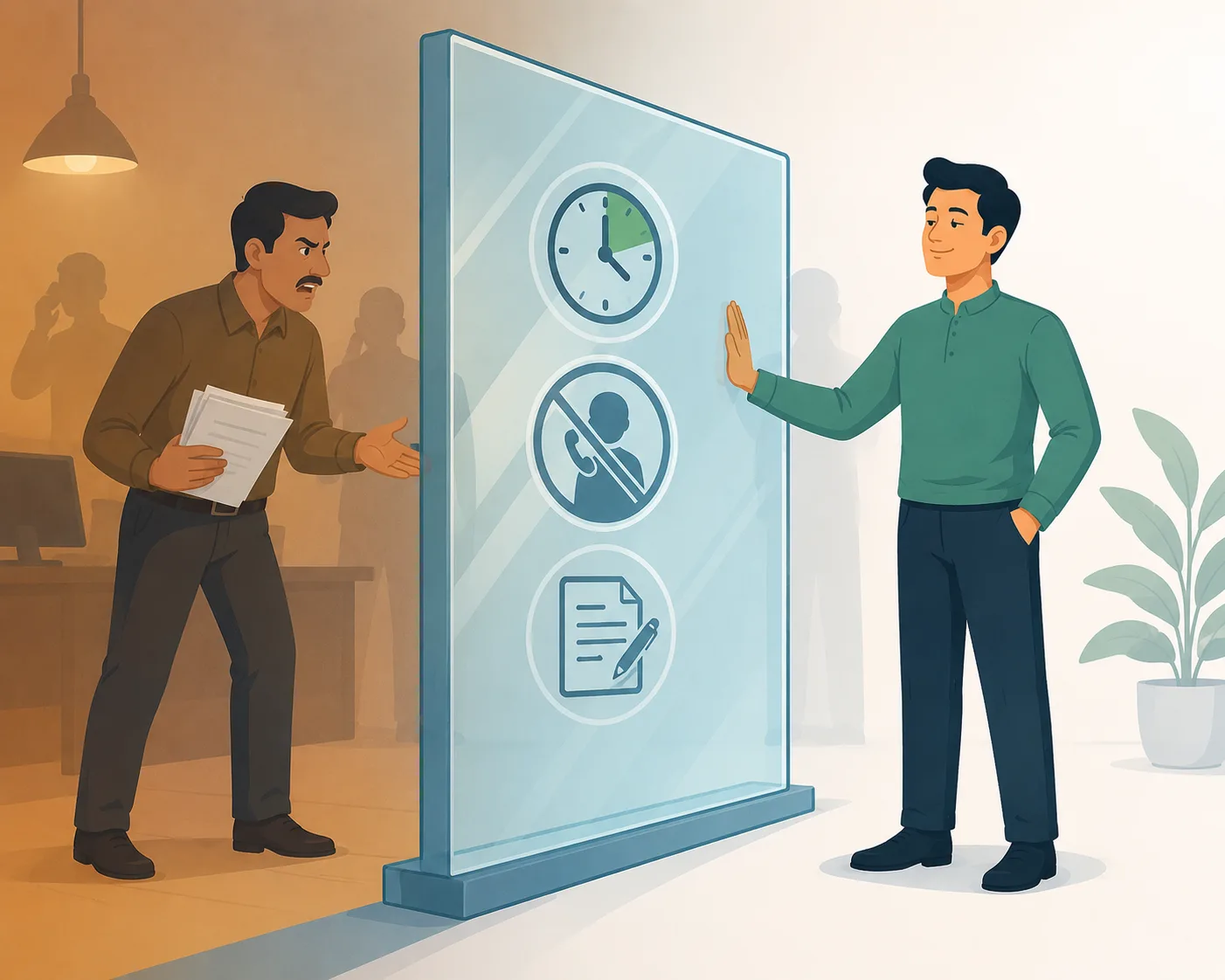
If a recovery agent says you will be arrested for a missed EMI, that is not how the law works. Threats of arrest, abuse and pressure on your family are not allowed. Our guide on RBI guidelines for loan recovery explains what banks and agents may and may not do.
We keep this section short on purpose. Jail and loan default is a big topic, and it needs its own full explanation in a separate guide.
What Are My Options After a Loan Default Notice?
The right option depends on where you stand today. Look at the three options below in this order, starting with the lightest.
Option 1: Ask the bank for a new repayment plan. If you are still paying most of your EMIs and the notice is a first reminder, write to the bank. Ask for a revised schedule or a longer tenure (more months to repay). A longer tenure lowers each EMI, though you may pay more interest overall. Say plainly what you can afford each month.
Option 2: Merge your loans into one EMI. If you are stretched thin but not behind on payments, consolidation can help. Consolidation means one new loan pays off your existing loans, so you pay one EMI instead of many. Your credit score can improve as you repay on time. You can read how it works in our guide on reducing your EMIs by consolidating your debt. FREED's Loan Consolidation Plan is for people who can still repay but need a smarter way to manage their debt.
Option 3: Settlement, only when repaying in full is truly not possible. Settlement is not something a borrower chooses out of preference. A lender may consider settlement when a borrower is experiencing financial difficulty and cannot repay the full outstanding amount under the existing terms. Approval is not guaranteed, and eligibility and settlement terms depend on the lender's policy and the circumstances of the account. Before accepting an offer, obtain the agreed terms in writing and confirm how the account will be reported. The bank accepts a smaller amount as the final payment. Any waiver (discount on the amount you owe) can be up to 50%*, and the final figure is the bank's decision. If the lender accepts less than the full amount owed as a settlement, the account may be reported as "Settled" rather than "Closed" or fully repaid. The reporting and its effect on future credit applications depend on the account information and the relevant credit-reporting practices. Ask the lender how the settlement will be reported and check your credit report after the account is updated. You can read what recovery looks like in our guide to steps to rebuild your credit score after a loan default. FREED's Loan Settlement Plan is built for this situation.
Option | Who it suits | Effect on your credit report |
|---|---|---|
New repayment plan | Still paying most EMIs | Stays clean if payments continue |
Consolidation | Still paying, but stretched | Score can improve with on-time payments |
Settlement | Truly unable to repay in full | Marked as settled, for up to 7 years |
*Rates and ranges shown are indicative. Final terms decided by the bank. FREED is not a Loan Provider. No outcome is guaranteed. Please verify directly with your bank.
Still paying, but stretched across several EMIs?
See if one consolidated loan fits.
Check My EligibilityHow FREED Helps If You Have Received a Legal Notice
FREED Shield helps ensure that customers don't have to face recovery-related pressure alone. Anyone can use it. You do not need to be enrolled in any FREED program.
One part of FREED Shield is Legal Notice Support. FREED's in-house legal team looks at the notice you received and does three things for you:
Checks whether the notice is genuine. Fake and copied notices do circulate, so this check gives you clarity before you act.
Tells you whether the notice needs a reply. Some notices only need a written response. Others need more attention.
Helps you draft the reply. If a reply is needed, the team helps you put it in clear words, so your side is on record.
There is one boundary, and it is worth knowing early. FREED provides pre-litigation support only. This means help before a case is filed. FREED does not give legal advice or representation once a bank has filed a case in court. For a court summons, you need a practising advocate.
If recovery calls or visits have crossed the line into abuse or threats, you can also use FREED Shield to report it. You file the complaint through the FREED app, and you can call the FREED helpline during a live harassment call. FREED Shield helps you understand your rights and keep records of what happened.
It also helps to know where your credit report stands before you reply to a bank. Check Credit Insight shows your Experian-based credit score, what is affecting it, and the steps to improve it.
If you are unsure what to do next, FREED counsellors are available for a call. There is no pressure. It is just someone to think it through with you.

Mohit Juneja
Mohit Juneja writes educational content at FREED on debt management, credit scores, loan repayment, and borrowing best practices. His content is shaped by expert insights and industry knowledge, helping readers better understand their financial options and make informed decisions.
mohit.juneja@freed.care

FREED is India's trusted loan management platform. Founded in 2020 and headquartered in Gurugram, FREED has counselled 20 lakh+ people on personal loans, credit cards, and app loans. FREED charges fees only on successful settlement, not upfront. FREED does not handle secured loans (home loans, car loans, gold loans).
Media Mentions