Demand Notice Under Section 138: What a Bounced Cheque Notice Means
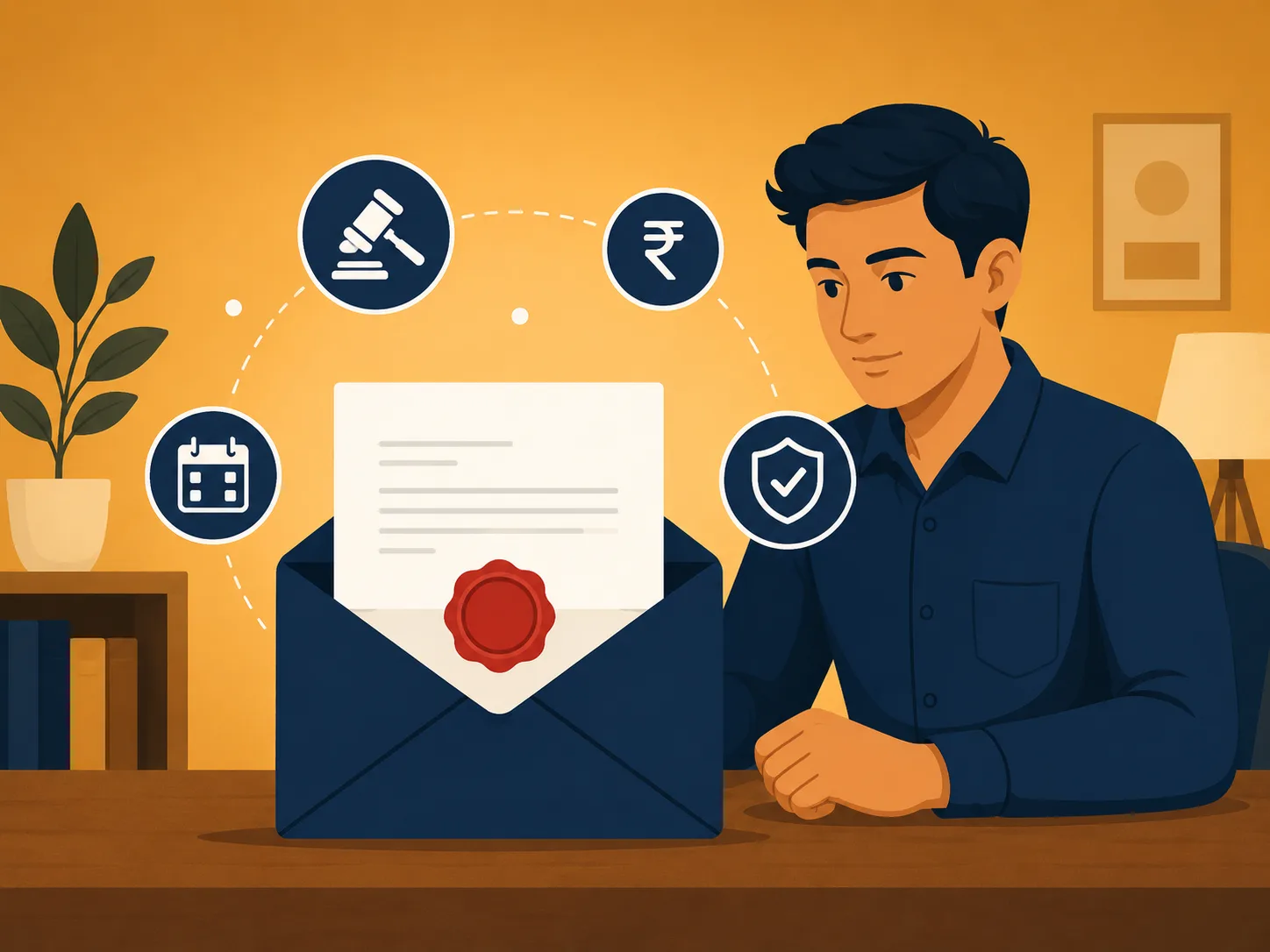
A demand notice under Section 138 is a written legal notice sent when a cheque you issued bounces due to insufficient funds, giving you 15 days from receipt to pay the full cheque amount before the sender can file a criminal complaint. It's the mandatory first step under the Negotiable Instruments Act before any case can be filed.

Mohit Juneja
Reviewed by FREED India, Debt Resolution Specialists
 4.7/5
4.7/5 ₹3,200Cr+
 20,000+
 20,00,000+4.7/5₹3,200Cr+20,000+20,00,000+
KEY TAKEAWAYS

A demand notice under Section 138 must be sent within 30 days of the cheque bounce, giving you 15 days from receipt to pay before a complaint can be filed.
A bounced cheque EMI can trigger Section 138 NI Act, criminal complaint possible, up to 2 years jail or fine up to 2x cheque amount. NACH/ECS bounces take a different legal path, but banks can still act.
Paying the full cheque amount within the 15-day window stops the case from proceeding; no offence is even committed at that point.
Paying the full cheque amount within the 15-day window stops the case from proceeding; no offence is even committed at that point.
A demand notice is not a court summons; no case exists yet at this stage. It's a mandatory warning step, not the case itself.
What Is a Demand Notice Under Section 138?
When a cheque you've issued bounces, whether because of insufficient funds or because it exceeds an arranged limit, and that cheque was issued to discharge a legally enforceable debt, the payee (the bank or lender you owed money to) gains a specific legal right. Before they can pursue a criminal complaint against you, they must first send a formal, written demand notice.
This is not optional on the payee's side, and it isn't a courtesy either. It's a mandatory statutory step under the Negotiable Instruments Act. The payee cannot skip straight to filing a case in court. The law requires this notice to come first, giving the person who issued the cheque a defined window to fix the situation before any criminal process can begin.
That distinction matters more than it might seem at first read. Receiving this notice is serious and shouldn't be ignored, but it also isn't the same as being summoned to court. What actually determines what happens next comes down to what the notice is required to contain and whether it was sent correctly in the first place.

Received a Section 138 Notice?
Free assessment. Understand your real options before the 15 days run out.
Talk to FREED's TeamWhat Must a Valid Section 138 Demand Notice Contain?
Because a defective notice can itself become a valid defense later in the process, the specifics matter. A valid Section 138 demand notice must meet several conditions:
- It must be in writing. A verbal demand for payment, however clearly made, does not satisfy the legal requirement.
- It must be sent within 30 days of receiving the bank's cheque return memo, the formal document the bank issues confirming why the cheque was dishonoured. This 30-day clock starts from when the payee receives that memo, not from the date the cheque itself bounced.
- It must clearly demand payment of the cheque amount. A vague reference to "outstanding dues" without specifying the cheque amount can weaken the notice's validity.
- It must be sent to the correct, current address of the drawer, the person who issued the cheque, typically by registered post or speed post to create a verifiable paper trail.
A notice sent after the 30-day window has closed, or one that fails to clearly demand the cheque amount, can potentially be challenged as invalid later. This is exactly why the next stage, what happens once you actually receive a properly sent notice, carries so much weight.
What Happens in the 15 Days After You Receive the Notice?
This is the single most important window in the entire process, and it's worth being precise about it.
From the date you receive the notice, not the date printed on the letter, you have exactly 15 days to pay the full cheque amount to the payee. If you make that payment within the window, the matter ends there. No offence is treated as having been committed, and no criminal complaint can proceed against you on that cheque.
If payment is not made within 15 days of receiving the notice, the cause of action arises after that period expires. The payee generally has one month from the date the cause of action arises to file a complaint. A court may accept a delayed complaint if the complainant shows sufficient cause for the delay.
So the sequence, in order, is this: cheque bounces, the payee has 30 days to send the notice, you have 15 days from receiving it to pay, and if you don't, the payee has 30 more days to file. Missing your own 15-day window doesn't mean a case is automatically filed the next day. It means the payee now has the legal right to file one within their own deadline. What that filed case actually looks like, and what it doesn't automatically mean for you, is worth understanding clearly.
What Happens If You Ignore a Section 138 Notice?
If the 15-day period expires without payment, the payee may file a complaint in the court having jurisdiction under Section 142(2). When the cheque is deposited through an account, jurisdiction generally lies where the payee’s bank branch is located; other modes of presentation may follow a different rule. This is where an honest, non-alarmist explanation matters, because what happens next isn't as sudden or severe as it might sound.
The case is bailable, which means you aren't automatically taken into custody the moment a complaint is filed. It's also compoundable, meaning it can still be resolved through payment or settlement even after the complaint has been filed, right up to a certain stage of the trial. Filing a complaint is the start of a legal process, not the end of your options.
Conviction, if it happens at all, comes only after a full trial where evidence is examined and both sides are heard. It is not an instant or automatic outcome the moment a complaint lands in court. That said, the underlying penalty is real and worth taking seriously: a bounced cheque EMI can trigger Section 138 of the NI Act; a criminal complaint is possible, up to 2 years' jail or a fine up to 2x the cheque amount. NACH/ECS bounces take a different legal path, but banks can still act.
Whether a case against you would actually succeed, or whether there are grounds to contest it, depends on the specific facts. That's exactly what the next section covers.

What the Law Says
A bounced cheque EMI can trigger Section 138 NI Act, criminal complaint possible, up to 2 years jail or fine up to 2x cheque amount. NACH/ECS bounces take a different legal path, but banks can still act.
Book My Free CallWhat Are Valid Defenses Against a Section 138 Case?
At a general-awareness level, and this is where most explanations of Section 138 stop short, a few defenses commonly get raised in these cases:
- The cheque wasn't issued for a legally enforceable debt. Merely describing a cheque as a “security cheque” does not automatically exclude Section 138; its treatment depends on whether a legally enforceable debt or liability existed when the cheque was presented.
- The notice wasn't properly served. If it was sent to a wrong or outdated address and never genuinely reached the drawer, that can undermine the notice's validity.
- Payment was actually made within the 15-day window but wasn't accounted for. Bank delays, misapplied payments, or a payment made through a different channel than expected can sometimes muddy this.
- The notice itself was sent outside the 30-day statutory window from the cheque return memo, which can make the entire notice defective from the start.
Whether any of these genuinely apply to your situation depends entirely on the specific facts, the documents involved, and the exact timeline. This isn't something to self-assess from a general explanation like this one. A lawyer reviewing your specific notice, your bank records, and the underlying transaction is what actually determines whether a defense holds up, not a checklist read online. None of this is a way to sidestep a genuine debt you owe; it's about understanding your actual legal position accurately.
What Should You Do If You Receive This Notice?
Start by reading the notice carefully and noting the exact date you received it, not the date printed on the letter. Your 15-day clock starts from receipt, so this date matters more than almost anything else in the document.
If you're able to pay the cheque amount, doing so within the 15-day window ends the matter cleanly, no offence is treated as committed, and no complaint can proceed. If you genuinely cannot pay, the worst response is silence. Don't ignore the notice. Respond in writing acknowledging that you received it, explain your situation honestly, and consult a lawyer about your specific case, since the right next step depends on facts a general article can't account for.
It's also worth separating two different problems that often get tangled together. The notice itself is a legal process with its own timeline and rules. The underlying reason the cheque bounced, usually an EMI you're genuinely struggling to keep paying, is a separate, resolvable problem. Fixing one doesn't automatically fix the other, but addressing the underlying debt is often what stops this from happening again on the next EMI cycle.

Freed Expert Tip
Note the exact date you received the notice, not the date on the letter; your 15-day window starts from receipt.
Talk to FREED's TeamHow FREED Helps When a Bounced EMI Is Behind This Notice
It's worth being direct about a boundary here: FREED does not represent borrowers in Section 138 court proceedings. If a complaint has been filed or is being threatened, that's a legal matter, and a lawyer is who you need for that, not FREED. This article won't overstate what FREED can do here.
What FREED does help with is the problem sitting underneath the bounced cheque. If the EMI that bounced reflects a genuine, ongoing inability to keep up with a personal loan or credit card, rather than a one-off slip, that's a debt problem FREED's Loan Settlement Plan (also called the Debt Resolution Program, or "Settle My Loans") is built to address. FREED has worked with more than 20,00,000 customers, settled over 20,000 accounts, and managed more than ₹3,200 Cr in debt, resolving the kind of underlying financial strain that leads to bounced EMIs in the first place.
Resolving that underlying debt won't undo a Section 138 notice already in motion; that still needs its own legal response. But if the pattern is EMIs that keep bouncing because the total debt load has become genuinely unmanageable, fixing that is what prevents the next notice from arriving at all.
Section 138 Demand Notice, Key Timelines
Event | Statutory Window |
Notice must be sent | Within 30 days of cheque dishonour intimation |
Drawer's payment window | 15 days from receipt of notice |
Complaint filing window (if unpaid) | Within 30 days after the 15-day window expires |
General awareness only, not legal advice. Timelines and their application depend on specific facts.
Sources
Claim in Blog | Source |
30-day notice window, 15-day payment window, 30-day (one month) complaint filing window, offence bailable and compoundable, penalty up to 2 years imprisonment and/or fine up to 2x cheque amount | Negotiable Instruments Act, 1881 (as amended), Sections 138, 142. |

Mohit Juneja
Mohit Juneja writes educational content at FREED on debt management, credit scores, loan repayment, and borrowing best practices. His content is shaped by expert insights and industry knowledge, helping readers better understand their financial options and make informed decisions.
mohit.juneja@freed.care

FREED is India's trusted loan management platform. Founded in 2020 and headquartered in Gurugram, FREED has counselled 20 lakh+ people on personal loans, credit cards, and app loans. FREED charges fees only on successful settlement, not upfront. FREED does not handle secured loans (home loans, car loans, gold loans).
Media Mentions