Everything You Need to Know About Section 25 of the Payment and Settlement Systems Act
Receiving a Section 25 notice can be stressful, but understanding your rights and obligations is essential. This guide explains what Section 25 means, when it applies, and the steps you should take if you receive such a notice.

Mohit Juneja
Reviewed by FREED India, Debt Resolution Specialists
 4.7/5
4.7/5 ₹3,200Cr+
 20,000+
 20,00,000+4.7/5₹3,200Cr+20,000+20,00,000+
Key Takeaways

Section 25 of the Payment and Settlement Systems Act applies only when an electronic transfer, NEFT, RTGS, IMPS, or UPI, bounces while repaying a legally enforceable debt.
All required conditions must be met for the offence to apply.
The beneficiary must send a written demand notice within 30 days of the dishonour; the payer then has 15 days to pay before the offence is complete.
Penalty on conviction can go up to 2 years imprisonment, a fine up to twice the transfer amount, or both.
A bounced cheque EMI can trigger Section 138 NI Act, criminal complaint possible, up to 2 years jail or fine up to 2x cheque amount. NACH/ECS and UPI bounces take a different legal path under Section 25, but banks can still act.
What Is Section 25 of the Payment and Settlement Systems Act?
Put simply, this section gives a bounced digital repayment the same legal weight a bounced cheque already carries; it exists so an auto-debit failure can't be treated more lightly just because no paper changed hands. In the Act itself, the section is titled "Dishonour of electronic funds transfer for insufficiency, etc., of funds in the account."
For a borrower, this matters in one specific way: an EMI auto-debit failure isn't just a bank penalty issue anymore. Under the right conditions, it can become a criminal matter, following a defined legal process rather than happening automatically the moment a payment fails. What that process actually requires is covered next.
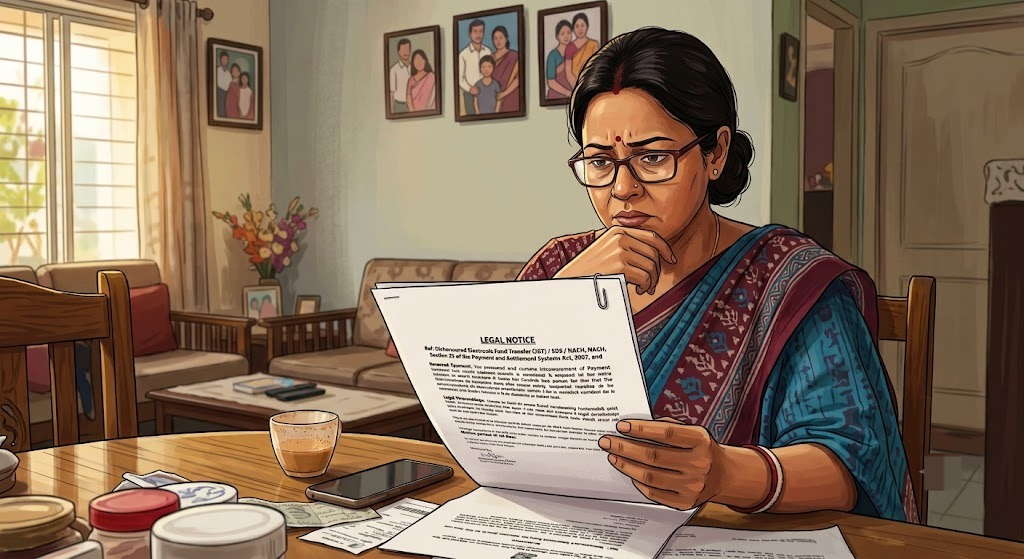
When Does Section 25 Apply? The Four Conditions
All four of these have to be true together, taken directly from the Act's text:
- The electronic funds transfer was initiated to pay another person, in whole or in part, for a debt or other liability, specifically a legally enforceable one.
- The transfer was initiated in accordance with the relevant procedural guidelines issued by the system provider (the bank or payment platform running the transfer).
- The beneficiary gives written notice demanding payment within 30 days of learning from the bank that the transfer was dishonoured.
- The payer fails to make the payment within 15 days of receiving that notice.
The Act is explicit that if even one of these isn't met, there's no offence; this isn't a grey area; it's a complete defence built into the law itself. Because all four conditions have to line up, a missed EMI does not automatically become a Section 25 case. What typically happens the first time an EMI bounces looks nothing like this: penalty fees and follow-up calls, long before anything resembling a Section 25 notice comes into play.
What Are the Penalties Under Section 25?
The maximum penalty, taken directly from the Act, is imprisonment for a term which may extend to two years, or a fine which may extend to twice the amount of the electronic funds transfer, or both. That's the ceiling, not the automatic or typical outcome; courts weigh the specific circumstances of each case.
The Act does shift some of the burden onto the payer. It presumes the transfer was for debt discharge unless proven otherwise, and once the bank communicates the dishonour, the court presumes that fact too, unless disproved. This is a serious provision, not a paperwork formality.
That said, reaching prosecution requires the beneficiary to actively file a complaint and pursue it. Under the Act, a court can only take up a Section 25 case on a written complaint from the person aggrieved by the dishonour; it doesn't happen on its own. Most banks prefer settlement or recovery over litigation, since it's genuinely faster for them too.

What the Law Says
Section 25 penalty: up to 2 years' imprisonment or a fine up to twice the transfer amount, or both, once all four conditions are met. A bounced cheque EMI can trigger Section 138 NI Act, criminal complaint possible, up to 2 years jail or fine up to 2x cheque amount. NACH/ECS and UPI bounces take a different legal path under Section 25, but banks can still act.
Check your optionsWhat Section 25 Does NOT Apply To
- A transfer that failed due to a technical or bank-side error, rather than insufficient funds in the account.
- A voluntary transfer with no debt repayment attached to it at all.
- A payment that is not made to discharge a legally enforceable debt or liability.
- Any case where the beneficiary skipped the 30-day notice step, or the payer was never actually given the 15-day window to pay.
None of this is a loophole to hunt for; it's simply what the four-condition test already excludes by design. A lot of what circulates about Section 25 online oversimplifies this. Here are the most common myths.
Common Myths About Section 25
Myth: Every bounced EMI leads to a Section 25 case. Fact: Only when all four conditions are met and the beneficiary actively pursues a written notice and, later, a complaint. Most bounced EMIs never get anywhere near this. Myth: Not knowing your account balance was low is a valid defence. Fact: The Act explicitly rules this out. Whether you had reason to believe your balance was insufficient at the time doesn't matter; it isn't a defence. Myth: UPI failures are always covered under Section 25. Fact: Only when the UPI transfer was specifically made to repay a legally enforceable debt. A failed UPI payment for daily spending, groceries, and a subscription sits outside this section entirely. Myth: This always ends in a criminal case. Fact: A lender may choose to pursue recovery or settlement before litigation, since litigation is slower and costlier for the lender too.
Are You Already in a Loan Trap? Quick Check
- Has more than one EMI or auto-debit failed in the past 3 months?
- Is over half your take-home salary already going toward EMI payments?
- Has a lender or recovery team already sent you a written notice?
- Are your savings close to zero, with another missed payment feeling likely?
If two or more of these are true, the underlying issue isn't the notice itself; it's the debt load behind it.

Confidential Help, No Judgment
Talk to a FREED counsellor about your full situation.
Book My Free Call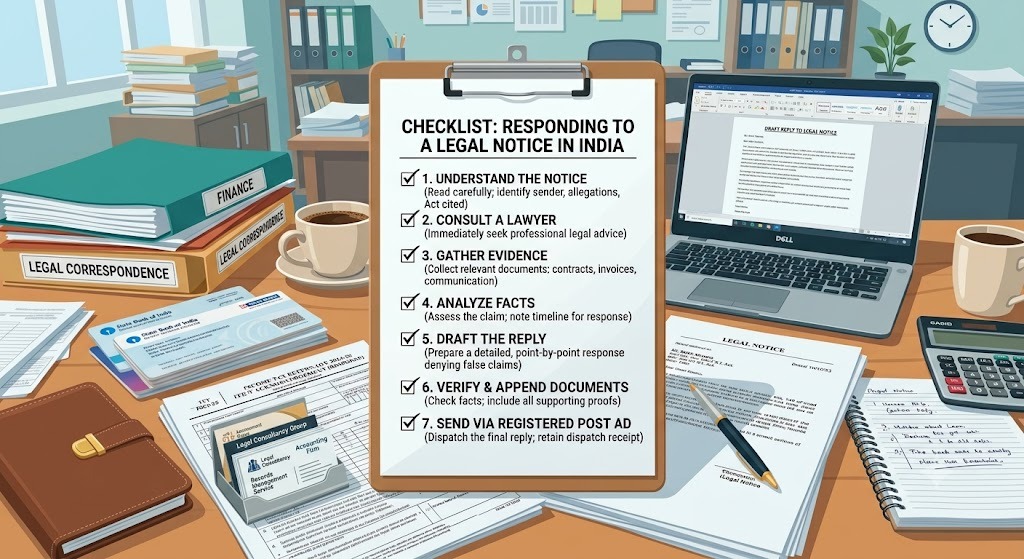
What to Do If You Receive a Section 25 Notice
Read the notice carefully. Confirm the sender, the exact amount claimed, and the date of the dishonour.
Do not ignore the 15-day window. Silence doesn't make the notice go away; it just lets the clock run out.
Check whether all four conditions actually apply to your case. Missing even one changes everything.
If the debt is genuine and unpaid, contact the lender or a debt resolution service before the 15 days lapse. Paying or arranging a settlement within that window can stop the matter from advancing further. This is also where FREED Shield's Legal Notice Support can help confirm what the notice actually requires.
Keep every communication in writing. Notices, replies, and any settlement discussion, all of it.

Freed Expert Tip
Never ignore the 15-day payment window after a Section 25 notice. Responding within the notice period can help you address the issue before it escalates further.
Check your options
How FREED Helps If You've Received a Legal Notice
FREED Shield, specifically its Legal Notice Support component, is available to everyone, including people not currently enrolled in any FREED program.
FREED has an in-house legal team, not external lawyers on retainer, that reviews the notice you've received, including a Section 25 notice, and . If a reply is needed, the team helps you draft it. FREED Shield helps ensure that customers don't have to face recovery-related pressure alone.
It's worth being precise about the boundary here: this is pre-litigation support only. Once a bank or lender has actually filed a case in a court of law, FREED steps back; court representation isn't something FREED provides.
If the notice traces back to debt you genuinely can't repay, that's a different and more fundamental problem than the notice itself. FREED's Debt Resolution Program exists for exactly that situation, since responding to the notice without addressing the underlying debt just delays the next one.
Got a Legal Notice? Talk to FREED First
FREED's legal team checks if it's valid and what to do next.
Get My Free Debt AssessmentSection 25 vs Section 138: What's the Difference?
Feature | Section 25, PSS Act | Section 138, NI Act |
Instrument covered | Electronic funds transfer (NEFT, RTGS, IMPS, UPI, ECS) | Physical or post-dated cheque |
Notice period | 30 days to demand payment, then 15 days to pay | Similar structure under its own notice timeline under the NI Act |
Penalty | Up to 2 years' imprisonment, or a fine up to 2x the transfer amount, or both | Up to 2 years' imprisonment, or a fine up to 2x the cheque amount, or both |
Procedure applied | Explicitly applies Chapter XVII of the Negotiable Instruments Act, 1881, to the extent circumstances allow | Governed directly under Chapter XVII, NI Act |
A bounced cheque EMI can trigger Section 138 NI Act, criminal complaint possible, up to 2 years jail or fine up to 2x cheque amount. NACH/ECS and UPI bounces take a different legal path under Section 25, but banks can still act. The wider legal picture for a loan default beyond just a single bounced payment is worth understanding too, since Section 25 and Section 138 are narrow, specific pathways within a much broader recovery process.

Mohit Juneja
Mohit Juneja writes educational content at FREED on debt management, credit scores, loan repayment, and borrowing best practices. His content is shaped by expert insights and industry knowledge, helping readers better understand their financial options and make informed decisions.
mohit.juneja@freed.care

FREED is India's trusted loan management platform. Founded in 2020 and headquartered in Gurugram, FREED has counselled 20 lakh+ people on personal loans, credit cards, and app loans. FREED charges fees only on successful settlement, not upfront. FREED does not handle secured loans (home loans, car loans, gold loans).
Media Mentions