I Don't Have CIBIL Score: What It Means for Your Finances
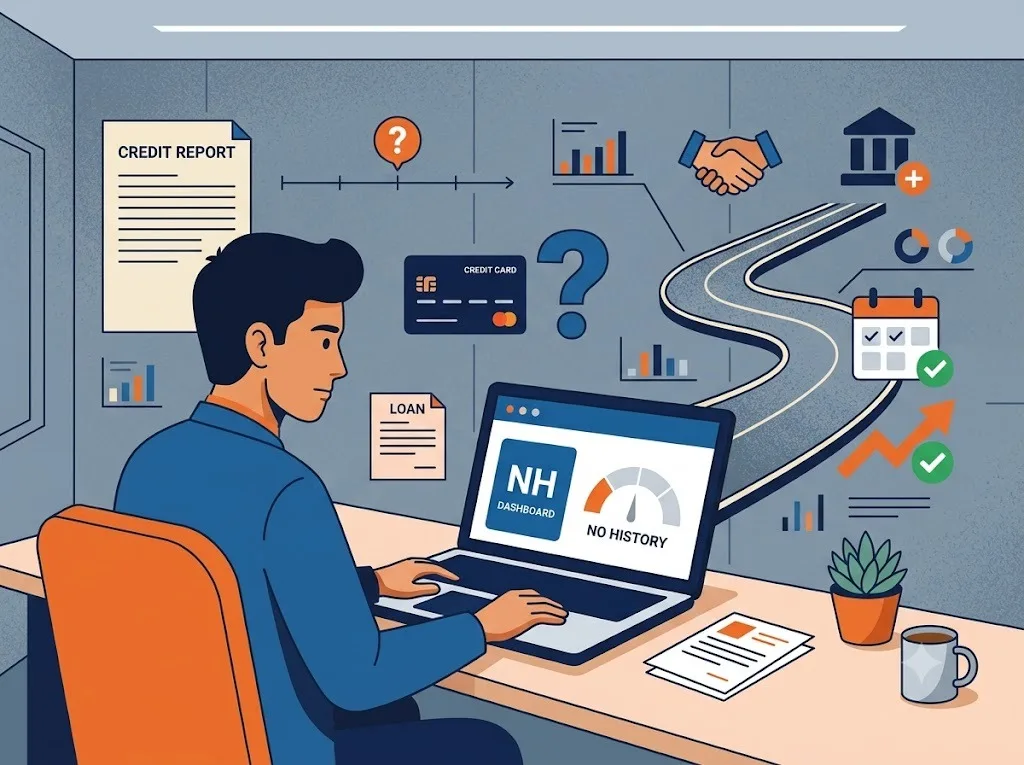
I don't have CIBIL score usually means your credit report shows NA or NH (no history) instead of a number. It does not mean a bad score. CIBIL makes a score only when it has recent credit activity from a loan or card, so first-time borrowers often see no score at first.
Mohit Juneja
Reviewed by FREED India, Debt Resolution Specialists
 4.7/5
 ₹3,200Cr+
 20,000+
 20,00,000+4.7/5₹3,200Cr+20,000+20,00,000+
KEY TAKEAWAYS

I don't have CIBIL score usually means NA or NH, which is no history, not a bad score.
CIBIL says a score needs an active loan or card in the last 36 months.
Lenders may ask for extra checks, or offer fewer options, when there is no score (commonly reported).
A secured card against a fixed deposit is a common way to start a credit history (commonly reported).
RBI directs every credit bureau to give 1 free full credit report each calendar year, to people whose history it holds.
What Does It Mean When You Don't Have a CIBIL Score?
No CIBIL score means CIBIL has nothing recent to score. It is not a penalty, and it is not a mark against you.
Instead of a number, your report may show NA (not applicable) or NH (no history). Lender blogs describe both labels the same way: no score was generated.
A first-time borrower is not given a 300. That matters, because 300 is a real score on a scale of 300 to 900. It is the lowest real score, and it sits on a record that a bureau has already read.
So no score and a low score are different things. A low score means there is history, and it shows problems such as late payments. No score means there was no record to read.
Take Asha, aged 24. She has a salary account and a debit card. She has never taken a loan, a credit card or an EMI (monthly instalment) purchase. A bureau has nothing of hers to score, so her report shows NH.
Nothing Asha did was wrong. She has simply not started a credit record yet.
Is that good or bad? Neither. It is a blank page. A blank page gives lenders less to rely on, but it carries no damage either. You can read more about what NH means on a CIBIL report.
Next, why your score may be missing.

Freed Expert Tip
Before you apply for a card, ask the issuer if it reports to credit bureaus. A card that is not reported builds no score.
See how to get a credit card without a scoreWhy Does My Report Show No CIBIL Score?
A missing score usually has a simple reason. Here are the common ones:
You never took a loan or credit card. With no account in your name, there is nothing for a bureau to score.
Your last loan or card activity is older than 36 months. CIBIL needs recent activity, so an old, closed account no longer counts.
Your first account is very new. It may not have built enough activity yet, and a first score is commonly reported to take about 3 to 6 months.
The details you typed do not match your loan papers. A different spelling of your name or a wrong date of birth can hide your real record.
Only enquiries exist, with no account. Enquiries alone are commonly reported to not create history.
Here is a quick self-check. Ask yourself whether any loan, card, BNPL (buy now pay later) instalment or EMI purchase is in your name. If yes, a mismatch in details is the likelier cause.
If the answer is no, the label is likely correct. Debit cards and UPI payments alone do not usually create a score (commonly reported).
Wrong details look the same as no history, so it helps to know how to check your CIBIL score by PAN card and compare the name and date of birth on screen.
Next, what no score means for money decisions.
How Does Having No CIBIL Score Affect Your Finances?
The impact is real but narrow. Here is what tends to change:
Credit cards and loans. Lenders cannot see your repayment record. Approval may need extra checks, or be harder (commonly reported).
Terms. A lender may offer a smaller amount, or a higher interest rate, when it has no history to rely on (commonly reported). No figure fits everyone.
Speed. Instant approvals that depend on a score may not be open to you.
What does not change. Your savings, your bank account, and your ability to pay are untouched.
No Score, Low Score or Good Score: What Do Lenders See?
Situation | What the lender sees | What it often means |
No score (NA or NH) | No recent history to read | Extra checks; some products may not be open |
Low score | History with late payments or high use | Higher cost or rejection; the record can be improved |
Good score | A record of on-time payment | More choice and better terms |
Details are indicative. Lender rules vary. FREED is not a Loan Provider.
In practice, no score is a blank page, while a low score is a record lenders have already read. A blank page can be filled in with steady payments. A low score has to be repaired over time.
It is possible to borrow without a score, with limits. See how to get a loan without a CIBIL score in India for the options and the care they need.

How to Get Your First CIBIL Score, Step by Step
The method is the same for everyone starting out.
Check Your Report First
Confirm the label you see. A mismatch in your details looks the same as no history.Pick One Starter Product
Choose a secured credit card backed by a fixed deposit, an eligible credit card from your salary-account bank, or a small loan you genuinely need.Ask If It Reports to Bureaus
Check with the issuer before you apply. A card that is not reported builds no score.Use a Small Part of the Limit
Low use of your limit (utilisation) looks steady to lenders. Staying below 30% is a common guide.Pay the Full Bill on Time
Payment history is usually the biggest factor in a score.Set Autopay as a Safety Net
Autopay (auto-payment permission) for at least the minimum due protects you from a forgotten date.Check Again After a Few Months
A score appears once there is enough activity.
Do not borrow just to build a score. The aim is a record, not new debt. For card routes, see how to get a credit card without a credit score. Your credit utilisation ratio explains the 30% guide.
If you need funds before a score builds, read about a loan without a CIBIL score and what it costs.
How long does all this take? That is next.
How Long Does It Take to Get a CIBIL Score From Scratch?
The honest answer is that it depends on when your lender reports and how steady your activity is. CIBIL does not publish a guaranteed date, so there is no fixed date to plan around.
Commonly reported, a first score can appear after about 3 to 6 months of regular activity. Treat that as a rough guide, not a promise.
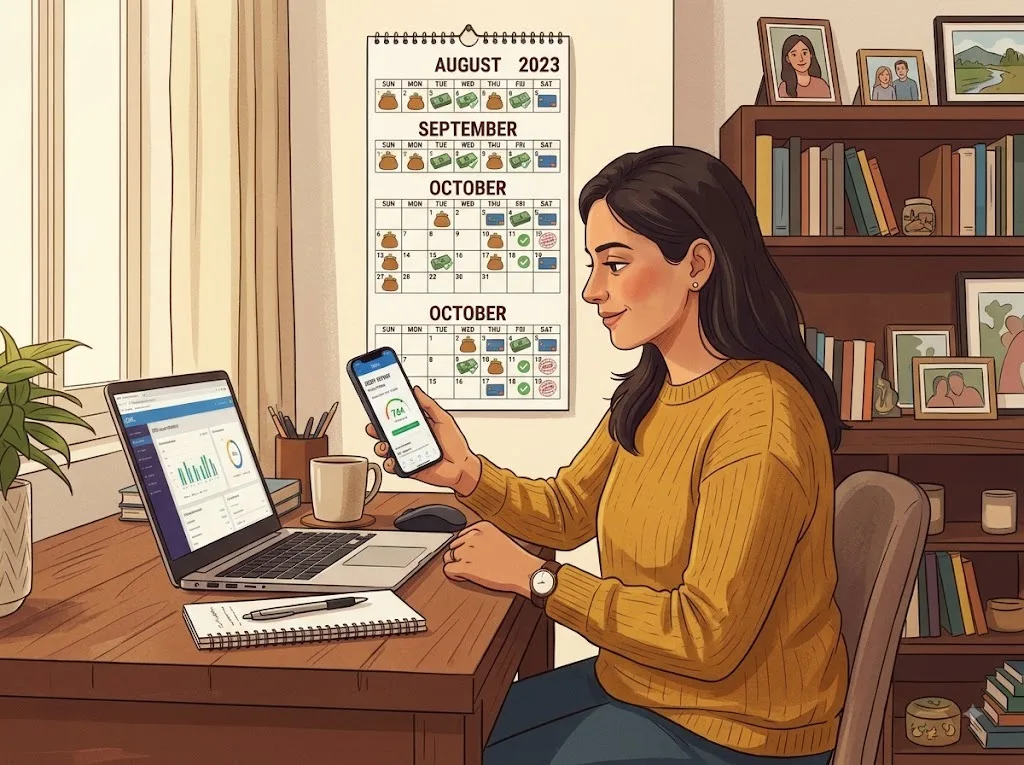
Here is a simple timeline. You open a card in January. You use it lightly and pay the full bill on time each month. You check your report in June or July. By then, there may be enough activity for a score.
Why the wait? Lenders send data to credit bureaus on fixed reporting dates. From 1 July 2026, there are 4 of them a month. A change on your account shows up in an upcoming cycle, and the bureau needs a little time to update.
Once you have a score, you can take your free full report once a calendar year. This is an RBI rule. You can also compare it with a second bureau's report.
No one can promise a specific score. Keep paying on time and keep your use of the limit low. For the update cycle in more detail, read how long a CIBIL score takes to update.

What the Law Says
Every credit bureau must give you 1 free full credit report, including the score, each calendar year, if it holds your credit history.
Learn how to download your free reportHow to Protect Yourself While You Build a First CIBIL Score
A few habits keep you safe while the record is thin. These 5 take little time.
Apply for one product at a time. Each application adds a hard enquiry (a lender's credit check after you apply). Many close together can read as urgent need. Read about the soft vs hard enquiry difference to see what counts.
Read the full cost of any "no score needed" loan offer before you accept. Easy approval is often paid for in the rate or the fees, so compare the total.
Never pay anyone to create or repair a score. CIBIL says consumers do not need to pay a fee to improve a score or fix errors. Know what to check about a score repair agency before you share any details.
Ignore calls, SMS, or emails that offer a score for money. CIBIL says it does not call, SMS or email people to sell score repair.
Keep your OTP and PAN private. Share them only with a lender you chose to apply to, and only on its official app or site.
These steps protect you whatever product you start with. Next, how FREED can help you track the score once it starts.
How FREED Helps If You Want to Track Your First Score
FREED Credit Insights, labelled "Check My Credit", is built for tracking a score once you have one. It is a subscription, not a free tool. It costs ₹249 for 3 months.
Here is how it works. It uses the Experian report. It is not a CIBIL report. It works once there is activity on your Experian file.
Once you have history, it shows 3 things:
Your credit score.
What is pulling that score down.
Step-by-step actions to improve it.
Credit Insights is open to everyone, whether or not you are in a FREED program. You do not need to be a FREED customer to use it.
Where does it fit? It is one option for later. Once your credit history exists, the free yearly report from each bureau is the first thing to take. Credit Insights helps you act on what you find.
FREED does not build or create a score. Only your own accounts and payments do that.
If you want to see how it works, read about the Experian free credit report. When your first score appears, you can check your credit report with Credit Insights.
What Helps Once Your First CIBIL Score Appears?
A first score is a start, not a finish line. These 5 habits keep it steady.
Keep paying on time. One late payment on a thin file shows up strongly (commonly reported), because there is little else on the record.
Keep card use below 30% of the limit. Spending ₹10,000 on a ₹50,000 limit is 20%, which sits well inside that guide.
Add a second type of credit only when you need it. A small loan next to a card can help, since a mix of credit helps over time. Do not borrow just for the mix.
Take your free official report once a year and check every account. A wrong entry is easier to fix early.
Use the CIBIL Impact Simulator below. It shows what a late payment could do to your score before you risk one.
One more rule. If EMIs take more than 50% of your take-home pay, the month gets tight. You can check your own load with EMI Score. To see what goes into a score, read how a credit score is calculated.
Are You in a Loan Trap? Quick Check
Move the slider to your total EMIs as a % of monthly salary. See your debt stress level instantly.
EMIs as % of Monthly Salary
Sources
Claim in blog | Source |
Every credit information company gives 1 free full credit report, with score, per calendar year, to individuals whose credit history it holds (effective 1 January 2017) | RBI/2016-17/58, Free Annual Credit Report to Individuals: https://rbi.org.in/Scripts/NotificationUser.aspx?Id=10590 |
Credit institutions report to credit bureaus on 4 fixed dates a month, from 1 July 2026 | RBI, Credit Information Companies Directions, 2025 (updated 1 July 2026): https://www.rbi.org.in/scripts/NotificationUser.aspx?Id=12926 |

Mohit Juneja
Mohit Juneja writes educational content at FREED on debt management, credit scores, loan repayment, and borrowing best practices. His content is shaped by expert insights and industry knowledge, helping readers better understand their financial options and make informed decisions.
mohit.juneja@freed.care

FREED is India's trusted loan management platform. Founded in 2020 and headquartered in Gurugram, FREED has counselled 20 lakh+ people on personal loans, credit cards, and app loans. FREED charges fees only on successful settlement, not upfront. FREED does not handle secured loans (home loans, car loans, gold loans).
Media Mentions