How to Manage Debt Wisely
Managing debt wisely means knowing what you owe, keeping your EMIs at a level your salary can carry, testing every new loan before you take it, and checking your numbers once a month. It’s a habit, not a one-time fix. Clear records and a steady routine give you room when life changes.
Mohit Juneja
Reviewed by FREED India, Debt Resolution Specialists
 4.7/5
 ₹3,200Cr+
 20,000+
 20,00,000+4.7/5₹3,200Cr+20,000+20,00,000+
Key Summary

How to manage debt wisely: test every new loan, check your numbers monthly, and read every offer.
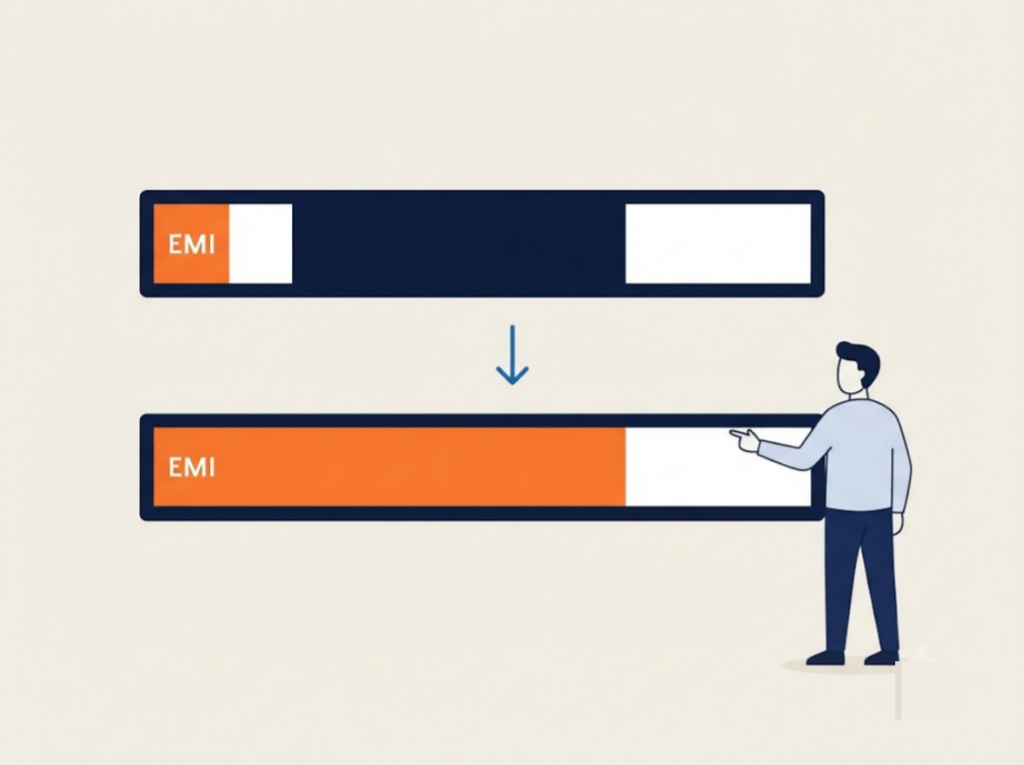
In our example, a new ₹3,00,000 loan moves EMIs from 30.0% to 47.1% of salary.
A common guide says EMIs above 50% of salary are risky; lower is safer.
For digital loans, RBI requires a Key Fact Statement and a cooling-off period of at least one day.
If you struggle to pay, act early, because the options narrow.

Paying Several EMIs and Want One?
FREED’s Loan Consolidation Plan combines multiple loans into one EMI.
Reduce My EMIHow to Manage Debt Wisely
Know your numbers, test every new loan before you take it, and check your debts once a month. That’s how to manage debt wisely, and none of it needs special skills. It needs a few simple rules and a habit you keep.
Here are five rules, in the order to use them.
Write down every debt. List the balance, the interest rate, the EMI (equated monthly instalment) and the due date for each one.
Keep your EMIs at a level your salary can carry. The next sections show how to find that level.
Test any new loan first. Add its EMI to your current EMIs before you say yes.
Read every offer in full. Look at the total you’ll repay, not just the monthly figure.
Review once a month. A short check beats a big clean-up once a year.
Wise doesn’t mean no debt. A home loan, a study loan or a planned purchase can be a sensible choice. What makes debt wise is that you chose it with the numbers in front of you, and you keep watching it afterwards.
Think of it as two jobs. The first is what you do before you borrow, and the second is what you do once you owe. Most people only do the second, and only when something goes wrong. If you do both, you’ll rarely be surprised.
This guide covers responsible borrowing for people who are still paying their EMIs on time. It builds on the basics in our guide to key strategies to manage debt in 2026, and adds a test and a routine on top. If you’re managing debt with a plan, our pillar guide on managing debt with a plan explains where counselling fits in. And if you’re already struggling to pay, skip ahead to the last sections.
First, let’s look at the test to run before you borrow again.
See What Share of Your Salary Goes to EMIs
Check how much of your pay your EMIs take today.
Check My EMI ScoreHow Do You Test a New Loan Before You Take It?
Check the new EMI against your salary before you say yes. A loan can feel small each month and still change the whole month. This test takes about two minutes, and you can run it on any offer.
Here are three steps.
Add the new EMI to your current EMIs. Use the EMI on the offer, and include every card minimum and app loan.
Divide the total by your salary. That’s your EMI share, shown as a percentage.
Check what’s left after essentials. Take your salary, subtract the new EMI total, then subtract rent, food, bills, school fees and transport.
Here’s an illustrative example. The figures are invented, and they aren’t any real person’s numbers.
Item | Before the loan | After the loan |
|---|---|---|
Salary | ₹60,000 | ₹60,000 |
Current EMIs | ₹18,000 | ₹18,000 |
New loan: ₹3,00,000 at 14% for 36 months | none | ₹10,253 |
Total EMIs | ₹18,000 | ₹28,253 |
EMI share of salary | 30.0% | 47.1% |
The new EMI is ₹10,253 a month. Over 36 months, the interest on that loan comes to ₹69,118. So the person pays ₹3,69,118 in all for a ₹3,00,000 loan.
Here’s what the example shows.
The share jumps by 17 points. It goes from 30.0% to 47.1% because of one loan.
A small monthly figure hides a big change. ₹10,253 sounds manageable, and it takes a sixth of the salary.
The test takes two minutes. You can run it before you sign, with a phone calculator.
We aren’t saying 47.1% is safe or unsafe. That depends on your costs and how steady your income is, and we cover that in the next section. What matters is seeing the number before you commit, not after. If you already have several loans and the test shows a tight month, our guide on what loan consolidation means explains one way to bring the monthly figure down.
Want Every Loan and Card on One Page?
See your accounts and balances in plain words before you borrow again.
Check My Credit InsightsHow Much of Your Salary Should Go to EMIs?
There’s no single legal number, only guides. A common guide is to keep EMIs under about half of your salary, and lower is safer. It’s safer still when your salary can change from month to month.
We found no RBI rule that sets a limit like this for borrowers. Banks use their own checks, so ask any bank how it assesses your income and EMIs. If someone tells you a number is “the rule”, ask where it comes from.
Three things move your own safe level.
How steady your income is. A fixed salary lets you carry a higher share than pay that changes with sales, bonuses or contracts.
Your essentials. Rent, school fees, medicines and family support come before any EMI. If they’re high, your limit is lower than the guide.
Whether you have an emergency fund. A small cushion means a surprise bill doesn’t land on a card. Our guide on the importance of an emergency fund explains how to start one.
Go back to the example for a moment. At a ₹60,000 salary, the half-of-salary line is ₹30,000. After the new loan, EMIs are ₹28,253, which is under the line by about ₹1,700. On paper, that passes the common guide.
But the guide is only a ceiling, not a target. A person with rent, school fees and a parent’s medicines may find ₹28,253 too heavy. Someone with no dependants and a steady job may find it fine. Your essentials set your real limit, and the guide only tells you where the edge is.
So treat the guide as a warning light, not a green light. If you’re near it, think twice. If you’re over it, the next step is to look at how to bring the load down. Next, let’s look at the monthly check that keeps you from drifting there.

FREED Expert Tip
Count the EMI share you’d have if your salary fell by a tenth. If that number scares you, your limit is lower than the guide. Check your EMI share in minutes.
Check My EMI ScoreWhat Does a 20-Minute Monthly Debt Check Look Like?
A small monthly habit beats a big yearly clean-up. Problems are cheap to fix in the first month and costly by the sixth. Twenty minutes, once a month, is enough to catch most of them.
Here are five steps.
Open every loan and card and note the balance. Write it in one list, so you can compare it with last month.
Confirm every EMI went through. A failed auto-debit can lead to a late fee, so check each one.
Check that no new charge or fee appeared. Look for processing fees, annual fees, insurance add-ons and late charges.
Note your EMI share of salary. Use the same method as the test above, and write the percentage down.
Decide one thing for next month. It might be paying a bit extra on one card, or pausing a purchase.
Once a year, add a sixth step. Pull your credit report and check it for errors. RBI requires each credit information company to provide individuals with one free full credit report, including their credit score, once per calendar year, on request after identity verification. For how to ask for it, read our guide on the annual credit report.
Now the stop rule. If your EMI share rises two months in a row, act at once, not later. A rising share means something is growing faster than your pay, such as a card balance or a new loan. The sooner you look at it, the more choices you keep.
Keep the check simple and keep it regular. A fixed date helps, such as the first Sunday of the month, or the day after salary comes in. It helps to keep the same notebook or sheet each time, so you can see the trend. For wider habits, read our guide on personal finance habits for a debt-free life, and for cards, our guide on using your credit cards wisely. If you want a simple budget frame, the 50/30/20 budget rule is an easy start.
Next, let’s look at how to read a loan offer.
See Your Whole Debt Picture
Your loans, cards and balances in plain words, with an action plan.
Check My Credit InsightsHow Do You Read a Loan Offer Before You Sign?
Read first, sign after. A loan offer is built to show you the monthly figure, and the rest sits in the fine print. A few minutes of reading can save you thousands of rupees.
Use this checklist on every offer.
The total you’ll repay. Multiply the EMI by the number of months, then compare it with the amount you borrow.
The rate in annual terms. Ask for the annual rate, so you can compare offers fairly.
All fees, including processing. Ask for every charge in writing, and ask when each one is taken.
The late fee. Know what a missed or late EMI costs.
What happens if you pay it off early. Ask whether there’s a charge, and how much.
Under RBI’s Digital Lending Directions, 2025, applicable regulated entities must provide borrowers with a Key Fact Statement (KFS) containing key loan details and applicable charges. Borrowers must also receive the relevant digitally signed loan documents through their registered email address or SMS. The directions provide for a cooling-off period of at least one day, as determined by the regulated entity’s Board-approved policy. During this period, borrowers can exit the digital loan by repaying the principal and proportionate APR, subject to the applicable terms.
RBI’s Pre-payment Charges on Loans Directions, 2025 provide that regulated lenders cannot levy prepayment charges on floating-rate loans to individuals for non-business purposes that are sanctioned or renewed on or after 1 January 2026. For other loan categories, the applicable rules and lender policies may differ. Check the sanction letter and loan agreement for the charges that apply to your loan. We should be clear about what these rules do and don’t cover. They apply to lenders regulated by RBI, such as banks and NBFCs (non-banking finance companies). They don’t cover every loan on offer, and the cooling-off period isn’t a feature of all loans. So don’t assume. Ask each lender what applies, and get the answer in writing.
One more point, if the offer is meant to pay off other debts. Do the same sums first. A new loan to pay off a card only helps if the total cost falls. Our guide on using a personal loan to pay off credit cards shows how to compare.

What the Law Says
Under RBI’s Digital Lending Directions, 2025, a borrower must get a Key Fact Statement before a digital loan, by email or SMS, and a cooling-off period of at least one day. See your accounts before you sign anything new.
Check My Credit InsightsWhich Debt Do You Pay First, and When Do You Save Instead?
Keep it simple. You don’t need a clever system to manage debt wisely, only a short rule you can follow in a hard month. Here it is, in three parts.
Pay every minimum on time. A missed payment costs fees and can hurt your credit report.
Put extra money on the debt with the highest interest rate. Cards and app loans usually cost the most.
Keep a small emergency fund. It stops a surprise bill from sending you back to a card.
If your emergency fund is empty, build a little first. Even a small cushion changes how a bad month feels. Without one, a car repair or a hospital visit goes straight onto a card, and you’re back where you started.
The best order can change with your situation. A person with a very high-rate card and a steady income may put most extra money on the card. A person with an unsteady income may keep more in savings. We aren’t saying one way beats the other for everyone.
For the longer discussion, read our guide on saving versus paying off debt. And for payoff speed, our guide on a clear path to debt freedom goes deeper. Both build on the short rule above.
Next, let’s look at the signs that a routine isn’t enough.
When Is Managing Debt on Your Own Not Enough?
Some signs mean you need more than a routine. A habit works when the numbers are workable. When they aren’t, a habit only shows you the problem more clearly.
Here are the signs.
EMIs above half of your salary. That’s past the common guide, and the gap usually grows.
Paying one loan with another, or with a card. This moves the problem and adds a cost.
Paying only the minimum for months. The balance barely falls, and interest keeps growing.
Missed EMIs. Any missed payment is a reason to act now.
What to do depends on where you are.
If you’re still paying but stretched, a counselling session or consolidation can help. A counsellor can look at your whole picture, and consolidation can bring several loans into one EMI. Our guide on what credit counselling is and how it helps explains what a session covers.
If you’ve missed payments, talk to your bank first. Ask what options it can offer, in writing. After that, FREED’s team can talk through your options with you. Don’t take a new loan to cover missed payments, because that can make the position worse.
If you genuinely cannot repay in full, settlement may come up. Settlement is not something a borrower chooses out of preference. It’s an option of last resort, with real consequences for your credit report and future borrowing. The bank decides, and no result is guaranteed.
Be honest with yourself about which group you’re in. Many people stay in the first group for too long because the next step feels like failure. It isn’t. Our pillar guide explains why managing alone has limits, and when more help makes sense.
Can’t Repay Your Loans in Full?
If you genuinely cannot repay your loans, FREED negotiates with your lenders to settle them for less than 50%* of your outstanding dues.
Settle My LoansHow FREED Helps When Your EMIs Take Too Much
FREED is a company that charges, and it can help when the routine isn’t enough. Over 20 lakh people trust FREED, India’s trusted loan management platform. This section sets out what FREED does, and for whom.
Numbers first. Credit Insights gives you a personalised action plan from your accounts. EMI Score shows what share of your salary your EMIs take. Both help you see where you stand before you decide anything.
For people still paying. If most of your salary goes towards paying multiple EMIs, FREED’s Loan Consolidation Plan helps you combine multiple loans into a single monthly EMI. This can reduce your monthly EMI burden by up to 50%.*
Here’s how it works.
FREED assesses your financial profile.
FREED matches you to a lending partner from its network.
The partner disburses one new loan that pays off your existing eligible unsecured loans and card dues.
FREED handles the process end to end, 100% online.
You’re left with one loan, one EMI and one due date.
Your credit score isn’t hurt by consolidation, and it tends to improve as you pay on time. FREED doesn’t charge you a fee for consolidation. The lending partner’s processing or foreclosure fees may apply, so check the Key Facts Statement. This is only for people who are still paying. If you’ve missed payments, don’t use it.
For people who cannot repay. Settlement is not something a borrower chooses out of preference. If you genuinely cannot repay your loans, FREED negotiates with your lenders to settle them for less than 50%* of your outstanding dues. The bank decides, no percentage is guaranteed, and the process takes time.
Your settlement savings sit in an account in your own name.
Not sure which group you’re in? FREED’s team can assess your situation and tell you what options are available. To see what the first weeks look like, read our guide on what happens when you join a debt relief program.
Rates and ranges shown are indicative. Final terms decided by the bank/lender. FREED is not a Loan Provider. No outcome is guaranteed. Please verify directly with your bank.
Outcomes vary by lender and borrower profile. Settlement terms are decided by the lender. No percentage is guaranteed.
Combine Your Loans Into One EMI With FREED
One monthly EMI instead of several, with the process handled for you.
Get Started on FREED
Mohit Juneja
Mohit Juneja is FREED’s Content & Communication Lead with 12+ years of experience across content, media, advertising and digital communications. He holds a postgraduate diploma in Communications from Xavier Institute of Communications, Mumbai, and has worked with organisations including NDTV, The Indian Express, McCann Worldgroup and NABARD.
At FREED, he leads content and communication across loan management, debt resolution, debt consolidation and financial well-being. His work combines research, storytelling and consumer-focused communication to make complex financial topics easier to understand and act on. He has also scripted and produced 11 documentaries on rural development and agriculture for NABARD, with film's selected for the Mumbai International Film Festival.
mohit.juneja@freed.care

FREED is India's trusted loan management platform. We help India settle their loans, consolidate their EMIs, improve their credit score, and manage their loans better. Over 20 lakh people trust FREED. We have managed more than ₹3,500 crore in loans and saved our users over ₹450 crore.
Media Mentions