Personal Finance Habits to Build for a Debt-Free Life
Debt-free living is not a single decision. It is the accumulation of daily and monthly habits that either move toward financial freedom or away from it. Here are the specific habits that make the difference.

Mohit Juneja
Reviewed by FREED India, Debt Resolution Specialists
 4.7/5
4.7/5 ₹3,200Cr+
 20,000+
 20,00,000+4.7/5₹3,200Cr+20,000+20,00,000+
Key Takeaways

Debt-free living is maintained by a small set of specific, consistent habits rather than by exceptional financial knowledge or high income.
The most important habits are structural (automation, separate accounts, FOIR checks) rather than willpower-based, because structural habits work whether or not any given month has the mental bandwidth for active financial management.
None of these habits require significant income. They require consistency, which is a different thing entirely.
People who maintain these habits across years rarely find themselves in unmanageable debt, because the habits create the conditions that prevent accumulation from reaching the unmanageable level.
For people currently in debt, FREED helps establish the starting point from which these habits can actually work.
What Debt-Free Living Actually Requires
Debt-free living does not mean never borrowing. A home loan is debt. A vehicle loan may be debt. Used well, these are productive obligations that build assets and serve genuine needs.
Debt-free living means not carrying high-interest unsecured debt, specifically credit card balances at 36% to 42% annually and personal loans accumulated for consumption rather than genuine needs, and not allowing any debt to grow to a level that consumes so much income that savings and forward financial movement become impossible.
The habits below are what people who maintain this state over years actually do. None of them are remarkable individually. Together, applied consistently, they create a financial position that is both stable and resilient.
Habit 1: Know the Exact Numbers Every Month
People who stay debt-free know, with reasonable precision, their monthly income, their fixed obligations, their savings balance, and their total outstanding on any current debt.
This does not require elaborate spreadsheets. It requires a monthly 15-minute review of the bank statement, the current balances on any credit products, and the FOIR. The review is brief because the numbers are not a surprise. They have been tracked consistently.
The specific act of knowing the numbers creates accountability that vague financial awareness does not. When the number is known, it is managed. When it is vague, it drifts.
The practical implementation: a recurring calendar entry on the first or second of each month for a 15-minute financial review. Income credited. Obligations cleared. Balance confirmed. Any unexpected charge identified and addressed.
Habit 2: Spend After Saving, Not Before
The most powerful structural change available to any Indian household is reversing the spending sequence.
Default sequence: salary arrives, obligations are paid, spending happens, whatever is left (usually nothing) is considered available for savings.
Debt-free sequence: salary arrives, a defined amount is automatically transferred to savings and investment before any other spending begins, everything else is managed on what remains.
The automation removes the decision from the realm of monthly willpower. A standing instruction set up once ensures the savings happen regardless of whether any given month has the mental bandwidth for financial discipline.
The specific amount should increase with every salary increment. When salary rises by Rs. 5,000, Rs. 1,500 to Rs. 2,000 of that increase goes to increasing the automated savings transfer before lifestyle spending increases. This one practice, applied consistently over years, is the mechanism through which wealth builds.

FREED Expert Tip
The savings account used for this automated transfer should have no debit card linked to it and should require a deliberate transfer to access. Money that requires active effort to spend is money that does not get spent on impulse. The friction is the protection.
Talk to FREED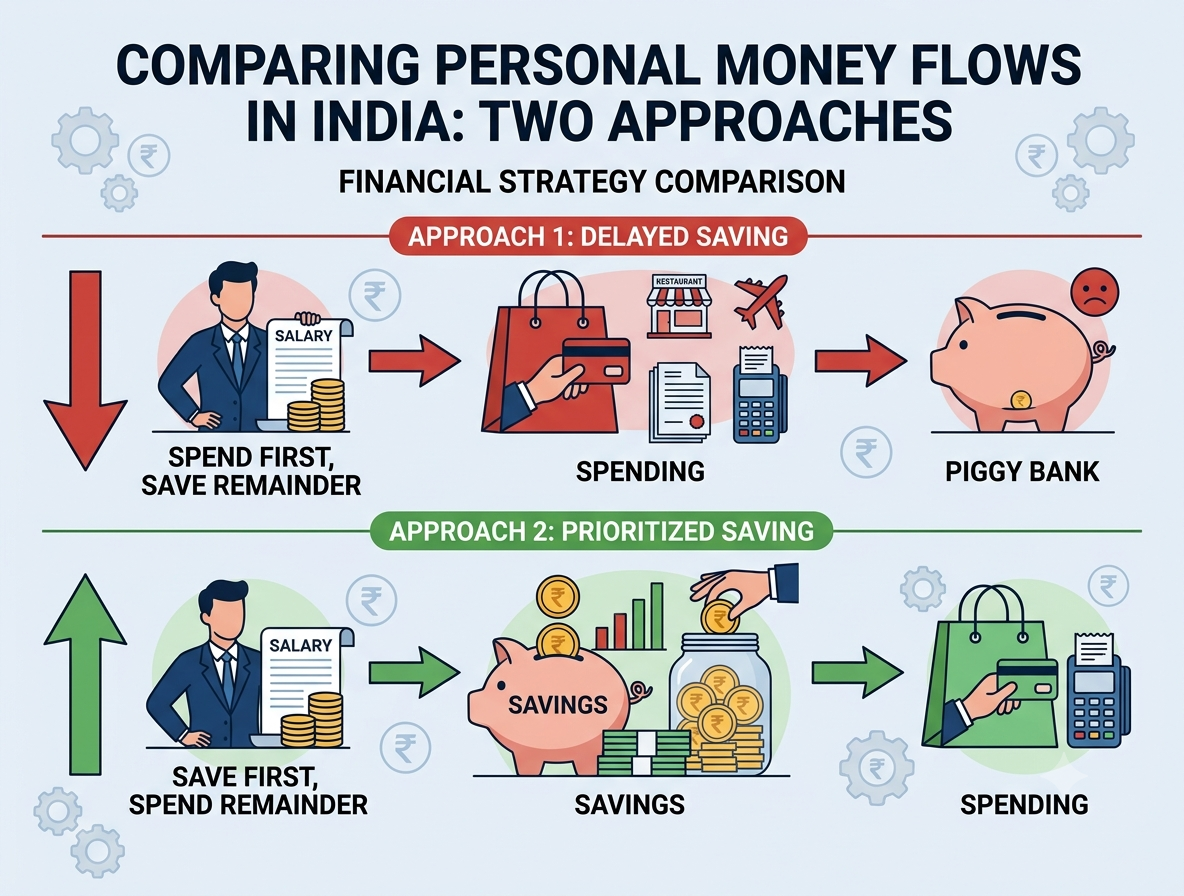
Habit 3: Maintain an Emergency Fund Permanently
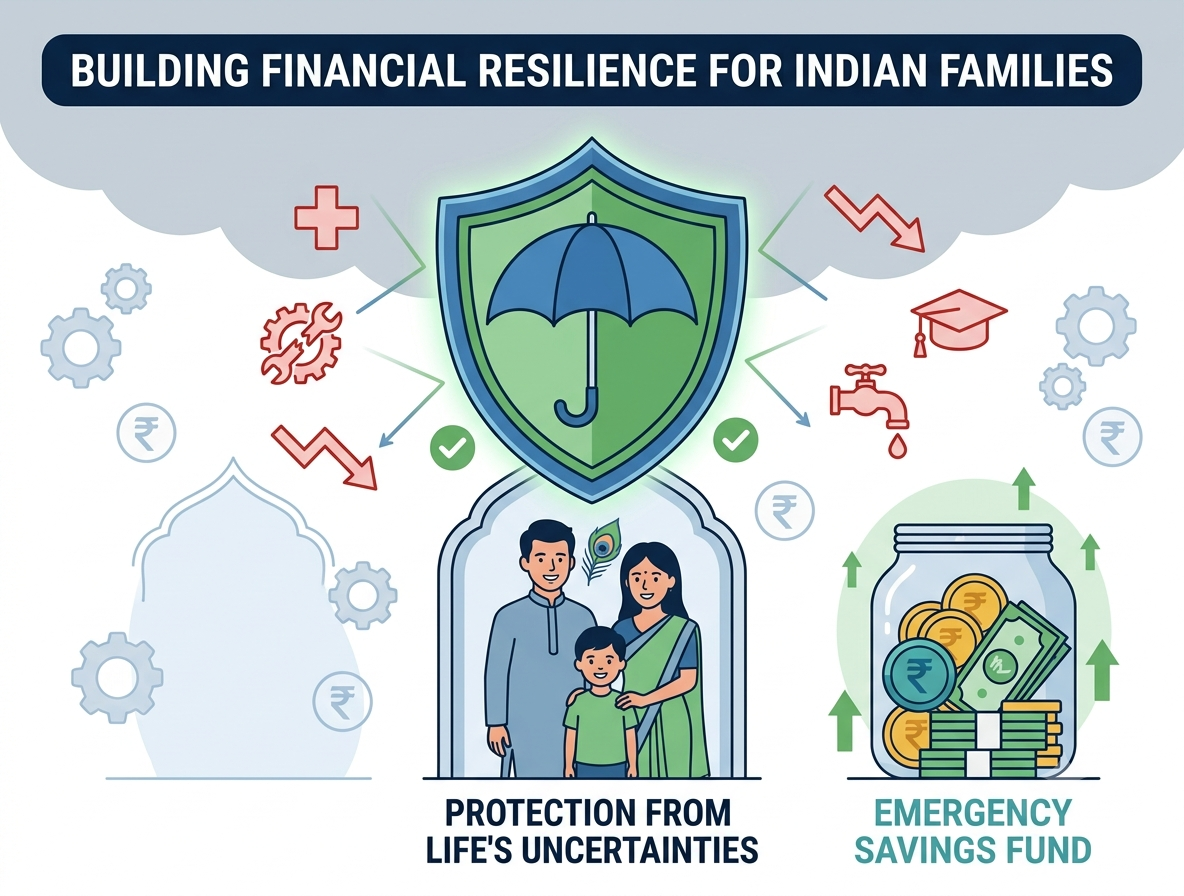
An emergency fund is not a savings goal to be achieved once and then depleted at the next disruption. It is a permanent financial feature that is maintained at its target level regardless of whether it was recently used.
When the emergency fund is used, the first financial priority of the next three to six months is replenishing it to the target level before any lifestyle increase or new discretionary spending.
The target: three months of total monthly expenses in a separate, accessible account. For most Indian urban households, this is Rs. 75,000 to Rs. 2,00,000 depending on the expense level.
The emergency fund is what prevents every unexpected event from creating new debt. Without it, a medical bill, a vehicle repair, or a month of reduced income creates a credit card charge or a personal loan, which raises the total monthly obligation, which reduces the margin for savings, which makes the next emergency more likely to require borrowing. With the fund in place, the same event is absorbed without any of these consequences.
This is the single habit that most consistently separates people who stay debt-free from those who cycle back into debt.
Habit 4: Pay the Full Credit Card Bill Every Month
Not the minimum. Not a large-but-not-full amount. The complete outstanding balance, every billing cycle, before the due date.
This single habit eliminates the entire category of high-interest revolving credit card debt. A credit card paid in full every month costs nothing in interest, builds positive CIBIL history, and earns rewards. The same card managed through minimum payments costs 36% to 42% annually, keeps the CIBIL score suppressed through high utilisation, and produces a compounding balance that can persist for years.
The implementation: automate the full outstanding balance through auto-pay if the bank allows it. If not, set a phone calendar reminder seven days before the due date to verify the account balance covers the full outstanding and initiate the payment.
If the full balance is not clearable in a given month because of an exceptional large purchase, the target is to clear the exceptional portion over the next one to two billing cycles before the interest compounds significantly.
Habit 5: Check FOIR Before Every New Commitment
Before taking any new loan, any new credit card, any new EMI through BNPL or consumer durables, calculate the post-commitment FOIR.
Add the new monthly commitment to all existing monthly fixed obligations. Divide by net monthly income. Multiply by 100. If the result exceeds 40%, do not take the commitment. Defer it until income grows or an existing obligation is cleared.
This one check, applied consistently, prevents the gradual accumulation of fixed obligations that is the most common path to over-leverage. Each individual commitment feels manageable. The aggregate becomes the problem.
People who stay debt-free do this check automatically, as a default response to any new borrowing or EMI conversation, before any other evaluation. The FOIR check is the gate.
Habit 6: Review Auto-Debits Quarterly
Subscriptions, app memberships, digital services, insurance premiums on policies no longer actively needed, and various other auto-renewing charges accumulate silently in the monthly financial picture. Each individual charge is small. Together, they may represent Rs. 2,000 to Rs. 5,000 per month in spending that provides no active value.
A quarterly review of every auto-debit on the bank account takes 30 minutes and consistently reveals two to four charges that were either forgotten or provide no current value. Cancelling these is permanent savings with zero impact on quality of life.
The specific implementation: every three months, pull the previous month's bank statement, identify every recurring charge, and apply the same question to each: "Am I actively using this? Would I miss it if it were gone?" Cancel those that fail the test.
Habit 7: Make Debt Repayment Decisions Based on Interest Rate, Not Emotion
People who stay debt-free understand one principle that shapes every debt repayment decision: the highest-interest obligation is the highest priority, regardless of which feels most psychologically urgent.
A Rs. 30,000 credit card balance at 40% annual interest costs significantly more in total interest than a Rs. 1,50,000 home loan remaining. The natural impulse may be to pay down the large home loan balance. The financially optimal action is to clear the small credit card balance first.
The debt avalanche, directing every available rupee above minimum payments toward the highest-interest obligation, is mathematically optimal and produces the fastest total debt clearance for any given monthly surplus. It requires overriding the emotional instinct to address the largest balance first.

Legal Note
Under RBI guidelines, banks are required to provide a clear amortisation schedule showing the principal and interest component of each EMI when requested. If a prepayment is made, the borrower is entitled to know whether it has been applied to principal reduction or future EMI payments. Always request confirmation that a prepayment has been applied to principal.
Know your rights as a borrowerHabit 8: Delay Large Purchases Deliberately
A purchase threshold, above which a defined waiting period applies before buying, prevents both impulse accumulation and debt from lifestyle inflation.
The threshold and waiting period should match the household's financial position. A useful starting point: for any unplanned purchase above Rs. 5,000, wait 30 days. For any purchase above Rs. 20,000, calculate the post-purchase FOIR and confirm the emergency fund would not be depleted.
People who stay debt-free consistently report that most large purchases they delayed were either not made (the desire passed) or made under better circumstances (a planned budget allocation rather than an impulse funded by credit). The waiting period does not prevent buying. It prevents buying without deliberation.
Habit 9: Talk About Money Openly in the Household
One of the least discussed and most impactful debt-prevention habits is the simple practice of financial transparency within the household.
When spending, saving, and borrowing decisions are made by one person without the other's knowledge, financial problems accumulate in silence until they are too large to ignore. When both partners know the full financial picture, including income, obligations, savings, and FOIR, decisions are made with shared understanding and shared accountability.
Monthly or quarterly household financial conversations, a structured discussion of where things stand and what the priorities are, are the practice of people who manage household finances well together. The conversations are not about blame or shame. They are about shared information and shared direction.
Habit 10: Review the Financial Picture Annually
Once per year, a more comprehensive review than the monthly 15-minute check: the full financial picture including savings rate, investment performance, insurance coverage, estate documents (nominations on all financial products), and any changes needed to the monthly financial structure.
This annual review catches the things that the monthly review does not: insurance that needs updating after a salary change, investment allocation that needs rebalancing after significant market movement, EPF nominations that have not been updated, or savings accounts that have accumulated without a defined purpose.
People who stay debt-free consistently report that this annual review is where they make the structural decisions that maintain the financial position they have built.
When Habits Are Not Enough
For people currently carrying significant debt, particularly with FOIR above 55%, these habits cannot be implemented from a position of financial stability. The debt structure itself prevents the emergence fund from being maintained, the full credit card bill from being cleared, and the monthly savings transfer from being meaningful.
In this situation, the right starting point is not building habits on top of unmanaged debt. It is addressing the debt first, creating the financial breathing room where these habits can actually take hold.
FREED's Debt Consolidation Programme combines multiple obligations into one lower monthly payment, reducing FOIR to a level where Habit 2 becomes possible. FREED's Debt Resolution Programme settles outstanding dues for less than the full amount, eliminating those obligations from the budget.
After the debt is resolved, the habits above are what maintain the debt-free state. They are the second chapter. FREED helps make the first chapter possible.
Are You in a Loan Trap? Quick Check
Move the slider to your total EMIs as a % of monthly salary. See your debt stress level instantly.
EMIs as % of Monthly Salary

Mohit Juneja
Mohit Juneja writes educational content at FREED on debt management, credit scores, loan repayment, and borrowing best practices. His content is shaped by expert insights and industry knowledge, helping readers better understand their financial options and make informed decisions.
mohit.juneja@freed.care

FREED is India's trusted loan management platform. Founded in 2020 and headquartered in Gurugram, FREED has counselled 20 lakh+ people on personal loans, credit cards, and app loans. FREED charges fees only on successful settlement, not upfront. FREED does not handle secured loans (home loans, car loans, gold loans).
Media Mentions