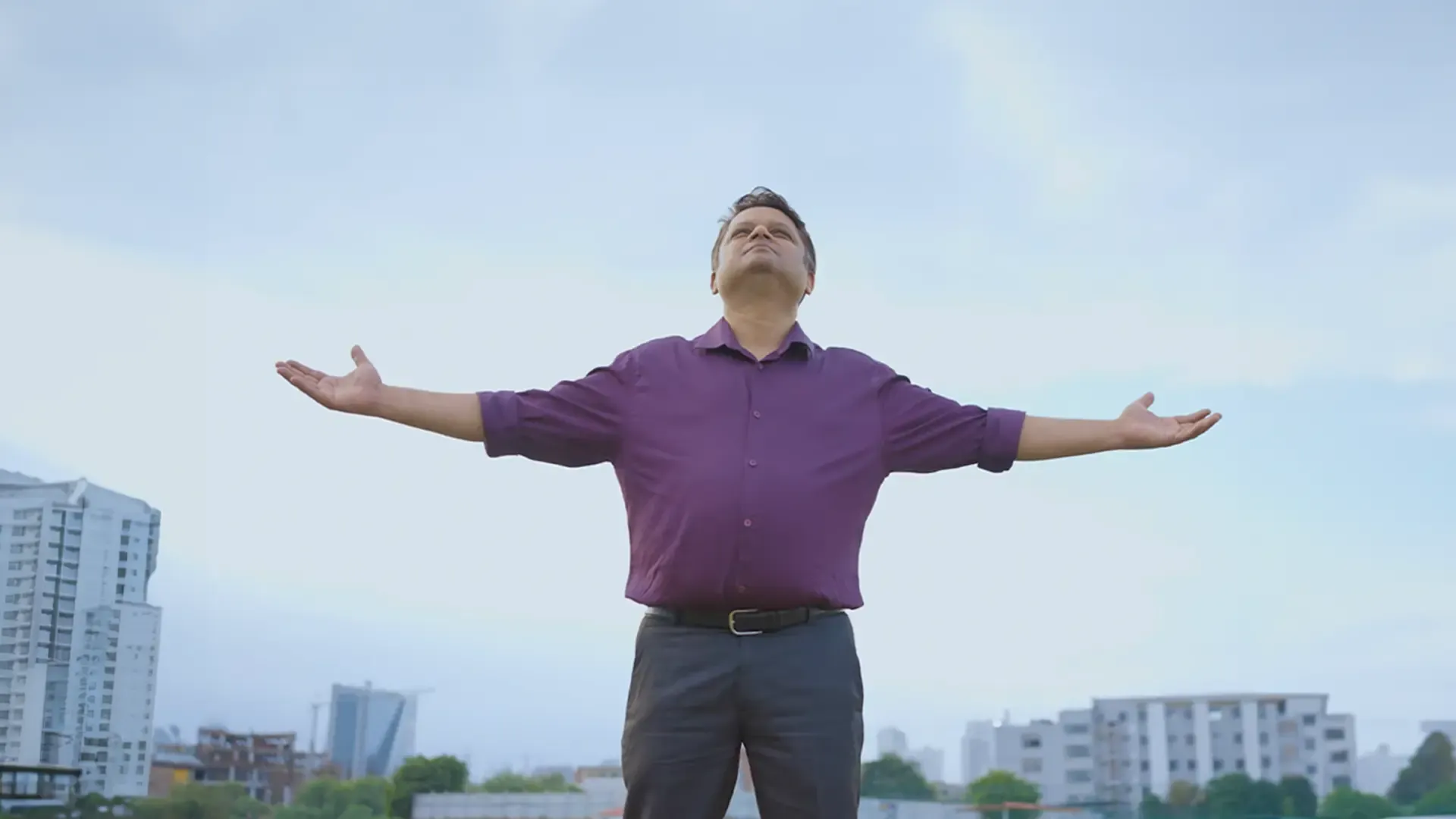
Freedom from Debt: A Reality or a Dream?
For someone who has been carrying debt for months or years, the idea of being completely debt-free can feel like something that happens to other people. This article addresses that feeling directly. Freedom from debt is real. It is not fast or easy. But it is achievable, and this is what it actually looks like.

Mohit Juneja
Reviewed by FREED India, Debt Resolution Specialists
 4.7/5
4.7/5 ₹3,200Cr+
 20,000+
 20,00,000+4.7/5₹3,200Cr+20,000+20,00,000+
Key Takeaways

Freedom from debt is not a fantasy. Over 60,000 Indians have achieved it through FREED alone, and millions more through their own effort and structured support.
The feeling that it is impossible is one of the most predictable effects of being in debt, produced by sustained financial stress reducing the brain's ability to imagine a different future.
The journey is not instant and it is not painless, but it is finite. There is an end date, and that date is calculable from the starting point.
What separates people who achieve debt freedom from those who do not is almost never income or intelligence. It is the decision to start and the consistency to continue.
FREED exists specifically to make the journey shorter, more structured, and less painful than attempting it alone.
Why Freedom from Debt Feels Like a Dream
When someone has been carrying significant debt for a long time, something specific happens to how they think about the future.
The sustained stress of unmanageable debt, the recovery calls, the monthly statements showing balances that have barely moved, the sense of obligations consuming income before it can be used for anything else, produces a psychological state in which the future genuinely looks different. It looks closed. It looks like more of the same. It looks like the debt will always be there, because it always has been, and every month confirms it.
This is not pessimism or weakness. It is the documented effect of chronic financial stress on the brain's ability to imagine possibility. Research consistently shows that people under sustained financial pressure have reduced access to what psychologists call prospective thinking, the ability to imagine and plan for a future that is different from the present.
The result is that many people in debt do not pursue debt freedom not because they do not want it, but because they genuinely cannot imagine reaching it. The goal feels too distant to motivate action. The journey feels too long to start.
Understanding this is the first step to overcoming it. The feeling that freedom from debt is impossible is a symptom of the debt, not an accurate assessment of reality.
The Evidence That It Is Real
FREED has helped over 60,000 Indians become debt-free. The We the FREED section of the FREED website carries their stories, in their own words, in Hindi, Tamil, Telugu, and English. Business owners whose businesses failed during COVID-19. Parents who borrowed for medical emergencies that became catastrophic. Professionals who accumulated credit card debt through lifestyle spending and found themselves trapped in the minimum payment cycle. People who had been told, including sometimes by themselves, that their situation was too far gone to fix.
They are debt-free now. Not hypothetically. Not approximately. Completely.
The debt that felt permanent was not. The situation that felt impossible was not. The recovery agent calls that felt like they would never stop have stopped. The monthly statements that used to be sources of dread are now unremarkable.
This is the reality of debt freedom. It is not loud or dramatic when it arrives. It is quiet and solid. The absence of a weight that had been so consistently present that its absence takes time to believe.

FREED Expert Tip
The stories on FREED's We the FREED page are real accounts from real clients, unedited and in their own voices. They are not marketing copy. They are the best available evidence for what debt freedom actually looks like, what it took to get there, and what changed when it arrived. Reading them before making a decision about whether to seek help is worth the time.
Talk to FREEDWhat the Journey Actually Looks Like
Freedom from debt does not look like a sudden release. It looks like a sequence of months in which something is happening even when progress is not immediately visible.
For people going through FREED's Debt Resolution Programme, the journey has four phases. The first is assessment and enrolment, in which the full situation is mapped and a monthly contribution amount is established. The second is saving, in which contributions build in the Special Purpose Account while FREED begins formal creditor contact. The third is negotiation and settlement, in which accounts are settled one by one as the fund reaches the threshold for each. The fourth is completion, in which the last account is settled, the documentation is in hand, and the programme is done.
The timeline is specific from the start. Clients know their expected end date. They know which account will be settled first and approximately when. They know what the monthly contribution is and why. The journey has a map, and the map has a destination with a date on it.
This specificity is itself part of what makes the journey achievable. Debt freedom as a vague aspiration is motivationally weak. Debt freedom as a specific date, 24 months from now, the last account settled by March 2027, is something a person can orient toward and sustain effort for.
Are You in a Loan Trap? Quick Check
Move the slider to your total EMIs as a % of monthly salary. See your debt stress level instantly.
EMIs as % of Monthly Salary
The Moment It Becomes Real
Most FREED clients describe a specific moment when the journey became real, not the date the programme ended, but a moment somewhere in the middle of it.
For some, it is the day FREED takes the first recovery agent call on their behalf and they realize they do not have to answer alone anymore. For others, it is the letter arriving confirming the first account has been settled, the first debt that is gone permanently, not restructured or deferred but resolved. For others, it is a night when they sleep through without waking to the specific anxiety that has been disrupting sleep for months or years.
These moments are different for different people. They share a common quality: the first tangible evidence that the future is going to be different from the present. That the debt, which felt permanent, is actually finite. That the journey, which felt impossible, is actually in progress.
That moment does not arrive at the beginning of the programme. It arrives somewhere in the middle, as the process produces its first visible results. But it arrives. For every client who stays in the programme consistently, it arrives.

Legal Note
The middle of a debt resolution programme is the hardest phase psychologically. The early relief of having a plan has faded, and the visible results of settlement have not yet arrived. This is the phase where most people who exit programmes do so, not because the programme is failing, but because progress is happening in ways that are not immediately visible. Knowing this in advance, and having a relationship manager who communicates what is happening behind the scenes, is what makes the difference between completing the journey and stopping before it ends.
Know your rights as a borrowerWhat Life Looks Like After Debt
The clients who have completed FREED's programme describe the after differently from how they imagined it while in debt.
Most expected to feel euphoric. The actual experience is quieter. The absence of the weight is profound, but it reveals itself gradually rather than all at once. Sleep improves. Appetite returns. Conversations at home become lighter, because the unspoken tension that debt had been producing, even when it was not being discussed directly, has lifted. The phone rings and the stomach does not tighten.
Decisions that were previously impossible become possible. The job change that was not pursuable because the monthly EMI obligation required the current salary becomes pursuable. The family visit that was declined because it involved spending becomes possible. The future, which had contracted to the next statement date, begins to extend forward again.
There are consequences that persist. The CIBIL score is lower than it was before the debt situation began. The "Settled" remark on the credit report remains for up to 7 years from the date of first default. New credit applications are more difficult in the near term. These are real costs of having resolved debt through settlement rather than full repayment.
But they are costs that diminish over time, as positive financial behaviour rebuilds the credit profile, as FREED's credit rebuilding support helps navigate the right steps at the right time. And they are costs that most people who have experienced both, the ongoing deterioration of unresolved debt and the temporary credit limitations of resolved debt, describe as dramatically preferable.
The One Thing That Determines Whether It Happens
Over 60,000 clients. Different income levels, different debt amounts, different creditors, different life circumstances. The one thing that most reliably determines whether a person reaches debt freedom is not income. It is not the size of the debt. It is not which creditors are involved.
It is the decision to start.
Not the decision to investigate. Not the decision to think about it. The decision to start. The call to FREED. The first consultation. The honest assessment of the situation. The enrolment into a programme that has a specific end date.
Every person who has become debt-free through FREED made this decision at a moment when debt freedom still felt like a dream. They did not start because they could see the end clearly. They started because they decided the dream was worth pursuing even without certainty about the outcome.
The decision to start is available to anyone. It does not require a minimum income. It does not require a perfect credit score. It does not require having all the information in advance. It requires a phone call to FREED, which is free, and an honest conversation about the situation, which is judgment-free.
Freedom from debt is a reality. It is available. The only question is whether the decision to pursue it is made today, or later, when the situation has had more time to worsen.

Mohit Juneja
Mohit Juneja writes educational content at FREED on debt management, credit scores, loan repayment, and borrowing best practices. His content is shaped by expert insights and industry knowledge, helping readers better understand their financial options and make informed decisions.
mohit.juneja@freed.care

FREED is India's trusted loan management platform. Founded in 2020 and headquartered in Gurugram, FREED has counselled 20 lakh+ people on personal loans, credit cards, and app loans. FREED charges fees only on successful settlement, not upfront. FREED does not handle secured loans (home loans, car loans, gold loans).
Media Mentions