Best Way to Get a Consolidation Loan: 5 Steps
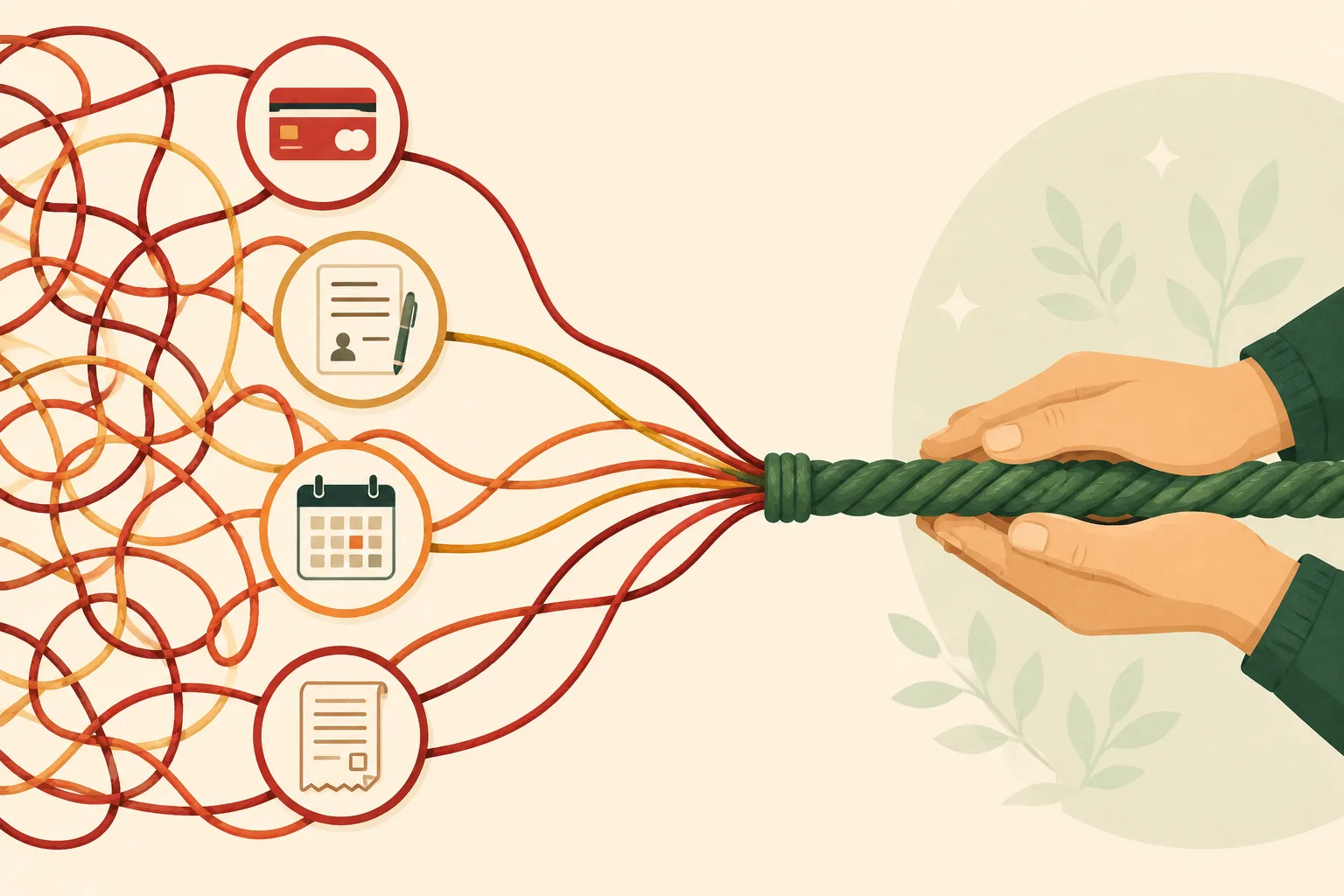
The best way to get a consolidation loan is to follow five steps in order: count your debts, check your credit report, choose the right borrowing option, compare offers and apply carefully. This may suit borrowers who can manage repayments but want one EMI.

Mohit Juneja
Reviewed by FREED India, Debt Resolution Specialists
 4.7/5
 ₹3,200Cr+
 20,000+
 20,00,000+4.7/5₹3,200Cr+20,000+20,00,000+
Key Summary

The best way to get a consolidation loan is five steps, done in order.
Check your free credit report first. Fix errors before you apply.
Fees come out of the loan, so you may fall short of paying every old debt.
Apply once, with care. Many applications can hurt your chances.
Make sure each old account is really paid off.
What Is the Best Way to Get a Consolidation Loan?
Many people rush to apply. They see an ad for one low EMI and tap the button. Then they get a rejection, or an offer that costs more than they thought.
The best way to get a consolidation loan is slower at the start and faster at the end. You prepare first. Then you apply once. The order of the steps matters as much as the steps themselves.
Here are the five steps:
- Add up what you owe and what you pay. Know your numbers.
- Check your credit report. Fix errors before a lender sees them.
- Pick the right route. A personal loan, a balance transfer or a top-up.
- Compare offers and plan for fees. Make sure the money is enough.
- Apply once and check the payoff. Confirm each old account is paid off.
This path is meant for people who can still repay. You may be paying every EMI (your fixed monthly payment) on time, but the dates and rates are hard to manage. Debt consolidation puts many debts into one loan with one EMI. It does not reduce what you owe.
If you have already missed several EMIs, this path may not fit. We cover that in a later section, and you can also talk to FREED’s team.
Other posts cover parts of this topic. Our guide on how to get approved for a debt consolidation loan explains what lenders look for. Our post on how to apply for debt consolidation covers the application itself. This guide puts the steps in order, and it shows a trap that many people miss: the fee that comes out of the loan before you get the money.
For the basics, read our pillar guide on what loan consolidation is.
Let us begin with Step 1.

Step 1: Add Up What You Owe and What You Pay
Start with a simple sheet. A notebook page works. You do not need a computer.
For each loan and card, write down five things:
- The lender’s name.
- The balance you still owe. Use the figure on your latest statement.
- The interest rate. Cards often charge a high rate, so check it.
- The months left. For a card, write how long you would take at today’s payment.
- The monthly payment.
Now add up the balances. This is the amount a new loan needs to cover. Add up the monthly payments too. This is what you pay each month today.
Then do one more sum. For each debt, multiply the monthly payment by the months left. Add these up. This is your base figure. It is what you will pay in total if you change nothing.
You will use the base figure in Step 4. A new loan helps in money terms if it beats this number. It can also help if a lower monthly payment is worth the extra cost to you. Either way, you should know which one you are choosing.
Write down the due date of each payment as well. This shows why juggling feels hard. Dates spread across the month are a common cause of late fees.
Be careful about one thing. Use the payoff amount, not just the balance on the statement. The payoff amount includes interest up to the day you pay. Ask each lender for it in writing.
Some old loans may also charge a fee for early payoff. Note that on your sheet next to the loan. RBI has barred such charges on many new floating-rate personal loans, but older and fixed-rate loans can differ, so ask each lender.
This step takes less than an hour. But it makes every later step easier.
Step 2: Check Your Credit Report Before You Apply
Lenders look at your credit report. You should look at it first. A wrong entry can cost you an approval or a good rate.
Under the RBI (Credit Information Companies) Directions, 2025, each credit information company must provide an individual with one free full credit report, including the credit score, once during a calendar year. The report can be requested electronically, subject to the prescribed authentication process.
Read the report with your sheet from Step 1. Check these points:
- Every loan on your sheet appears on the report.
- The balances are close to what you owe.
- No loan you do not know appears. If one does, it may be a mistake or a sign of misuse.
- Payments you made on time are not shown as late.
- Paid-off loans show as paid off.
If you find an error, ask the lender and the bureau to correct it. Send a short written note with proof, and keep a copy. RBI’s rules expect a complaint to be resolved within 30 calendar days of filing, and they provide for ₹100 a day in compensation if it is not. Still, data updates in cycles, so a fix can take a few weeks to show. Plan for that. Do not apply the same day you raise a dispute.
Consider postponing unnecessary credit applications while preparing for consolidation. Multiple recent credit enquiries may influence a lender’s assessment, although the impact depends on the lender’s criteria and your overall credit profile.
Do not worry if the score is not perfect. We do not set a score you must have. Each lender has its own view. Your goal here is a clean, correct report.
Want help reading your score? FREED’s Credit Insights is open to everyone. It shows your Experian credit report and what is pulling it down, with step-by-step actions to improve it. The report refreshes monthly.
For a deeper look at what lenders check, read our guide on how to qualify for a consolidation loan.

What the Law Says
Each credit bureau must give you one free full credit report, including your score, once in a year (January to December), under the RBI (Credit Information Companies) Directions, 2025.
Check My Credit InsightsStep 3: Pick the Right Route for Your Debts
There is more than one way to consolidate. The right route depends on what you owe and what you own.
| Your situation | A route that may fit | Watch out for |
|---|---|---|
| Several personal loans and card dues, no property involved | A personal loan that pays them all off | Fees, and a longer tenure that raises total cost |
| Mostly one or two card balances | A balance transfer to a new card or loan | The low rate may last only for a set period |
| You own a home and want a lower rate | A top-up or a loan against property | Your property is at risk if you cannot pay |
| Many small loans from apps and BNPL dues | A personal loan, or a matched consolidation program | Apps with hidden charges. Read all terms |
A personal loan is the most common route for people with mixed unsecured debt. It has no security behind it and a fixed end date.
Be careful with the secured route. A lower rate looks good. But if you miss payments, the lender can act on your property. Many careful borrowers choose not to risk their home for a consolidation loan.
Also think about who is giving the loan. A bank, a finance company and an online platform all have different rules. Ask for the lender’s name and registration details in writing, and check them on RBI’s website.
Some services match you with a lender. They look at your profile and find an offer that fits. This can save you time. Ask how they are paid and what the total cost is.
Our post on the types of debt consolidation explains each route in more detail. If your debt is mostly on cards, read about personal loan balance transfer.
Whatever route you pick, choose a tenure you can keep. A shorter tenure costs less in total but raises the EMI. A longer one eases the EMI but costs more.
Pick one route and one or two lenders to compare. Too many options will slow you down.
Not sure which route fits your debts?
See how one consolidation plan could work for your loans.
Compare My OptionsStep 4: Compare Offers and Plan for Fees
Now compare offers. Look at four things: the rate, the tenure, the total amount you will repay, and the fees.
Here is a trap that many people miss. A lender often takes its fee out of the loan before sending the money. So the amount that reaches your old lenders is less than the loan amount.
Here is an illustration. It is not a real case, and all figures are examples. You need ₹3,00,000 to pay off your old debts. For illustration, assume a processing fee of 2% and GST of 18% on that fee. The combined deduction would be 2.36% of the loan amount. Actual charges and applicable taxes may vary by lender.
| If you borrow | Fee taken | Money you receive | Result |
|---|---|---|---|
| ₹3,00,000 | ₹7,080 | ₹2,92,920 | ₹7,080 short. One old debt stays open |
| ₹3,07,251 | ₹7,251 | ₹3,00,000 | Enough to clear every debt |
If you borrow ₹3,00,000, you are short by ₹7,080. You would still have a small debt open. You would pay that from your pocket, or leave a late fee building.
If you borrow ₹3,07,251, you receive what you need. But the loan is bigger. At 16% for 36 months, the EMI goes from ₹10,547 to ₹10,802. The total repaid goes from about ₹3,79,696 to about ₹3,88,873. That is about ₹9,177 more.
So the fee has a real cost. Count it.
Rates and ranges shown are indicative. Final terms decided by the lender. FREED is not a Loan Provider. No outcome is guaranteed. Please verify directly with your lender.
Ask each lender for the Key Facts Statement. RBI asks lenders to give it before you sign the loan contract. It shows the rate, the fees, the APR (the all-in yearly cost) and the repayment schedule. It also stays valid for at least three working days, so you can compare without pressure. Then ask the lender one question: “How much money will reach my old lenders after all fees?”
Compare the answers side by side. The offer with the lowest rate is not always the one that clears all your debts for the least money.
Our post on the debt consolidation calculator can help you test your own numbers.
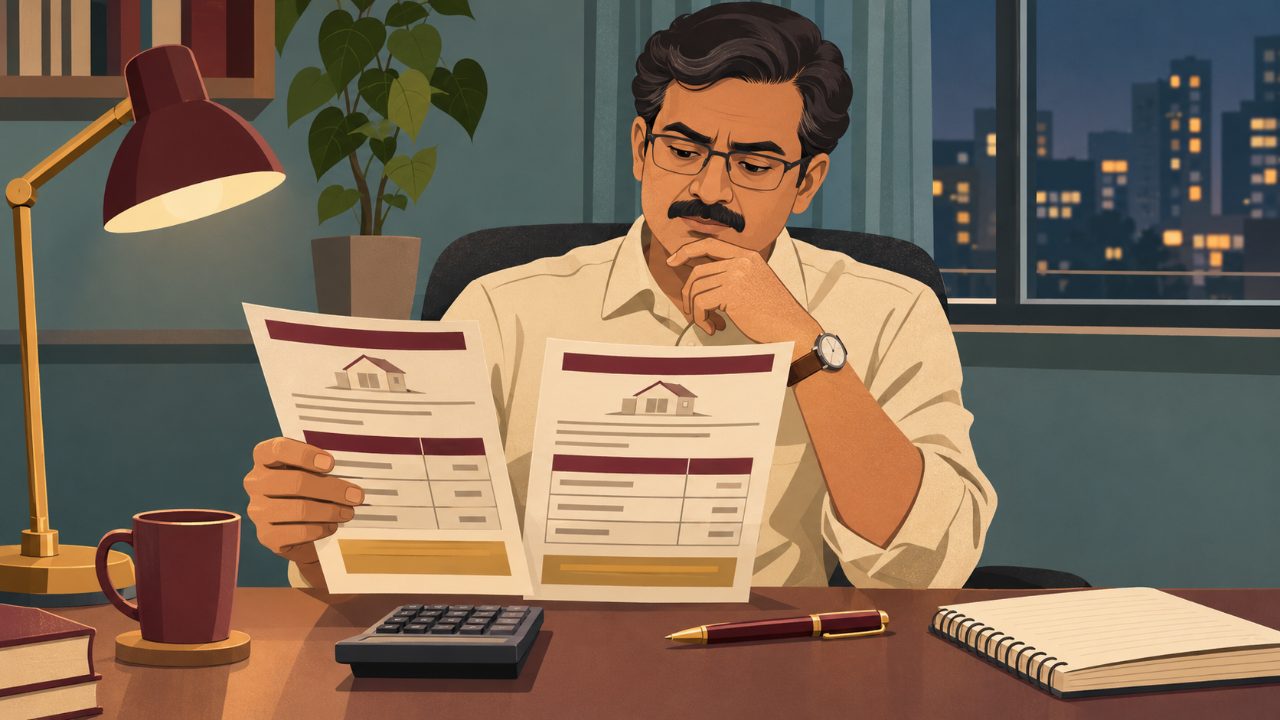

FREED Expert Tip
Ask the lender how much money will reach your old lenders after all fees.
Plan My ConsolidationStep 5: Apply Once and Make Sure Old Loans Are Paid Off
You are now ready to apply. Apply to the one lender you chose. Do not send many forms at once. A formal loan application may result in a credit enquiry being recorded on your report. Several enquiries within a short period may affect how some lenders assess your application, so compare the terms first and apply selectively.
Some lenders and platforms show an offer range after a light check. Ask first whether it is a soft check or a full application. Give your consent only when you know.
Fill in the form with care. Your name, income and address must match your papers. A small mismatch can lead to a rejection.
Once you are approved, read the full agreement. Do not sign a blank page. Match the figures to the Key Facts Statement.
Now the most important part. Make sure the old loans are really paid off. Use this checklist:
- Prefer direct payment. Ask the lender to pay your old lenders itself. This stops the money from being spent by mistake.
- Keep the payoff letters. Ask each old lender for a closure letter once the account is paid off.
- Keep paying until you see proof. Do not stop an old EMI until the lender confirms the payoff.
- Stop standing instructions on old accounts. Cancel any auto-pay so money is not taken twice.
- Check your credit report. Look a month or two later. Each old account should show as paid off, with a nil balance.
If the lender sends the money to you, pay the old lenders the same day. Do not wait.
Then set up auto-pay for the new EMI. One missed payment on a new loan is a poor start.
Set yourself a follow-up date, about six to eight weeks after payout. On that date, open your credit report and your closure letters side by side. If any old account still shows a balance, write to that lender with your payoff proof.
If you want to see the full flow, read our guide on how to consolidate debt into one payment.
Want to confirm your old accounts closed?
See your credit report and open accounts in one place.
Check My Credit InsightsWhat Documents Do You Need for a Consolidation Loan?
Keep your papers ready before you apply. It saves time and avoids delays. Lists differ by lender, but these are common.
About you:
- A photo ID and an address proof.
- Your PAN card.
- Recent passport-size photos, if asked.
About your income:
- Salary slips for the last few months, if you are salaried.
- Bank statements, often for the last three to six months.
- Income tax returns or business papers, if you are self-employed.
About your debts:
- A recent statement for each loan or card you want to pay off.
- A payoff letter or foreclosure letter from each lender, if asked.
- Your credit report, if the lender wants a copy.
Make sure your name, address and phone number match on all papers. A mismatch is a common reason for delay.
Keep digital copies on your phone. Many lenders now take papers online. Never send your papers to someone who asks on a call or an unknown chat app. Use only the lender’s official site or app.
Never pay a fee to get a loan “approved”. A real lender shows every fee in the Key Facts Statement, and takes it from the loan or after approval. A request for money before approval is a warning sign.
If you are self-employed, expect more questions about your income. Keep your tax papers and bank statements in order.
To see where to apply and what to ask, read where to apply for a debt consolidation loan.
See how much of your take-home pay your EMIs take
Before you apply, see how heavy your EMIs really are. FREED’s EMI Score compares your EMIs with your take-home pay, against the 50% pointer, which is FREED’s rule of thumb and not an RBI rule. Results are indicative. Your lender statements are the final word.
See My EMI LoadWhat Helps You Stay on Track After the Loan?
Getting the loan is only half the work. The other half is staying clear of new trouble. These habits help.
- Set up auto-pay. Link the new EMI to your bank account, and keep enough balance on the due date.
- Keep your cleared cards for emergencies. Do not use them for new spending. If a card is a temptation, put it away.
- Build a small buffer. A small emergency fund helps you avoid a new card bill.
- Make a simple monthly budget. Write your income, your EMI and your must-pay costs. Spend the rest with care.
- Check your report in a few months. See that the new loan and the paid-off accounts show correctly.
- Pay extra when you can. Ask first whether the lender charges a fee for part payment.
Keep your promise to yourself too. The loan clears your old debt. It does not clear the habit that built it. If bills keep running ahead of income, look at the cause. It may be a low income, a medical cost or a family need. A plan for that cause helps more than any loan.
Consistent, timely repayments and lower credit card utilisation may support a healthier credit profile over time. However, a credit score depends on several factors, and improvement is not guaranteed or immediate.
Also keep all your papers in one folder. Keep the loan agreement, the Key Facts Statement, the payoff letters and the receipts. You may need them later.
If something goes wrong, speak to the lender early. A call before a missed payment is better than a call after it.
For more on the risks, read our post on the disadvantages of debt consolidation.
Not Sure Which Option Fits Your Loans?
Open the FREED app, add your loans and see which plan fits your situation.
See My Options on FREEDWhat Can You Do If Your Consolidation Loan Is Rejected?
A rejection feels bad. But it gives you information. It tells you what to work on.
Try these steps:
- Ask for the reason. Request it in writing, if you can.
- Check your credit report again. Look for errors, old overdue amounts or too many recent enquiries.
- Wait before you reapply. Applying again right away can leave more marks. A few months of on-time payments can change the picture.
- Lower your card balances. This helps your report and your chances.
- Ask for a smaller loan. Clearing only your costliest debts may be easier to get.
- Check your papers. A mismatch in name, income or address can cause a rejection.
Start with Credit Insights. It shows your Experian credit report and gives step-by-step actions.
Do not take a loan from an unknown app or agent who says no papers are needed. These offers often hide high costs.
What if you have missed several EMIs, or repaying has become very hard? In that case, a standard consolidation may not be open to you. Talk to FREED’s team. They can look at your whole situation and explain the options that fit. You do not have to work it out alone.
One more point. A rejection is not a verdict on you. Lenders decide on many things, and each has its own view. Use the reason you are given as your list of things to fix.
Our guide on how to get approved for a debt consolidation loan has more on what lenders look for.
How Does FREED Help You Get a Consolidation Loan?
FREED’s Loan Consolidation Plan (the Debt Consolidation Program, also called “Reduce My EMI”) is for people who can still repay but need a smarter way to manage their debt. FREED is India’s trusted loan management platform, and over 20 lakh people trust it. It helps you take control before your situation gets worse. Here is how it works:
- FREED assesses your profile. It looks at your loans, income and repayment record.
- FREED matches you to a lending partner from its network.
- The partner disburses one new loan. It pays off your existing eligible unsecured loans and card dues.
- You are left with one loan, one EMI and one due date.
- If one partner declines, FREED tries others that match your profile.
Depending on the loan terms and the borrower’s profile, consolidation may reduce the monthly EMI by extending the repayment tenure or changing the interest rate. The impact on your credit score can vary based on credit enquiries, account closures and repayment behaviour. The application process and level of online support may depend on the lending partner. Review FREED’s applicable fees and payment terms before enrolling.
The program covers unsecured debt, such as personal loans, credit card dues, BNPL and app loans. It doesn’t cover home loans, car loans or other secured loans.
The checks in this guide still apply. Ask for the total amount you will repay, read the Key Facts Statement, and keep the payoff proof.
Not sure if you qualify? FREED’s team can look at your situation on a call and tell you which options fit. You can also read the Loan Consolidation Plan page for more.
Ready to Turn Many EMIs Into One?
See how the Loan Consolidation Plan could cover your cards and personal loans.
Get Started on FREED
Mohit Juneja
Mohit Juneja is FREED’s Content & Communication Lead with 12+ years of experience across content, media, advertising and digital communications. He holds a postgraduate diploma in Communications from Xavier Institute of Communications, Mumbai, and has worked with organisations including NDTV, The Indian Express, McCann Worldgroup and NABARD.
At FREED, he leads content and communication across loan management, debt resolution, debt consolidation and financial well-being. His work combines research, storytelling and consumer-focused communication to make complex financial topics easier to understand and act on. He has also scripted and produced 11 documentaries on rural development and agriculture for NABARD, with film's selected for the Mumbai International Film Festival.
mohit.juneja@freed.care

FREED is India's trusted loan management platform. We help India settle their loans, consolidate their EMIs, improve their credit score, and manage their loans better. Over 20 lakh people trust FREED. We have managed more than ₹3,500 crore in loans and saved our users over ₹450 crore.
Media Mentions