What Is the Ideal Credit Utilization Ratio for Your Credit Score?
Ideal credit utilization sits below 30% of your total credit limit. Under 10% is even better if you're maximising your score. Utilisation is widely considered the second-biggest factor in your CIBIL score after payment history, though CIBIL does not disclose the exact weight assigned to each factor, the second-biggest factor after payment history. Persistently high utilisation may indicate greater reliance on revolving credit and can negatively affect how lenders assess your credit profile.
Mohit Juneja
Reviewed by FREED India, Debt Resolution Specialists

 4.7/5
4.7/5 ₹3,200Cr+
 20,000+
 20,00,000+4.7/5₹3,200Cr+20,000+20,00,000+
KEY TAKEAWAYS

Ideal credit utilization sits below 30%, with under 10% being the target if you're about to apply for a major loan.
Utilisation is roughly 30% of your CIBIL score, calculated as (total outstanding ÷ total credit limit) × 100.
With multiple cards, utilisation is calculated on the combined total, not per card, so spreading balances can help.
There is no need to carry a balance or deliberately spend just to create utilisation. If you already use a credit card, paying the balance in full and on time is generally the priority. Using a card lightly and paying in full shows active, responsible credit behaviour.
RBI has required credit institutions to update credit information more frequently, with reporting on a fortnightly basis. The exact date when a payment or balance change appears can depend on the lender's reporting cycle and the bureau's processing.
What Is Credit Card Utilisation?
Take two people with identical credit limits and identical payment records. One carries a ₹10,000 balance, the other carries ₹80,000. Same limit, same on-time history, completely different score outcomes, and utilisation is the reason.
The formula is straightforward: Credit Utilisation (%) = (Total Outstanding ÷ Total Credit Limit) × 100. A ₹1,00,000 limit with ₹35,000 outstanding works out to 35%. That's slightly above the recommended range, not a crisis by any measure, but a quiet, ongoing drag on the score that compounds the longer it sits there unaddressed.
This is often the most under-managed factor on a credit report, mostly because attention gravitates toward payment history and stops there. Paying every bill on time feels like the whole job. It isn't. A person who's never missed a single payment can still watch their score stall out simply because a balance sits too close to the limit month after month, reported at that same level every single cycle.
With just one card, the math above covers the entire picture. Add a second or third card, and the calculation works a little differently, in a way that trips up a lot of people who assume each card gets judged on its own.
For the fuller picture beyond just this one factor, what actually shapes your credit score and how to improve it covers the other pieces working alongside utilisation.

See Your Own Utilisation Number
Free Experian based check, know exactly where you stand today.
Talk to FREED TeamHow Do You Calculate Utilisation With Multiple Credit Cards?
Credit Card | Credit Limit | Current Outstanding |
Card A | ₹50,000 | ₹30,000 |
Card B | ₹80,000 | ₹10,000 |
Card C | ₹30,000 | ₹5,000 |
Total | ₹1,60,000 | ₹45,000 |
Combined utilisation here works out to ₹45,000 ÷ ₹1,60,000 × 100, which is 28.1%, comfortably inside the safe zone. Card A alone sits at 60% utilisation on its own, a number that would look alarming in isolation. Overall utilisation across accounts is an important measure, but lenders and scoring models may also consider individual account behaviour and other aspects of your credit profile.
This corrects a misconception a lot of cardholders carry: that a maxed-out card automatically drags down the score regardless of the rest of the portfolio. It doesn't work that way. One heavily used card gets offset by others sitting low, as long as the combined ratio across everything stays healthy.
One caution belongs here directly. This isn't a reason to open new cards purely to lower a ratio. A higher combined limit only helps if spending doesn't rise to match it, and opening cards purely for the math often ends up defeating its own purpose within a few months. How multiple credit cards actually affect your credit score goes deeper into that trade-off. Here's exactly how that combined number maps onto your score.
How Does Utilisation Affect Your CIBIL Score?
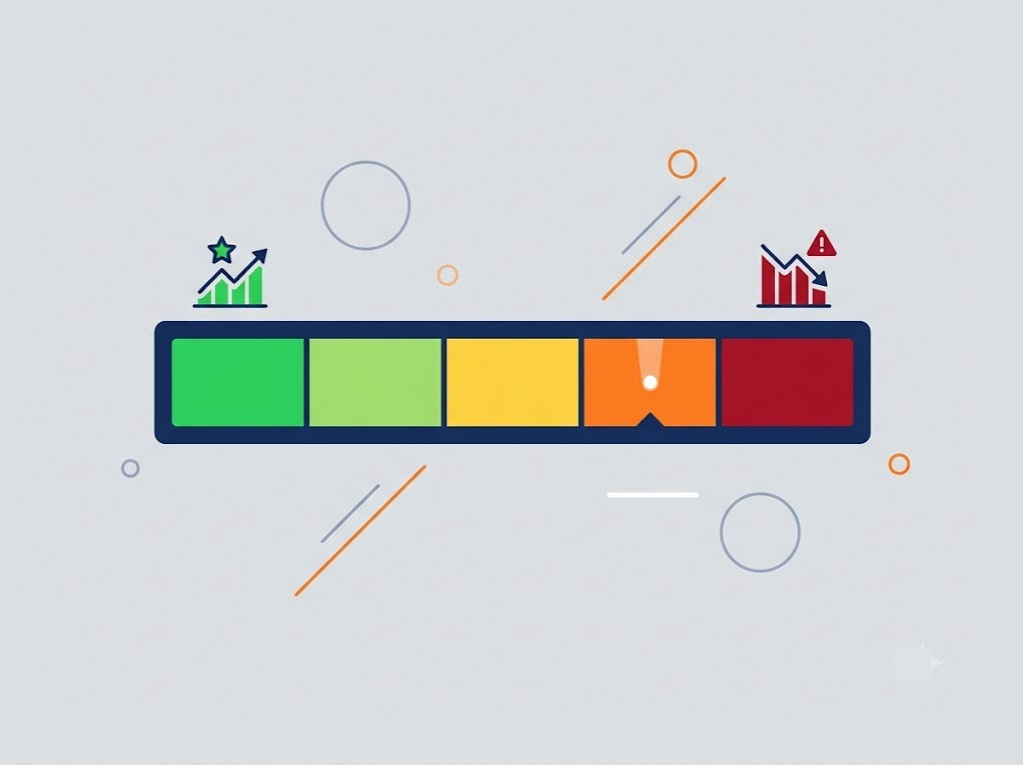
Utilisation Level | Impact on Score |
Below 10% | Excellent, maximum positive impact |
10-30% | Good, healthy, no negative impact |
30-50% | Average, mild negative impact beginning |
50-70% | Poor, noticeable score reduction |
Above 70% | Very poor, significant score damage |
Near 100% (maxed out) | Severe, serious damage and a red flag to banks and NBFCs |
The damage builds gradually rather than dropping off a cliff at exactly 30%. A score at 32% utilisation looks nearly identical to one at 28%. The real difference shows up in the pattern over time. Persistently high utilisation may be more concerning than a temporary spike, particularly when considered alongside other credit and repayment information.
That trend gets tracked more closely than it used to be. Since January 2025, credit bureaus update from banks and NBFCs every fortnight instead of monthly under RBI's current reporting rule. A balance paid down today can show up in your file within roughly two weeks, meaning utilisation now moves faster, in both directions, than it did before this change took effect.

Freed Expert Tip
Planning a home, car, or personal loan in the next 3 months? If you're planning a major loan application, reducing unusually high card utilisation before the lender reviews your profile may be worth considering.
Check your optionsWhat Is the Optimal Utilisation Percentage?
Three bands cover most situations, and each one serves a different purpose rather than a single blanket number applying everywhere.
Below 30% is the widely recommended guideline. This figure appears consistently across Indian financial guidance as a rule of thumb, keeping utilisation here signals responsible credit use without over-reliance on borrowed funds. It is not a formally published CIBIL scoring cutoff, but it is the point where most credit practitioners agree the risk of a negative impact starts to rise.
Below 10% is the ideal range, worth targeting specifically before a home loan or car loan application, or while rebuilding a file after a default or settlement. This tighter number squeezes out extra approval odds and rate advantages that the 30% threshold alone doesn't guarantee.
10-30% is the practical range for most people, most of the time. It's perfectly healthy day to day, showing active credit use without dependence on it. Chasing below 10% permanently isn't necessary outside a specific application window.
None of these numbers are arbitrary. They trace directly back to where the score-impact bands shift from excellent to good to average. High utilisation isn't just a number sitting on a statement. High utilisation can be one of the factors a lender considers when reviewing your credit profile.
What Happens When Utilisation Is Too High?
A bank looking at consistently high utilisation, 70-80% and climbing, doesn't just see a percentage. They read behaviour behind it: heavy reliance on borrowed credit, a possible gap between income and lifestyle, a higher perceived chance of falling behind on payments soon.
A handful of common situations push utilisation into this range without anyone intending it to happen.
- Daily expenses charged to the card without a full monthly payoff. Groceries and fuel add up quietly, and the balance never quite resets to zero.
- A sudden large expense, a medical bill or an urgent repair, that spikes the balance well past a comfortable level in a single billing cycle.
- Paying only the minimum due every month, so the outstanding balance keeps growing while the credit limit stays fixed in place.
- Cash advances typically attract a separate fee and interest may begin accruing immediately, depending on the card's terms.
None of this reflects poorly on the person behind it. It's mechanics, the same mechanics that explain why one bad month can linger on a report far longer than the month itself lasted. The opposite extreme, barely using a card at all, isn't the fix either.
If minimum payments are what's keeping your balance stuck, what minimum due actually costs over time breaks down exactly why that trap runs so deep.
Is Zero Utilisation Actually Good for Your Score?
No, and this surprises most people the first time they hear it. A card that's never touched gives a bank nothing to judge credit management by. Zero utilisation misses the positive signal that comes specifically from active, responsible use, on-time payments against a real balance, however small that balance is.
The fix here is simple and doesn't involve carrying any debt at all. Use the card for one or two small, planned purchases each month, a phone bill or a subscription works well, and pay the full amount before the due date every time. Use the card only for planned purchases and pay the balance in full and on time.
This isn't a suggestion to carry any revolving balance on purpose. Usage plus full payment is the goal. Usage plus a balance left sitting there defeats the entire point and pushes utilisation right back into territory this piece has spent several sections explaining how to avoid.
The grace period on credit card payments explains exactly how long you have to clear that small monthly purchase before any interest applies at all.
How Can You Keep Your Utilisation Low?
These tactics work as a set, not as isolated fixes. No single one below moves the needle on its own the way applying all of them together does over a few consistent months.
Step 1: Pay More Than the Minimum, Every Month
Every extra rupee above the minimum reduces both your outstanding balance and your utilisation together. Paying more than the minimum reduces the outstanding balance faster and can help lower utilisation.
Step 2: Make Mid-Month Payments Before the Reporting Date
If your card issuer reports a balance before you make your payment, paying down the balance earlier in the billing cycle may result in a lower reported utilisation. Check your issuer's reporting practices rather than assuming the statement date is always the reporting date.
Step 3: Request a Credit Limit Increase
A higher limit can reduce your utilisation ratio if spending stays unchanged. Only consider requesting one if you can maintain the same spending discipline.
Step 4: Spread Spending Across Multiple Cards
Distribute purchases rather than loading one card exclusively. Since combined utilisation across all cards is what actually gets calculated, spreading spending out keeps both each card and the overall total lower.
Step 5: Consider the impact before closing an old card.
Closing a card reduces your available credit limit, which can increase your utilisation ratio if other balances remain unchanged. However, whether to keep or close the account depends on fees, usefulness and your overall credit profile.
Step 6: Avoid Cash Advances
A cash advance hits utilisation immediately and starts charging interest from day one, with no grace period. If you need emergency funds, compare the total cost of a personal loan, cash advance and other available options before borrowing.
If several EMIs alongside card balances are what's actually keeping your utilisation stuck high, how loan consolidation works tackles that underlying load directly rather than asking these six tactics to compensate for it.

When High Utilisation Signals a Bigger Problem
If utilisation stays above 50-60% consistently despite paying the minimum every single month, that pattern usually points to one of two things. Either income genuinely isn't covering expenses, the early stage of a debt cycle, or the outstanding balance has grown large enough that the interest being added each month nearly equals what's being paid down, so the number barely moves regardless of effort.
In either case, the utilisation-management tips covered above only help at the margins. The underlying debt load needs addressing directly, not managed around.
If you're still able to pay but multiple card dues are what's overwhelming, consolidation combines them into one loan at a lower rate, which directly reduces outstanding and, by extension, utilisation itself, not just temporarily but as a structural fix. If payments have already been missed and repaying in full genuinely isn't possible anymore, settlement is the structured last-resort path instead. Settlement is not something a borrower chooses out of preference. A settlement may result in a ‘Settled’ status on the credit report, which can negatively affect future borrowing decisions.
Loan settlement's full process and CIBIL impact covers exactly what that trade-off looks like in practice.

What the Law Says
Since January 2025, RBI requires banks and NBFCs to report credit data to bureaus every fortnight instead of monthly, so a payment made today can reflect on your credit report within about two weeks.
Check your optionsHow FREED Helps With Credit Card Utilisation Problems
For those still repaying but stretched across multiple card balances pushing utilisation high, consolidation is the direct fix.
FREED's Debt Consolidation Program, known to customers as Reduce My EMI, assesses your full profile and matches you to a lending partner from its network. For eligible customers, FREED's consolidation offering may provide access to lending-partner rates that can be lower than typical credit-card borrowing costs. Actual rates depend on eligibility, lender and borrower profile. This structurally lowers both your outstanding balance and your utilisation, not as a temporary dip that creeps back up, but as a genuine reset. FREED charges its success-based fee only once consolidation actually completes.
For genuine inability to repay, settlement is the separate, last-resort path.
FREED's Debt Resolution Program, known as Settle My Loans, exists specifically for borrowers who genuinely cannot repay in full, not as a shortcut for anyone who could still manage with a lower EMI instead. In some cases, settlement may involve negotiating a reduction in the amount owed. Actual outcomes vary by lender, account and borrower circumstances, and no specific reduction is guaranteed. The "Settled" mark stays visible on your credit report for up to 7 years, worth stating plainly. This program also charges its fee only on completion.
Both programs include FREED Shield protection from recovery harassment, regardless of which one applies to your situation. If a settlement mark is already sitting on your file, can you still use a credit card after debt settlement answers what actually changes once that's in place.
Sources
Claim | Source |
Credit bureaus now report every fortnight instead of monthly, effective January 2025 | RBI notification (https://www.rbi.org.in/Scripts/NotificationUser.aspx?Id=12718&Mode=0) |
Credit utilisation is roughly 30% of the CIBIL score; recommended under 30%, ideal under 10% | Credit bureau best practices (CIBIL, Experian, Equifax guidance) |
Cash advance fees typically run 2.5-3% of the withdrawn amount, with interest from day one | Industry consensus across major card issuers |
Consolidation typically runs 14-20% versus 36-42% card interest | FREED's documented consolidation product range |
Settlement waiver "up to 50%*" | FREED's product standard, bank-negotiated outcomes vary |
"Settled" mark visible for up to 7 years | Credit bureau standard, Credit Information Reporting Directions |

FREED is India's trusted loan management platform. Founded in 2020 and headquartered in Gurugram, FREED has counselled 20 lakh+ people on personal loans, credit cards, and app loans. FREED charges fees only on successful settlement, not upfront. FREED does not handle secured loans (home loans, car loans, gold loans).
Media Mentions