What Is Cap Credit? Meaning Explained
Two friends apply for the same personal loan the same week. One asks for ₹5 lakh and gets it. The other asks for the same amount and walks away approved for ₹2.8 lakh instead- same bank, same product, wildly different number. That gap is cap credit, the highest amount a lender will actually extend you, a personal loan sanction or a card's credit limit, based on its own risk read of your income, your credit score, and your existing debt, not on what you asked for.

Mohit Juneja
Reviewed by FREED India, Debt Resolution Specialists
 4.7/5
4.7/5 ₹3,200Cr+
 20,000+
 20,00,000+4.7/5₹3,200Cr+20,000+20,00,000+
KEY TAKEAWAYS

Cap credit is the maximum amount a lender will extend to you based on their risk assessment, not what you ask for.
Your income, CIBIL score, and existing EMI load (FOIR) are the main factors that determine where your cap lands.
A credit card's cap is a revolving limit, while a loan's cap is a one-time sanctioned amount; both use the same underlying risk logic.
Existing debt eating into your FOIR is one of the most common reasons a cap comes in lower than expected.
What Is Cap Credit?
Every product carries its own cap, and it's set independently even when you're applying for several at once. A personal loan, a credit card, and an overdraft facility each get their own maximum, so being approved for a generous card limit last year tells the lender surprisingly little about what your loan cap should look like this year. That number isn't up for negotiation just because you ask for more. The lender's risk models decide it before you even fill out the form in a pre-approved offer, or underwriting sets it once you apply directly, with your documents and credit history feeding into a process that's largely settled before you see the result.
Knowing what actually drives that number changes how you read a lower-than-expected offer. A cap that comes in under what you hoped for isn't a red flag on your application, and it isn't the lender quietly judging you; it's just the math coming out the way it does once income, history, and existing obligations are weighed together. Why lenders bother capping credit at all, rather than simply approving whatever's requested and letting the borrower decide how much to take on, is worth understanding next, since the logic behind it explains most of what follows in this piece.

Want to know where your own numbers actually stand?
Check your credit picture.
Check My Credit ScoreWhy Do Lenders Cap Your Credit at All?
This isn't about limiting you personally, though it might feel that way in the moment. A lender extending a higher cap is simply carrying more exposure if the account ever goes bad, and that exposure has to be managed somehow, spread across thousands of borrowers rather than assessed purely on goodwill or how convincing an application sounds. Every rupee of headroom a lender grants is a rupee it's genuinely prepared to lose if things go wrong, and that calculation sits behind every cap issued, whether the borrower ever thinks about it or not.
A steady income and a clean repayment history typically loosen that cap over time; the lender's confidence grows with every EMI paid on schedule, and that confidence translates directly into more room the next time round. That's also exactly why two people earning identical salaries can walk away with very different numbers: income is only one input among several, and credit history and current debt load carry just as much weight in the calculation, sometimes more. What specifically feeds into that calculation, and how each piece pulls the final number up or down, is worth breaking down individually.
What Factors Determine Your Cap?
- Income and income stability. A salaried applicant with three years at the same employer reads very differently to a lender than someone six months into a new job, even at identical pay, since the lender is really underwriting the reliability of that income over the loan's full tenure, not just its current size.
- CIBIL score. Higher scores generally unlock higher caps. The relationship isn't perfectly linear: a jump from 780 to 800 rarely moves the number as much as a jump from 620 to 700, but the overall direction is consistent across nearly every lender.
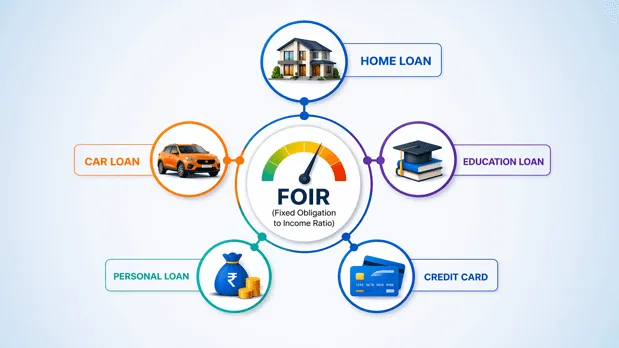
- FOIR, how much of your income is already committed to existing EMIs? A high FOIR pulls your cap down regardless of how strong your income looks on paper, since the lender cares about what's actually free to service a new obligation, not your gross salary figure.
- Relationship and vintage with the lender. An existing customer with a salary account and a couple of years of visible transaction history sometimes gets meaningfully more favourable treatment than a fresh applicant walking in cold, simply because the lender already has data instead of inferring everything from documents alone.
- Product type itself. Secured products generally allow higher caps than unsecured ones; the collateral does real work in the lender's risk calculation, effectively insuring a chunk of the exposure that an unsecured product leaves entirely uncovered.
How this becomes a single, final number is worth walking through step by step, since the process is more mechanical than most applicants assume.
How Lenders Actually Calculate Your Cap
Here's roughly how the pieces come together, in the order most lenders work through them.
- Income Assessment. The lender verifies your income through salary slips, ITR filings, or bank statements, whatever fits the product and your employment type. Salaried and self-employed applicants are typically assessed through slightly different documentation paths.
- FOIR Check. The lender calculates what share of your income already goes toward existing EMIs, pulling this from your credit report and any additional obligations you've declared.
- Credit Score Review. Your CIBIL score is pulled and weighed against the lender's internal risk thresholds, not a single fixed cutoff everyone shares; different lenders draw this line in different places.
- Product-Specific Rules Applied. The lender applies its own policy for that particular product, a credit card, a personal loan, or an overdraft, each of which carries different caps even for the same customer on the same day.
- Final Cap Set. The lender confirms the maximum amount or limit you're actually approved for, based on everything above, arriving at the number that eventually shows up in your sanction letter or card approval.
The exact formula and how heavily each factor is weighted vary from lender to lender, and even between two products at the same bank. This is a general pattern worth understanding, not a universal calculator you can plug your own numbers into and expect an exact figure back.

Freed Expert Tip
Calculate your own FOIR before applying for new credit; if it's already high, that's usually why your cap comes in lower than the income alone would suggest.
Check Your EligibilityCredit Card Cap vs Loan Cap: What's the Difference?
Feature | Credit Card Cap | Loan Cap |
Type of limit | Revolving, reusable as you repay | One-time sanctioned amount |
How is it reviewed | Periodically, it can increase or decrease over time | Fixed for that loan, a new application is needed for more |
What determines it | Income, CIBIL score, FOIR, card type | Income, CIBIL score, FOIR, loan type, and tenure |
Risk to lender | Ongoing, revolving exposure | Fixed, known exposure over the tenure |
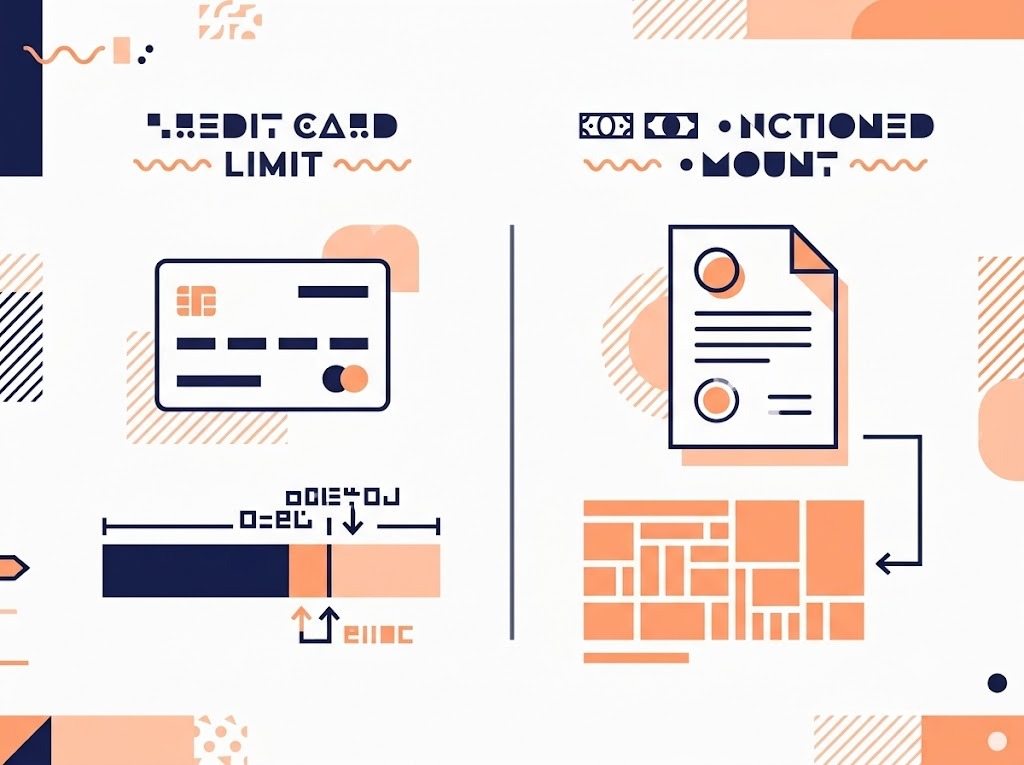
Neither is "better" than the other, and treating them as competing products misses the point entirely; they simply serve different purposes: ongoing, reusable access on one side, and a lump sum with a defined endpoint on the other, and most people genuinely need both at different points in their financial life.
What If You Need More Than Your Cap Allows?
Building your CIBIL score and repayment history over time is the slow, reliable lever; caps typically expand as a lender's confidence in you grows with each clean cycle, and this compounding trust is often worth more over a few years than any single negotiation could achieve in the moment. A co-applicant with stable income can also push a joint cap noticeably higher, since the lender is underwriting two incomes and two credit histories instead of one, effectively spreading the risk it's being asked to take on.
An NBFC route sometimes offers more room than a traditional bank, so it's worth comparing directly rather than assuming a bank will always be the more generous or more sensible option, since NBFCs often price flexibility into a somewhat higher rate rather than a stricter cap. But if existing debt is what's actually eating into your FOIR and dragging your cap down in the first place, addressing that debt first, rather than shopping around for a more generous lender, often moves the needle further and faster than any amount of comparison shopping would.
If Existing Debt Is Capping You Lower Than Expected
If several existing EMIs are already stretching your FOIR thin, that's often the real reason your cap comes in lower than your income alone would suggest, not anything wrong with the application itself or a sign that a lender doesn't trust you. It's a mechanical consequence of how much of your income is already spoken for before the new lender even starts its own calculation.
Consolidating that debt through FREED's Debt Consolidation Program can free up room in your FOIR and improve how lenders read your profile over time by replacing several tracked obligations with one cleaner picture. This route works best for borrowers still current on their payments, where the goal is genuinely to free up headroom rather than fix something that has already gone wrong. If accounts have already gone into default, FREED's Loan Settlement Plan is a separate path built to resolve that first, before consolidation becomes a realistic next step.
Are You in a Loan Trap? Quick Check
Move the slider to your total EMIs as a % of monthly salary. See your debt stress level instantly.
EMIs as % of Monthly Salary
A Few Things Worth Knowing
Check your own FOIR before applying, so a lower-than-expected cap doesn't come as a surprise you're unprepared for, and so you can plan around the number rather than reacting after the fact.
Don't assume a lower cap means something's wrong with your application. More often than not, it's just the math working exactly as designed, a reflection of your current obligations rather than a judgment on you as a borrower.
An unused pre-approved cap doesn't disappear, but it can change if your income or debt profile shifts before you actually use it, so treat a pre-approved figure as a snapshot rather than a permanent guarantee.
If you're weighing a new loan against paying down existing debt, run both scenarios properly before deciding, rather than defaulting to whichever feels more urgent right now. A few common assumptions about personal loans are worth checking too, since some of what people believe about eligibility, particularly around existing debt disqualifying them outright, simply isn't accurate anymore.

Mohit Juneja
Mohit Juneja writes educational content at FREED on debt management, credit scores, loan repayment, and borrowing best practices. His content is shaped by expert insights and industry knowledge, helping readers better understand their financial options and make informed decisions.
mohit.juneja@freed.care

FREED is India's trusted loan management platform. Founded in 2020 and headquartered in Gurugram, FREED has counselled 20 lakh+ people on personal loans, credit cards, and app loans. FREED charges fees only on successful settlement, not upfront. FREED does not handle secured loans (home loans, car loans, gold loans).
Media Mentions