NBFC Personal Loan for Low CIBIL Score: What You Need to Know
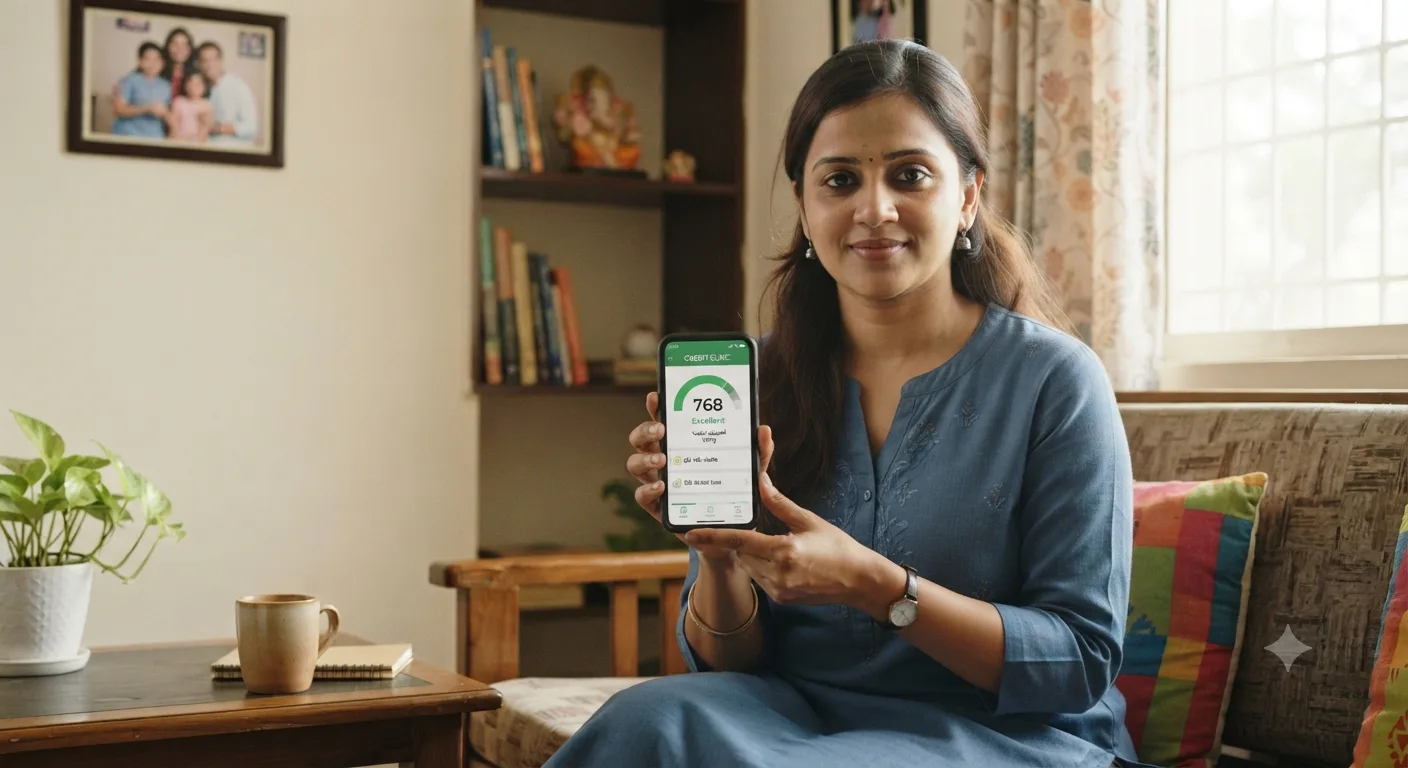
An NBFC personal loan for low CIBIL score is an unsecured loan given by a Non-Banking Financial Company (a lender that is not a bank) to people whose CIBIL score is below what most banks accept. NBFCs look at your income, your bank statements, and your job stability along with your score, so approval is possible even with a weak credit history, usually at a higher interest rate.

Mohit Juneja
Reviewed by FREED India, Debt Resolution Specialists
 4.7/5
4.7/5 ₹3,200Cr+
 20,000+
 20,00,000+4.7/5₹3,200Cr+20,000+20,00,000+
KEY TAKEAWAYS

Eligibility for a low-CIBIL personal loan differs sharply by lender type. Some NBFCs and lending apps work with scores in the 550-600 range, but expect a steep interest premium in exchange for that flexibility, this isn't a fixed cutoff, just how the market currently segments risk.
Score requirements aren't standardized across the industry. Banks generally sit at the stricter end, often expecting 750+, while NBFCs spread out some accept 650+, others go lower for small-ticket loans. Where any individual lender actually draws the line is their own internal policy call, not a published rule.
A large share of Indian loan applicants carry a CIBIL score below 700, which makes this one of the most common borrowing problems in the country.
NBFC loan amounts for low-score applicants are often capped between Rs. 25,000 and Rs. 2 lakh, with shorter repayment periods.
If your CIBIL score is low because of existing loan stress, taking a new NBFC loan at 24% to 36% interest often adds to the problem instead of solving it.
What Is an NBFC Personal Loan for a Low CIBIL Score?
A Non-Banking Financial Company, or NBFC, is a lender registered with the Reserve Bank of India (RBI, India's banking regulator) that can extend loans but cannot accept savings or fixed deposits as a bank does. That one difference changes a lot about how they lend. Banks depend heavily on your CIBIL score because they also answer to depositors whose money they are protecting. NBFCs raise their money differently, through their own capital and borrowing, so they can afford to look at a wider set of applicants.
CIBIL scores span 300 to 900, but what a lender does with that number isn't uniform. Banks tend to be conservative. Many won't move on an unsecured personal loan without something close to 750. NBFCs price for risk instead of gatekeeping on score alone, so the same applicant might get turned away by a bank and approved by an NBFC at 650, or even lower through an app-based lender. Treat any specific number here as a market pattern, not a rule that applies to every lender.
"Low CIBIL" in this context generally refers to scores between 650 and 700. If your score sits in that range, a bank will likely reject your application outright or offer very limited terms. An NBFC personal loan for low CIBIL score exists precisely to serve this gap, though it comes with trade-offs worth understanding before you sign anything.

Not sure a new loan is the right move?
Talk to FREED before you apply anywhere. One call tells you whether your existing debt needs sorting out first.
Start My Free Debt AssessmentWhy Is Your CIBIL Score Low? (And Why It Matters Before You Apply)
A low score rarely comes from one event, it builds over months. Missed EMIs, running credit cards close to their limit, a burst of loan applications, and old "Settled" or "Written Off" accounts are the usual contributors. Utilisation specifically: staying meaningfully below your limit is a widely recommended habit, though bureaus don't publish an exact cutoff at which the penalty kicks in.
Payment history is generally understood to carry the heaviest weight in how bureaus assess risk, though the precise internal formula each bureau uses isn't disclosed publicly.
If Ramesh has missed a few EMIs over the last few months and is now looking at a new loan to bridge the gap, it helps to pause and ask why the score dropped in the first place. If the answer is existing debt that has become hard to manage, a new NBFC loan at 24% to 36% interest adds another payment on top of a pile that is already too heavy. Knowing the root cause first tells you whether a new loan actually helps or just delays a bigger problem.
FREED Expert Tip
Check your CIBIL report for errors before you apply anywhere. Wrong DPD (Days Past Due) entries are more common than most borrowers realise and can be disputed directly with the bureau.
See FREED's guideHow Do NBFCs Evaluate a Low CIBIL Score Application?
NBFCs do check your CIBIL score, and it is wrong to assume they ignore it. What changes is how much weight they place on it compared to everything else in your profile. Most NBFCs run their own internal credit algorithm alongside the bureau score, and that algorithm looks at five things in particular.
The first is your bank statement, usually the last three to six months of it, to see actual cash flow rather than a snapshot number. The second is employment stability. Staying with your current employer for a year or more improves your odds, because it signals a steady income the NBFC can count on. The third is your existing EMI load. If you already have several EMIs running, a new NBFC weighs how much room is genuinely left in your monthly budget. The fourth is the loan amount you are asking for. Smaller amounts carry less risk for the lender, so a request for Rs. 30,000 clears more easily than one for Rs. 2 lakh. The fifth, increasingly common with digital-first NBFCs, is your UPI and digital transaction history, which can act as informal proof of income for self-employed or gig applicants who don't have a fixed salary slip.
Many lenders also assess whether the applicant's income is sufficient to support the proposed EMI. The reverse also holds: a borrower with a 620 score but a consistent Rs. 40,000 monthly salary credit for the past year is often a safer bet, on paper, than a borrower with a 700 score and erratic income. This is why two people with the same CIBIL number can get very different outcomes from the same NBFC.
What Are the Real Costs of an NBFC Loan with Low CIBIL Score?
This is the part most comparison articles skim over, and it is the part that matters most to your monthly budget. NBFC interest rates for low CIBIL borrowers typically range from 18% to 36% per annum, well above the 10% to 18% a bank charges someone with a healthy score. On top of the interest, expect a processing fee of 1% to 3% of the loan amount, plus GST on that fee. Late payment or bounce charges apply if an EMI fails, and most NBFCs allow prepayment only after you've completed 6 to 12 EMIs, sometimes with a small penalty attached.
Here is what this looks like in real numbers. Borrow Rs. 1 lakh at 30% per annum over 24 months, and your total repayment works out to roughly Rs. 1.33 lakh, meaning you pay back around Rs. 33,000 in interest alone. Compare that to the same Rs. 1 lakh at an illustrative bank rate of 12% over the same period, where the interest cost drops to around Rs. 13,000. This is a hypothetical comparison, not a rate typically available to all borrowers, and stronger credit profiles may qualify for better terms. Even so, that Rs. 20,000 gap shows how much a low score can cost you in interest, and it's money that could otherwise go toward closing your existing debt faster.
NBFCs that serve the low-score segment typically operate in the 15% to 30% per annum range, though the exact rate always depends on your individual profile. Rates and ranges shown are indicative. Final terms are decided by the lender. FREED is not a Loan Provider. No outcome is guaranteed. Please verify directly with the NBFC before borrowing.
Before you apply for an NBFC loan, talk to FREED for free
One call tells you whether clearing your existing debt is a smarter move than adding another.
Talk to an ExpertIs There Really an NBFC Loan Without CIBIL Check?
No. No RBI-registered NBFC gives a loan without checking your credit report at all.
What some NBFCs do is give your CIBIL score less weight than banks do. They look harder at your income and bank statements instead. That is very different from not checking at all.
Why "no CIBIL check" is a warning sign. Unregistered and predatory lenders often use this phrase to attract people who have been rejected elsewhere. These lenders may charge very high fees, give very short repayment dates, or misuse your personal data. Some ask for access to your contacts and photos and use it to harass you when you miss a payment.
If an app or website promises an NBFC loan without CIBIL check, stop and verify it first. Check that the NBFC is RBI-registered, as explained in the application steps below. If you can't find it on RBI's list, don't share any documents.
If you have no credit history at all, that's a different situation. Read about getting a loan without CIBIL score.
NBFC Small-Ticket Loans for Low CIBIL Score
Small-ticket loans are often the easiest NBFC loans to get with a low score. For low-score borrowers, amounts commonly range from ₹25,000 to ₹2 lakh, and first loans are often up to around ₹50,000.
Why NBFCs approve small loans more easily:
Less risk. If a small loan goes unpaid, the NBFC loses less.
Smaller EMI. A small EMI fits more easily inside your income, so you pass the affordability check more easily.
Faster checks. Small loans often go through a quicker, fully digital process.
How the cost math changes. Small loans can look cheap, but fees weigh more heavily on them.
Small-ticket loan | Larger loan | |
|---|---|---|
Amount | ₹30,000 | ₹1,00,000 |
Tenure | 6 months | 12 months |
Interest rate (illustrative) | 30% | 24% |
Monthly EMI | about ₹5,447 | about ₹9,456 |
Total interest | about ₹2,679 | about ₹13,472 |
₹1,000 flat fee as share of loan | about 3.3% | 1% |
Rates and ranges shown are indicative. Final terms decided by the lender. FREED is not a Loan Provider. No outcome is guaranteed.
The total interest on a small loan is lower in rupees. But a flat fee takes a much bigger share of a small loan, and short tenures push the real yearly cost (APR) up. Always check the APR in the Key Fact Statement.
Tip: Repaying a small first loan on time can improve your score and make a bigger loan easier and cheaper later.
Best NBFCs for a Personal Loan with Low CIBIL Score
There is no single best NBFC for everyone. The best one for you is the one that approves your profile at the lowest total cost, and is genuinely RBI-registered. Online "top NBFC" lists are often paid ads, so judge NBFCs yourself on these points.
What to compare | What to look for |
|---|---|
RBI registration | Listed as a registered NBFC on RBI's website; apps linked to it appear in RBI's Digital Lending Apps directory |
Score flexibility | Willing to consider your score band, based on income and bank statements |
APR | Lowest yearly cost after interest and all fees |
Processing fee | Clear amount shown upfront, not hidden |
Loan amount and tenure | Matches what you actually need, not more |
Key Fact Statement | Shown before you accept |
Data permissions | Never asks for contacts, photos or messages |
Grievance process | A named grievance officer and clear complaint route |
How to shortlist:
Start with the bank or NBFC you already have a relationship with, such as where your salary is credited or where you have an existing loan.
Check each NBFC's eligibility page for its minimum income and score requirements.
Use soft-check eligibility tools where offered, so you don't add hard enquiries.
Compare the APR from each Key Fact Statement.
Apply to one NBFC at a time.
Whichever NBFC you choose, verify its RBI registration first. A familiar name you saw online is not proof that it is registered.
How to Apply for an NBFC Personal Loan for Low CIBIL Score
The process below applies broadly across NBFCs, whether you're applying through an app or a branch. The order matters. Skipping the first two steps is how borrowers end up with fraudulent lenders or a score that drops further than it needed to. It also helps to have a realistic view going in: an NBFC is weighing your file against thousands of others, and the applicants who move fastest are the ones who show up organised.
Check Your CIBIL Report First
Pull your report from cibil.com before you apply anywhere. Look closely for errors, incorrect DPD entries, or accounts that aren't yours. Correcting reporting errors helps ensure lenders assess accurate credit information.
Verify the NBFC Is RBI-Registered
Search the NBFC's name on the RBI's official list of registered NBFCs at rbi.org.in. Any lender not on that list has no legal standing to recover a loan and is not one you should be borrowing from.
Apply for a Smaller Loan Amount
Lower loan values carry less risk for the NBFC and clear faster. Ask for the minimum amount that solves your actual need, not the maximum you think you can get.
Keep Documents Ready
Identity proof (Aadhaar, PAN), address proof, your last three months' salary slips or bank statements, and a recent photograph cover most NBFC requirements. Self-employed applicants should keep ITR or GST filings ready instead of salary slips.
Apply to One NBFC at a Time
Every application triggers a hard enquiry on your credit report. Applying to five NBFCs in the same week pushes your score down further before you've even been approved anywhere. Pick one lender carefully, based on your research, and apply there first.
Enable Auto-Debit on Approval
Set up NACH (an auto-payment permission linked to your bank account) or auto-debit the moment your loan is approved. A missed EMI from here undoes any score recovery you were hoping this loan would help with. Most NBFCs complete KYC and disbursal fully online, often within 24 to 48 hours of submitting your documents.
Which Borrowers Should Think Twice Before Taking an NBFC Loan?
Not every low-score borrower should take this route, and it helps to be honest about that upfront. Four situations, in particular, are worth pausing over.
If a significant share of your monthly income is already committed to EMIs, carefully assess whether additional borrowing is affordable. Adding another EMI on top of that is structurally unsound, whatever the loan promises. The second is when your score fell below 650 because of actual defaults or missed payments, not bureau errors. A new high-interest loan doesn't fix the underlying repayment gap that caused the drop. The third is if you're already fielding recovery calls on an existing loan. Taking on fresh debt while a lender is already chasing you for an old one rarely ends well. The fourth is the most common trap: using a new NBFC loan to pay off an older one. This is called debt cycling, and at 30%+ interest, each cycle leaves you owing more than the one before it.
If any of these describe your situation, a new loan likely isn't the answer, but settlement isn't automatically the answer either. Settlement is not something a borrower chooses out of preference. Banks and financial companies only consider it when repaying in full has genuinely become impossible, not simply difficult or inconvenient. On a Rs. 1 lakh NBFC loan at 30%+ interest, the interest cost alone can cross Rs. 30,000 over 24 months, on top of whatever you already owe elsewhere. That's the real weight a new loan adds when your finances are already stretched.

What the Law Says
RBI requires every NBFC that lends money to hold a valid registration. Before borrowing from an unfamiliar NBFC or app
check its registration status directlyHow FREED Helps When an NBFC Loan Is Not the Right Move
Some readers land here because their CIBIL score has already been pulled down by loans that have become too much to manage. For that situation, adding a new loan usually isn't the fix. FREED works on the root cause instead, through two different paths depending on where you actually stand.
If you're still paying but stretched thin, juggling several EMIs across different banks and NBFCs, FREED's Debt Consolidation Program (Reduce My EMI) combines those loans into one lower monthly payment. FREED assesses your financial profile and matches you to a lending partner who pays off your existing eligible debts in one go. Debt consolidation may help simplify repayments for eligible borrowers, depending on their financial circumstances and lender assessment.
If repaying in full has genuinely become impossible, that's a different situation, and settlement is not something you'd choose out of preference. It's the option banks consider only when the borrower is truly unable to pay. In that case, FREED's Loan Settlement Plan (Settle My Loans) negotiates with your banks on your behalf, using a Special Purpose Account (SPA), a dedicated savings pool held independently, to settle the account for up to 50%* of what you owe once enough has been saved.
FREED charges a success-based fee, meaning it's only charged once the work is actually done. There's no cost to have a conversation first, and no pressure either way.
Waiver percentage shown is indicative and depends on your bank's final decision. FREED is not a Loan Provider. No specific outcome is guaranteed.
Are You in a Loan Trap? Quick Check
Move the slider to your total EMIs as a % of monthly salary. See your debt stress level instantly.
EMIs as % of Monthly Salary
Tips to Improve Your Chances During the NBFC Loan Process
A few practical steps, done before you apply, genuinely improve your approval odds and the terms you're offered.
Pay down outstanding credit card balances as much as you can before applying. Lower utilisation on existing cards signals less financial strain to the NBFC reviewing your file. Ask for a smaller loan amount than the maximum you think you qualify for. NBFCs approve smaller requests faster and at better terms because the risk to them is lower. If someone in your family has a clean CIBIL record, adding them as a co-applicant can meaningfully improve your approval chances and sometimes your interest rate too.
Make sure your bank statement shows consistent salary credits on the same date each month. Irregular deposits, even if the total income is the same, read as unstable to an NBFC's system. Avoid applying to more than one NBFC at the same time. Each hard enquiry chips away at your score, and multiple enquiries in a short window can do more damage than the low score you started with. Once approved, set up auto-debit immediately. Consistent, on-time repayment helps build a stronger repayment history that future lenders may consider. Every on-time EMI from that point starts rebuilding the positive repayment history your score needs.

Not sure if a new loan is right for you?
FREED's debt counsellors give you a clear picture in one free call.
Book My Free CallNBFC Personal Loan vs Bank Personal Loan for Low CIBIL Score
Feature | Bank Personal Loan | NBFC Personal Loan |
Minimum CIBIL Score | Typically 700 to 750 | 550 to 650 (varies by NBFC) |
Interest Rate | 10% to 18% per annum | 18% to 36% per annum |
Loan Amount | Up to Rs. 40 lakh | Rs. 25,000 to Rs. 5 lakh typically |
Approval Speed | 3 to 7 working days | 24 to 48 hours |
Documentation | Moderate | Minimal, mostly digital |
CIBIL Impact (hard enquiry) | Yes | Yes |
Best For | Good credit profiles | Urgent needs, thin credit files |
If your score clears the bank threshold, a bank loan almost always costs less over the life of the loan. NBFCs exist for the gap banks won't serve, faster approval and a lower score bar, but that convenience comes at a real interest cost, as the numbers above show. Rates and eligibility vary by institution and borrower profile. Compare actual offers before applying. FREED does not recommend or endorse any specific bank or NBFC.
Sources
Claim in Blog | Source |
NBFCs must be registered with the RBI, and unregistered NBFCs cannot legally recover a loan | RBI official list of registered NBFCs: https://rbi.org.in/Scripts/BS_NBFCList.aspx (registration required under Section 45-IA, RBI Act, 1934) |
Note: Claims such as typical CIBIL score thresholds by bank/NBFC, specific interest rate ranges, hard enquiry point-drops, and score recovery timelines are industry conventions reported by lenders and credit bureaus rather than codified RBI figures. These are worded as "typically," "usually," or "often" in the blog body rather than listed here as sourced facts.

Mohit Juneja
Mohit Juneja writes educational content at FREED on debt management, credit scores, loan repayment, and borrowing best practices. His content is shaped by expert insights and industry knowledge, helping readers better understand their financial options and make informed decisions.
mohit.juneja@freed.care

FREED is India's trusted loan management platform. Founded in 2020 and headquartered in Gurugram, FREED has counselled 20 lakh+ people on personal loans, credit cards, and app loans. FREED charges fees only on successful settlement, not upfront. FREED does not handle secured loans (home loans, car loans, gold loans).
Media Mentions