What Is a CRIF Report and Why a Lender Might Ask for It
A CRIF report is a credit report issued by CRIF High Mark, one of four RBI-licensed credit bureaus operating in India, alongside CIBIL, Experian, and Equifax. It shows the same kind of information as a CIBIL report, your loan and card history, repayment record, and a 300-900 score, but pulled from CRIF's own database, which some lenders specifically prefer to check.
Mohit Juneja
Reviewed by FREED India, Debt Resolution Specialists
 4.7/5
4.7/5 ₹3,200Cr+
 20,000+
 20,00,000+4.7/5₹3,200Cr+20,000+20,00,000+
KEY TAKEAWAYS

A CRIF report comes from CRIF High Mark, one of India's four RBI-licensed credit bureaus.
CRIF High Mark has particularly strong data coverage in microfinance, rural, and cooperative bank lending, which is why some lenders pull it specifically.
CRIF and CIBIL both use a 300–900 credit-score range, but each bureau uses its own scoring methodology.
You're entitled to one free full CRIF report per year, directly from CRIF High Mark.
Checking your own CRIF report is a soft inquiry. It never affects your score.
What Is a CRIF Report?
A CRIF report is a credit report issued by CRIF High Mark, one of India's four RBI-licensed credit bureaus, alongside CIBIL, Experian, and Equifax. It shows your loan accounts, credit cards, repayment history, and a credit score on the standard 300-900 scale, compiled from data reported by the banks and NBFCs (Non-Banking Financial Companies) you've borrowed from.
If you've ever seen a CIBIL report, a CRIF report will look structurally familiar. It covers the same broad categories, your personal details, your full account history, your payment record month by month, and a list of who's checked your file recently. CRIF and CIBIL reports contain many of the same broad categories of credit information, although the exact data and report format can vary by bureau. What's different is which bureau compiled them, using its own database and its own scoring model, which can produce a slightly different picture even from largely the same underlying lender data, a point worth understanding properly if you've ever wondered why your credit score varies between credit bureaus.
CRIF High Mark has a fairly specific history worth knowing. CRIF High Mark is an RBI-licensed Credit Information Company serving banks, NBFCs, microfinance institutions, cooperative and rural banks, and other lenders across India. It's headquartered in Mumbai, same as CIBIL, and today it's one of exactly four credit bureaus RBI has licensed to operate in India.
That last point raises an obvious question. If CIBIL already exists and most people have heard of it, why does India need three other credit bureaus running in parallel, CRIF included? That structure is worth understanding on its own before getting into what makes CRIF specifically relevant to certain lenders.
Why Does India Have Four Different Credit Bureaus?
RBI doesn't operate a single centralised credit bureau itself. Instead, it licenses multiple Credit Information Companies (CICs), CIBIL, Experian, Equifax, and CRIF High Mark, each of which independently collects data reported to it by banks and NBFCs and builds its own database and scoring model from that data. All four operate as independently licensed Credit Information Companies under India's credit-information regulatory framework.
A lender isn't required to check all four for every application, and in practice, most don't. A typical bank or NBFC checks one or two bureaus depending on the type of lending it does and which bureau's data tends to be most complete for that segment of borrowers. Which bureau gets pulled for any given application varies by lender and loan type, not by any fixed industry rule. Some lenders lean on Experian specifically, and if you're curious how that one stacks up, FREED's breakdown of Experian's credit score meaning and range covers it in the same kind of detail as this piece covers CRIF.
This structure exists for a fairly practical reason. India has multiple independent CICs, and lenders may use different bureaus depending on their credit-assessment practices and the type of lending they undertake. CIBIL happens to be the most widely recognised name among consumers, largely because it was India's first credit bureau and remains the one most traditional banks check by default. That popularity doesn't make it officially "the primary" bureau in any regulatory sense, all four operate under the same RBI licence and the same rules, a distinction FREED's guide on understanding the difference between credit score and credit report also touches on from a different angle.

What the Law Says
Individuals with credit history are entitled to one free full credit report, including the credit score, once each calendar year from each CIC.
Check My CreditWhy Might a Lender Specifically Ask for Your CRIF Report?
This is where CRIF genuinely stands apart from the other three bureaus, and it comes down to history and data depth rather than any regulatory difference. CRIF says its microfinance database has grown to become the world's largest, with more than 80 million borrowers. That's not a minor footnote. It means CRIF has years of deep, granular data on microfinance lending, the kind of small, often group-based loans issued by microfinance institutions (MFIs) to borrowers who may not have extensive history with traditional banks.
That same depth extends into rural lending, cooperative bank lending, and agricultural credit, segments where CIBIL grew up primarily serving mainstream retail banks and large NBFCs rather than smaller regional and cooperative institutions. This is a useful thing to know before comparing your own numbers across bureaus, especially if you're also trying to make sense of where you sit on the broader credit score ranges explained across every band.
CRIF serves NBFCs, microfinance institutions, cooperative and rural banks, and other lenders, so a lender in these segments may use a CRIF report as part of its credit assessment. A borrower who's taken a microfinance loan through an MFI, or who banks primarily with a cooperative institution in a smaller town, might have thinner CIBIL data but a much richer CRIF history reflecting that same activity.
What this means practically is worth stating plainly. If a lender uses CRIF High Mark when assessing your application instead of your CIBIL report, that's usually a reflection of the type of lending they do, not a sign that anything unusual is showing up on your file. It's a routine part of how that lender assesses risk within their particular segment.

Freed Expert Tip
If you're applying with an NBFC, microfinance lender, or cooperative bank, check your CRIF report specifically, not just CIBIL. It may better reflect your actual history with that type of lender.
Check your optionsWhat's Different Between a CRIF Report and a CIBIL Report?
Comparison Table: CRIF High Mark vs CIBIL
Feature | CRIF High Mark | CIBIL |
RBI-licensed | Yes | Yes |
Score range | 300 to 900 | 300 to 900 |
Strongest data coverage | Microfinance, rural, cooperative banks | Mainstream retail banking, broadest overall coverage |
Most commonly checked by | NBFCs, microfinance lenders, some fintechs | Most banks and traditional lenders |
Read this table as a coverage-strength comparison, not a ranking. Neither bureau is objectively "better" than the other, they're both legitimate, RBI-licensed sources of the same underlying kind of information, weighted toward slightly different lending segments based on which institutions each one has served longest and most deeply. A borrower with a long relationship at a major private bank will likely have a richer CIBIL file. A borrower with meaningful microfinance or cooperative bank history will often have a richer CRIF file. Most people, in practice, have some presence on both, and if a lender has ever offered you an Equifax-based product instead, FREED's explainer on what an Equifax credit score actually means fills in that third piece of the picture.
What's Inside a CRIF Report?
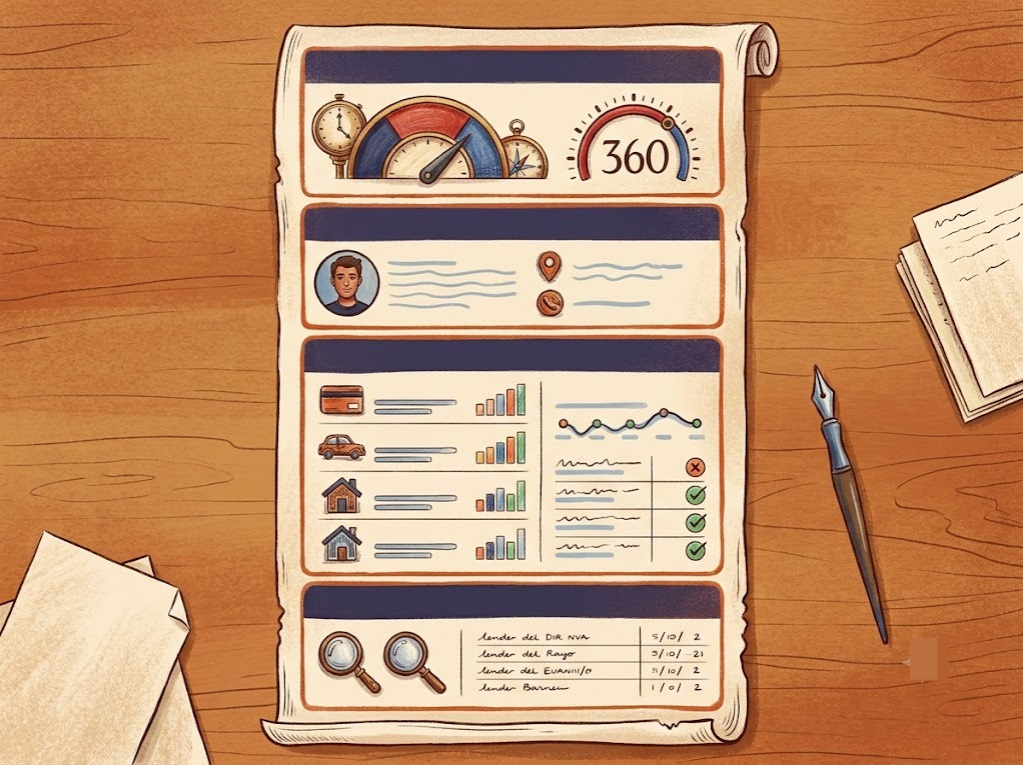
Open an actual CRIF report and the structure will feel immediately familiar if you've ever looked at a CIBIL report before. It's organised into the same broad sections, just populated from CRIF's own database.
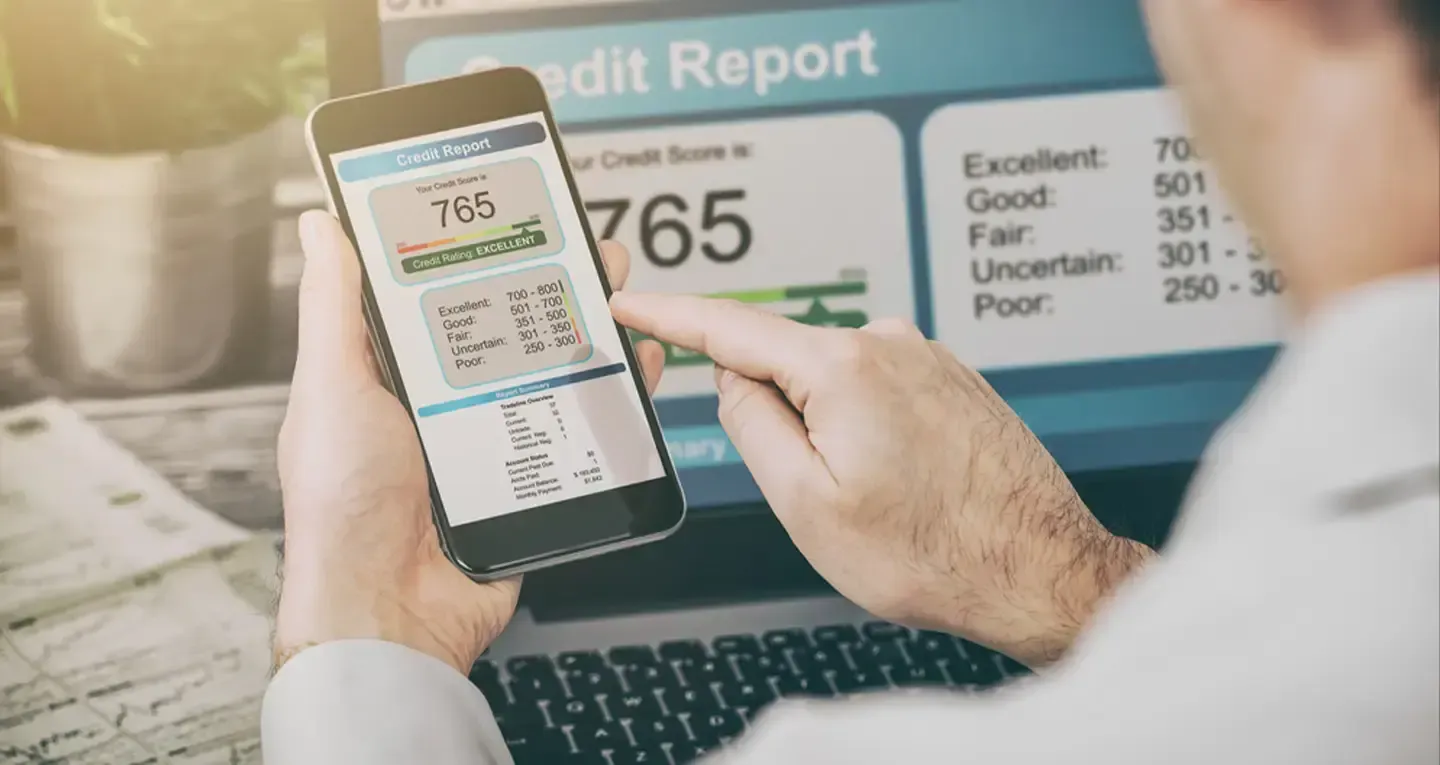
It starts with your personal details, your name, address, and identification information exactly as reported by the lenders you've borrowed from. Next comes the credit score itself, presented on the same 300-900 scale used across all four Indian bureaus, giving you a quick numerical snapshot before the detailed sections below it.
The bulk of the report is account-level history, every loan and credit card that's been reported to CRIF under your name, along with a month-by-month payment status for each one, whether you paid on time, paid late, or missed a payment entirely. This is the section that actually explains why your score sits where it does, since the score is essentially a summary of everything recorded in this section. If you'd like the full walkthrough of how to read a bureau report line by line rather than just knowing what the sections are called, FREED's guide on downloading and reading your CIBIL report online covers the same structure in more depth, and most of it carries over directly to reading a CRIF report too.
Finally, there's inquiry history, a record of every time a lender has pulled your CRIF report, whether because you formally applied for credit or because a lender was simply checking your eligibility for a pre-approved offer. This section matters because a sudden cluster of inquiries in a short window is one of the things future lenders look at when assessing risk. None of this differs structurally from what you'd find in a CIBIL report. The categories are the same across bureaus. What differs is the underlying data source populating each section.
How Do You Check Your Own CRIF Report?
Getting your own CRIF report is a straightforward process, and it's worth doing directly rather than through a third-party site claiming to offer it.
Start by visiting CRIF High Mark's own consumer portal directly, rather than clicking through a search result for a site that isn't actually crifhighmark.com. For the most direct route, use CRIF High Mark's official consumer portal rather than an unknown third-party site.
You'll need your basic personal details and an accepted identity document, such as PAN or another ID supported by CRIF, along with contact details for verification. From there, you can request your free annual report, available once per calendar year at no cost, the same entitlement RBI guarantees across all four credit bureaus, not just CIBIL. Once it's generated, review the full report carefully, not just the headline score. Go through the account details and inquiry history section by section, checking specifically for anything unfamiliar, an account you don't recognise, or an inquiry from a lender you never actually applied with, the same discipline FREED recommends when understanding your credit score more broadly, regardless of which bureau issued it.
Checking your own CRIF report is a soft inquiry and does not lower your score. FREED's free credit check is another straightforward way to see your report and score without paying anything, if you'd rather have that visibility in one simple place.

What If Your CRIF Score Differs From Your CIBIL Score?
This is one of the most common sources of confusion once someone actually pulls both reports side by side, so it's worth addressing head-on. It's entirely normal, and expected, for your CRIF score and your CIBIL score to differ somewhat. Each bureau runs its own proprietary scoring model, built and weighted differently, and neither bureau necessarily has identical data from every single lender you've ever borrowed from. The underlying data may not be identical across bureaus because lenders may report information at different times or the bureaus may hold different records.
A difference between your CRIF and CIBIL scores is not unusual. The two scores may differ because the bureaus use different scoring models and may hold different or differently updated data. It's simply two different models looking at data that overlaps but isn't perfectly identical. That said, if the gap between your two scores feels unusually large, that's worth investigating, pull both reports and check whether one is missing an account, showing an inquiry you don't recognise, or reflecting a payment status that doesn't match your own records. It's also worth knowing that certain events, like a settled loan, can affect scores differently across bureaus, which FREED's piece on whether debt relief actually affects your credit score explains in more detail.
What matters more than getting the two numbers to match exactly is making sure both scores are accurately reflecting your real payment history. A small, unexplained gap between bureaus is background noise. An account showing incorrectly on either report is the thing actually worth acting on, and knowing what the highest achievable credit score in India actually looks like can help you judge whether either number is genuinely in the range it should be.
How FREED Helps
For most people reading a piece explaining what a CRIF report actually is, the goal is simply understanding, not solving an active problem. FREED's role here stays proportionate to that.
FREED's free Credit Insights check gives you visibility into your own credit report and score without any cost, a straightforward way to actually see what a bureau like CRIF or CIBIL has on file for you, rather than guessing. FREED's Debt Consolidation Program may help eligible borrowers combine multiple debts into a single repayment arrangement. Credit impact depends on the application and subsequent repayment behaviour, so no specific CIBIL outcome should be guaranteed.
If a report reveals something more serious, genuine hardship that's made full repayment unrealistic rather than just inconvenient, that's a separate and later conversation, one that would involve FREED's Loan Settlement Plan instead. But that's not the likely takeaway for most readers of a report-literacy piece like this one, and it's worth being honest about that rather than stretching every article toward the same conclusion. If your own next step is simply pushing your score higher rather than managing existing debt, FREED's practical guide on how to increase your CIBIL score fast is the more relevant read from here.
What Helps You Keep Every Bureau Report in Good Shape
- Pay on time across every loan and card you hold. Paying on time is one of the most important factors in maintaining a healthy credit profile across bureaus.
- Check more than one bureau's report periodically, not just CIBIL. This matters especially if you've ever borrowed from an NBFC, a microfinance lender, or a cooperative bank, especially if you've borrowed from NBFCs, microfinance institutions, cooperative banks or other lenders that report to CRIF.
- Keep your credit utilisation low across all your cards. A lower balance relative to your credit limit reads as a positive signal to every bureau, not just the one a particular lender happens to check.
- Dispute any error directly with the bureau that shows it. If you spot an incorrect account or a payment status that doesn't match your own records on your CRIF report, raise that dispute with CRIF High Mark specifically, not just with whichever bureau you happen to check most often. An error on one bureau's file doesn't automatically get corrected on another's.
None of this requires tracking four separate reports obsessively. Checking your reports periodically can help you identify errors before they become a problem when you apply for credit. If you're due for an Experian pull too, FREED's guide on checking, downloading, and reading your Experian credit report rounds out the picture alongside this one. FREED's free credit check is a simple way to keep an eye on all of it over time without adding it to your list of things to remember to do.
Sources
Claim | Source |
Every individual is entitled to one free full credit report per year from every Credit Information Company, CRIF High Mark included | RBI Notification, Free Annual Credit Report to Individuals, Reserve Bank of India |
CRIF High Mark began operations in 2007, received its RBI licence in 2010, and is headquartered in Mumbai; it built India's first and one of the world's largest microfinance credit bureau databases | CRIF High Mark corporate history (crifhighmark.com, crif.com) |

Mohit Juneja
Mohit Juneja writes educational content at FREED on debt management, credit scores, loan repayment, and borrowing best practices. His content is shaped by expert insights and industry knowledge, helping readers better understand their financial options and make informed decisions.
mohit.juneja@freed.care

FREED is India's trusted loan management platform. Founded in 2020 and headquartered in Gurugram, FREED has counselled 20 lakh+ people on personal loans, credit cards, and app loans. FREED charges fees only on successful settlement, not upfront. FREED does not handle secured loans (home loans, car loans, gold loans).
Media Mentions