Understanding your Credit Score
Most people know their credit score matters. Far fewer understand what actually moves it, by how much, and how quickly, which means most people can only react to the number rather than genuinely influence it. Here is what actually determines your score, in plain, specific terms.
Mohit Juneja
Reviewed by FREED India, Debt Resolution Specialists
 4.7/5
4.7/5 ₹3,200Cr+
 20,000+
 20,00,000+4.7/5₹3,200Cr+20,000+20,00,000+
Key Takeaways

A credit score is a single number, typically 300 to 900 in India, calculated by a credit bureau from your credit history to estimate how reliably you are likely to repay borrowed money.
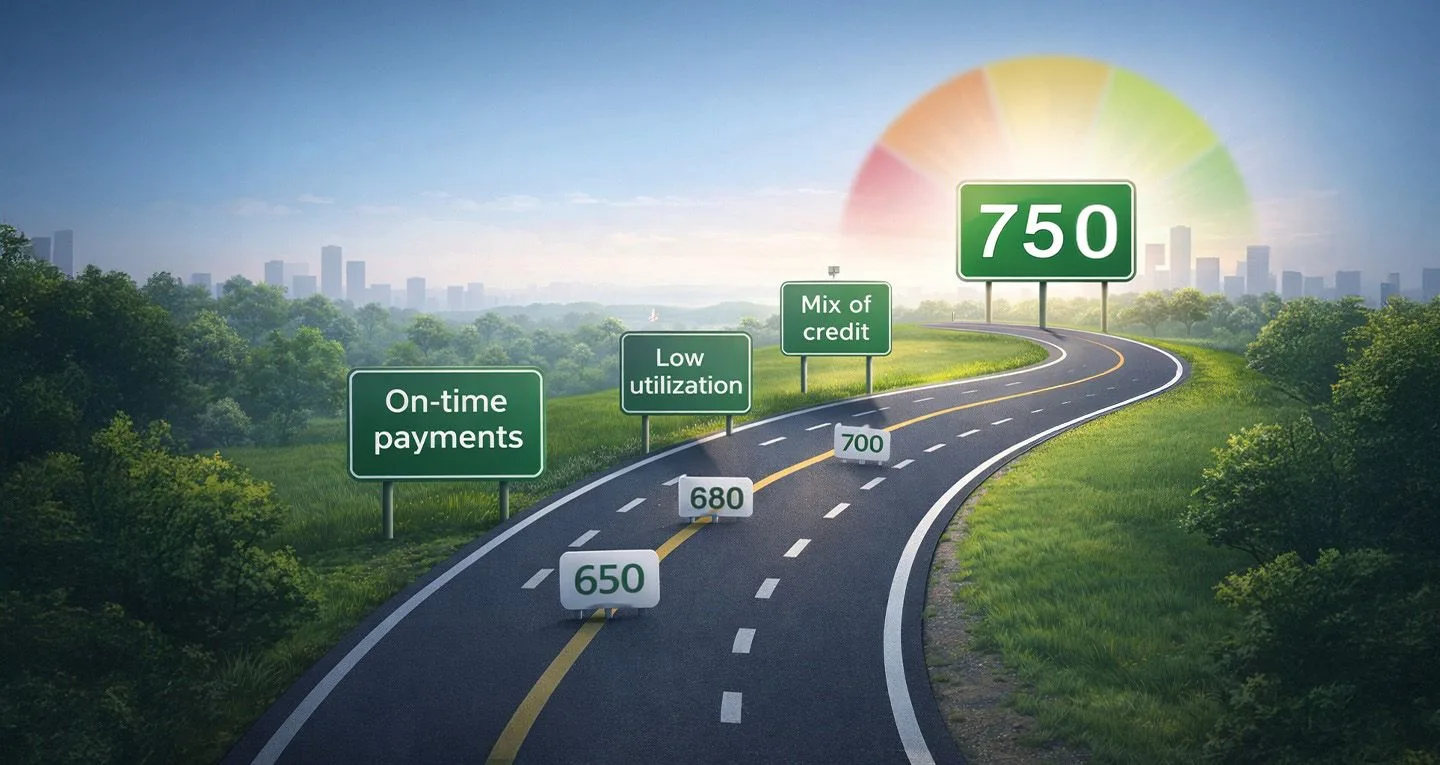
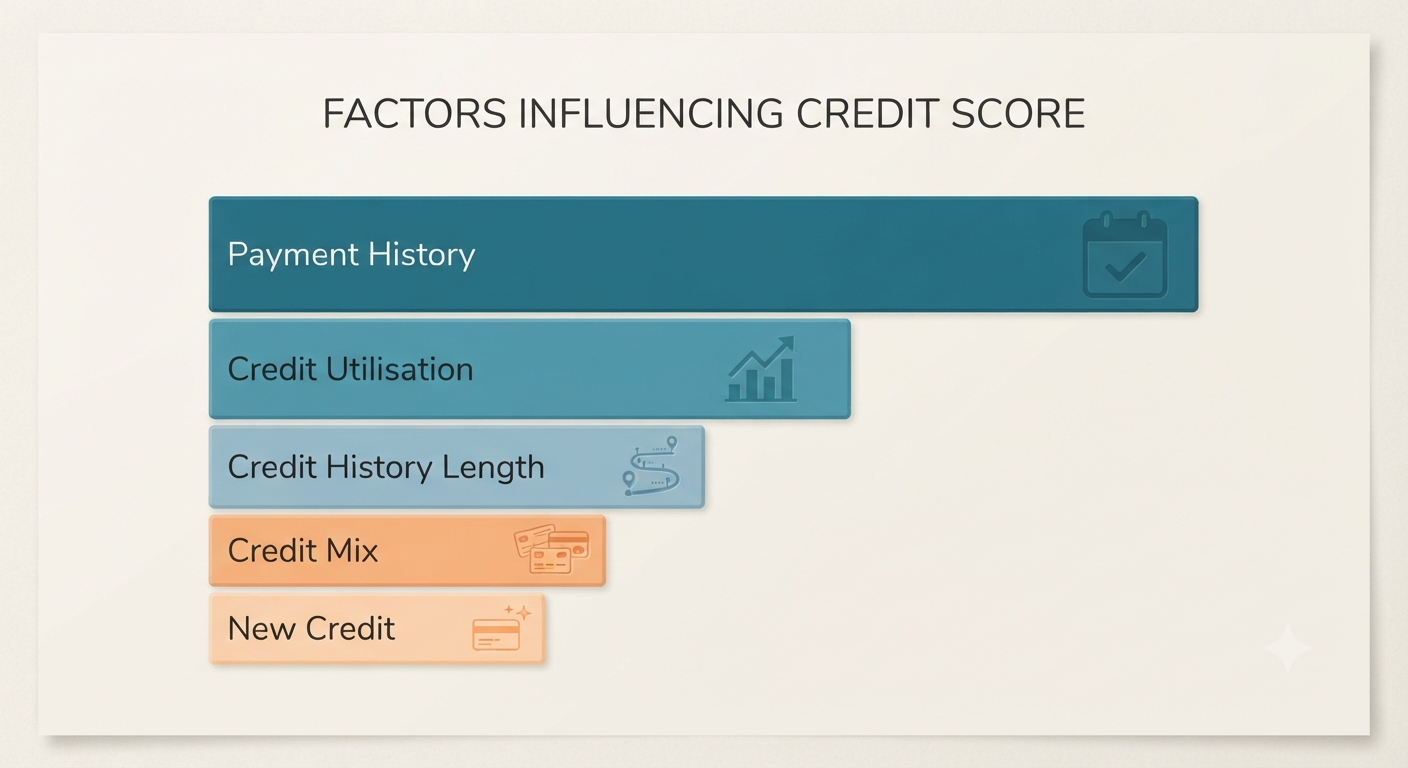
Five main factors determine the score, payment history and credit utilisation together account for the majority of it, with credit history length, credit mix, and recent hard enquiries contributing the remainder.
The same underlying behaviour can produce a slightly different score across different bureaus, since each uses its own specific calculation model, which is why the exact number can vary depending on where you check it.
A score can improve within a few months of sustained positive behaviour, but specific negative events, a default, a settlement, remain visible in the underlying report for considerably longer than the score's own recovery timeline.
If a persistently low score reflects an ongoing, unresolved debt situation rather than simply habits that can be adjusted, FREED can help address that debt directly so genuine score recovery becomes possible.
What a Credit Score Actually Represents
A credit score is a number, generated by a credit bureau, CIBIL, Experian, Equifax, or CRIF High Mark in India, using a specific mathematical model applied to your credit history, intended to estimate the likelihood that you will repay borrowed money reliably, based on how you have handled credit in the past.
It is not a judgement of your character, your income, or your overall financial wisdom. It is a narrow, specific prediction, calculated from a defined set of factors within your credit history, used primarily by lenders to make faster, more consistent decisions about loan and credit card applications than a fully manual review would allow for every applicant.
Understanding it this way, as a specific, mechanical calculation rather than a broader verdict, is useful because it clarifies that the score responds predictably to specific behaviours, not to vague notions of being "good" or "bad" with money in some general sense.

Want a clear, honest read on what is actually affecting your score?
Talk to a FREED Expert for free.
Connect with FREED ExpertThe Scale, and What Each Range Actually Means
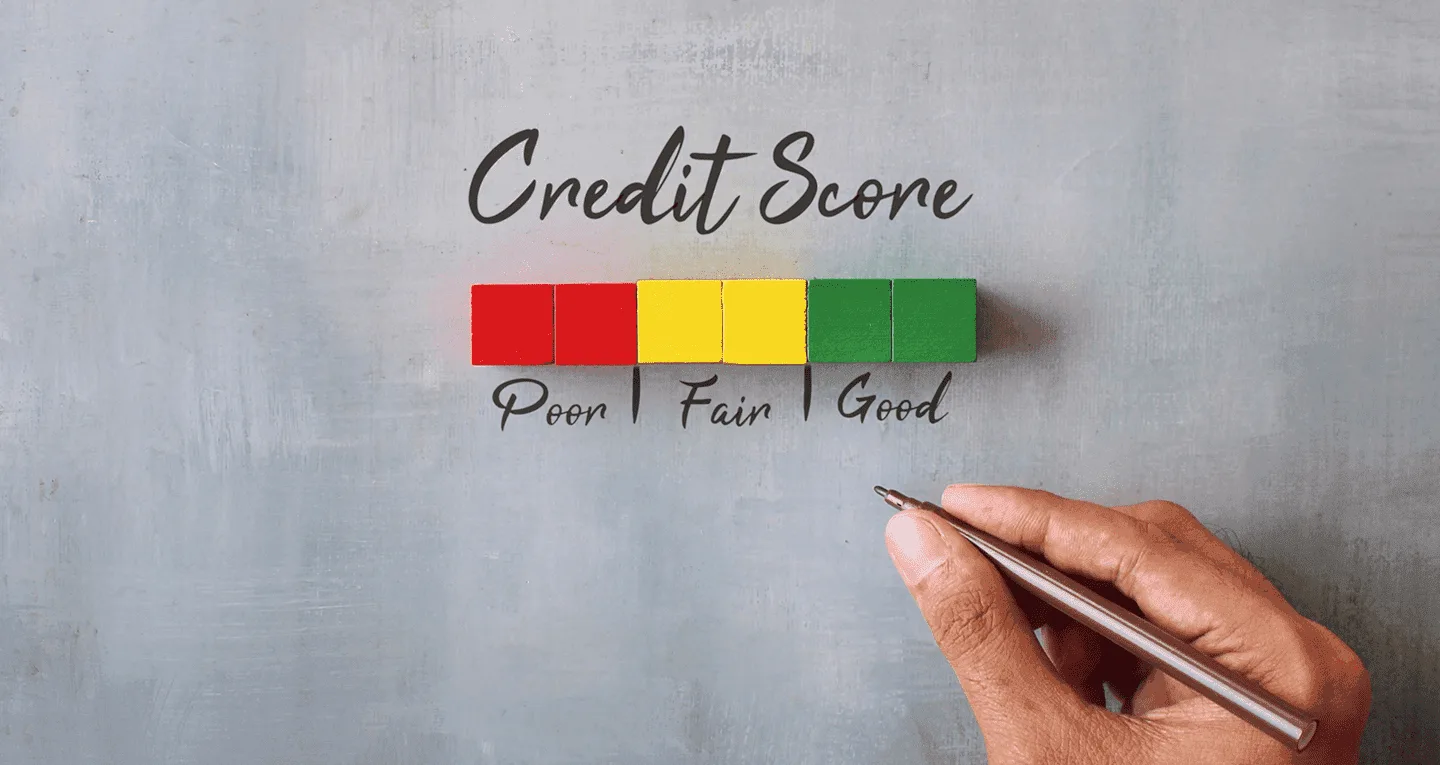
In India, credit scores generally range from 300 to 900, and the specific range your score falls into carries practical, specific meaning for how lenders are likely to respond to an application.
Below 600 is generally considered poor, and typically results in loan or credit card rejections, or approval only with a higher interest rate and stricter conditions. 600 to 750 is considered fair to good, generally sufficient for approval on many products, though not always at the most favourable terms available. Above 750 is considered good to excellent, and typically unlocks the best available interest rates, faster approvals, and higher credit limits, with scores above 800 often accessing the very best terms a lender offers.
These ranges are general guidelines used across most lenders, though the exact cutoff and the specific terms offered within each range can vary somewhat from one lender to another.
Factor 1: Payment History, the Single Biggest Driver
Payment history, whether you have paid your credit card bills and loan EMIs on time, consistently, over time, is generally the single largest factor in most credit scoring models, often accounting for roughly 30 to 35% of the total calculation.
This factor reflects not just whether a payment was eventually made, but whether it was made by the due date, how many days late it was if missed, and how frequently late or missed payments have occurred across your full credit history, not just recently. A single missed payment, corrected quickly, has a smaller, more temporary impact than a pattern of repeated late payments across multiple accounts over an extended period.
This is precisely why setting up auto-debit for at least the minimum due on every account is one of the single most effective actions available for protecting and improving a credit score, since it directly addresses the largest single factor in the entire calculation.
Factor 2: Credit Utilisation, the Second Biggest Driver
Credit utilisation, the percentage of your total available credit limit currently in use across all your credit cards, is typically the second largest factor, often accounting for roughly 25 to 30% of the calculation.
A utilisation level below 30% is generally considered healthy. Utilisation above 50%, even with a perfect payment record, actively pulls the score down, since it signals a higher reliance on available credit relative to what has been extended, a pattern statistically associated with higher risk of future repayment difficulty. Utilisation is calculated both per card and in aggregate across all cards combined, and both versions matter to the overall calculation.
This factor updates relatively quickly, generally reported to bureaus every 30 to 45 days, meaning a specific month's high spending, even if fully paid off by the due date, can show up as a temporary utilisation spike if the statement date falls before the payment is recorded, worth being aware of if your utilisation appears higher than your actual current outstanding balance would suggest.
Factor 3: Length of Credit History
How long your credit accounts have existed, both your oldest account specifically and the average age across all your accounts, contributes a smaller but still meaningful portion of the calculation, generally around 15%.
A longer history provides more data for the model to assess consistency and reliability over time. This is precisely why closing an old, even rarely used, credit card can quietly work against your score, it shortens your average account age, a factor that cannot be quickly rebuilt regardless of how well any newer account is managed afterward.
Factor 4: Credit Mix
The variety of credit types you manage, a mix of credit cards, and instalment loans like a personal loan or a vehicle loan, contributes a smaller portion of the calculation, generally around 10%, reflecting a demonstrated ability to manage different types of credit obligations responsibly.
This factor matters considerably less than payment history or utilisation, and is not a reason to take on a loan you do not otherwise need simply to diversify your credit mix. It functions more as a modest, secondary contributor that tends to develop naturally over a normal financial life, rather than something to be deliberately engineered.
Factor 5: Recent Hard Enquiries
Hard enquiries, generated when you formally apply for new credit, contribute a smaller portion of the calculation, generally around 10%, with each individual enquiry causing a modest, typically temporary, reduction of 5 to 10 points.
The impact of a single hard enquiry is relatively minor and fades within a few months if no further applications follow. Multiple hard enquiries within a short period, however, compound this effect considerably and signal to the model a pattern associated with urgent credit seeking, which is weighted more heavily than the same number of enquiries spread out over a longer period.
Not sure which of these factors is affecting your score the most right now?
Talk to a FREED Expert for free.
Talk to a FREED ExpertWhy the Same Behaviour Can Produce Different Scores Across Bureaus
A specific, often confusing detail is that checking your score through CIBIL, Experian, Equifax, and CRIF High Mark separately can produce slightly different numbers, even when checked on the same day, based on the exact same underlying credit history.
This happens because each bureau uses its own specific, proprietary calculation model, weighting the same five factors described above slightly differently, and may also have marginally different, or differently timed, data from certain lenders reporting to them. The differences are typically modest, generally within a range of 20 to 50 points, rather than dramatically different, but they explain why a score checked on one platform may not exactly match a score checked on another.
Are You in a Loan Trap? Quick Check
Move the slider to your total EMIs as a % of monthly salary. See your debt stress level instantly.
EMIs as % of Monthly Salary
How Quickly a Score Actually Changes
Scores are generally recalculated and updated on a rolling basis as lenders report new information to bureaus, typically every 30 to 45 days, rather than instantly with every single transaction or payment.
A single, isolated positive action, one on time payment, one paid off balance, produces a modest, gradual improvement rather than an immediate, dramatic jump. Sustained positive behaviour, consistent on time payments and healthy utilisation maintained over 6 to 12 months, produces considerably more meaningful, visible improvement than any single action in isolation, regardless of how significant that single action felt at the time.
Common Myths About Credit Scores, Corrected
A few specific, persistent myths are worth correcting directly. Checking your own score lowers it, false, this is always a soft enquiry with zero impact. Closing a credit card always helps your score, false, it often hurts it by reducing available credit and shortening account history. Carrying a small balance instead of paying in full helps build credit, false, paying in full every month is always better, this myth likely persists because people confuse having a card with a limit that reports positively with the separate, unrelated cost of actually carrying interest bearing debt. A high income guarantees a high score, false, income is not directly a factor in the calculation at all, only how credit is actually managed.

What the Law Says
Under RBI regulations, every individual is entitled to one free, complete credit report per year from each of the four licensed bureaus in India, and bureaus are required to investigate and correct any formally disputed inaccuracy within approximately 30 days. This right to a free annual report and formal dispute process is the most direct, no cost way to confirm exactly which specific factors are currently affecting your own score.
Check My Credit Score FreeA Simple Monthly Habit That Keeps a Score Healthy
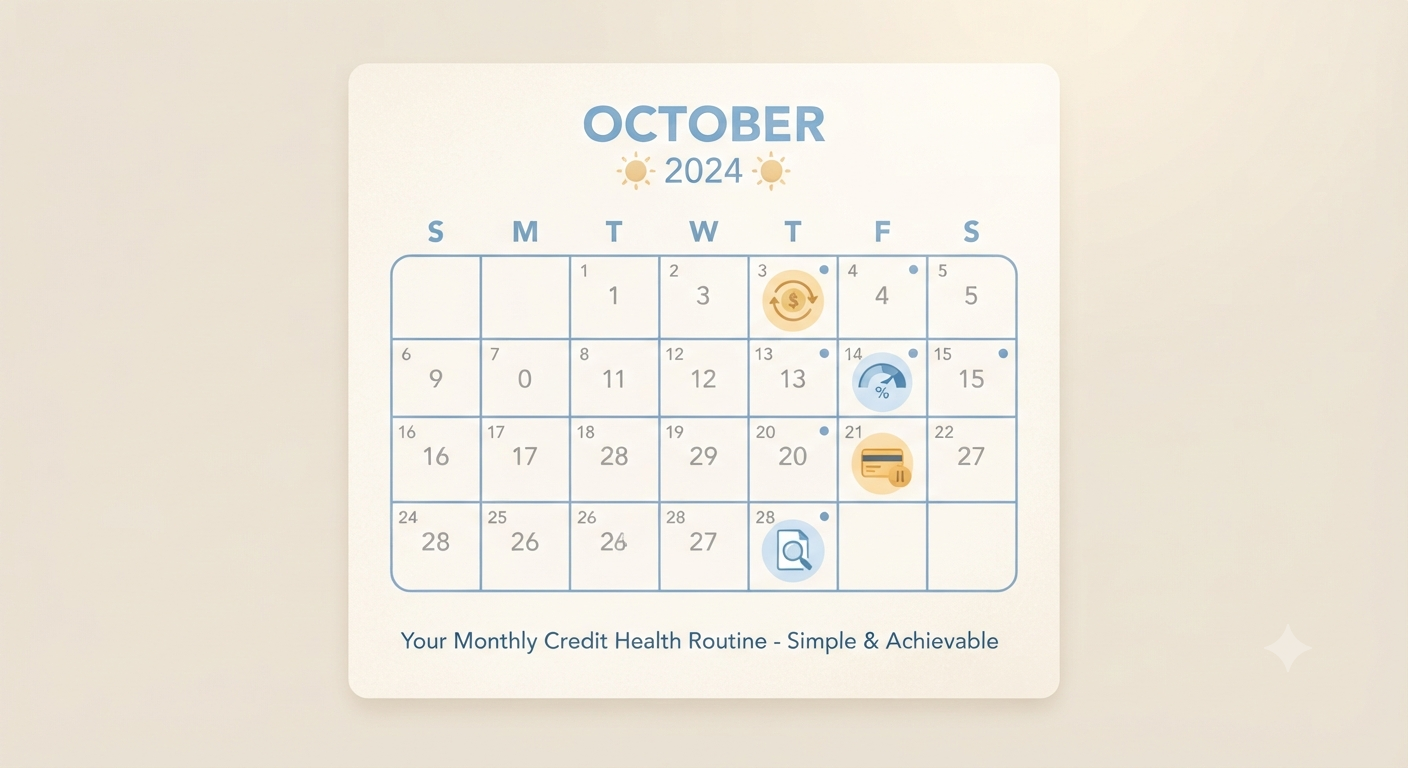
A brief, consistent monthly habit reliably protects and improves a credit score over time, without requiring any complex strategy. Confirm every payment due that month is scheduled through auto-debit, so none are at risk of being missed. Check your current utilisation across all cards combined, and pay down any balance pushing this above 30% before the statement date if possible. Avoid applying for any new credit unless genuinely needed. And once or twice a year, request a full credit report to confirm accuracy and catch any error before it silently affects future applications.
When a Low Score Reflects Debt That Needs Direct Attention
For many people, a lower than desired score reflects specific, adjustable habits, inconsistent payment timing, high utilisation from spending patterns, that respond well to the changes described above over a period of several months.
For others, a persistently low score reflects an existing, unresolved debt situation, multiple accounts significantly overdue, a utilisation level that current income genuinely cannot reduce without restructuring, that will not meaningfully improve through habit changes alone, since the underlying debt itself continues generating new negative impact faster than better habits elsewhere can offset it.
FREED's Debt Consolidation Program combines multiple high interest debts into one lower interest loan with a single, manageable EMI, directly supporting a return to consistent, on time payment history and healthier utilisation.
FREED's Debt Resolution Program negotiates a reduced settlement for debt that cannot realistically be repaid in full, on average 56% less than the original outstanding, stopping the ongoing damage an unresolved default causes and creating a genuine starting point for recovery.
A free consultation can assess your specific situation honestly and identify whether habit changes are likely to be sufficient, or whether the underlying debt needs to be addressed first.
FREED Financial Health Score
Want an honest, specific read on what is currently affecting your credit score? Take the FREED Financial Health Score, free, 2 minutes.
Check My Financial Health Score
Mohit Juneja
Mohit Juneja writes educational content at FREED on debt management, credit scores, loan repayment, and borrowing best practices. His content is shaped by expert insights and industry knowledge, helping readers better understand their financial options and make informed decisions.
mohit.juneja@freed.care

FREED is India's trusted loan management platform. Founded in 2020 and headquartered in Gurugram, FREED has counselled 20 lakh+ people on personal loans, credit cards, and app loans. FREED charges fees only on successful settlement, not upfront. FREED does not handle secured loans (home loans, car loans, gold loans).
Media Mentions