How to Increase Your CIBIL Score Fast: Steps That Actually Work
How to increase CIBIL score fast means taking specific, ordered actions: fixing report errors, clearing overdue dues, and keeping credit card usage below 30%, to push your score toward 750 as quickly as possible. No shortcut exists, but the right sequence gets you there faster than random effort.

Mohit Juneja
Reviewed by FREED India, Debt Resolution Specialists
 4.7/5
4.7/5 ₹3,200Cr+
 20,000+
 20,00,000+4.7/5₹3,200Cr+20,000+20,00,000+
KEY TAKEAWAYS

A higher CIBIL score can improve your chances of loan approval and may help you access more competitive interest rates.
Correcting errors on your report is the single fastest action
Payment history is one of the biggest factors affecting your score. Paying on time consistently can help strengthen your credit profile over time.
Credit utilisation, how much of your limit you use, should stay below 30%. High usage is the second most common score killer
FREED's Credit Insights pulls your Experian report and tells you exactly what's affecting your score, so you know where to focus instead of guessing
What Is a CIBIL Score and Why Does It Actually Matter?
Your CIBIL score is a number between 300 and 900. TransUnion CIBIL calculates it based on your credit history, and every bank and NBFC checks it before approving a personal loan or credit card.
There are 4 RBI-licensed credit bureaus in India: CIBIL, Experian, Equifax, and CRIF Highmark. CIBIL is the most widely used, and most lenders pull it first.
The number matters because it directly changes what you pay. A score of 800 or above can help you get a lower home loan interest rate. On a 20-year loan, even a small difference adds up to lakhs over time. A lower CIBIL score can make it more difficult to get approved for unsecured loans or access favourable interest rates.
Think of it this way. Two people apply for the same home loan. One has a score of 750, one has 680. The person at 680 may get a higher rate, a lower approved amount, or a flat rejection. The score changes the terms of your financial life.
If you want a clear read on where you stand, FREED's Credit Insights pulls your Experian report and shows your score along with what's pulling it down. It costs ₹249 for 3 months and is open to anyone; you don't need to be enrolled in any FREED program to use it.
What Makes a CIBIL Score Go Up or Down?
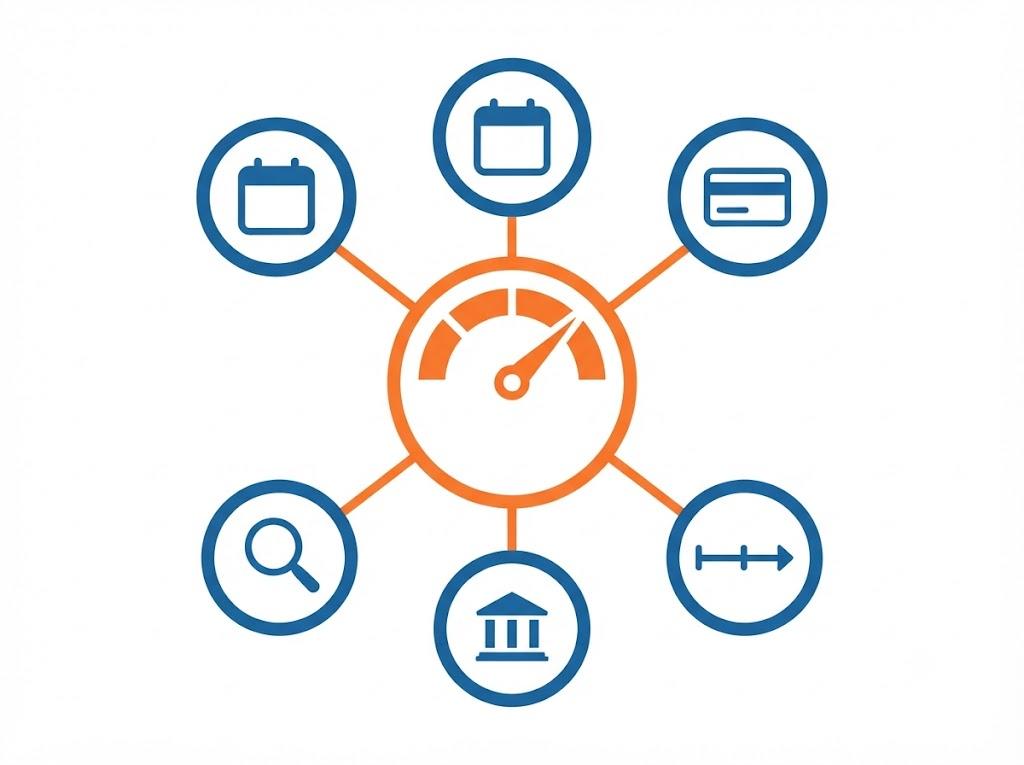
Five factors decide your score. Knowing the weight of each tells you where to focus first.
Payment history is the biggest factor. Every EMI and credit card bill paid on time adds a positive mark. Every missed or delayed payment adds a negative one. A missed payment can affect your credit profile. Consistent on-time payments over time can help strengthen it again.
Credit utilisation is the second biggest factor. This is how much of your total card limit you're using. If your combined limit is Rs. 1 lakh and you're carrying Rs. 70,000, your utilisation is 70%. Above 30%, most scoring models start treating you as a higher risk, even if you pay on time. This is one of the most common reasons scores get stuck in the 600 to 680 range.
Credit history length matters. The longer your accounts have been active and in good standing, the better. Closing old cards removes that history from the calculation.
Credit mix counts too. Holding both secured credit (home or car loan) and unsecured credit (card or personal loan) shows you can manage different types responsibly.
New inquiries play a smaller role. Every loan or credit card application triggers a hard inquiry. Multiple loan applications in a short period may affect your credit profile.
Why Is Your CIBIL Score Low Right Now?
This happens more than people realise. A low score is rarely one big decision. It's usually a few things that are compounded quietly.
Missed EMIs are the most common cause. A payment missed for 30 days or more can pull your score down, and a rough patch of two or three months can do damage that takes longer to repair than it took to cause.
High card usage is the second most common cause. You might pay every bill on time but still sit at 70% or 80% of your limit. The score doesn't just reward paying, it also looks at how much of your available credit you're using.
Errors are more common than people expect. A bank may have reported a payment as late when it was on time. A closed account may still show as open. A loan you never took may appear on your report.
Applying to too many banks in a short window leaves multiple hard inquiries on file and signals stress to future lenders.
Written-off and settled accounts remain visible on your credit report for an extended period and may affect future borrowing decisions. They're not the same as missing an EMI, but they carry real weight in the calculation.
One thing most people don't know: if you're a guarantor on someone else's loan and they default, that default shows on your report too. Same damage, not your debt.
If you're not sure which of these is actually dragging your score down, FREED's Credit Insights checks your Experian report and points to the specific factors behind your number, rather than leaving you to guess from a general list.
Step 1: Check Your CIBIL Report for Errors (Do This First)
This is the fastest possible score boost available to anyone, and it costs nothing.
An error on your report can suppress your score unfairly. A payment marked late when it was on time. An account that shows open when it was closed years ago. An account that simply isn't yours. Any one of these can drag your number down, and you'd never know unless you check.
You're entitled to one free full credit report per calendar year from each licensed bureau. Start there. Go to cibil.com and download your full report. You can also use FREED's Credit Insights to pull your Experian report and get a breakdown of what's affecting your score.
Here's how to raise a dispute if you find an error:
- Log in to cibil.com and go to the "Raise a Dispute" section
- Select the incorrect entry from your report
- Upload supporting documents: bank statement, EMI receipt, loan closure letter, whichever is relevant
- Submit and note the reference number to track progress
CIBIL forwards your dispute to the bank that originally reported the entry. Banks and bureaus are required to resolve the dispute within 30 calendar days of filing. If they don't, you are entitled to Rs. 100 per calendar day until the dispute is closed, under RBI circular RBI/2023-24/72 dated October 26, 2023. If the bank confirms the error, CIBIL updates the record.
It's not guaranteed, because the size of the correction depends on how significant the false entry was. But no other single action moves faster.
Check your own score as often as you like. It doesn't count as a hard inquiry and won't hurt your score.
Step 2: Clear Every Overdue Amount, Even the Small Ones
An overdue of Rs. 500 on an old credit card you've forgotten about keeps hurting your score every reporting cycle. The bank reports the unpaid balance every month, and each month it's a fresh signal that your account isn't in good standing.
DPD (days past due, meaning how many days you're past the due date on any account) entries are among the top reasons loan applications get rejected at the underwriting stage. A single DPD says to every future lender that you missed a payment. Multiple entries across accounts say something worse.
The moment an overdue clears, that monthly negative signal stops. The old mark doesn't vanish immediately, but the ongoing drag stops from that point.
Sequence matters. Clear the most overdue accounts first, then work forward. Don't just pay the minimum due; that still registers as a partial payment, better than nothing but not a clean bill of health. Pay the full outstanding balance.
One thing people often do after clearing an old account: close it. Don't. A cleared, zero-balance account that stays open helps your credit history length and keeps your available limit up. Both protect your utilisation ratio. Leave it open.
Check What Your Debt Is Costing You
Find out how much your current EMI load is weighing on your financial health.
See My Debt Impact: app.freed.care
Step 3: Bring Your Credit Utilisation Below 30%
Credit utilisation ratio (CUR) is your total card balance divided by your total limit across all cards. Cards with a combined limit of Rs. 2 lakh and Rs. 1.4 lakh outstanding gives you a CUR of 70%. That's damaging even if you pay the bill in full every month, because the score is based on the balance at the time the bank reports it, not after you pay.
Above 30% utilisation, most scoring models treat you as a higher risk. Bringing it down reflects in your score once your bank reports the lower balance, and bureaus now update scores more frequently than they used to, so the lower balance will be reflected once the lender updates your credit information.
Three ways to bring it down:
Pay down the balance. The most direct way. Even a partial paydown before the statement date can reduce the reported balance.
Request a credit limit increase. Ask your bank to raise your limit without spending more. Your balance stays the same, your limit goes up, the ratio drops. Not every bank approves this right away, but it's worth asking.
Spread spending across cards. If you hold multiple cards, don't concentrate on spending on one. Keeping each card below 30% of its own limit works better than staying below 30% overall on a single card.
The mistake people make: closing old cards to simplify things. That reduces your total available limit and pushes your utilisation up. An old card with a zero balance is helping you even if you never use it. Keep it open.
Step 4: Pay Every EMI and Bill on Time, Without Exception
Payment history is the single biggest factor in your score. One month of on-time payments won't move the needle much on its own.
Set up auto-debit for every EMI. For credit card bills, set a reminder 3 days before the due date, not on the date itself, so a bank holiday or transfer delay doesn't cause a missed payment.
Here's the part most people miss: on credit cards, paying the full outstanding balance is what shows as fully paid in your CIBIL record. Paying only the minimum due still registers as a partial payment. Better than a missed one, but it holds the score back because the remaining balance keeps showing as outstanding, and your utilisation stays high.
Bureaus now refresh credit data more frequently than the older monthly cycle, so a payment you make can reflect in your record sooner than it used to. If you're actively rebuilding, that's a meaningful change in your favour.
Consistent on-time payments can help strengthen your credit profile over time.
Step 5: Avoid New Loan Applications While You're Rebuilding
Every loan or credit card application triggers a hard inquiry on your report. Multiple applications within 60 days show up as a pattern that every future lender can see, read as a sign of financial stress.
Checking your own score is a soft inquiry and doesn't affect it at all. Only applications to banks and NBFCs create hard inquiries.
The instinct when cash is tight is to apply somewhere, anywhere, hoping one approves. That's understandable, but each rejection followed by another application compounds the damage.
Take a pause of a few months on new applications while your score rebuilds. If you genuinely need credit during this period, a secured credit card is the lower-risk option, issued against a fixed deposit you hold with the bank. Approval doesn't require a high score, and timely payment builds positive history. A small consumer durable loan, for a phone or appliance from a reputed NBFC, works the same way.
These build payment history without needing a strong score to access them.
Are You in a Loan Trap? Quick Check
Move the slider to your total EMIs as a % of monthly salary. See your debt stress level instantly.
EMIs as % of Monthly Salary
How Long Does It Actually Take to Increase Your CIBIL Score?
The honest answer depends on why the score is low.
If the problem is a reporting error, fixing it tends to show results faster than other fixes, since you're correcting a direct input to the calculation.
If the problem is overdue accounts and missed EMIs, clearing the dues and building a track record of on-time payments over time may help strengthen your credit profile over time, although the pace varies from person to person. No fixed timeline applies to everyone; your starting report, how many factors need fixing, and how consistent you stay all change the pace.
If the report carries a settlement or write-off entry, the path is longer. A "Settled" status may remain visible on your credit report for an extended period. It doesn't block improvement on the other factors, but it's a drag on the overall score. Recovery is still possible, and it depends on how much positive history you build alongside it.
This is also where Credit Insights is useful as an ongoing check rather than a one-time look. Since it's a 3-month subscription, you can see whether the actions you're taking are actually moving your score, instead of waiting months to find out.
What If Your Score Is Low Because of a loan settlement?
A "Settled" entry on your report doesn't mean your score is permanently stuck. It does mean recovery takes longer than it would without that mark.
A "Settled" status may remain visible on your credit report for an extended period. Banks treat it as a partial default, and a future application will show that entry to any lender who checks.
But here's what it doesn't stop. You can still build a positive payment history with a secured credit card or a small loan repaid on time. You can still bring your utilisation below 30%. You can still fix any errors in the rest of the report. Each of those adds a positive signal. The settled entry stays, but it shares the report with a new, clean history, and over time, that matters.
People settle loans because they had no other option, a genuine financial emergency: job loss, medical costs, or business failure. That's not a moral failing, it's a situation. The score reflects the situation, not the person.
If you're dealing with active loan debt and haven't reached the point of settlement, FREED can help you understand your options before anything affects your CIBIL record. Knowing the full picture, what settlement means, what consolidation means, and what staying on the current path means, gives you a real choice.
Check Your Score Today
See exactly what's affecting your score with FREED's Credit Insights.
Subscribe Now: freed.care/check-credit-insight

Mohit Juneja
Mohit Juneja writes educational content at FREED on debt management, credit scores, loan repayment, and borrowing best practices. His content is shaped by expert insights and industry knowledge, helping readers better understand their financial options and make informed decisions.
mohit.juneja@freed.care

FREED is India's trusted loan management platform. Founded in 2020 and headquartered in Gurugram, FREED has counselled 20 lakh+ people on personal loans, credit cards, and app loans. FREED charges fees only on successful settlement, not upfront. FREED does not handle secured loans (home loans, car loans, gold loans).
Media Mentions