What Is a Revolving Credit Facility? Uses in India and How It Works
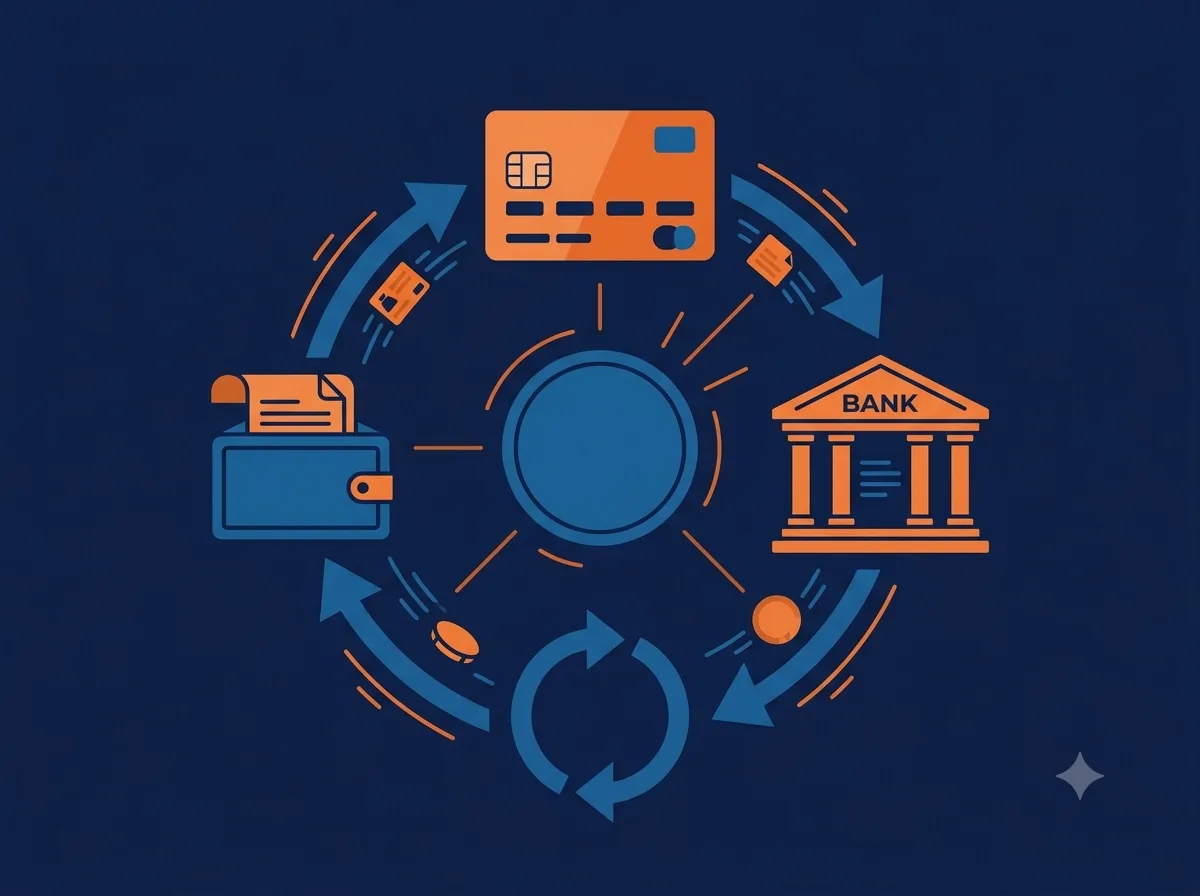
A revolving credit facility is a credit arrangement where a lender sets a maximum limit, and you can draw funds, repay, and draw again without reapplying each time. Interest is charged only on the amount actually used, not the full limit. A credit card is the most common example for individuals.
Mohit Juneja
Reviewed by FREED India, Debt Resolution Specialists
 4.7/5
 ₹3,200Cr+
 20,000+
 20,00,000+4.7/5₹3,200Cr+20,000+20,00,000+
Key Takeaways

A revolving credit facility lets you borrow, repay, and reborrow repeatedly up to a set limit, unlike a term loan's one-time lump sum.
Credit cards are the everyday example of revolving credit for individuals in India, businesses use it as a working capital line.
Interest applies only to the amount used, but carrying a balance month to month means interest keeps compounding on the unpaid part.
Paying only the minimum due keeps the account technically current while the outstanding balance and interest quietly grow.
Consistently carrying a revolving balance can make credit card debt grow quickly because interest continues to accrue on the unpaid balance.
What is a revolving credit facility?
A revolving credit facility works on a completely different logic from most loans you're used to dealing with. A term loan, like a personal loan or a car loan, hands you one lump sum on day one. From that point, you're locked into a fixed repayment schedule, usually a set EMI every month for a set number of years, until the loan is fully closed. A revolving credit facility doesn't work that way at all.
Instead, the lender agrees to a maximum limit, say ₹1,00,000, and leaves it to you how you use it. You can draw ₹20,000 this month, repay it next month, draw ₹35,000 the month after, repay part of it, and keep going. There's no fresh loan application every time you want to use the facility again. It simply sits there, ready, as long as you stay within your sanctioned limit.
For individuals in India, the credit card is the clearest and most common example. Every purchase draws down from your available limit. Every payment you make restores it by that same amount. Swipe ₹8,000, and your available limit drops by ₹8,000. Pay off that ₹8,000, and the full limit is back, immediately, with no paperwork in between.
For businesses, the same structure shows up as a working capital line or an overdraft account against a current account. A small trader might draw ₹2,00,000 to buy stock ahead of a festive season, repay it once the stock sells, then draw again for the next cycle. This is built specifically for expenses that repeat and fluctuate, unlike a term loan, which is built for one defined, one-time need such as buying equipment or expanding a shop.
The constant across both cases, individual or business, is this: you only pay interest on the portion of the limit you've actually used and are still carrying, never on the full sanctioned amount sitting unused.
How Does a Revolving Credit Facility Work Day to Day?
A revolving credit facility gives you a fixed limit. You use part of it, repay, and the limit opens up again. You pay interest only on the part you use, not on the full limit.
Example. Say your limit is ₹1,00,000 and you use ₹30,000. You have ₹70,000 still available. If you repay ₹20,000, your available limit goes back up to ₹90,000.
How this plays out on a credit card bill, cycle by cycle, is covered in our guide on revolving credit. This page looks at the wider facility, including overdrafts and credit lines.

What the Law Says
Under RBI guidelines, banks must clearly disclose the interest rate, minimum due calculation, and all charges on revolving credit statements.
Check what your credit card statement is really showing you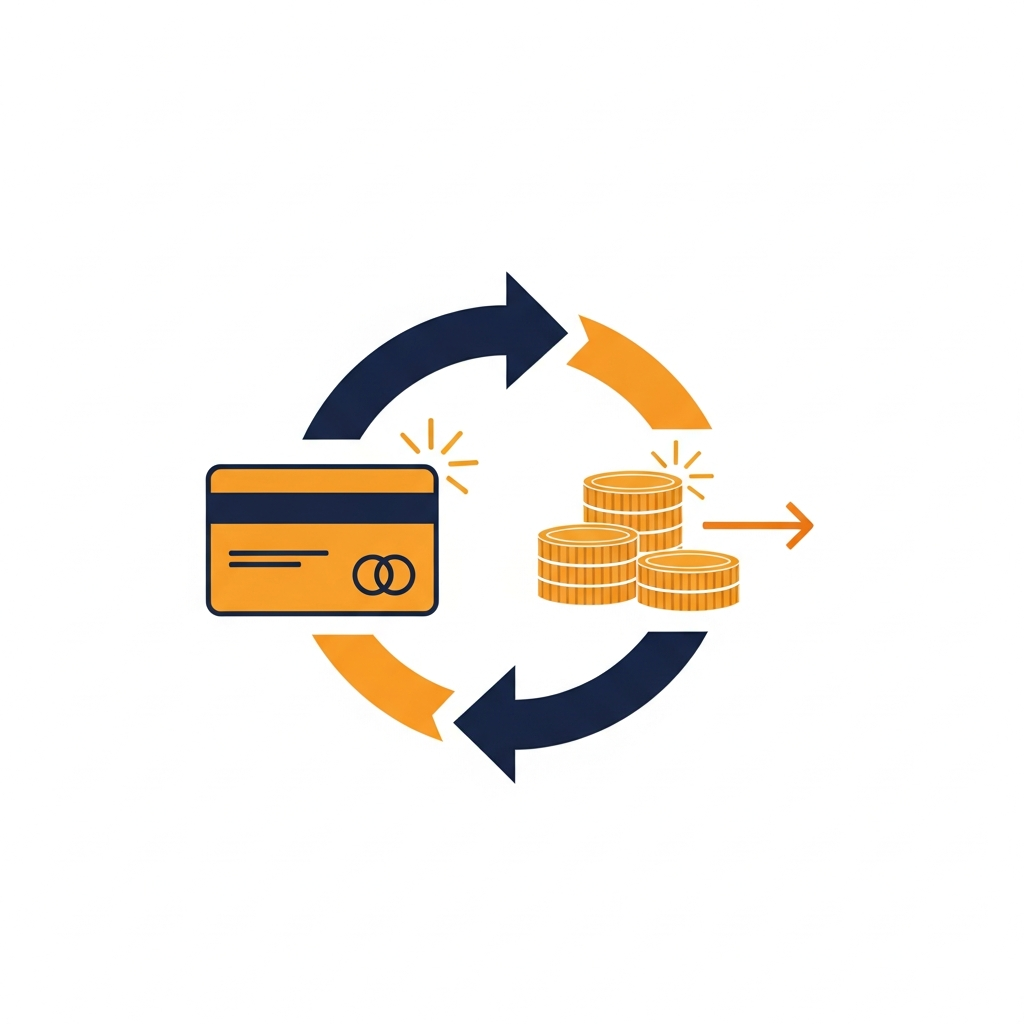
Revolving Facility or Term Loan: Which Ends Sooner?
A term loan gives you one lump sum and a fixed EMI for a fixed time. When the last EMI is paid, the loan ends. A revolving facility stays open. There is no fixed end date and no fixed EMI, only a minimum payment.
That makes revolving credit flexible, but also easy to keep using. The detailed comparison is in our page on revolving credit vs instalment credit.
Where is revolving credit used in India?
- Credit cards are the most widely used form of revolving credit for individuals, issued by nearly every major bank and a growing number of NBFCs. Your limit is typically set based on your income, existing obligations, and credit history, and it can be revised upward or downward over time based on how you use the card.
- Overdraft accounts let salaried employees or fixed deposit holders draw beyond their available account balance, up to a pre-approved limit tied either to their salary account or to a fixed deposit they hold with the bank. As money comes back into the account, whether from salary credit or repayment, the overdrawn amount reduces and the limit refills.
- Business working capital lines give small and medium businesses a running credit facility specifically to manage inventory purchases, payroll, and the short-term cash gaps that happen between when a business pays its suppliers and when it collects from its customers. Many working capital facilities are reviewed or renewed periodically, depending on the lender's policies.
- Many fintech lenders offer faster digital approvals, subject to eligibility checks. These are increasingly used for everyday spending rather than large, planned purchases, which makes the discipline of tracking usage even more important.
Each of these follows the exact same underlying mechanic, draw, repay, draw again, just scaled and packaged differently depending on who's using it and for what purpose.
Why a Revolving Facility Can Keep You in Debt Longer
The main risk is that the balance never really goes down. Interest on credit cards and many credit lines is charged every month on what is left unpaid. If you keep using the limit while paying only the minimum, the balance can stay the same for years.
A second risk is your credit score. Using a large share of your limit tells lenders you may be stretched, even if you never miss a payment.

FREED Expert Tip
Paying only the minimum due feels manageable, but the interest on the rest keeps adding up. Check your statement's "total amount due" every month, not just the minimum.
See what your real balance is costing youHow the minimum due trap builds up on revolving credit
This is where a manageable-looking balance quietly turns into a real problem, and it's worth walking through slowly, because at no single step does it look dangerous.
- Month one: you're carrying a ₹20,000 balance from last cycle and add ₹5,000 in new spending, taking your outstanding to ₹25,000. You pay the minimum due of ₹1,250. The card stays active, no red flags anywhere, nothing on your statement screams warning. But interest has already started accruing on the ₹23,750 you didn't pay off.
- Month two: you add another ₹5,000 in spending on top of the carried balance, and pay the minimum again. Now interest is compounding on a larger base than before, because last month's unpaid interest has itself joined the balance being charged interest this month.
- Repeat this for six to eight months, and the outstanding balance has grown steadily even though every single payment was made strictly on time, no missed due dates, no default flags, nothing that would show up as a problem on a quick glance at your account status. A borrower who started at ₹20,000 can easily find themselves carrying ₹35,000 to ₹40,000 by month eight, purely from the gap between minimum due and actual accruing interest.
This is exactly the point where the ladder of options starts to matter. If you're still able to make payments but the balance keeps climbing regardless of how disciplined you are, consolidating the revolving debt into one fixed, lower EMI is usually the more effective move. It converts an open-ended, compounding balance into a defined loan with a fixed end date, which stops the compounding entirely.
If the balance has grown well past what your income can realistically clear, even with consistent effort, that points to a different situation, and settlement becomes the option worth exploring, framed clearly as a last resort for genuine inability to repay, not a first response to a growing card bill.

Credit Card Balance Growing Every Month?
See if consolidation can bring it down to one lower EMI.
Check My Consolidation EligibilityAre You in a Loan Trap? Quick Check
Move the slider to your total EMIs as a % of monthly salary. See your debt stress level instantly.
EMIs as % of Monthly Salary
How FREED helps when revolving credit card debt gets out of hand
If your card or credit line balance keeps growing even though you pay every month, there are two paths.
- If you are still paying, FREED's Loan Consolidation Plan can replace your card dues and other unsecured loans with one lower EMI and a fixed end date. It comes at no fee to you, and your CIBIL score does not drop because of it.
- If you genuinely cannot repay, Settlement is not something a borrower chooses out of preference. If you genuinely cannot repay your loans, FREED negotiates with your lenders to settle them for less than 50% of your outstanding dues. The "Settled" mark stays on your report for up to 7 years.
What helps you use revolving credit without getting stuck
- 1
Pay the full statement amount when you can
Pay the full statement amount when you can, not just the minimum due. Clearing the entire balance every single cycle is, by a wide margin, the single biggest factor in avoiding accumulated interest, more impactful than any card feature, cashback offer, or reward point programme attached to the account.
- 2
Keep utilisation
Keep utilisation below 30% of your total available limit, added up across every card you hold, not just one. Even with a perfect on-time payment record, consistently high utilisation is generally considered poor credit practice, and it can affect your score independently of whether you're actually missing payments.
- 3
Treat the credit limit as a safety net, not as spending power.
Treat the credit limit as a safety net, not as spending power. The available limit isn't extra income sitting there for you to use, it's borrowed money that comes with a real cost the moment it's carried past the due date. A useful habit is to mentally treat your card limit the way you'd treat an emergency fund, there for
- 4
Review the statement every single cycle
Review the statement every single cycle, not just the amount due at the top of the page. Look specifically at the total outstanding balance, the interest charged that cycle, and how much of your last payment actually went toward reducing the principal versus simply covering interest that had already accrued.

Mohit Juneja
Mohit Juneja is FREED’s Content & Communication Lead with 12+ years of experience across content, media, advertising and digital communications. He holds a postgraduate diploma in Communications from Xavier Institute of Communications, Mumbai, and has worked with organisations including NDTV, The Indian Express, McCann Worldgroup and NABARD.
At FREED, he leads content and communication across loan management, debt resolution, debt consolidation and financial well-being. His work combines research, storytelling and consumer-focused communication to make complex financial topics easier to understand and act on. He has also scripted and produced 11 documentaries on rural development and agriculture for NABARD, with film's selected for the Mumbai International Film Festival.
mohit.juneja@freed.care

FREED is India's trusted loan management platform. We help India settle their loans, consolidate their EMIs, improve their credit score, and manage their loans better. Over 20 lakh people trust FREED. We have managed more than ₹3,500 crore in loans and saved our users over ₹450 crore.
Media Mentions