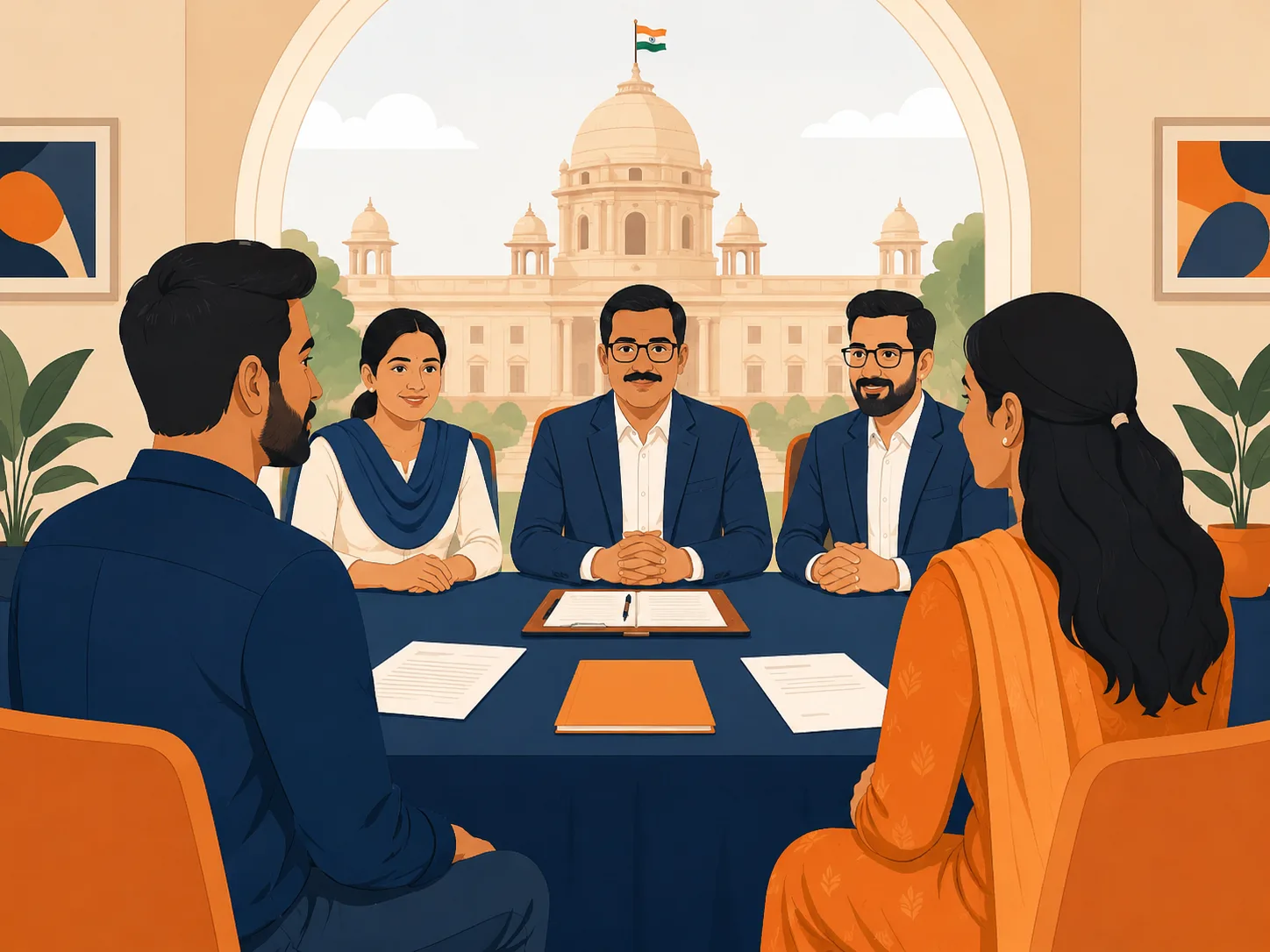
Lok Adalat Loan Recovery: Everything You Need to Know
Most guides cover how to get to a Lok Adalat settlement. This one covers what happens after you sign: your award becomes a court decree immediately, and defaulting on it triggers direct execution, not a fresh negotiation.

Mohit Juneja
Reviewed by FREED India, Debt Resolution Specialists
 4.7/5
 ₹3,200Cr+
 20,000+
 20,00,000+4.7/5₹3,200Cr+20,000+20,00,000+
KEY TAKEAWAYS

Under Section 21 of the Legal Services Authorities Act, 1987, a Lok Adalat award is deemed to be a decree of a civil court and is final and binding on the parties.
If you default on the installments agreed in your Lok Adalat award, the bank can file a direct execution petition, no fresh lawsuit, no new notice period, often recovering the full remaining balance in one go.
The award is final and binding, with no appeal available against it at all, a recent Supreme Court ruling confirmed even the executing court cannot set it aside.
The only real challenge route left is a writ petition to the High Court's supervisory jurisdiction, an exceptionally narrow, high-bar remedy, not a routine option.
Why a Lok Adalat Award Is Different From an Ordinary Settlement
Default on a private settlement you negotiated directly with a bank, and you're basically back where you started. Another notice goes out. The bank's recovery team picks up the file again and works it through its usual process.
A Lok Adalat award skips all of that from the first signature. You're agreeing to settlement terms that, once embodied in a Lok Adalat award, receive the statutory status of a civil-court decree. Unlike an ordinary contested judgment, however, a Lok Adalat award is based on settlement between the parties rather than adjudication of the dispute on merits.
That single fact should change how you read the document in front of you before you sign it. You're not agreeing to pay a reduced amount over time the way you would with a bank's own settlement desk. You're accepting terms with the same standing as a consent decree a civil court hands down after a full hearing, except here there's no hearing at all, just your signature. Anyone still deciding whether to go this route in the first place should read our practical guide to settling a bank loan at Lok Adalat before the session itself.
What decree status actually costs you if the schedule slips is the part almost nobody explains upfront.

Freed Expert Tip
Read the exact installment schedule in your award as carefully as you'd read a court order, because that's legally what it is the moment you sign.
Talk to FREED's TeamWhat Happens If You Default on the Agreed Installments
Say an award sets ₹8,000 a month for 24 months against a ₹1.92 lakh loan, with a standard acceleration clause built in. Miss the third payment, and the bank isn't chasing that missed ₹8,000. It's filing to recover whatever remains of the ₹1.92 lakh, in one shot, through the same legal recovery process available for enforcing any civil decree.
This isn't a hypothetical read of the statute. In K.N. Govindan Kutty Menon v. C.D. Shaji (2012), a Lok Adalat settlement carried exactly this kind of clause: default on the installments, and the creditor could recover the full balance in one lump sum. The debtor stopped paying. The creditor went straight to an execution petition, skipping any fresh suit entirely. In K.N. Govindan Kutty Menon v. C.D. Shaji, the Supreme Court recognised that a Lok Adalat award arising from a settlement can be treated as a decree of a civil court and executed accordingly.
Most borrowers assume a missed payment buys them a phone call, maybe a warning letter, before things get serious. A borrower does not have an automatic right to reopen the settlement simply because circumstances later become difficult. Any further accommodation would depend on the creditor and the circumstances. The number written into your schedule is the number that gets enforced, and it enforces on the terms already fixed months earlier.
Whether you can even push back on any of this later is a separate question, and the answer is blunter than most people expect going in.

What the Law Says
Under Section 21 of the Legal Services Authorities Act, 1987, every Lok Adalat award is deemed to be a decree of a civil court, immediately executable. The Supreme Court has confirmed this applies to installment-plan awards directly, including acceleration clauses triggered by default.
Understand My RightsWhy You Basically Can't Undo an Award Once Signed
Section 21(2) writes finality straight into the statute. No appeal lies against a Lok Adalat award, to any court, for any reason tied to the terms themselves.
A 2025 Supreme Court ruling tested how far this actually reaches, and the answer surprised a lot of practitioners. A borrower tried to challenge the validity of their award during execution proceedings, arguing to the executing court itself that the award shouldn't stand. The Court shut that down. The executing court, it held, has no power to set aside a Lok Adalat award or a decree built on one. Wrong forum, wrong stage, case closed on that argument.
One door stays open, barely. A writ petition to the High Court, invoking its supervisory jurisdiction, is the remedy the Court pointed to instead. It's not a casual option. Courts reserve it for genuine fraud or a fundamental defect in jurisdiction, not for a borrower who's simply reconsidered a number they agreed to.
Sign a Lok Adalat award assuming you'll renegotiate it if life gets harder, and you'll find that assumption was wrong the moment you needed it to be right.
What This Means Before You Agree to a Payment Schedule
The safest time to raise concerns about the payment schedule is before the settlement is finalised and the Lok Adalat passes its award.
Two things are worth checking in the document itself. Does it carry an acceleration clause, the kind that turns one missed payment into the full remaining balance? And does the monthly figure match what you can actually pay most months, not what you'd pay in a good month with no surprises? Borrowers already behind on an education loan specifically should look at our piece on Lok Adalat education loan settlement, since eligibility there works a little differently.
If a proposed number feels tight, say so at the session, out loud, before anyone signs anything. A schedule stretched over a few extra months that you can actually keep beats a shorter one that looks better on paper and falls apart in month four.
What Are Your Options If You're Already Struggling With the Agreed Terms
Already behind on the installments in a signed award? Call the bank before a missed payment turns into an actual default, not after. A borrower does not have an automatic right to modify a Lok Adalat award. However, a borrower facing genuine difficulty can still approach the creditor to ask whether any accommodation is available.
That's the award. Other unsecured debt sitting outside it, another credit card, a separate personal loan, is a different conversation, and FREED's Debt Consolidation Program or settlement can still apply there. One thing needs saying plainly here: settlement is not something a borrower chooses out of preference. Banks and financial companies only consider it when someone is genuinely unable to repay in full.
How FREED Helps Before You Sign
Before a Lok Adalat schedule becomes a decree you can't undo, FREED's Debt Resolution Program can walk through the terms with you and help negotiate them properly.
For debt outside the award, credit cards, other personal loans, FREED's Debt Consolidation Program brings it into one lower EMI instead, for borrowers still able to pay. No decree, no finality, just a lower monthly number.

Tips If You're Heading Into a Lok Adalat Settlement
Treat the schedule as a binding court order the second you'd sign it, not a flexible private arrangement you can revisit later.
Look for an acceleration clause before you agree to anything. It can determine whether a missed installment makes the remaining balance immediately payable under the award.
Pick a number you're confident you can hit most months, even if that means stretching the schedule longer.
Call the bank the moment a payment gets shaky. Silence turns a manageable problem into a default.
Sources
Claim | Source |
Lok Adalat award deemed a decree of a civil court, immediately executable | Section 21, Legal Services Authorities Act, 1987 |
Installment-plan awards with acceleration clauses are directly executable on default | K.N. Govindan Kutty Menon v. C.D. Shaji, AIR 2012 SC 719, Supreme Court of India |
Award is final and binding, no appeal lies against it | Section 21(2), Legal Services Authorities Act, 1987 |
Even the executing court cannot set aside a Lok Adalat award; supervisory writ jurisdiction is the only remedy | Supreme Court ruling on Lok Adalat award finality (2025) |

Mohit Juneja
Mohit Juneja writes educational content at FREED on debt management, credit scores, loan repayment, and borrowing best practices. His content is shaped by expert insights and industry knowledge, helping readers better understand their financial options and make informed decisions.
mohit.juneja@freed.care

FREED is India's trusted loan management platform. Founded in 2020 and headquartered in Gurugram, FREED has counselled 20 lakh+ people on personal loans, credit cards, and app loans. FREED charges fees only on successful settlement, not upfront. FREED does not handle secured loans (home loans, car loans, gold loans).
Media Mentions