How to Settle a Bank Loan at Lok Adalat: A Practical Guide for Borrowers
Settling a bank loan at Lok Adalat means walking into a government-organised session, presenting your financial situation honestly, and agreeing on a reduced amount the bank accepts as full and final. This guide covers how to prepare your case, what banks actually consider, how to handle a bank that says no, and what happens after the award is signed.
Mohit Juneja
Reviewed by FREED India, Debt Resolution Specialists
 4.7/5
4.7/5 ₹3,200Cr+
 20,000+
 20,00,000+4.7/5₹3,200Cr+20,000+20,00,000+
Key Takeaways

Lok Adalat is not a court case. It is a conciliation session where both sides agree voluntarily. No one is ruled against.
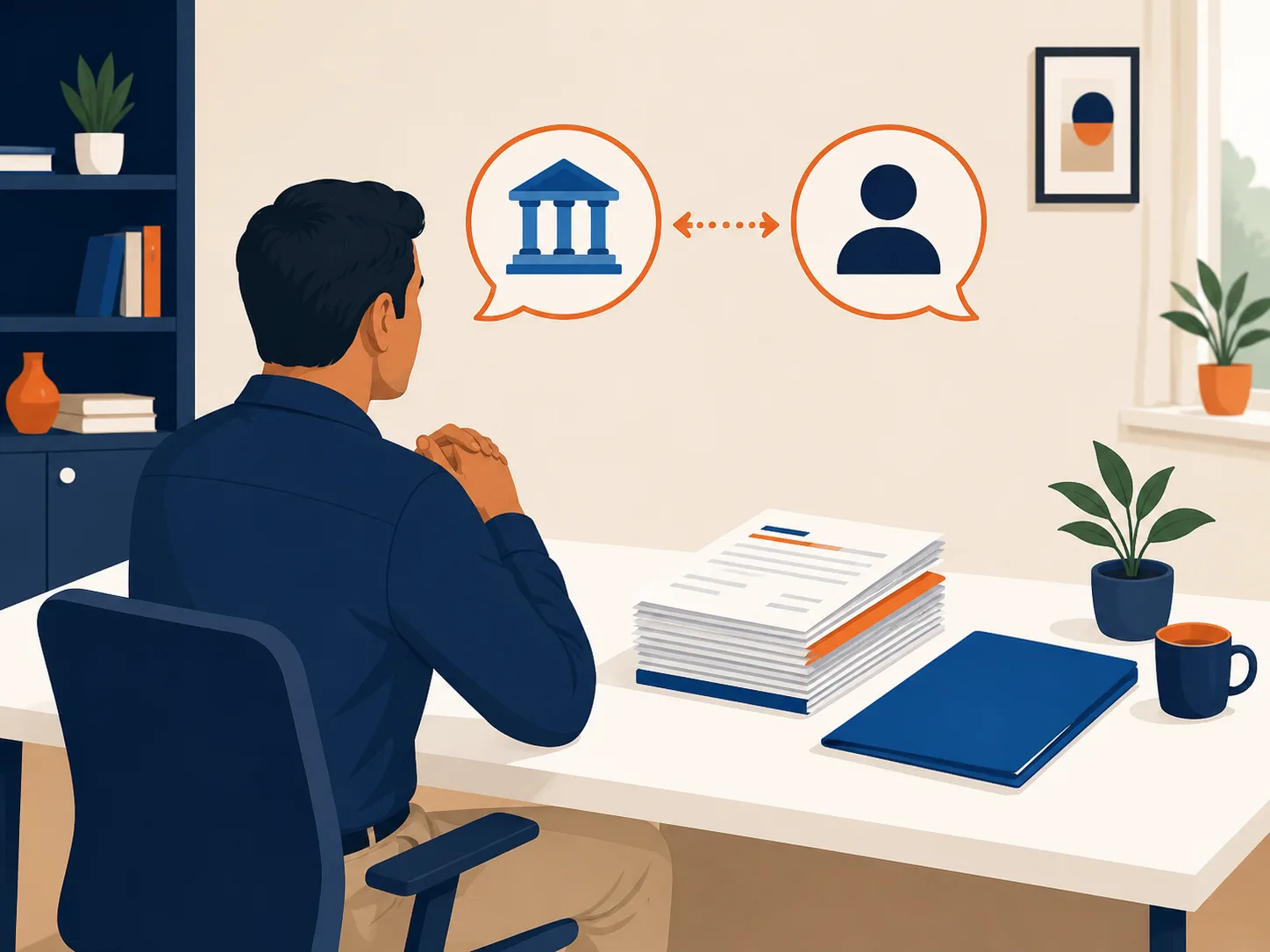
Banks come to Lok Adalat because it helps them clear bad loan accounts faster than litigation. That makes them more open to negotiating than you might expect.
Preparation decides the outcome. Borrowers who arrive with the right documents and a realistic offer move faster than those who don't.
The award is permanent. Once signed, the bank cannot reopen the claim. You cannot appeal either.
The account is reported as 'Settled' on your credit report. The reporting period is determined by the credit bureau's policies. Know this before you agree to anything.
If no agreement is reached in one session, you have not lost anything. You can return at the next Lok Adalat or try another route.
Why Do Banks Agree to Settle at Lok Adalat?
What Banks Actually Look at When Deciding to Settle
Before any Lok Adalat session, the bank's recovery team reviews your account internally. They look at a few things.
How long has the account been NPA? The longer the default, the harder it is for the bank to justify a full recovery through litigation. Older NPA accounts may be considered differently depending on the bank's recovery policy and the borrower's financial circumstances.
What is the outstanding amount? Banks weigh how much they can realistically recover through a court case versus what they can settle for now. For unsecured loans like personal loans and credit cards, there is no asset to fall back on. That limits what litigation can achieve.
What has the borrower shown about their financial situation? This is the part you control. A borrower who arrives with clear documentation of why repayment in full is genuinely not possible gives the bank something to work with. A borrower who arrives with nothing gives them no reason to move.
What is already on the loan account? Banks may consider waiving accumulated interest and penalties, depending on their internal policies and the borrower's circumstances. The exact amount depends on your balance, your financial position, and what the bank's NPA policy allows.
How to Build Your Case Before the Session
The session itself is often short. The preparation before it is what counts.
- 1
Get your loan documents together.
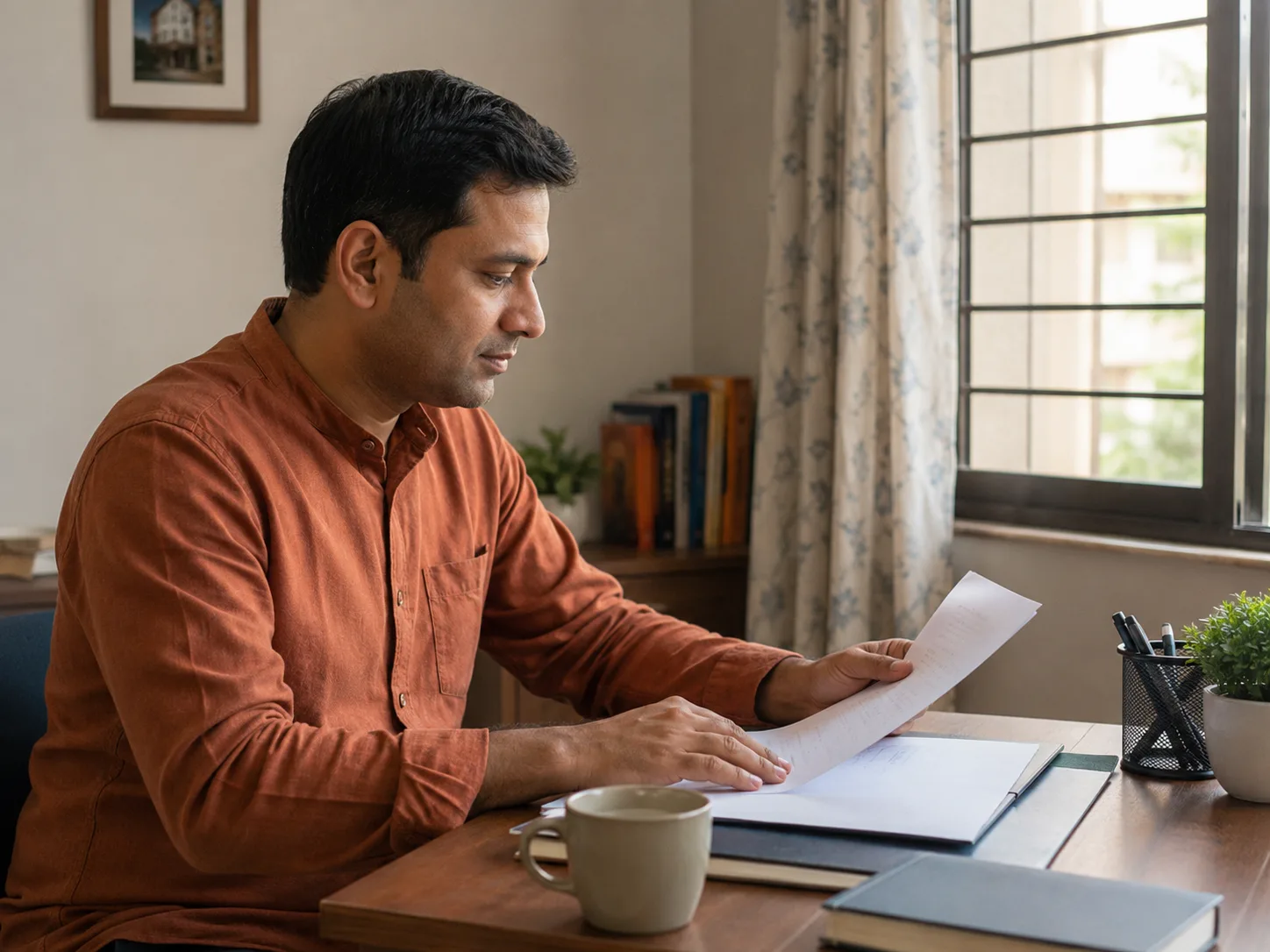
You need the original loan agreement or sanction letter, the last 6 to 12 months of bank statements, and any notices or demand letters the bank has sent you. If the bank has already filed a court case, bring the case number and the summons.
- 2
Document your financial hardship in writing.
This is not about drama. It is about facts. What changed? When did it change? Recent salary slips showing a drop in income, a job loss letter from your employer, medical bills if a health event caused the shortfall, or bank statements showing consistent low balances. The panel needs a factual picture of why repaying in full is genuinely not
- 3
Know your number before you go in.
Before the session, work out how much you can actually pay, and by when. The payment timeline is specified in the Lok Adalat award and commonly falls within a few weeks. Do not agree to an amount you cannot arrange within that window. A missed payment after the award is a fresh problem on top of the existing one.
- 4
Understand what you are asking for.
You are asking the bank to close the loan account by accepting a reduced amount as full and final payment. Be ready to say clearly: here is my outstanding balance, here is what I can pay, here is why I cannot pay more. Clear and factual works better than vague or emotional.

FREED Expert Tip
If a significant share of your monthly income is already committed to EMIs, it may be worth reviewing your repayment options before approaching Lok Adalat. Talk to a counsellor to understand your specific situation before you approach the session.
Talk to a FREED ExpertWhat Happens at the Lok Adalat Session
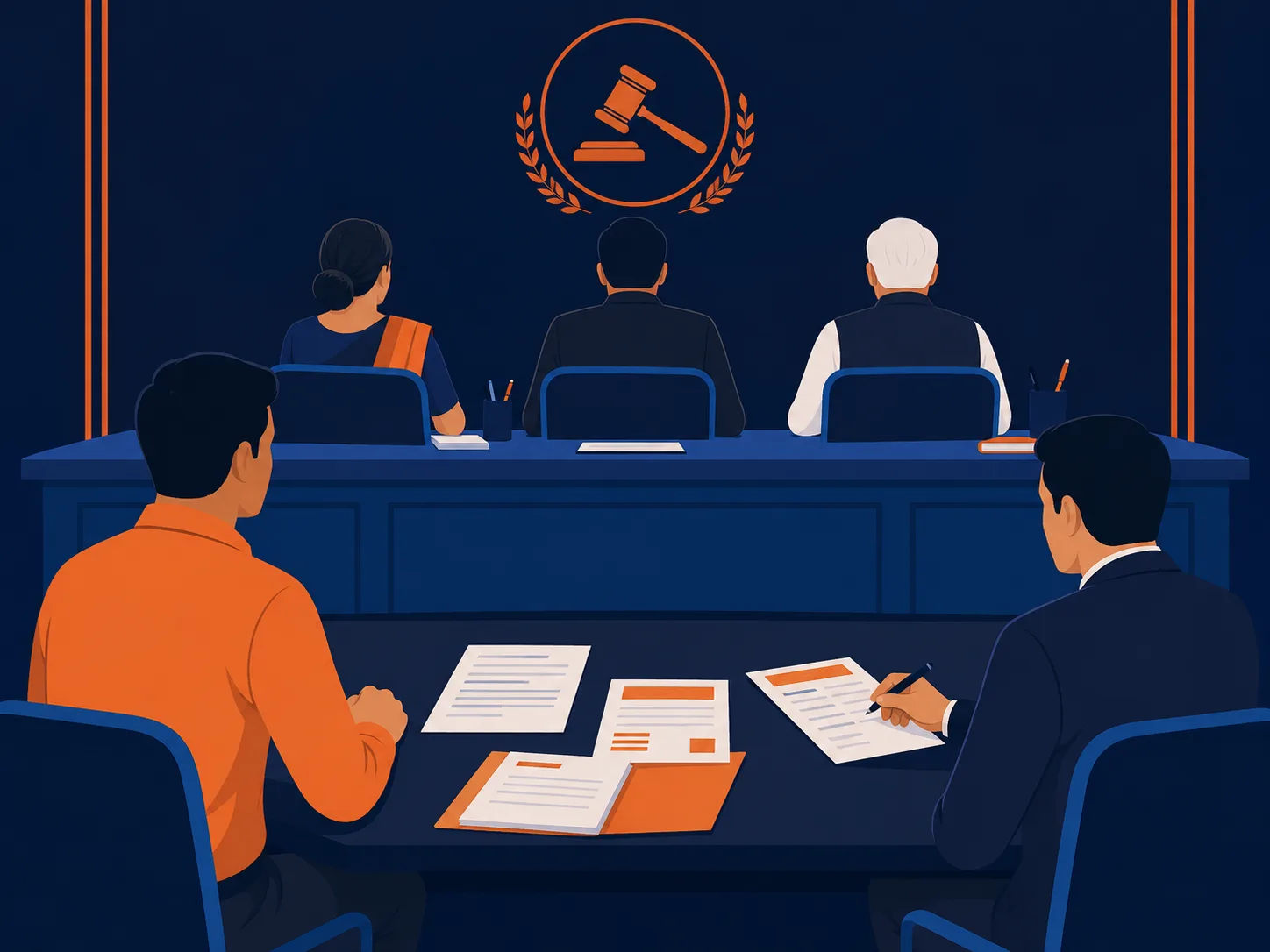
A conciliation panel typically consisting of a retired judge, a lawyer, and a social worker sits with you and the bank representative. They are not there to decide who is right. They are there to help both sides agree.
The bank representative will likely present the outstanding amount, interest accumulated, and any penalties on the account. You present your financial position and your offer.
The panel may ask clarifying questions. They may suggest a middle figure between what you offered and what the bank wants. They are not pressuring you. You can say no to any proposal and leave without signing.
If both sides agree, the panel drafts the award on the spot. Both you and the bank representative sign it. Under the Legal Services Authorities Act, 1987, this award is treated as a civil court decree from the moment it is signed. It is final. Neither side can appeal or reopen it.
If no agreement is reached, no award is passed. No penalty applies. You can try again at the next Lok Adalat session or explore another route. Attending does not close any door.

What the Law Says
Under Section 21 of the Legal Services Authorities Act, 1987, every Lok Adalat award is treated as a civil court decree. It is binding on both parties and permanently closes the bank's claim on that loan. Consult a legal professional if you have questions about how this applies to your specific account.
Get Free Debt AssessmentWhat to Do If the Bank Says No
Banks can decline to participate or decline your offer at the session. This happens. Here is how to handle it.
If the bank refuses to attend the Lok Adalat session at all, your options include requesting another date through the District Legal Services Authority (DLSA) or approaching the bank's NPA settlement desk directly for a one-time settlement (OTS) outside of Lok Adalat.
If the bank attends but rejects your offer, ask the panel whether the bank has a counter-proposal. Sometimes the bank's first position is not its final one. The panel can help bring both numbers closer. If the gap is too large, you can leave and reassess before the next session.
A bank that declines at one session may accept at the next one. NPA accounts that sit unresolved cost the bank carrying costs every quarter. Time sometimes works in your favour.
If direct settlement with the bank outside Lok Adalat is also not progressing, FREED's counsellors can work with the bank's recovery or NPA team on your behalf and manage the negotiation directly.
What Happens After the Award Is Signed
Signing the award is not the end. The steps after matter just as much.
Pay within the agreed window. The payment deadline is stated in the award itself, usually 30 to 45 days. Pay through official channels only: NEFT, RTGS, or demand draft directly to the bank's account. Do not pay cash to anyone. Keep the payment receipt.
Request the NOC in writing immediately after payment. The NOC (clearance letter, officially called No Objection Certificate) is the bank's written confirmation that no dues remain. Request it in writing on the same day you make the payment. Follow up until it arrives. This document is your proof that the matter is permanently closed.
Check your CIBIL report 45 to 60 days after payment. The bank is expected to update your account status with credit bureaus after settlement. Confirm that the account now shows as "Settled" rather than "Default" or any other status. If it has not been updated correctly, write to the bank with your payment receipt and award copy and ask them to correct it.
What the "Settled" CIBIL Status Actually Means for You
This section is here because many borrowers find out about the CIBIL impact only after they have signed. Know it before.
The account will be marked "Settled" on your CIBIL report. This is not "Closed." Any bank or NBFC that pulls your report will see this mark. It stays for up to 7 years from the date of settlement. Future lenders may consider the reported settlement status while evaluating new credit applications. During this period, getting new unsecured loans approved becomes harder.
Lok Adalat does not give you a special CIBIL outcome. The same "Settled" mark applies whether you settle through Lok Adalat, directly with the bank, or through any other route.
What Lok Adalat does give you is a permanent legal close on the bank's claim. The debt is resolved. The bank cannot come back. That is the real value of the forum.
If you have already missed multiple payments, your CIBIL score has already dropped. Settlement resolves the outstanding debt with the lender and brings the account to a formal closure.
Common Mistakes Borrowers Make at Lok Adalat
These come from real cases. Avoid them.
- 1
Agreeing to an amount they cannot pay within the window.
The payment window after an award is short, usually 30 to 45 days. Borrowers who agree to an amount in the session and then cannot arrange it in time create a fresh legal problem. Agree only to an amount you can actually pay within the deadline.
- 2
Arriving without hardship documents.
Saying "I cannot pay" is not enough. The panel and the bank need to see why. Income documents, bank statements, and any proof of the event that caused the shortfall make your case credible. Without them, the session may not go anywhere.
- 3
Signing without reading the award.
The award drafted at the session is a legal document. Read it before you sign. Check the settlement amount, the payment deadline, and the statement that the loan is being closed as full and final. Ask the panel to clarify anything that is not clear.
- 4
Not collecting the NOC after payment.
Many borrowers pay the settlement amount and consider the matter done. The NOC (clearance letter from the bank) is what makes it actually done. Without it, you have no written proof that the bank's claim is closed. Follow up until you have it in hand.
- 5
Expecting recovery calls to stop immediately.
In some cases, a pending Lok Adalat session or a signed award can reduce recovery contact, but this is not guaranteed. The surest way to stop recovery calls is to complete the payment and get the NOC.
When Lok Adalat Is the Right Route and When It Is Not
Lok Adalat works well when:
- Your account is already NPA or overdue by 90 days or more
- You have a lump sum available or can arrange one within 30 to 45 days
- You want a legally binding resolution in a single session
- A court case has already been filed and you want to resolve it without further litigation
Lok Adalat is probably not the right fit when:
- Your account is still current or only slightly overdue, where asking the bank for EMI revision or a change in loan plan may resolve things without any settlement
- You cannot arrange any lump sum at all, since Lok Adalat settlements are paid in one go within a fixed window
- What you actually need is a lower monthly EMI over a longer period, which is worth requesting directly from the bank before considering settlement
Settlement is not a first resort. If there is a way to keep repaying through a revised plan, that route protects your credit record and is worth trying first.
How FREED Helps With the Bank Loan Settlement Process
FREED works in the direct settlement space. FREED does not sit inside Lok Adalat sessions or represent borrowers in the forum. What FREED does is help you prepare the parts that come before the session and handle the parts that follow it.
FREED counsellors review your complete debt situation and help you understand whether Lok Adalat, direct bank OTS, or another route suits your case. They help you put together the hardship documentation that any settlement route requires. When direct OTS with the bank is the right path, FREED's counsellors manage the back-and-forth with the bank's recovery or NPA team on your behalf and make sure the settlement letter has the right terms before any payment is made. After payment, FREED follows up for the NOC (clearance letter) and tracks the CIBIL update.
FREED covers unsecured loans only: personal loans, credit cards, BNPL products, and loan apps. FREED does not handle secured loans such as home loans or car loans.
FREED does not promise a specific waiver percentage and does not claim to stop recovery calls. What FREED does is handle the process and the follow-up so you are not going through it alone.
Settlement waiver up to 50%* is indicative, not a guarantee. Final terms are decided by the bank. FREED is not a loan provider. No outcome is guaranteed. Please verify directly with your bank.

Talking to a Bank Alone Is Hard. FREED Can Help.
Over 60,000 customers counselled. Real support, no false promises.
Book My Free CallAre You in a Loan Trap? Quick Check
Move the slider to your total EMIs as a % of monthly salary. See your debt stress level instantly.
EMIs as % of Monthly Salary
About FREED
FREED is India's trusted Loan Management Platform, founded in 2020 and headquartered in Gurugram. FREED helps people who are unable to repay unsecured loans, including personal loans, credit cards, and BNPL products, manage the settlement process end to end. FREED charges fees only when a settlement is successfully completed. FREED does not handle secured loans.

Mohit Juneja
Mohit Juneja writes educational content at FREED on debt management, credit scores, loan repayment, and borrowing best practices. His content is shaped by expert insights and industry knowledge, helping readers better understand their financial options and make informed decisions.
mohit.juneja@freed.care

FREED is India's trusted loan management platform. Founded in 2020 and headquartered in Gurugram, FREED has counselled 20 lakh+ people on personal loans, credit cards, and app loans. FREED charges fees only on successful settlement, not upfront. FREED does not handle secured loans (home loans, car loans, gold loans).
Media Mentions