Loan Rejected Due to CIBIL Report: What to Do
If your loan is rejected due to your CIBIL report, start by asking the lender for the reason and reviewing your full credit report. Check account details, repayment history, enquiries and account statuses for errors. Dispute inaccurate information and address any genuine repayment or debt-related concerns before applying again. Remember that lenders also consider your income, existing EMIs, eligibility criteria and submitted documents.
Mohit Juneja
Reviewed by FREED India, Debt Resolution Specialists
 4.7/5
 ₹3,200Cr+
 20,000+
 20,00,000+4.7/5₹3,200Cr+20,000+20,00,000+
Key Summary

A CIBIL report is one input lenders use. Axis Bank's own FAQ says a high-income profile can still be rejected if existing EMIs are high, and that credit history issues or incomplete documents can lead to rejection.
Get your Free Full Credit Report, including your score, once during January to December, and check it line by line.
A wrong entry can be disputed online. CIBIL says it may take about 30 days.
CIBIL says it doesn't maintain a defaulters list, so there's no list to be removed from.
Axis Bank's page warns that multiple loan applications within a short period can affect your credit score and reduce approval chances.
Don't reapply to several lenders at once. Wait until the reason has changed.
What Should You Do When a Loan Is Rejected Due to Your CIBIL Report?
Avoid submitting several new applications immediately after a rejection. Each application may result in a credit enquiry, and multiple enquiries within a short period may affect your credit score. First identify the reason for the rejection and decide whether another application is appropriate.
Here's the order that works. First, ask the lender why. Second, get your full report. Third, check it for errors. Fourth, fix what's wrong or what's accurate but fixable. Fifth, apply once, with a lender whose terms you've checked.
That's what to do when a loan is rejected due to your CIBIL report, and it takes a week or two, not a day. The next sections go through each step.
Was the CIBIL Report Really the Reason?
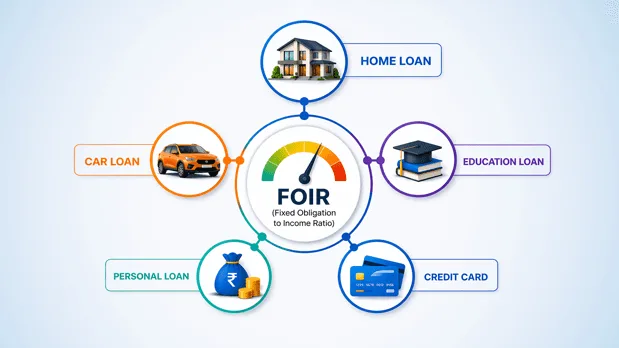
Not always. A decline that you assume is about the report may be about something else. Axis Bank's personal loan FAQ says a high-income profile can still be rejected if existing EMIs are high, and that credit history issues or incomplete documents can also lead to rejection. It also says that even with a strong score, a high debt-to-income ratio can impact approval.
So the report is one of several things. Income, existing obligations, the amount asked for and the papers you submitted all count. That's why the first step is to ask. Don't guess, because the wrong fix wastes weeks.
For how lenders weigh obligations against income, read our guide on FOIR and loan eligibility.
How Do You Find Out Why the Lender Rejected Your Application?
Ask, in writing, and keep the reply. Use the lender's app, branch or email, and say you'd like to know the main reason for the decision.
Contact the lender through its official customer service or grievance channel and ask for the main reason for the rejection. Request the response in writing so you have a record. The information provided may help you determine whether the issue relates to your credit history, income, existing obligations or documents.
If the reason is a CIBIL report issue, the lender may also tell you which part: a late payment, a settled status, high utilisation or too many enquiries. Write it down.
How Do You Get and Read Your CIBIL Report After a Rejection?
RBI's directions entitle you to one Free Full Credit Report, including your score, once during January to December from each credit information company. CIBIL's FAQ says the same in its own words. You can get it from your CIBIL account.
Read it in this order.
- Accounts: any late, overdue, settled or written-off status, and balances close to limits.
- Enquiries: how many applications in the last few months, and whether you recognise each one.
- Personal details: name, PAN, date of birth, address.
- Anything you didn't open.
CIBIL's walk-through says the Accounts section covers repayment history for up to the past 36 months and the Enquiries section records checks during loan or card applications over the last 36 months. For the layout, see our guide on how to read a CIBIL report.
What Report Problems Most Often Lead to Rejection?
The CIBIL pages we read point to a short list.
- Late payments or EMI defaults. CIBIL says they have a negative impact.
- High credit utilisation. CIBIL says it may negatively impact the score.
- Too many enquiries. CIBIL says they may have a negative impact.
- Settled or written-off status. CIBIL says it will affect your access to credit in the future.
The first and last are the heaviest. The middle two are easier to fix, because balances can be paid down and applications can be paused. We don't give a minimum score a lender needs, because lenders set their own and the pages we read don't give one for every lender. For a general view, see our guide on the minimum CIBIL score for a personal loan.

Not Sure What Your Report Is Telling Lenders?
See which options fit your situation on FREED.
See My Options on FREEDHow Do You Dispute a Wrong Entry After a Rejection?
Raise it with the bureau and the lender, in writing, with proof. CIBIL's FAQ says you can raise disputes online, dispute multiple fields in a single dispute and that it may take approximately 30 days to resolve, depending on the credit institution's response. While it's open, CIBIL marks the item "Under Dispute".
What counts as proof: bank statements showing on-time debits, closure letters or no-dues certificates, payment receipts and the lender's own statement of account. Without them a dispute is a claim. With them it's a case.
RBI's directions say the lender has 21 days to send corrected details. For the full process, read our guide on disputing wrong entries.
Your Rights if Something on Your Report Is Wrong
- You're entitled to one Free Full Credit Report, including your score, once during January to December from each credit information company.
- If a complaint about your credit information isn't resolved within 30 days, the company pays ₹100 a day. The lender has 21 days to send corrected details.
- Disputes about how a score is calculated are excluded.
Sources: RBI/DOR/2025-26/378 and cibil.com/freecibilscore
What If the Report Is Accurate, but Still the Reason for the Decline?
If the information is accurate, focus on the issues you can address. Reduce high outstanding card balances where possible, bring overdue accounts up to date and maintain timely repayments. Avoid unnecessary credit applications while you review your borrowing needs. If an account is marked as Settled or Written-off, understand the implications and contact the lender to discuss any outstanding obligation. Accurate account history cannot be removed simply because it affects your eligibility.
None of this needs a service or a fee. It needs a few months of clean payments and fewer applications. For habits that build a score, see our guide on how to build a credit score.
How Long Should You Wait Before Applying Again?
There's no single rule. The lenders we read give three to six months, and each sets its own.
| Source | What it says |
|---|---|
| SBI Card, online application FAQ | You can generally reapply for a card after three months |
| Muthoot Finance, rejection explainer (undated) | Give the profile three to six months to recover |
| Axis Bank, personal loan FAQ | Multiple applications in a short period can reduce approval chances |
The calendar isn't the point. What matters is that the reason for the decline has changed. If you apply again with nothing different, you may get the same answer and add another enquiry. Ask the lender about its own rule.
Does the Rejection Itself Lower Your Score?
The sources we read say the rejection isn't recorded as a mark. Muthoot Finance's explainer says so, and CIBIL's loan-rejection FAQ states that it doesn't maintain a defaulters list. What can remain is the enquiry from the application, which CIBIL says may affect your score when there are many in a short period.
So the harm comes from repeat applications, not from the decline. For more on this, see our guide on what too many credit card rejections mean.
Should You Apply for a Smaller Amount or With a Co-Applicant?
It can help in some cases and not in others. If the reason was a high EMI burden, a smaller amount means a smaller EMI. If the reason was the report itself, a smaller amount doesn't change the entries.
A co-applicant brings another income and another report into the application. Whether it helps depends on whether their report and income are stronger. And remember CIBIL's mistakes guide says co-signing can hurt your own score if the other person falls behind, so it's a decision for both of you.
Ask the lender which route fits your reason before changing anything.

FREED Expert Tip
Write the decline reason, date and lender in one note before you do anything else. When you reapply, you can show what changed since.
Check My Credit InsightsWhat Should You Do in the First Week After a Rejection?
A short checklist beats a long worry.
- Day 1: note the lender, the date and the reason you were given. Don't apply anywhere else.
- Days 1 to 2: ask the lender in writing for the main reason.
- Days 2 to 3: get your full credit report and read the Accounts, Enquiries and personal details.
- Days 3 to 5: list anything wrong and gather proof.
- Days 5 to 7: raise disputes for wrong entries, and plan fixes for the accurate ones.
This is our suggested order, not a rule. The point is to know why before you move, so the next application answers the reason.
What If Several Lenders Reject You in a Row?
Then the pattern is the message. If different lenders decline you for the same reason, it's probably in the report or in your obligations. Check the report for late payments, a Settled or Written-off status and high card balances. Check your monthly EMIs against your income.
Stop applying while you work it out. Each application can leave an enquiry, and CIBIL says too many loan enquiries may have a negative impact. Axis Bank's page says the same in its own words: multiple loan applications within a short period can affect your credit score and reduce approval chances.
Need Help Reading What Lenders See?
See which options fit your situation on FREED.
See My Options on FREEDCan You Get a Loan if Your CIBIL Report Is Weak?
Sometimes, with different terms or a different type of lender. We don't recommend any specific lender or promise approval.
What we can say is that a weak report usually means a smaller amount, a higher rate or a refusal. And taking a loan from anyone who'll say yes can make things worse if the cost is higher than you can carry. Compare the total you'd pay before you agree.
If you're rejected for a personal loan and want to know where the bar typically sits, read our guide on the CIBIL score for a personal loan.
What Mistakes Do People Make After a Loan Is Rejected Due to Their CIBIL Report?
- Reapplying straight away. The same report gives the same answer.
- Applying to many lenders at once. CIBIL says multiple loan applications in a short period make lenders view you as a riskier borrower.
- Not asking for the reason. Without it you're guessing.
- Not reading the report. An error stays until you find it.
- Taking an expensive loan out of panic. The cost can outweigh the benefit.
- Paying someone to fix the report. Accurate entries can't be removed on request.
- Ignoring EMIs and income. Axis Bank's FAQ says high existing EMIs can lead to rejection.
Ready to See Your Report?
Check your credit report with FREED Credit Insights.
Check My Credit InsightsHow Does FREED Help After a Loan Is Rejected Due to Your CIBIL Report?
FREED Credit Insights shows your credit report and score and points to what's holding the score back, so you can see what a lender might have seen. It reads your Experian report, so the number can differ from your CIBIL score.
Over 30,000 borrowers have used Credit Insights, and over 20 lakh people trust FREED. FREED isn't a loan provider. Credit Insights explains your report. It doesn't change what lenders report, and a wrong entry still has to be disputed with the bureau and the lender.
Use it next to your CIBIL report. If both show an account the same way, you can relax. If they differ, check the dates first. You can start on the Credit Insights page.
What If Your EMIs Are the Reason You Keep Getting Declined?
Then fix the load before the next application. Match the fix to your situation.
- Still paying, but stretched. If most of your salary goes towards paying multiple EMIs, FREED's Loan Consolidation Plan helps you combine multiple loans into a single monthly EMI. This can reduce your monthly EMI burden by up to 50%.* It's only for people who are still paying. Read more about the Loan Consolidation Plan.
- Cannot repay. Settlement is not something a borrower chooses out of preference. If you genuinely cannot repay your loans, FREED negotiates with your lenders to settle them for less than 50%* of your outstanding dues. Read more about the settlement programme.
Rates and ranges shown are indicative. Final terms decided by the bank/lender. FREED is not a Loan Provider. No outcome is guaranteed. Please verify directly with your bank.
Outcomes vary by lender and borrower profile. Settlement terms are decided by the lender. No percentage is guaranteed.
Settlement leaves a settled status on your report, which CIBIL says will affect your access to credit in the future. Weigh that before you choose it.

Mohit Juneja
Mohit Juneja is FREED’s Content & Communication Lead with 12+ years of experience across content, media, advertising and digital communications. He holds a postgraduate diploma in Communications from Xavier Institute of Communications, Mumbai, and has worked with organisations including NDTV, The Indian Express, McCann Worldgroup and NABARD.
At FREED, he leads content and communication across loan management, debt resolution, debt consolidation and financial well-being. His work combines research, storytelling and consumer-focused communication to make complex financial topics easier to understand and act on. He has also scripted and produced 11 documentaries on rural development and agriculture for NABARD, with film's selected for the Mumbai International Film Festival.
mohit.juneja@freed.care

FREED is India's trusted loan management platform. We help India settle their loans, consolidate their EMIs, improve their credit score, and manage their loans better. Over 20 lakh people trust FREED. We have managed more than ₹3,500 crore in loans and saved our users over ₹450 crore.
Media Mentions