How to Improve Your CIBIL Score After a Loan Default
A missed or overdue loan payment can become a serious delinquency when it remains unpaid for an extended period. Under applicable RBI prudential norms, qualifying loan accounts may be classified as NPAs once dues remain overdue for more than 90 days. Banks usually mark it as a Non-Performing Asset, or NPA, after 90 days overdue. It drags your CIBIL score down hard. Recovery is real, but it takes time, and it starts with clearing or settling the debt first.
Mohit Juneja
Reviewed by FREED India, Debt Resolution Specialists
 4.7/5
4.7/5 ₹3,200Cr+
 20,000+
 20,00,000+4.7/5₹3,200Cr+20,000+20,00,000+
KEY TAKEAWAYS

A default is classified as an NPA (Non-Performing Asset) once repayment is overdue for more than 90 days.
Addressing the defaulted debt is an important first step, while maintaining on-time payments on all other accounts can also support your credit profile.
A settled account may remain visible on your credit report and can affect how lenders assess future credit applications.
Repayment history and credit utilisation are important factors in your credit profile, alongside other factors such as credit history, credit mix and recent credit enquiries.
Banks and credit bureaus are required to keep your credit data accurate, and you have the right to dispute inaccurate entries.
What Does a Loan Default Do to Your CIBIL Score?
A default doesn't mean you did something wrong on purpose. Income drops, expenses stack up, a few EMIs slip over a rough patch. The bank's records don't capture the reason. They only capture the missed payments.
Your bank first marks a missed EMI as DPD, or Days Past Due (the count of days since a payment was missed). Under applicable RBI prudential norms, a loan account may be classified as an NPA when principal or interest remains overdue for more than 90 days, subject to the applicable rules. That's the formal word for default.
A serious delinquency can negatively affect your credit profile and may make future borrowing more difficult or expensive. A single corrected missed payment may have less lasting impact than a prolonged default, but the effect and recovery timeline vary by credit profile and subsequent repayment behaviour.
So the real question behind how to improve your CIBIL score after a loan default isn't which habit to pick up first. It's what you do about the debt itself. That's where recovery actually starts.

Talk to a FREED Counsellor About Your Score
Free, confidential, no obligation.
Start My Free AssessmentClear or Settle the Debt First
Settlement is not something a borrower chooses out of preference. Banks and financial companies only consider it when you're in genuine financial difficulty and truly unable to repay the full amount.
If you can repay the full outstanding amount, do that first. If you can repay the full outstanding amount, the account can be reported as ‘Closed’ rather than ‘Settled,’ which is generally viewed more favourably by future lenders.
If repayment in full genuinely isn't possible, settling for a reduced lump sum as full and final payment is the realistic path. Once the loan is settled, your report still shows a "Settled" tag, not a "Closed" one, and that tag can stay visible for up to 7 years. A "Settled" tag isn't a clean "Closed" record. Settlement resolves the outstanding account under an agreed arrangement, but the resulting ‘Settled’ status can still affect future lending decisions. Borrowers should weigh it against the possibility of repaying the full amount.
Whichever path applies to you, everything else depends on this step. You can't meaningfully work on how to improve your CIBIL score after a loan default while the default itself is still open.
Know Exactly What's on Your Credit Report
Before anything else, pull your complete credit report, not just the score number. Read it slowly, line by line.
Look for a loan you never actually took, a payment marked as missed that you actually paid on time, or an account still showing "active" or "overdue" after it was closed or settled months ago.
Errors like these matter because they pile extra damage on top of a default that's already hurting you. Fixing report errors is one of the most controllable parts of learning how to improve your CIBIL score after a loan default.
If you spot something wrong, raise a formal dispute with the bureau. Bureaus are required to look into it and correct genuine errors, though it typically takes a few weeks. Don't expect it instantly, and follow up if you don't hear back.
Stay Current on Every Other Payment
A default on one account doesn't mean giving up on the rest. If anything, it's the opposite.
Every other on-time payment works in your favour. Other EMIs, credit card bills, utility accounts where these get reported, all of it adds up. Payment history carries the single biggest weight in your CIBIL score, more than almost anything else. This is at the core of how you improve your CIBIL score after a loan default.
One more missed payment during this window sets you back further than it might seem worth in the moment. Even a small slip can undo weeks of steady progress.
The single most reliable habit here is auto-pay. Set it up for every bill you can, and you remove the risk of forgetting during a stressful stretch.

Freed Expert Tip
Set up auto-pay for every other bill during recovery. One additional missed payment during this window costs far more progress than it seems worth in the moment.
Check your options
Build a New Track Record With a Secured Credit Card
A secured credit card is backed by a fixed deposit you place with the bank. A secured credit card may be easier to qualify for than some unsecured credit products because it is backed by a fixed deposit, although approval depends on the issuer's criteria.
Use it for small, planned purchases. Keep utilisation relatively low and pay the full bill on time. Around 30% is commonly used as a rule of thumb, not a formal CIBIL cutoff. That kind of steady, boring use is exactly what builds a fresh, positive track record, one that gets reported to the bureaus right alongside your older default. A secured card is one of the more useful tools for how to improve your CIBIL score after a loan default.
This doesn't erase or hide the default. The two sit on your report together until the default's visibility period ends. But a new pattern of on-time, low-utilisation behaviour is one of the clearest signals you can send a lender.
Limit New Credit Applications During Recovery
Every new loan or credit card application triggers a hard enquiry on your report. Multiple hard enquiries within a short period may be considered by lenders when assessing a new application.
Avoid unnecessary applications and apply only when you have a genuine need and reasonable eligibility. Check your likely eligibility before you apply instead of applying speculatively and hoping.
You don't need to avoid credit forever here. Just be selective, and give your report time to heal.
Monitor Your Progress, Not Just the Final Number
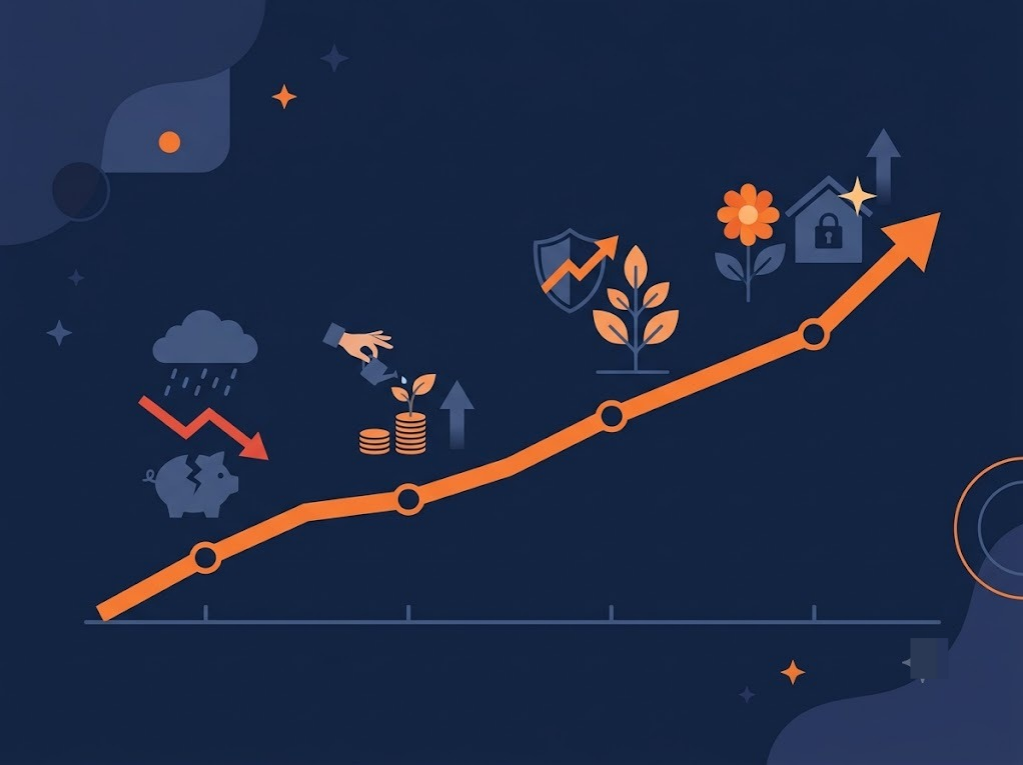
Checking your score once a month isn't the same as tracking your recovery properly. Recovery from a default doesn't show up as one big jump. It builds slowly, in small pieces, which is really the whole story of how to improve your CIBIL score after a loan default.
Pull your full report periodically, not just the score number. Confirm that your on-time payments, lower utilisation, and your settled or closed status, if that applies to you, are actually being recorded correctly.
This habit also catches new errors early, before they sit unnoticed for months and quietly undo your progress. A quarterly check is usually enough to stay on top of it without turning into something you obsess over.
How Long Does Recovery Actually Take?
Situation | Approximate Recovery Timeline |
Single missed payment, corrected quickly | A few months of consistent on-time behaviour |
Default resolved via full repayment ("Closed") | 12 to 24 months for meaningful score recovery |
Default resolved via settlement ("Settled") | Longest path; score drag usually fades over 18 to 24+ months, even though the mark stays visible for up to 7 years |
These are typical ranges, not guarantees. Your recovery depends on your full financial picture, not one factor alone. The visibility period on your report and your score's actual recovery are two different things.
If you're trying to work out how to improve your CIBIL score after a loan default in your own case, this table is the honest starting point, not a guarantee.

What the Law Says
Under applicable RBI prudential norms, a qualifying loan account may be classified as an NPA when principal or interest remains overdue for more than 90 days.
Talk to FREED's TeamHow FREED Helps After a Default
If repaying in full genuinely isn't possible for you, FREED's Loan Settlement Plan, "Settle My Loans," is built for exactly this stage.
FREED starts by understanding your full financial picture, your outstanding loans, income, and what you can realistically manage each month. From there, FREED helps build a personalised settlement plan around your reality, not a generic template.
Your savings build up in your own SPA (Special Purpose Account), held separately from FREED. Once there's enough saved, FREED negotiates with the bank on your behalf. Nothing gets paid out without you authorising it first.
Be honest with yourself about the trade-off. In some cases, FREED may negotiate a reduction in the outstanding amount. The amount, if any, depends on the lender, account and borrower circumstances, and no specific reduction is guaranteed. It's not a clean "Closed" record, but it ends the unresolved default hanging over you. FREED can assist with the documentation and follow-up involved in updating the credit report after settlement.
If you're not fully in default yet, still paying but stretched thin across other loans, FREED's Loan Consolidation Plan can bring those other EMIs into one lower payment. That's a separate, preventative step, meant to stop a second default from happening while you work on this one.
*Rates and ranges shown are indicative. Final terms are decided by the bank. FREED is not a Loan Provider. No outcome is guaranteed. Please verify directly with your bank.
Sources
Claim | Source |
A loan is classified as an NPA (default) once principal or interest is overdue for more than 90 days | RBI Notification, Prudential Norms on Income Recognition, Asset Classification: https://www.rbi.org.in/commonman/Upload/English/Notification/PDFs/74MIR010714FL.pdf |
Banks and credit bureaus must keep credit data accurate and investigate a formal dispute over incorrect entries | RBI Master Direction Reserve Bank of India (Commercial Banks – Credit Information Reporting) Directions, 2025: https://www.rbi.org.in/Scripts/BS_ViewMasDirections.aspx?id=13154 |

Mohit Juneja
Mohit Juneja writes educational content at FREED on debt management, credit scores, loan repayment, and borrowing best practices. His content is shaped by expert insights and industry knowledge, helping readers better understand their financial options and make informed decisions.
mohit.juneja@freed.care

FREED is India's trusted loan management platform. Founded in 2020 and headquartered in Gurugram, FREED has counselled 20 lakh+ people on personal loans, credit cards, and app loans. FREED charges fees only on successful settlement, not upfront. FREED does not handle secured loans (home loans, car loans, gold loans).
Media Mentions