ICICI Bank Loan Restructuring: How to Apply and What It Means for Your Credit Report
How to ask ICICI to change your loan terms, what to send, how your EMI moves, and what to check on your credit report.

Mohit Juneja
Reviewed by FREED India, Debt Resolution Specialists
 4.7/5
4.7/5 ₹3,200Cr+
 20,000+
 20,00,000+4.7/5₹3,200Cr+20,000+20,00,000+
Key Summary

Restructuring changes the terms of the same loan. You still owe the full amount.
You apply in writing with proof of hardship. ICICI decides case by case, and nothing changes until you accept the new terms in writing.
A longer repayment time lowers the EMI but raises total interest. The worked examples below show by how much.
Ask ICICI in writing how the change will be reported before you accept, then check your credit report before and after.
Is ICICI Bank Loan Restructuring Available, and What Does It Mean?
Yes, you can ask ICICI to change the terms of a loan you are struggling with. No, approval is not guaranteed. ICICI decides under its own board-approved policy, case by case.
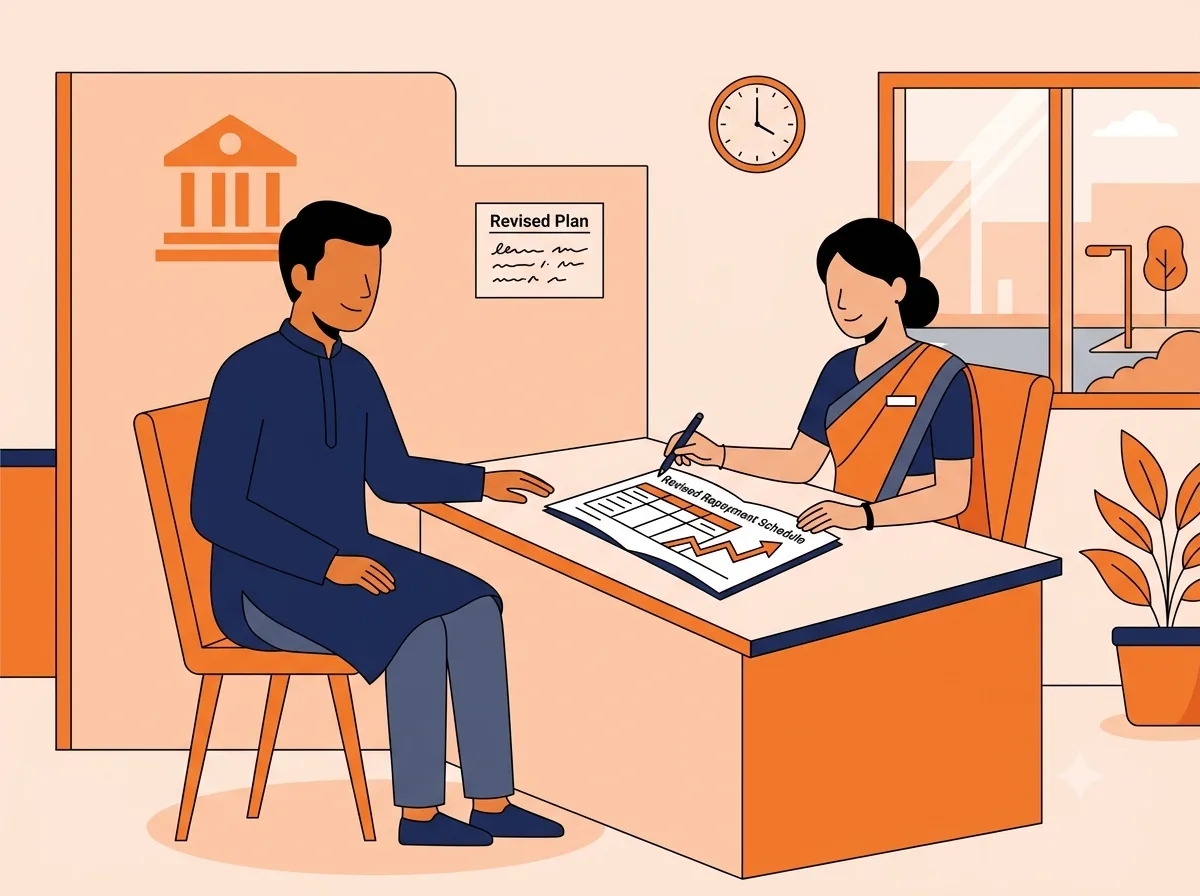
Picture an ordinary month for someone in this spot. The salary has dropped or stopped. The EMI date is a week away. The amount in the account is smaller than the EMI, and the phone has started to ring with reminders. Restructuring is the conversation you have with the bank before that date, or soon after it, to change the shape of the repayment so that it fits what you can actually pay.
What does it mean in plain terms? The loan stays alive on new terms: same bank, same debt. The bank may stretch the repayment time, lower the EMI, or agree to a short pause. You still owe the full amount, and usually you pay more interest over the longer period. That is the trade.
It helps to be clear about what it is not.
It is not a loan waiver. The amount you owe does not shrink.
It is not a new loan, even if the paperwork feels like one.
It is not a one-time settlement. A settlement closes the loan for less than you owe, and the account is reported as "Settled". Restructuring keeps the loan running.
In this guide:
How to apply, step by step
Which documents to send, with a letter you can copy
How the EMI changes, with real figures
What it can mean for your credit report
What to check before you sign
What to do if ICICI says no
Nothing here is an ICICI offer. Every rupee figure is an illustration. The only way to know what ICICI will agree to is to ask in writing.
One general observation: asking before EMIs are missed tends to leave more options than asking after. It is not a rule, and no bank has to say yes. But a request that arrives while your record is still clean usually reads very differently from one that arrives after several missed dues. For the basics, read what a restructured loan means and how it differs from rescheduling.

Not sure whether restructuring is the right route for your ICICI loan?
A FREED counsellor can help you compare your options.
Talk to a CounsellorWho Can Ask ICICI for Loan Restructuring?
Start with the honest line. ICICI has no published eligibility checklist for individual borrowers. So anyone quoting a fixed rule, such as a minimum score, a maximum number of missed EMIs or a set time after sanction, is guessing. We will not guess.
Anyone with an ICICI loan can ask. The real question is what makes a request easier for a bank to act on. What follows is general bank behaviour. It is not ICICI policy.
Usually helps | Usually hurts |
A hardship you can document with dates: a job-loss letter, pay cut, medical bills, or business statements showing a slowdown | A hardship you cannot document |
A clean repayment record before the problem | Several EMIs already missed |
Asking early | A vague request with no proposed terms |
A realistic proposal you can actually pay | Repeated requests for the same relief |
Clear written communication | Verbal-only requests |
Why do these matter? A bank reading your request is asking three things. Is the hardship real? Does the borrower have a record of paying? And will the new terms actually work, or will we be back here in three months? A request that answers all three, in writing, with numbers, is the one that gets a proper review.
Two people, two different asks
Ramesh lost his job two months ago and has a notice-period payout and a job search under way. His hardship has a foreseeable end. A short pause or a lower EMI for a few months may fit his situation, and he should ask now.
Priya is still paying every EMI, but four loans and two cards take most of her salary. Restructuring one of them will not change the others. She may do better to look at a different route, which this guide covers in the options ladder further down.
What about overdue accounts? ICICI's response depends on its own policy and on RBI's rules for stressed accounts, which differ by case. So this page makes no claim about NPA (non-performing asset, a loan the bank treats as bad) accounts, monitoring periods or exclusions. If your account is already overdue, ask ICICI directly what it can consider, in writing.
Before you write, check how much of your income your EMIs take. The EMI Score does it in a minute. A common rule of thumb is that EMIs above 50% of your take-home pay deserve a hard look. Our guide to the debt-to-income ratio explains the number.
Which ICICI Loans Can You Ask to Restructure?
Different products behave differently. Each block says what a bank can typically change, and what to ask ICICI. None of this is a statement of ICICI policy, so ask the bank which options it will consider for your account.
Personal loan
This is the product people most often ask about. A bank can typically change the repayment time, change the EMI, or add a short pause. It is unsecured, so no asset sits behind it, and the bank's main comfort is your record and your ability to pay. Ask ICICI which of these it will consider, and what it needs from you to decide.
Credit card dues
Card balances are revolving, not a term loan, so they work differently. Banks sometimes offer a fixed repayment plan instead of the minimum due, which turns a balance into a set number of instalments. Ask ICICI whether a fixed repayment plan is available for your card, and what it would cost. Do not assume a card can be restructured the way a term loan can. If you hold a card balance, paying only the minimum due each month keeps the balance alive for a long time, so ask for the full picture of what you would pay under any plan.
Car loan
A longer repayment time is the usual lever, and the vehicle is the security. Ask ICICI what it will consider, and ask how a longer repayment time affects the total you pay.
Home loan
It is secured, so banks usually prefer to hold the EMI steady or extend the repayment time rather than change much else. Ask ICICI in writing which options apply to your loan.
Whatever the product, the route is ICICI itself. For the rules that apply to every regulated bank, read about loan restructuring under RBI rules.
One reminder on scope. FREED works on unsecured loans only, so a home loan or car loan falls outside what FREED can negotiate. For those, your options are ICICI's own and the legal route.
Not sure which of your loans can be restructured?
A FREED counsellor can go through your loans with you.
Check My OptionsHow Do You Ask ICICI to Restructure Your Loan?
Here are eight steps. Write everything down as you go, because the paper trail is your protection if the conversation drifts.
- Decide what you are asking for. A longer repayment time, a lower EMI, a short pause, or a fixed repayment plan for card dues. Work out the EMI you can pay today, from the money you actually receive, not the money you hope to receive. A request for "something lower" is hard to act on. A request for "an EMI of ₹X for the next Y months" is not.
- Contact ICICI through the channel it offers for your loan. That may be your relationship manager, the branch that holds the loan, or customer care. Check ICICI's own website for the current channels. Whichever you use, send the request in writing too. A phone call alone leaves no record.
- Write the request. Give the reason for the hardship with dates, the relief you want, and what you can pay now. Two or three factual sentences are enough. The next section has a letter you can copy.
- Attach the documents. The next section has the list.
- Get an acknowledgement with a date, a name, and a reference number. If you send by email, keep the sent message. If you hand it in at a branch, ask for a stamped copy.
- Follow up in writing if you hear nothing, and keep a log of calls: date, time, who you spoke to, what was said.
- If ICICI offers new terms, read the EMI, repayment time, rate, fees, and how the change will be reported. Do not accept on a call. Accept only in writing.
- Continue paying your contractual EMIs until ICICI Bank formally approves revised repayment terms. If you cannot afford the full EMI, inform the bank immediately and ask whether a partial payment arrangement is available. Paying less than the required EMI without approval may still result in overdue charges, missed-payment reporting, and recovery action.
A request does not automatically pause EMIs, credit reporting, or recovery. That is worth knowing before you write. Until the bank confirms new terms in writing, the old terms are the ones that apply.
What about recovery calls? They may continue during talks. If they turn abusive or threatening, you can document and report them. Note the date, the time, the number and what was said. FREED Shield is open to anyone for that purpose. Read the RBI guidelines for recovery agents to know what is allowed.
For ICICI-specific details, see our eligibility and documents guide.
Facing recovery calls during talks with your bank?
FREED Shield is built for abusive or threatening recovery calls and unannounced agent visits.
Learn About FREED ShieldWhat Documents and What Letter Should You Send?
Ask ICICI which documents it wants, because they may differ by product and by case. These are the papers a request usually rests on.
Income proof
salary slips, an employer letter or income tax returns. If your income has dropped, the latest slips matter most, because they show the new reality.
Bank statements for the last 3 to 6 months
these show your income, your expenses, and your payment behaviour. This is a general practice, not an ICICI rule.
PAN, Aadhaar and address proof
to confirm who you are.
Your loan account number and latest statement
so the bank can find the account and agree on what is outstanding.
Proof of the hardship
a job-loss letter, a salary-reduction letter, hospital bills, or business statements showing the slowdown. Dates matter. A letter that shows when the problem began lets the bank see why your record changed.
Never send documents to anyone who is not the bank or its staff. And never share OTPs, card numbers, or passwords with anyone who calls about your request.
A letter you can copy
To the Branch Manager, ICICI Bank [branch name]
Subject: Request to change repayment terms, loan account [number]
I am writing about my [loan type] account [number], with [outstanding amount] outstanding. Since [date], my income has [fallen / stopped] because of [reason]. I can pay [amount] a month from [date]. I request that you [relief asked, for example, extend the repayment time by X months]. I have attached my income documents, bank statements, and hardship proof. Please confirm in writing the revised EMI, rate, and fees.
[Name, mobile number, date]
How to make the letter work
Keep the tone factual and brief
No blame, no pleading, no threats.
Ask for something specific
A request built on real numbers, such as the EMI you can afford, is easier for a bank to act on than "please help".
Show your working
If you can pay ₹8,000 a month, say how you arrived at it. A one-line budget helps.
Ask for the reply in writing, including the revised EMI, rate, fees, and how the change will be reported.
Do not promise what you cannot pay
A new schedule you miss in month two is worse for you than a smaller change you can keep.
Keep a paper trail
dated copies of everything you send, the acknowledgement, names, and call notes. Put them in one folder, on paper and on your phone.
For more on wording, see how to write to your bank.
Want help putting your request together?
A FREED counsellor can help you work out the numbers to put in your letter.
Talk to a FREED CounsellorHow Does Your EMI Change After ICICI Restructuring?
The rule in one line: a lower EMI usually means a higher total cost.
Illustration only. These are not ICICI rates or an ICICI offer. Your actual EMI depends on ICICI's rate and terms. The examples use a ₹3,00,000 personal loan at 16% a year. The figures come from the standard reducing-balance EMI formula.
Case 1: a longer repayment time
Repayment time | EMI | Total interest |
24 months | ₹14,689 | ₹52,534 |
36 months | ₹10,547 | ₹79,696 |
48 months | ₹8,502 | ₹1,08,100 |
Moving from 24 to 48 months cuts the EMI by about ₹6,187 and adds about ₹55,566 in interest. That is the trade-off in one line: about ₹6,200 of breathing room each month, paid for with about ₹55,600 more over the life of the loan.
Case 2: a lower rate, at 36 months
Rate | EMI | Total interest |
16% | ₹10,547 | ₹79,696 |
15% | ₹10,400 | ₹74,386 |
14% | ₹10,253 | ₹69,118 |
A one-point cut lowers the EMI by about ₹147 a month. That helps, but it rarely fixes a cash-flow gap on its own. A longer repayment time moves the EMI far more than a small rate change.
Case 3: re-spreading mid-loan
After 6 EMIs on the 24-month loan, about ₹2,33,690 is outstanding. Spread over 36 months, the EMI falls to about ₹8,216. But the remaining interest rises from about ₹30,711 on the old schedule to about ₹62,081. You pay roughly ₹31,370 more in interest for an EMI that is about ₹6,473 lower.
Case 4: a pause
Suppose you take a 3-month pause on the 36-month loan, and the interest for those months is added to the balance. The balance grows to about ₹3,12,161. Paying that off over 36 months raises the EMI from ₹10,547 to about ₹10,975, and total interest from about ₹79,696 to about ₹95,087. That is about ₹15,400 more. A 6-month pause takes the balance to about ₹3,24,814, and the EMI to about ₹11,420. Whether interest is added to the balance is the bank's decision, so ask.
What share of your income do the EMIs take?
Here are three hypothetical borrowers.
Monthly take-home | ₹14,689 EMI | ₹10,547 EMI | ₹8,502 EMI |
₹30,000 | about 49% | about 35% | about 28% |
₹45,000 | about 33% | about 23% | about 19% |
₹60,000 | about 24% | about 18% | about 14% |
The first borrower is above the 50% line with the shortest option, and comfortably below it with the longest. The EMI that works for you depends on your own take-home. Check yours with the EMI Score.
How should you read an offer?
Ask ICICI for these in writing:
The new EMI
The repayment time
The rate
The total payable
Any processing or modification fee
Then compare the total payable with the tables above. If the total looks much higher than you expected, ask why. For the difference between this and rescheduling, read loan rescheduling vs restructuring.
Tool: Loan Trap Quick Check
See where your EMIs stand. Enter your EMIs as a percentage of monthly take-home pay to get a stress level and a short note.
Are You in a Loan Trap? Quick Check
Move the slider to your total EMIs as a % of monthly salary. See your debt stress level instantly.
EMIs as % of Monthly Salary
See where your EMIs stand
A short call can show which repayment route fits your take-home pay.
Talk to a FREED CounsellorWhat Does Restructuring Mean for Your Credit Report?
The exact reporting treatment depends on the bank and on RBI's rules, so this section sticks to what holds in every case.
What gets reported, and how often
Banks send updates to credit bureaus on set dates each month. Since 1 July 2026, those are the 9th, 16th, 23rd, and the last day. So any change to your account shows up quickly. A missed EMI is reported whether or not you are in talks with the bank. This is why the gap between the request and the written confirmation matters: while you wait, the old terms still apply.
What a change in terms can look like
A change in repayment time or EMI can be reported by the bank. How the account is described, and how it affects your score, depends on ICICI's reporting and on the rest of your profile. Two people with the same restructuring can see different effects, because their other accounts, their payment history and their credit use are different. For field-level detail, read how to read a restructured loan on your report.
What to ask ICICI before you accept
Ask in writing:
How will the account be reported after the change?
Will its classification change?
What do I need to do to keep it on track?
Keep the reply. It is your reference if the report later disagrees.
What to check on your own report
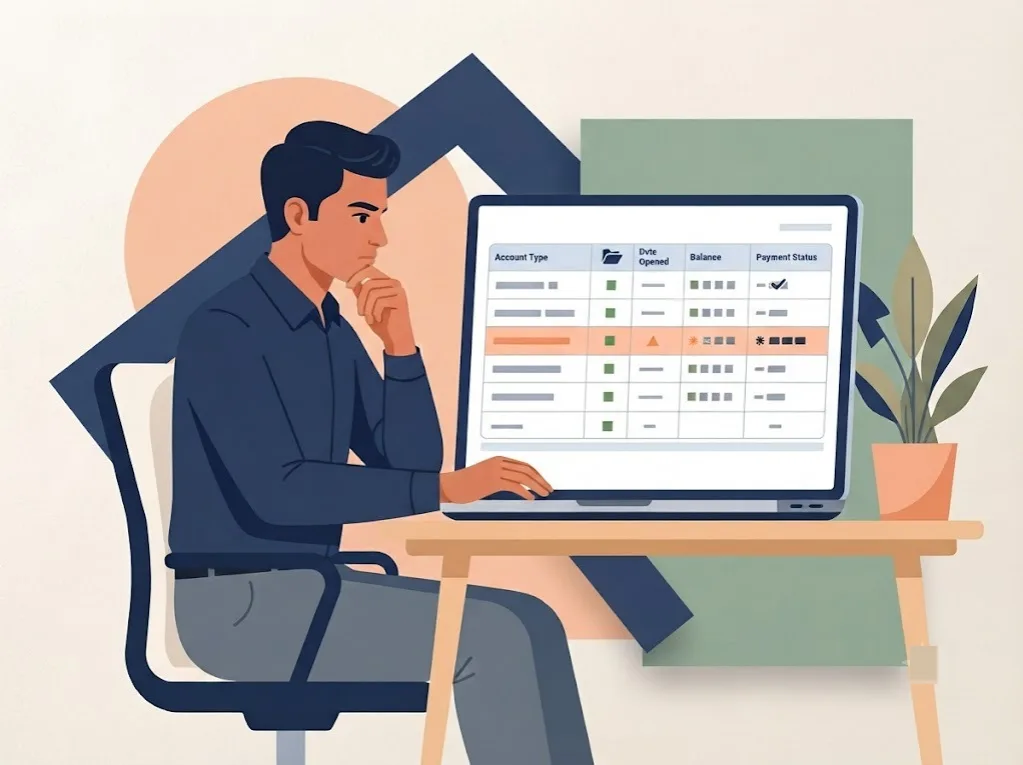
Look at the account status, the payment history, and the days-past-due entries before you write. That gives you a starting point. Look at two reporting cycles after the change. If something does not match the letter, raise a dispute with the letter and your payment proofs attached.
Here is a rule few people know. If an entry is wrong, the bank must resolve your complaint within 30 days. After that, RBI's rules provide ₹100 a day in compensation. Note the date you complained, because the clock starts there.
How does this compare with settlement?
A settled account shows as "Settled" for up to 7 years, and the drop is commonly reported at 75 to 100 points. Restructuring is a different outcome, and we do not rank the two. What we can say is that they are different decisions. Restructuring keeps the loan running on new terms. Settlement closes it for less than you owe, and it is for people who genuinely cannot repay in full.
See your accounts in one place with Credit Insights, which reads your credit report. Nobody can promise a recovery time. Read the impact of debt settlement on credit score for the other side.

Expert Tip: ask how the change will appear on your report
Before accepting new terms, ask ICICI in writing how the change will appear on your credit report, then check the report yourself after two reporting cycles.
Talk to a FREED CounsellorWhat Should You Check Before You Sign?
Read the offer slowly, even if you are relieved to have one. A signature turns the offer into your new obligation. Here is the checklist, with a line on why each item matters.
- The numbers. The new EMI, repayment time, rate, and total payable, in writing. If the figures on the offer do not match what was said on the phone, go with the paper and ask about the difference.
- Fees. Any processing, modification, or documentation fee. Ask for the amount, when it is charged, and whether it is added to the loan.
- A pause. If a moratorium (a pause in EMIs) is part of the offer, ask whether interest keeps building and whether the later EMI rises. Pausing usually adds interest to the balance, so the later EMI can be higher unless the repayment time extends. Case 4 above shows how much.
- Reporting. How the account will be reported, in writing.
- Auto-debit. Whether your NACH (the standing instruction that pulls your EMI from your bank account) is being reset, and from which date. A mismatch may cause a failed debit and a bounce charge.
- A missed EMI. What happens if you miss one under the new terms? Ask whether the old terms come back.
- Who you are dealing with. Only the bank or its staff can change your loan. Ignore anyone who offers to get your restructuring "approved" for a fee, and never hand over documents, OTPs, or card details to a third party.
Watch for loan-trap signs too. These are the habits that make a stretched month into a stretched year.
- Borrowing on one card to pay another
- Using a new loan to cover EMIs
- EMIs above what you can pay each month, even after the change
If any of those fit, new terms alone may not be enough. That is the point to compare the other routes, which the next section covers. For the wider rules, read loan restructuring under RBI rules.
Worried the new EMI is still too high?
Compare the other routes before you sign anything.
Talk to a FREED CounsellorWhat If ICICI Says No, or the New EMI Is Still Too High?
Settlement is not something a borrower chooses out of preference. So take the options in order, and do not skip a step because a later one sounds quicker.
Step 1: ask for the refusal in writing, with the reason. A "no" with a reason tells you what to fix. Maybe the proof was thin, or the request was too vague. Use ICICI's grievance route if you think the request was not reviewed properly. If there is no reply, take it to the RBI complaint process. The RBI looks at your complaint. It does not order a bank to restructure or settle.
Step 2: consolidation. Suppose you hold several unsecured loans and cards and are still paying them on time. A new loan from a lending partner can pay them off and leave one EMI and one date. FREED's Loan Consolidation Plan charges zero fee and requires a CIBIL score of 700 or above. It is not for someone already in default. If your accounts are current and the problem is the sheer number of EMIs, this is the route to check first.
Step 3: settlement. This is only for unsecured loans such as ICICI personal loans and credit cards, and only when full repayment is genuinely not possible. The bank decides final terms, and no outcome is guaranteed. A rejected restructuring request does not lead to settlement on its own. FREED's Loan Settlement Plan covers it.
A home loan or car loan is secured, and FREED does not handle it. For those, talk to ICICI first.
Your situation | What may fit | Why |
Still paying every EMI but need a lower one | Ask ICICI to restructure | The loan can continue on new terms |
Several loans, all current | Consolidation | One EMI replaces several |
No income and months overdue on unsecured loans | Settlement may be considered | Full repayment is not possible |
An ICICI home loan in trouble | Talk to ICICI first | Outside FREED's scope |
Rates and ranges shown are indicative. Final terms decided by the bank. FREED is not a Loan Provider. No outcome is guaranteed. Please verify directly with your bank.
Compare the routes in debt restructuring vs debt settlement, and read our guide to ICICI Bank personal loan settlement.
Not sure which route fits your loans?
A FREED counsellor can compare restructuring, consolidation and settlement with you.
Talk to a FREED CounsellorHow Does FREED Help When Restructuring Is Not Enough?
Restructuring is something you ask ICICI for yourself. FREED does not negotiate it.
What FREED does is help you see the options. A counsellor looks at your loans and helps you work out which route fits: restructuring with your bank, the Loan Consolidation Plan, or the Loan Settlement Plan. Many people arrive unsure which of the three applies to them, and a short call often settles that.
The FREED Loan Settlement Plan (also called the Debt Resolution Program or "Settle My Loans") helps borrowers move from financial distress to a structured path toward resolving their debt and rebuilding their financial future.
Here is how it works. FREED reviews your full financial picture and builds a personalised plan. You save a fixed monthly amount into a Special Purpose Account (SPA), held by an independent trusteeship company. When the corpus is sufficient, FREED negotiates with your bank and prepares documents and letters. The bank decides the final terms. You approve each settlement before any payout. It takes time, because the savings come first.
FREED covers unsecured loans only. It does not handle home loans, car loans, or gold loans. A settled account shows as "Settled" for up to 7 years.
On fees: an evaluation fee applies, and it is non-refundable. A separate success-based fee applies only when a settlement is completed. Banks may reduce dues by up to 50%*.
Rates and ranges shown are indicative. Final terms decided by the bank. FREED is not a Loan Provider. No outcome is guaranteed. Please verify directly with your bank.
Read more about the Debt Resolution Program.
20,000+ accounts settled | 20,00,000+ customers counselled | ₹3,200 Cr+ debt managed
Let FREED negotiate the settlement side for you
One counsellor, every lender, one plan.
Settle My LoansSourcing and Verification
Claim | Source |
₹100 per day compensation, 30-day correction window | |
Reporting dates from 1 July 2026 | RBI Credit Information Reporting amendment dated 4 Dec 2025 (primary link to be confirmed) |
Restructuring is separate from settlement | |
EMI and interest figures | Own calculation, standard reducing-balance formula. Illustration only |
Not sure where your loan documents stand?
Get a free review of your loan papers and the bank letters you need before you contact ICICI.
Check My Documents
Mohit Juneja
Mohit Juneja writes educational content at FREED on debt management, credit scores, loan repayment, and borrowing best practices. His content is shaped by expert insights and industry knowledge, helping readers better understand their financial options and make informed decisions.
mohit.juneja@freed.care

FREED is India's trusted loan management platform. Founded in 2020 and headquartered in Gurugram, FREED has counselled 20 lakh+ people on personal loans, credit cards, and app loans. FREED charges fees only on successful settlement, not upfront. FREED does not handle secured loans (home loans, car loans, gold loans).
Media Mentions