ICICI Loan Restructuring: Process and Eligibility
ICICI loan restructuring lets eligible borrowers change their repayment terms, usually by extending the loan tenure to lower the EMI, when genuine financial hardship makes the original schedule difficult to meet. The bank reviews each request on its own. Approval is not automatic.

Mohit Juneja
Reviewed by FREED India, Debt Resolution Specialists
 4.7/5
4.7/5 ₹3,200Cr+
 20,000+
 20,00,000+4.7/5₹3,200Cr+20,000+20,00,000+
Key Takeaways

ICICI loan restructuring changes your repayment terms, most often by extending your tenure so your EMI drops.
Approval depends on the bank reviewing your account and your situation. Nothing here is guaranteed.
Your account usually needs to be standard, meaning not already in serious default, before the bank will even consider it.
A lighter EMI sounds like a win, but over a longer tenure, you end up paying more interest in total.
If restructuring doesn't fix things, FREED's Debt Consolidation Program may combine eligible unsecured debts into a single repayment, depending on the approved loan amount, tenure, and bank/NBFC terms. FREED also helps borrowers settle their unpaid or overdue loans at up to 50%* less.
What Is ICICI Loan Restructuring?
Restructuring is the bank changing the terms of a loan you already have, usually by stretching the tenure so the EMI comes down.
It's not a new loan. The account you already hold stays open, just running on a different schedule.
Banks tend to offer this when someone is going through a real but temporary money problem, not when repayment has become permanently impossible. Lost your income for a few months? Expenses suddenly jumped? This is the kind of situation restructuring is meant for.
It's worth separating this clearly from taking a fresh loan to pay off an old one. With restructuring, the same account continues. Only the repayment plan changes underneath it.
And no, asking doesn't mean getting. ICICI looks at your income, your track record on this loan, and how serious the hardship actually is before it decides anything.

Who Is Eligible for ICICI Loan Restructuring?
There's no fixed checklist that guarantees approval, but a few things tend to matter across most banks, ICICI included.
Your account status is the first thing banks look at. Banks generally prefer to step in before an account has slipped too far into default. If you've already missed several EMIs in a row, the door isn't necessarily closed, but your options narrow, and it's worth having a direct conversation with the bank about exactly where you stand.
Beyond that, the bank wants a genuine, explainable reason for why your ability to repay has changed. A job loss. A pay cut. A medical emergency. A slowdown in business income. Vague financial stress usually isn't enough on its own; the bank is looking for something specific it can point to.
Even if you tick every box above, the final call still sits with ICICI. There's no formula that promises a yes. A clean repayment history before things went sideways tends to help your case, but it doesn't override the bank's own review.
If you're not sure where you fall, the most reliable move is asking ICICI or your relationship manager directly. Exact cutoffs on default status shift, and confirming with the bank beats guessing.

What the Law Says
Under RBI's stressed asset framework, banks must have a board approved policy for reviewing restructuring requests from genuinely distressed borrowers.
See if you qualify
What Loans Can Be Restructured at ICICI?
Restructuring isn't limited to one kind of loan. Most banks, ICICI included, offer some version of it across several products, though the terms shift depending on which loan you're talking about.
Personal loans are often restructured through a simple tenure extension, since there's no collateral to complicate things. Credit card dues can sometimes get converted into a fixed repayment plan instead of sitting as revolving credit. Auto loans usually get restructured by stretching the term to bring the EMI down. Home loans have their own restructuring path too, and given how large those loans are, the runway tends to be longer.
The specifics, what qualifies, what the process looks like, change by product. Don't assume what applies to your personal loan automatically applies to your home loan. Confirm the current policy for each one directly with ICICI.
Multiple Loans Getting Hard to Track?
See whether FREED's Debt Consolidation Program could help simplify your eligible unsecured repayments.
Check My Options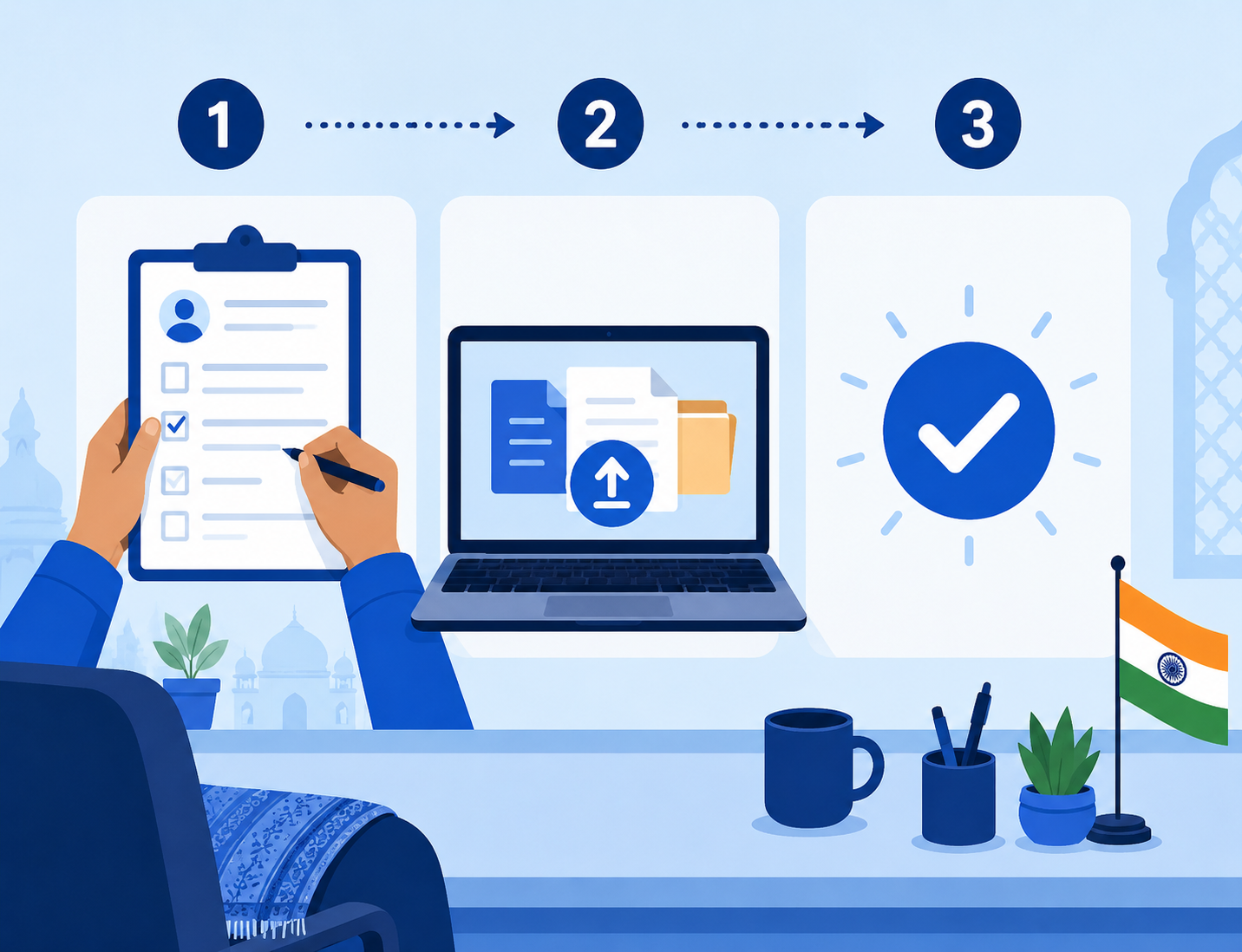
How Does the ICICI Loan Restructuring Process Work?
The process tends to look similar across banks. Broadly, this is how it plays out.
- 1
Reach out to the bank
Net banking, a branch visit, or your relationship manager all work as starting points. Starting the conversation early, before you've missed a string of EMIs, tends to keep more doors open.
- 2
Explain what's actually going on
A job loss, a pay cut, a medical event, and roughly how long you expect this to last. The clearer you are, the more accurately the bank can assess your request.
- 3
Hand over your documents
Income proof, bank statements, ID proof, sometimes a written hardship declaration. A surprising number of requests stall simply because something's missing.
- 4
The bank reviews it
Account history, current income, the reason behind the hardship. This can take a while, since ICICI looks at each case on its own rather than running everyone through the same script.
- 5
You get a decision
Approved means new terms in writing, the revised tenure, EMI, and any fee attached. Rejected means it's worth asking the bank directly what other support might be available for your account.
What Documents Are Needed for Restructuring?
Having these ready before you even pick up the phone tends to move things along faster.
Income proof comes first, salary slips, an employer letter, or ITRs if you're self-employed, since this is what shows the bank your current repayment capacity. Bank statements from the last three to six months help the bank see your income pattern and existing obligations at a glance. Standard ID and address proof, PAN, Aadhaar, a utility bill, is the same paperwork you handed over when you first took the loan. And a short, self-attested hardship declaration rounds it out: what changed, and why restructuring makes sense now. Keep it factual and specific rather than vague.
Pull these together before your first real conversation with the bank. It's a small bit of prep work that tends to pay off.
What Happens to Your EMI and Interest After Restructuring?
The EMI drop is real, and it usually happens fast. That part feels like relief almost immediately.
Here's the part that's easy to miss. A longer tenure means paying interest for more months. So even though each individual EMI shrinks, the total interest you pay over the life of the loan usually goes up.
Say you had ₹3 lakh left on a loan with two years remaining, and the bank stretches that to four years. Your EMI could drop noticeably. But you're now paying interest across twice as many months as before. The actual numbers depend entirely on your specific loan, so ask ICICI to show you the total interest under the new plan, not just the new monthly figure, before you sign anything.
None of this makes restructuring a bad move. For a lot of borrowers dealing with genuine hardship, a lower EMI right now matters more than a slightly higher total cost later. The point isn't to avoid restructuring, it's to walk in knowing the tradeoff instead of discovering it later.
Does Restructuring Affect Your CIBIL Score?
Honestly? It depends, and that's not a dodge, it's just true.
Restructuring done before serious default generally doesn't carry the weight that settlement does. Settlement means paying less than you owe, and it shows up as a "Settled" mark on your credit report. This can affect future lender assessment. Restructuring is different, your loan keeps going, just under new terms.
But how a specific restructuring gets reported isn't identical everywhere. It can shift from bank to bank, and even case to case. Some restructured accounts pick up a flag noting the change in terms, some don't. This detail is worth nailing down with ICICI directly before you finalize anything, so there are no surprises when you pull your report later.
The safest move: ask the bank, in writing, exactly how this specific request will be reported to the bureaus. Don't assume, confirm.
What If Restructuring Is Not Approved or Not Enough?
If ICICI turns down your request, or approves it but the new EMI is still too heavy, there are two real paths forward, and which one fits depends on where you actually stand.
If you can still manage payments, even if it takes effort, but you're juggling this loan alongside others, consolidation is usually the next thing to look at. FREED's Debt Consolidation Program may combine eligible unsecured debts into a single repayment, depending on the approved loan amount, tenure, and lender terms.
If repaying in full genuinely isn't possible anymore, settlement is built for that. It's not something anyone picks out of preference, it's what banks consider once full repayment has stopped being realistic.
Figuring out which one actually describes your situation, rather than assuming, is the real first step. An assessment call can help with that before you decide anything.

Are You in a Loan Trap? Quick Check
Move the slider to your total EMIs as a % of monthly salary. See your debt stress level instantly.
EMIs as % of Monthly Salary
How FREED Helps If Restructuring Alone Does Not Solve It
If your bank's restructuring offer still leaves your EMI heavier than you can handle, but you can still repay something, FREED's Debt Consolidation Program, known on the app as Reduce My EMI, is worth a look. It may combine your eligible unsecured loans and credit card dues into a single repayment, depending on the approved loan amount, tenure, and bank/NBFC terms. This can mean one EMI, one due date, instead of several accounts pulling at once. This is meant for people still paying but stretched thin, not for accounts already deep in default.
If your situation has moved past that point, and repaying in full genuinely isn't possible anymore, FREED's Loan Settlement Plan, known as Settle My Loans, is built for that stage. Settlement isn't something a borrower chooses out of preference. Banks only consider it once someone is in genuine financial difficulty and truly can't repay the full amount. FREED helps borrowers settle their unpaid or overdue loans at up to 50%* less, handling the negotiation on your behalf. This does show up on your credit report and can affect future lender assessment.
Both paths start the same way, with an honest look at where you actually stand. FREED's team can help you work out which one fits.
See If Consolidation or Settlement Fits Better
Get a clear picture before you decide.
Start My Debt AssessmentThings to Check Before You Apply for Restructuring
A few minutes of checking now can save you a headache later.
Ask for the total interest cost over the new tenure, not just the new EMI figure, since a lighter monthly payment can still mean paying more overall. Get every term in writing before you agree to anything: the tenure, the EMI, any fee attached. Ask directly whether there's a restructuring fee, some banks charge one, and you don't want to find out after the fact. And check how the whole thing will show up on your credit report, ICICI can tell you if this specific restructuring carries any flag or note.
None of this takes long. Skipping it is usually what leads to confusion months down the line.

FREED Expert Tip
Get every restructuring term in writing before you agree, including the new tenure, EMI, and any fee.
Compare your optionsRestructuring vs Consolidation vs Settlement
Aspect | Restructuring | Consolidation | Settlement |
Who it is for | Temporarily stressed, still able to pay | Paying but over-leveraged across multiple loans | Genuinely unable to repay |
What changes | Tenure or terms on the same loan | Multiple loans merged into one lower EMI | Bank accepts a reduced lump sum |
CIBIL impact | Varies, generally milder if pre-default | Score improves | Score drops, "Settled" tag up to 7 years |
Who arranges it | Your own bank (ICICI in this case) | FREED matches you to a lending partner | FREED negotiates via the SPA process |
These aren't three flavors of the same thing, they're for three different situations. Restructuring makes sense when the difficulty is temporary and your own bank agrees to new terms. Consolidation makes sense when you can still pay but the number of loans has gotten unmanageable. Settlement is for when repaying in full has genuinely stopped being possible. This table is meant as general awareness, not a recommendation for your specific case.

Mohit Juneja
Mohit Juneja writes educational content at FREED on debt management, credit scores, loan repayment, and borrowing best practices. His content is shaped by expert insights and industry knowledge, helping readers better understand their financial options and make informed decisions.
mohit.juneja@freed.care

FREED is India's trusted loan management platform. Founded in 2020 and headquartered in Gurugram, FREED has counselled 20 lakh+ people on personal loans, credit cards, and app loans. FREED charges fees only on successful settlement, not upfront. FREED does not handle secured loans (home loans, car loans, gold loans).
Media Mentions