Script for Debt Settlement: What to Say to Your Bank on the Call
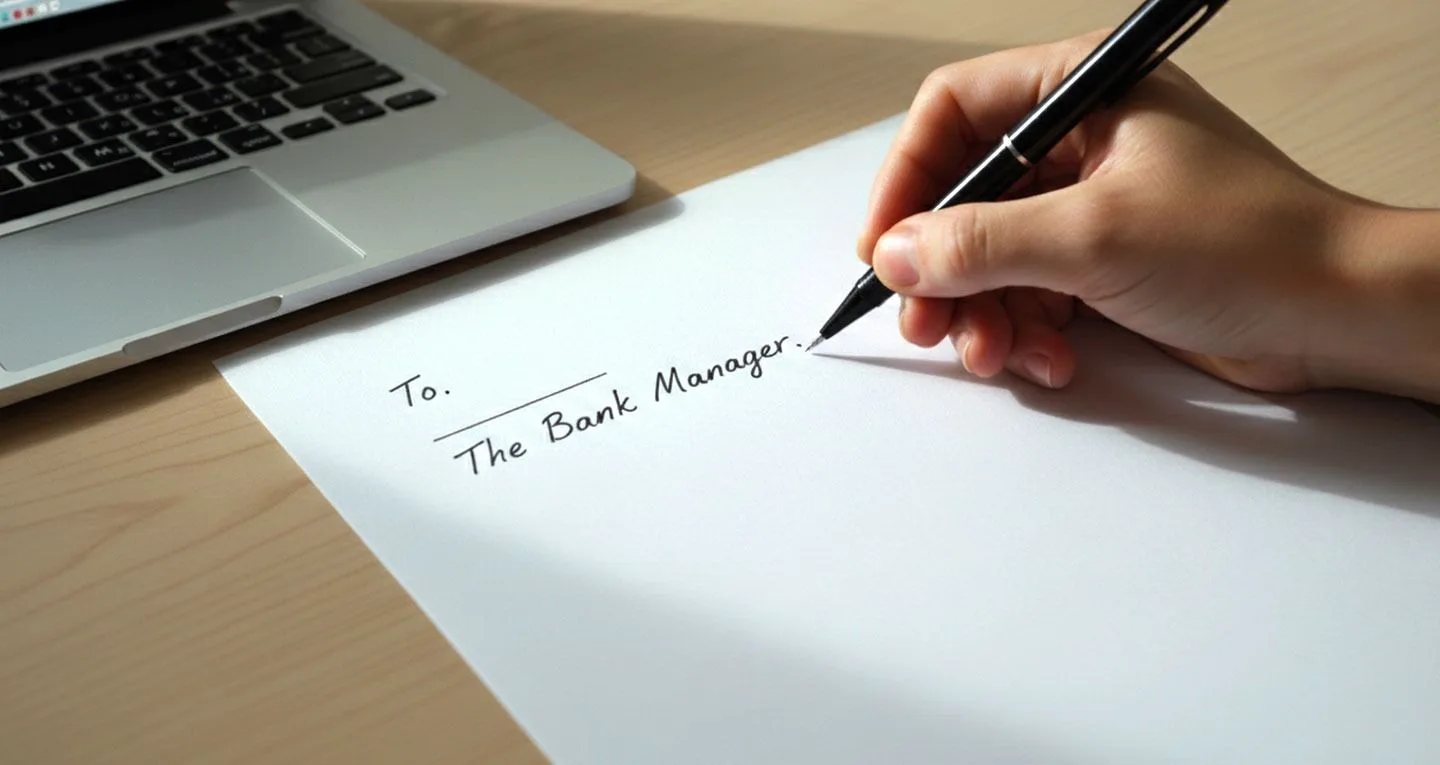
A script for debt settlement is a short written plan of what you will say when you ask your bank for a one-time loan settlement (OTS). It keeps you calm, helps you share the right facts about your loan, and stops you from agreeing to anything on the phone.

Mohit Juneja
Reviewed by FREED India, Debt Resolution Specialists
 4.7/5
 ₹3,200Cr+
 20,000+
 20,00,000+4.7/5₹3,200Cr+20,000+20,00,000+
Key Summary

A script for debt settlement keeps your bank call short, calm and factual.
Ask the collections or recovery team, not general customer care, about a one-time loan settlement.
Never pay on a phone promise. Get the offer on the bank’s letterhead or official email first.
RBI requires banks and NBFCs (non-bank loan companies) to have a board-approved policy for loan settlements.
A settled loan shows a “Settled” mark on your credit report for up to 7 years.

Can’t Repay Your Loan in Full? Get a Settlement Plan Built Around You
FREED counsellors look at all your loans first.
Start My Loan AssessmentWhat Is a Script for Debt Settlement?
Plenty of people know exactly what they want to tell their bank, right up to the moment the call connects. Then the mouth goes dry, the first sentence comes out wrong, and the call ends with a promise nobody meant to make. A script for debt settlement is not a trick. It is your own notes, written before you dial, so nerves don’t take over the call.
First, what loan settlement actually means. Loan settlement is an arrangement in which a lender agrees to accept a negotiated amount to resolve specified outstanding dues, subject to its approval and the written terms. The lender decides whether to offer settlement and which obligations the agreement covers. Once you pay it, the loan is marked “Settled,” not “Closed,” and that difference matters later when you apply for credit. You can read the full background in our loan settlement guide.
Settlement is not something a borrower chooses out of preference. Lenders may consider settlement in certain cases of financial difficulty, but approval is not guaranteed. Contact your lender to understand its policy and the options available for your account. If you can still repay, even with effort, the options further down will suit you better.
The request itself is usually called an OTS (one-time settlement, paying once and the matter ends). For the people on the other side of the phone, it is a routine file they already know how to handle.
The script for debt settlement in this blog has three parts: before the call, on the call, and after the call. Each part gets its own section, with sample lines you can read out loud and replies for the moments when the bank pushes back.
So why does picking up the phone feel so heavy in the first place?
Why Does Calling the Bank About Loan Settlement Feel So Hard?
Three EMIs have slipped. A recovery call came while you were in a meeting, and a colleague noticed your face change. That evening you open the loan app, see the helpline number, and put the phone down again.
If that sounds familiar, the heaviness has reasons. There is shame, first of all, the feeling that you failed at something other people manage without effort. There is the fear of being shouted at. There is the worry that one wrong sentence about your loan will be used against you later. And there is a plain practical problem: you don’t know whom to ask for. Customer care picks up, but the person who can discuss loan settlement sits somewhere else.
Here is one fact that may help. RBI directions require covered regulated entities to maintain a board-approved policy for compromise settlements. However, this does not mean that every settlement request must be accepted.
Your request is not an embarrassing exception. It is something their system already has a place for.
Having a script for debt settlement on paper takes away half the fear. You stop searching for words while your heart pounds, and you simply read the next line.
One more thing, in case the calls you already get feel wrong. RBI bars recovery calls before 8 a.m. and after 7 p.m., and any intimidation, verbal or physical. If an agent crosses that line, read your rights with recovery agents. Noting the time and number of each call gives you a record to work from.
Next, how to tell whether this call is right for you yet.
When Should You Call Your Bank About Loan Settlement?
This call is meant for one situation: repaying the loan in full is no longer possible. Check yourself against these four signs.
Your loan EMIs have slipped for a few months. One late payment is a timing problem. Several in a row is a pattern.
Your total EMIs eat more than 50% of your take-home pay. At that level, even a perfect month leaves almost nothing for rent, food and school fees.
You are skipping essentials to pay the bank. Medicines postponed, groceries trimmed, and the EMI still not covered.
Your income has dropped with no clear return soon. Job loss, a medical cost, or a business loss that will take long to recover from.
Now the other side. If you are still paying your loans, even with real effort, settlement is probably the wrong call. Ask your bank whether a revised repayment schedule is available, or explore loan consolidation if you qualify. Compare the interest rate, fees, repayment period and total cost before deciding. Neither option guarantees a particular credit outcome.
One neutral fact worth knowing: banks usually consider loan settlement only after a loan has been unpaid for some time. So if you are two weeks late because a salary was delayed, a settlement call is not what you need. A short, honest message to the bank about the delay is.
If three or four of the signs above describe your month, the next section will help you prepare.
Still Paying Your Loans, but Stretched? One EMI May Be Easier
For people who can still repay but need a simpler way.
Reduce My EMIWhat Should You Keep Ready Before the Loan Settlement Call?
Ten minutes of preparation changes how the whole call goes. Keep these six things on the table in front of you.
- Your loan account number and latest loan statement. The bank will ask for the number first, and the statement shows what the bank says you owe.
- A written note of what you borrowed, the interest added and the late fees, listed separately. This lets you spot a number that looks wrong.
- Proof of your difficulty. A job loss letter, medical bills, or salary slips showing a cut. Keep copies ready, but share them only when the bank asks.
- One honest amount you can arrange as a one-time payment, and by when, without taking a new loan. Decide this alone, before the call, when you are calm.
- A notebook for the name, employee ID, date and time of everyone you speak to. It becomes your record if anything is disputed later.
- A quiet 20 minutes in bank hours. Rushing between meetings is how people agree to things they shouldn’t.
These papers are the backbone of your script for debt settlement. Without them, the script is only a hope. With them, every line has a fact behind it.
Here is a worked example, and it is only an example, not a typical outcome. Say your personal loan outstanding is ₹2.4 lakh. After checking with family and looking at your savings, you can arrange ₹1 lakh within 60 days. That is the number you take into the call. You do not raise it on the spot because someone sounds disappointed, and you do not go below what you can honestly pay. If you are unsure how the bank arrives at the final figure, read what a settlement amount usually includes.
What to Say to Your Bank When Asking for Loan Settlement: Sample Call Script
Here is a script for debt settlement you can read from. Each beat has the line to say and a short reason for it. Use your own words where they come more easily, but keep the order.
- Ask for the right team. “I’d like to speak to the collections or recovery team about my loan account.” Customer care usually can’t discuss loan settlement.
- Identify yourself and the loan. “My name is [name], my loan account number is [number], and this is my [personal loan / credit card].” Give the loan type, so nobody opens the wrong file.
- Explain what happened, briefly. “I lost my job in March, and since then I have missed EMIs.” Two or three sentences, true facts only. Long stories invite long questions.
- Say clearly that full repayment isn’t possible now. “I want to resolve this loan, but I’m unable to repay the full amount.” Saying it plainly saves both sides from circling around it.
- Ask about one-time settlement. “Does the bank have a one-time settlement option for my loan?” Let them answer before you offer anything.
- Share what you can pay. Give the one honest amount and date from your preparation. Do not stretch it, even if the silence feels long.
- Ask for the full loan breakup in writing. “Please send me the principal, interest and charges separately.” This shows you what the settlement is actually being measured against.
- If they make an offer, ask for it in writing. Please send the complete offer through a verified official channel. I’ll review the amount, deadline and conditions and confirm the payment details with the lender before making any payment.
- End the call properly. Note the name, employee ID, date, time and next step, then thank them. A polite ending keeps the next call easy.
What not to say or do on the call
- Don’t promise an amount you don’t have.
- Never share an OTP, PIN or net banking password.
- Never pay to a personal UPI ID or an agent’s account.
- Don’t agree to “token payments” without it being in writing.
- Don’t sign blank forms.
A good script for debt settlement protects you as much as it helps you ask. If you want to go deeper into the bargaining side, our guide on how to negotiate a personal loan settlement covers it.

FREED Expert Tip
Read beats 4 to 8 aloud once before the call. Saying them once makes the real loan settlement call easier.
Settle My LoansWhat If the Bank Says No or Asks for More?
The first reply on a loan settlement request is often not the final one, and that is normal. Banks respond to the first call with standard lines. Your job is to stay on facts, keep it on record and avoid promising anything you can’t keep. It is not about winning or beating anyone.
Here is how that can sound. Keep this table next to your notes. The CIBIL line in it refers to your credit score from India’s credit bureau (CIBIL).
What the Bank May Say and What You Can Say
| Bank may say | You can say | Why it helps |
|---|---|---|
| “You must pay the full loan amount.” | “I understand. I’m unable to right now. Can my loan be reviewed for settlement?” | Keeps the door open without arguing |
| “Pay something today as a token.” | “Please share the request in writing first.” | Protects you from unrecorded payments |
| “Settlement will hurt your CIBIL.” | “I know. I still can’t repay this loan in full.” | Shows you’ve thought it through |
| “Send us documents.” | “Please share the official email ID to send them.” | Keeps a paper trail |
| “Pay today or face legal action.” | “Please send any notice in writing. I’ll respond.” | Stays calm, moves it on record |
| “We can’t settle at that amount.” | “What amount can the bank consider? I’ll check and come back.” | Avoids promising on the spot |
This table is the second half of your script for debt settlement. The goal in every row is the same: stay calm, stick to facts, and move the conversation onto paper.
If the bank refuses loan settlement altogether, ask whether it can change the loan’s repayment schedule instead. That keeps you in conversation with the bank. Some readers prefer to put the request in writing first, and our guide on how to write a loan settlement letter shows how.
What Should You Do After the Loan Settlement Call?
The last part of your script for debt settlement happens after you hang up. These six steps keep everything on paper.
- Send a follow-up email the same day. Summarise who you spoke to, what was discussed and your offer.
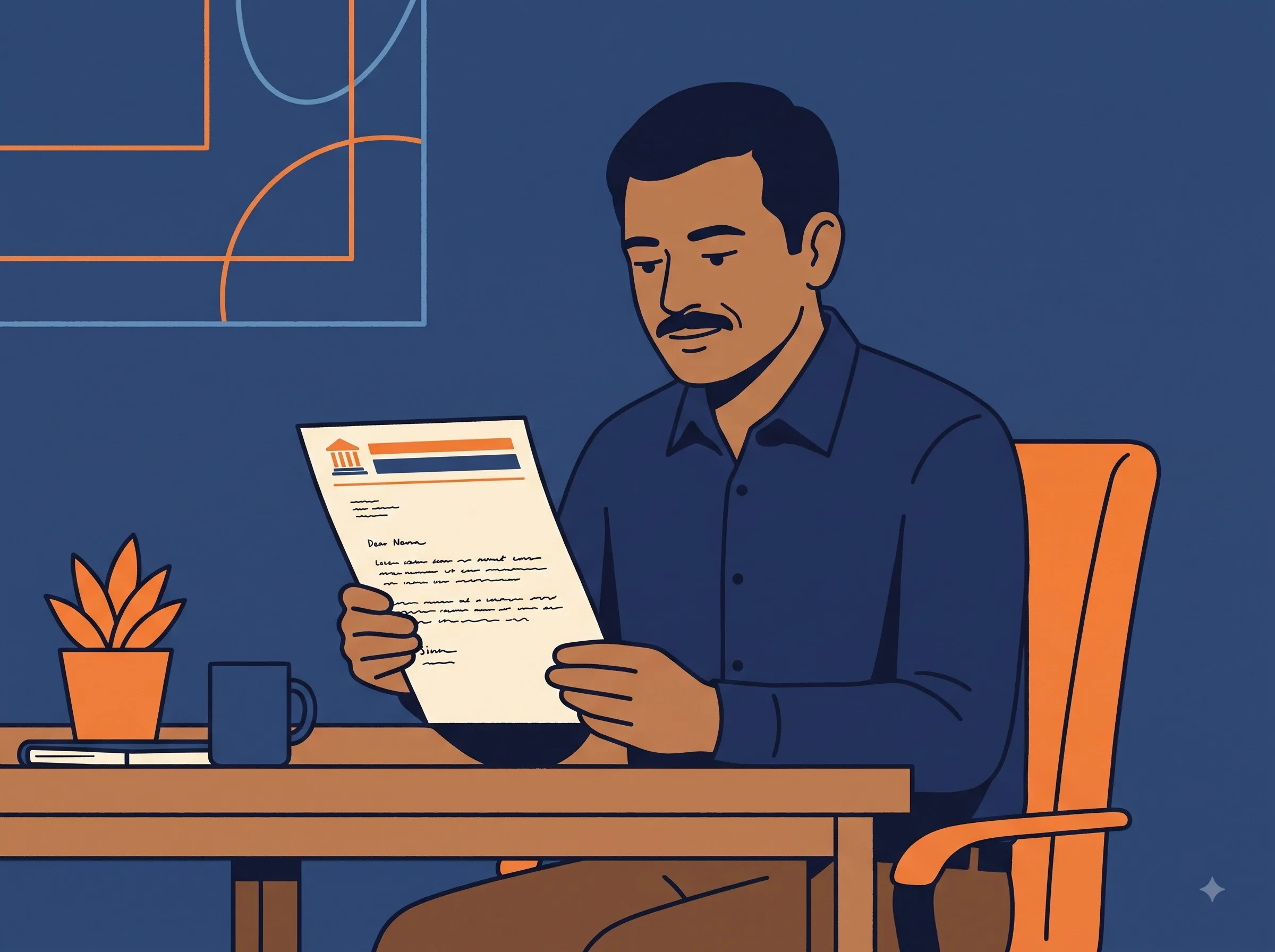
- Wait for the written offer. Make no payment before a letter on letterhead or an official email arrives.
- Check the letter. Look for your loan account number, the amount, the deadline, the words “full and final settlement,” and a line on the credit bureau update. What the letter should include is explained in a separate guide.
- Pay only to the bank’s official account. Keep the receipt and the transaction ID.
- Ask for the clearance letter, called an NOC (no objection certificate, proof that the bank has no further claim). Keep it with the settlement letter.
- Check your credit report after a couple of months. Confirm the loan shows “Settled.” You can see where you stand through Credit Insights.
A word on your credit record. The “Settled” mark can stay for up to 7 years, and a score drop of 75 to 100 points is commonly seen, though it varies from person to person. Our guide on the Settled mark explains how it shows up and what slowly improves it. A loan settlement can affect your credit report because the account may be recorded differently from one repaid in full. The effect on your credit score and future applications varies with your credit history and how the lender reports the account. Check your credit report after the lender has processed the settlement, and raise any inaccurate information through the appropriate lender or credit bureau process.
Keep every email, letter and receipt in one folder, physical or digital. If a recovery call arrives after you have paid, that folder answers it in a minute.

What the Law Says
After a loan settlement, RBI rules set at least 12 months before the same bank or NBFC can give you a new loan.
Check My Credit InsightsWhat Are Your Options Before Asking for Loan Settlement?
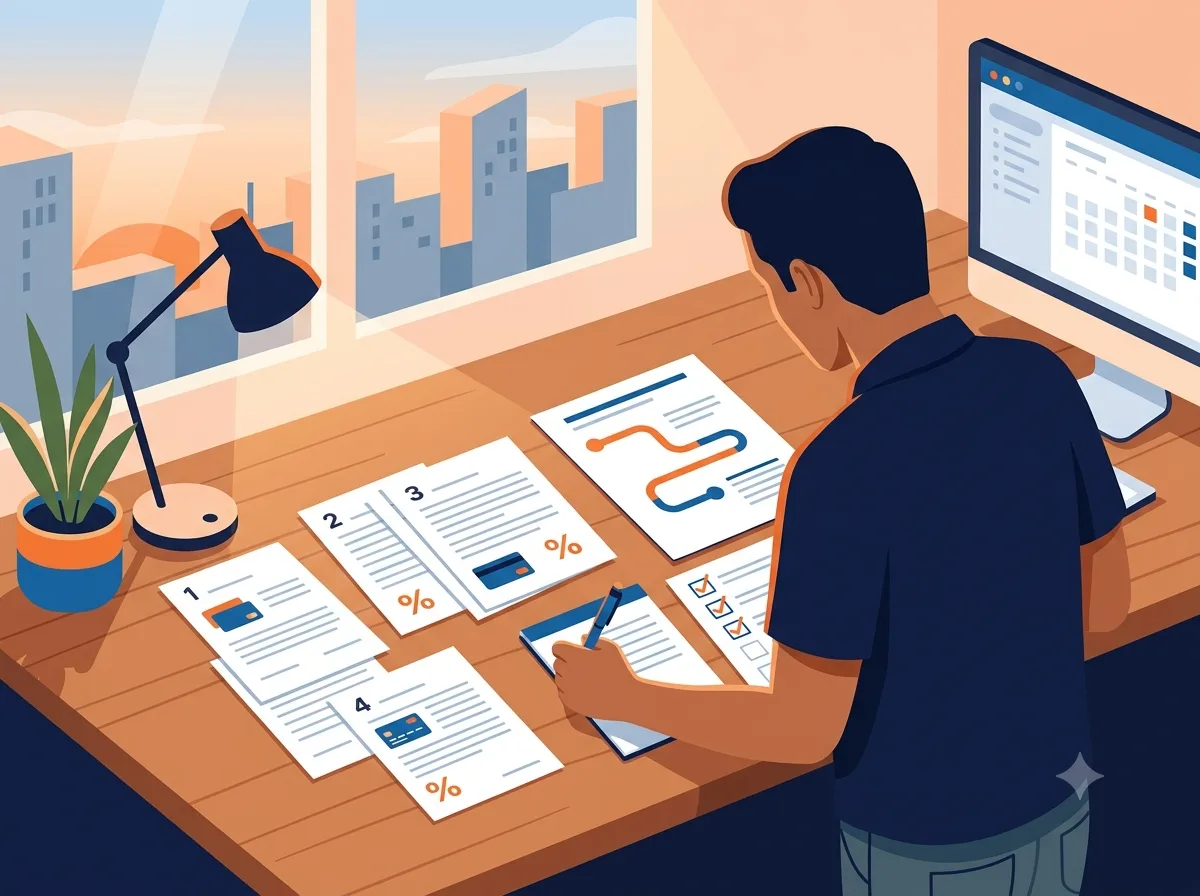
Think of three steps on a ladder. You start at the lowest one that fits your situation.
- Ask your bank to change the loan plan. A changed repayment schedule or more time gives you room without touching your record.
- Take a Loan Consolidation Plan if you are still paying. One new loan pays off your existing personal loans and card dues, so you pay one EMI instead of several. Your CIBIL score is not hurt and starts improving over time. FREED’s Loan Consolidation Plan is built for this situation.
- Use loan settlement only when full repayment is genuinely impossible. It is the last step on the ladder, not the first.
Your Loan Options Compared
| Changed Repayment Schedule | Loan Consolidation Plan | Loan Settlement | |
|---|---|---|---|
| Who it suits | Short-term cash gap | Still paying, several loans | Genuinely unable to repay the loan in full |
| What you pay | Full loan amount, over longer time | Full amount, one lower EMI | Reduced one-time amount (up to 50%* less) |
| CIBIL effect | Limited if kept | Score can improve | “Settled” mark for up to 7 years |
| Decided by | Your bank | Lending partner after FREED’s matching | Your bank |
| With FREED | Not applicable | FREED matches you and gets it done | FREED negotiates once your savings fund is ready |
Rates and ranges shown are indicative. Final terms decided by the bank. FREED is not a Loan Provider. No outcome is guaranteed. Please verify directly with your bank.
Read across a row to see what each route asks of you and what it leaves on your record. The cheapest route in rupees is not always the lightest on your credit report, so compare both columns before choosing.
If you are unsure whether you qualify for any of these, FREED’s team can look at your loans on a call.
How FREED Helps If Talking to Your Bank Feels Too Heavy
Some people simply cannot face the call. Others have loans across several banks, and repeating the same story five times is more than they can carry. That is where FREED steps in.
The FREED Loan Settlement Plan, also called “Settle My Loans,” works in steps. FREED first looks at your full picture: your loans, your income and your essential costs. Then it builds a personalised plan around those numbers. You save a fixed monthly amount into a separate account held in your own name by an independent trustee. Once enough is saved, FREED talks to each bank on your behalf.
You stay in control throughout. You approve or decline every offer. When you approve one, the payment goes to the bank, and you receive a settlement letter for that loan.
FREED handles the back-and-forth, prepares the documents and makes sure the letter is worded correctly. The fee is success-based and charged only when a loan settlement is done. The process takes time. It is not an overnight fix, and no outcome is guaranteed. The full programme is on the Loan Settlement Plan page.
If recovery calls turn abusive in the meantime, FREED Shield is available to everyone, whether or not you join the plan.
FREED has settled 20,000+ accounts, counselled 20,00,000+ customers and managed ₹3,200 Cr+ debt. Rates and ranges shown are indicative. Final terms decided by the bank. FREED is not a Loan Provider. No outcome is guaranteed. Please verify directly with your bank.
Let FREED Handle the Bank Conversations on Your Loans
A personalised loan settlement plan built around your income.
Start My Loan AssessmentHow Much Could a Loan Settlement Save You?
Numbers make a call easier. The calculator below gives you an estimate you can add to your script for debt settlement, so you walk in knowing the rough shape of the figures. The real number is always decided by the bank.
Take the ₹2.4 lakh loan from the earlier example. Enter ₹2,40,000 as the total outstanding, set the slider to its 50% limit, and choose a time frame of 6 months. The calculator shows an estimated one-time amount of ₹1.2 lakh and a monthly saving of ₹20,000 to reach it. That is ₹20,000 more than the ₹1 lakh the reader in our example could arrange, which tells him he needs a longer time frame or a conversation about a lower amount before he calls.
Rates and ranges shown are indicative. Final terms decided by the bank. FREED is not a Loan Provider. No outcome is guaranteed. Please verify directly with your bank.
Are You in a Loan Trap? Quick Check
Move the slider to your total EMIs as a % of monthly salary. See your debt stress level instantly.
EMIs as % of Monthly Salary
Tips for a Calmer Loan Settlement Call With Your Bank
A few small habits make a big difference on the day.
- Call in bank hours from a quiet place. A noisy bus stop is a bad office. Step into a room and close the door.
- Keep your script for debt settlement and your loan papers in front of you. Open on the table, not tucked away in a drawer.
- It is fine to say, “I’ll check and call back.” Nobody expects an answer on the spot. Say it the moment you feel pushed.
- Ask for names, and repeat the key loan numbers back. For example: “Just to confirm, the amount you mentioned is ₹X and the deadline is the 15th, correct?” Misheard numbers cause most of the confusion later.
- Take a family member’s help if you freeze. They sit beside you and only listen. You still do the talking.
- If one call goes badly, the next one can go better. You can end politely, regroup and call again with the same script.
A tough month does not need to be carried alone. Our short guide on managing money during a hard phase can help you plan the weeks around the call.
Loan Recovery Calls Crossing the Line?
Document and report harassment with FREED Shield.
Get Help With HarassmentSourcing and Verification
| Claim | Source |
|---|---|
| Board-approved settlement policy; at least 12 months before a new loan from the same bank or NBFC after a compromise settlement | RBI/2023-24/40, 8 June 2023 |
| No recovery calls before 8 a.m. or after 7 p.m.; no verbal or physical intimidation | RBI/2022-23/108, 12 August 2022 |

Mohit Juneja
Mohit Juneja writes educational content at FREED on debt management, credit scores, loan repayment, and borrowing best practices. His content is shaped by expert insights and industry knowledge, helping readers better understand their financial options and make informed decisions.
mohit.juneja@freed.care

FREED is India's trusted loan management platform. Founded in 2020 and headquartered in Gurugram, FREED has counselled 20 lakh+ people on personal loans, credit cards, and app loans. FREED charges fees only on successful settlement, not upfront. FREED does not handle secured loans (home loans, car loans, gold loans).
Media Mentions