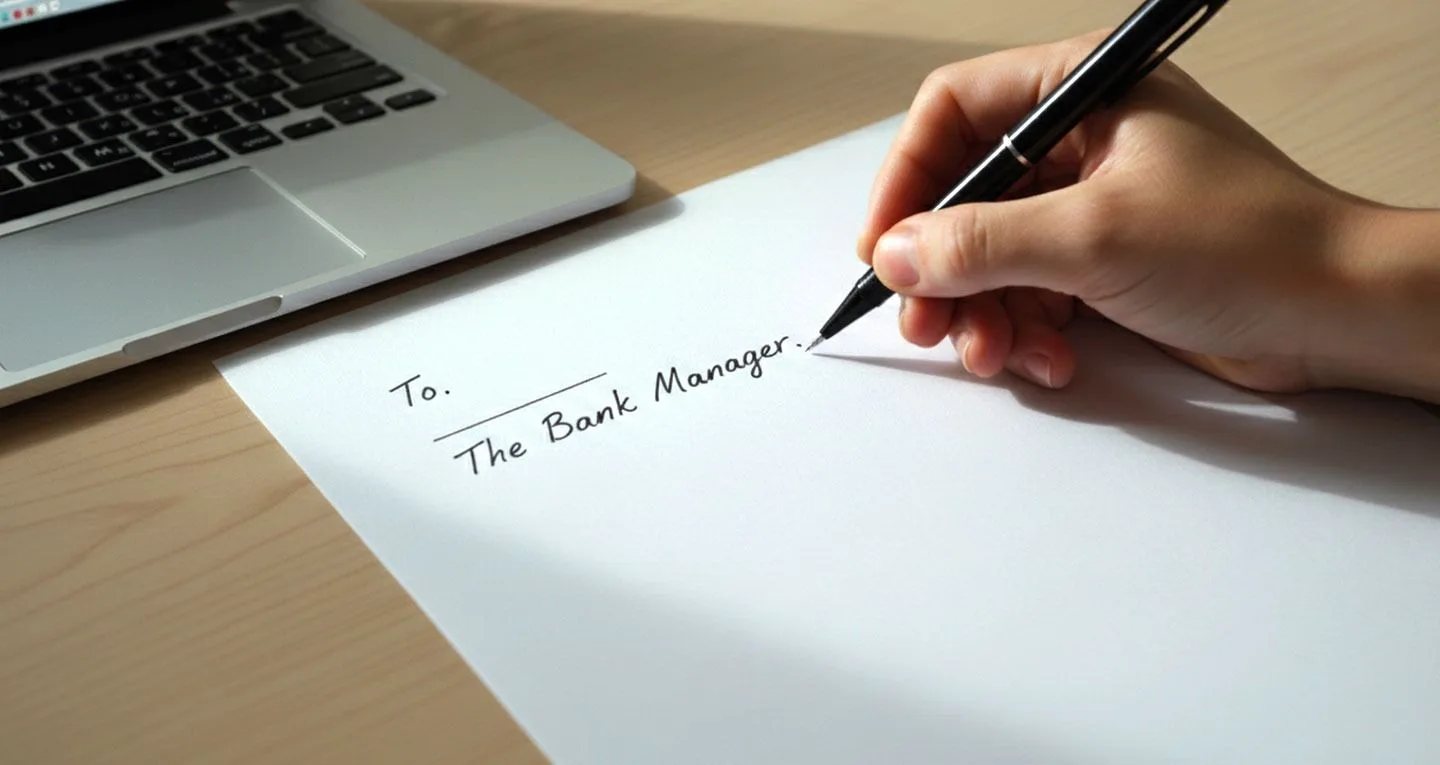
One-Time Settlement Letter: What a Valid OTS Letter Includes
A one-time settlement letter is the bank's written confirmation of a negotiated settlement, issued after a settlement amount has been agreed upon but before any payment is made. It's different from the request letter a borrower sends to start the negotiation. This is the document you should never pay against unless it has every required element in writing.
Mohit Juneja
Reviewed by FREED India, Debt Resolution Specialists
 4.7/5
4.7/5 ₹3,200Cr+
 20,000+
 20,00,000+4.7/5₹3,200Cr+20,000+20,00,000+
Key Summary

A one-time settlement letter format includes the account number, the agreed amount, the payment deadline, and the words "fully and finally settled."
This letter comes from the bank after negotiation. It's different from the request letter a borrower sends to start the process.
Never pay a settlement amount before this letter is in hand on official letterhead.
After settlement, the account may be reported as "Settled" on your credit report, which can affect your credit profile.
A No Objection Certificate (NOC) follows separately, after payment, and should also be collected in writing.
What Is a One-Time Settlement Letter?
This article is about one specific document, worth being precise about which one from the start. A one-time settlement letter is the bank's written confirmation of an agreed settlement, issued after negotiation, once both sides have arrived at a number. It's a formal document on the bank's official letterhead, stating the agreed reduced amount, the deadline to pay it, and confirming that full payment closes the account as settled.
This is different from the hardship or request letter a borrower sends first, the one that actually opens the settlement conversation with the bank. That's a separate document with a separate purpose, written by you, explaining your hardship and proposing a figure. The letter this article covers is in the opposite direction entirely, written by the bank, confirming what it has agreed to.
Many borrowers spend real time and care getting their own request letter right, the tone, the documentation, the proposed amount, and then treat whatever comes back from the bank as a formality, something to glance at before wiring money. That's backwards. The letter you send opens a conversation. The letter you receive provides written proof of the agreed settlement terms once you've paid. If you haven't sent your initial request yet, FREED's guide on writing a loan settlement letter to a bank covers that side of the process, tone, structure, and what to include, in full detail, worth reading before you get to the stage this article picks up at.
Think of these as two separate checkpoints in the same journey. Getting the first one right gets you to the negotiating table. Getting the second one right is what makes the eventual payment actually mean something.

When Do You Receive an OTS Letter in the Settlement Process?
This letter arrives at a specific point in a longer sequence, worth placing clearly so you know what to expect and roughly when to expect it. It comes after your request letter has been sent to the bank, after some back-and-forth negotiation on the actual figure, since banks rarely accept a borrower's first proposed amount outright, and after the bank has internally approved the settlement at whatever level its own policy requires. Only after all of that does the formal confirmation get issued. Critically, it arrives before any payment moves from your side.
The review window between sending your initial request and receiving this confirmation letter varies meaningfully by bank, by how the account is classified, and by how much internal approval the specific amount requires. Commonly, this stretches to a few weeks rather than days, since the proposal typically needs to move through a review process, sometimes involving more than one internal sign-off, before anyone at the bank is actually authorised to issue a formal, binding confirmation on letterhead. A larger settlement figure, or an account flagged for any special handling, can push this timeline out further still.
Here's the part worth being genuinely firm about, because it's where borrowers most often get caught out. A verbal agreement over a phone call, even one that sounds confident and comes from a genuine, named bank official, isn't final until this letter physically or digitally arrives with everything in writing. Banks can and do shift terms between an informal verbal discussion and the eventual written offer; sometimes the final number is slightly different, and sometimes the deadline is tighter than what was discussed on the call. Only the letter itself carries any real weight if a dispute comes up later; a phone call leaves no trail either side can point back to with certainty.
If you're mid-negotiation right now and trying to move things along faster, FREED's guide on how to speed up your loan settlement process covers practical ways to reduce this waiting period without cutting corners on the paperwork itself.
What Must a Valid OTS Letter Include?
This is the core checklist worth running against any settlement letter before you act on it in any way. Each element exists for a specific, practical reason, worth understanding rather than just mechanically ticking off.
- The loan or credit card account number, exactly matching bank records. This single line confirms the letter genuinely applies to your specific account, and not a similar one or a clerical mix-up somewhere inside a large bank's system. A single transposed digit in an account number has, in real disputes, been enough for a bank to later claim the letter didn't actually apply to the account in question.
- The borrower's full name as it appears on the account, spelled exactly. A mismatched or misspelled name might look trivial at first glance, but it can create real complications later if this letter is ever needed as formal proof, whether in a dispute with the bank or when explaining a "Settled" entry to a future lender.
- The bank's official letterhead, not a plain printout with no branding, and not an email from an address that isn't verifiably the bank's own domain. Letterhead is what makes the document identifiable and traceable back to the institution itself, rather than to an individual staff member who might later leave the bank or deny involvement.
- The exact agreed settlement amount, ideally written in both numerals and words, the way a cheque traditionally is. This double format is standard practice for a specific reason: it closes the door on a simple typo or transcription error being read later as the actual, binding figure. If the numerals say ₹85,000 but the words say "Eighty Five Thousand," that consistency matters more than it might seem.
- The payment deadline should be stated as a specific date, not vague phrasing like "at the earliest" or "soon." A specific date, say "on or before 15th September 2026," is enforceable and unambiguous in a way a vague window simply isn't. If the deadline passes before you've paid, whether or not the original offer still stands becomes its own separate question.
- The explicit phrase "fully and finally settled," or clearly equivalent wording. This is arguably the single most important line in the entire letter, since it's what legally distinguishes a closing settlement from what could later be reframed as merely a partial payment against a larger, still-open balance.
- The authorised signatory's name, designation, and signature or official stamp. This confirms that someone with actual authority to approve settlements, not just a junior staff member drafting routine correspondence, has personally signed off on these specific terms.
- A clear statement that payment of this amount closes the account entirely. Beyond the "fully and finally settled" phrase itself, the letter should state in plain terms that this specific payment resolves the matter completely, leaving nothing further outstanding on this account.
FREED reviews this letter carefully for every enrolled customer, checking systematically for each of these eight elements before advising a customer to proceed with the payment.

FREED Expert Tip
Check that the agreed amount is written in both numerals and words, and that they match exactly. A mismatch is a real reason to go back to the bank before paying anything.
Settle My LoansWhat's Missing From an Invalid or Incomplete OTS Letter?
Flip the checklist above, and a specific set of red flags emerges, each one worth watching for directly rather than simply hoping a letter that looks official actually is complete.
No specific deadline, just vague phrasing like "as soon as possible," "shortly," or "at your earliest convenience." Without a firm date attached, there's genuinely no clear point at which the offer expires or the terms lock in, which leaves the entire arrangement open to reinterpretation later by either side, but usually not in the borrower's favour.
No explicit "fully and finally settled" language anywhere in the letter. This is the single gap that matters most, and it's often the easiest one to miss on a quick read, since the letter can still sound conclusive in tone without actually containing this specific phrase. Without it, there's real, practical room for a bank to later argue the account wasn't actually fully closed by that particular payment, potentially treating it instead as a partial payment against a larger balance that technically remains open.
Only a verbal confirmation, or an informal SMS or WhatsApp message, with no letterhead at all. These carry essentially no formal weight if a genuine dispute ever arises later. A message sent from a mobile number isn't reliably traceable back to an authorised, board-approved bank decision the way a signed letter on official letterhead is, and a bank can plausibly deny that an informal message represented its actual, final position.
No named signatory or official stamp anywhere on the document. A letter with no identifiable, authorised person attached to it is meaningfully harder to hold the bank accountable to later, since there's no specific individual or role whose sign-off you can point back to if the terms are ever questioned.
If any of this is missing from what you've received, the right move is straightforward: go back to the bank in writing, clearly request a corrected letter with the missing element included, and hold off on paying anything at all until you have that correction in hand. Paying against an incomplete letter simply to keep the process moving is exactly the risk this entire checklist exists to flag, and it's the single most avoidable mistake in the whole settlement journey. FREED's guide on negotiating a personal loan settlement with your bank covers how to push back on incomplete terms during the negotiation itself, before a defective letter even gets issued.

What the Law Says
A settlement letter missing explicit "fully and finally settled" wording weakens your legal footing under the contract-law principle of accord and satisfaction, the doctrine that determines whether a payment genuinely discharges a debt in full. Without that language, a bank retains more room to dispute later whether the account was actually closed by that payment.
Talk to a FREED CounsellorWhat Happens After You Receive a Valid Letter?
Once you're holding a letter that checks every box above, a clear sequence follows from there, and it's worth knowing upfront that this isn't quite the end of the paperwork yet, even once the biggest hurdle is cleared.
Step 1: Pay the agreed amount within the stated deadline. Use a traceable method like a bank transfer rather than cash, and never pay into a recovery agent's personal account under any circumstances, regardless of what you're told on a call. Payment should go only to the bank's official account, confirmed directly with the branch if there's any doubt at all.
Step 2: Retain the payment confirmation alongside the settlement letter itself. Keep both together as a pair, ideally in both a digital copy and a physical one, since this combined record, the letter plus the proof of payment, is what actually demonstrates the settlement was completed on the agreed terms.
Step 3: Request the NOC (No Objection Certificate) once payment has cleared. This is worth being precise about: the NOC is a separate document from the settlement letter, issued at a distinctly later stage, not a duplicate of what you already have in hand. A properly issued NOC provides written confirmation of the account’s status after settlement, so it is important to collect it after payment.
Step 4: Check all four credit bureaus within 30 to 45 days. Confirm that the "Settled" status has actually been reflected correctly on your report across CIBIL, Experian, Equifax, and CRIF High Mark, rather than assuming the update has happened automatically just because you paid and received your NOC. Bureau reporting delays are common enough that this check genuinely matters.
This isn't the finish line the moment payment clears, even though it can feel that way after a long and often stressful process. Two more pieces of paperwork, the NOC and the bureau update, both still need separate, active confirmation before the matter is genuinely closed end to end. FREED tracks the case through to both of these for enrolled customers, so the follow-through after payment doesn't fall entirely on the borrower alone, at exactly the stage where most people are the most exhausted and least inclined to keep chasing paperwork.
How FREED Helps
FREED reviews every settlement letter for enrolled customers before advising anyone to pay, checking it methodically against each of the eight elements covered above, the account number, the exact amount in both numerals and words, the deadline, the "fully and finally settled" wording, and the signatory, rather than leaving that verification entirely to the customer at the exact moment they're most eager to just get the process over with.
Beyond the letter review itself, FREED drafts and sends the borrower's original request letter, prepares the supporting hardship documentation, income proof, medical bills, a termination letter, whatever genuinely applies, and manages the negotiation through a structured SPA-based (Systematic Payment Approach) savings plan, building steadily toward a realistic settlement figure before ever approaching the bank with a formal offer.
FREED follows through well past the payment itself too, tracking the case all the way to the NOC and the credit bureau update, so the paperwork covered in the previous section doesn't sit entirely on the borrower's shoulders at exactly the stage they're often most drained by the whole journey. If you're weighing whether settlement is even the right route for your situation before getting this far, FREED's broader guide on negotiating a personal loan settlement in India is worth reading first.
FREED has helped settle 20,000+ accounts and managed ₹3,200 Cr+ in debt, with eligible cases receiving settlements of up to 50%* less than the original outstanding. The fee is success-based, charged only once settlement is actually complete, never upfront.
Waiver percentage varies by case, bank, and account history. No specific outcome is guaranteed.
What Helps You Verify Your OTS Letter Is Legitimate
- Cross-check the account number and name against your own records exactly, character by character. A small typo can matter more than it seems at first glance, so don't skim this step. Pull up your original loan documents and compare them slowly, digit by digit, rather than trusting a quick visual match.
- Confirm the bank's letterhead or the sending email domain independently; don't just trust what's printed on the page. A quick check against the bank's official website, or a call to a published customer care number rather than one printed on the letter itself, is enough to rule out anything questionable.
- Don't pay based on a phone call alone; wait for the letter itself. As covered earlier in this piece, a verbal confirmation carries no real formal weight until it's written down, dated, and signed on official letterhead.
- Keep both a digital and a physical copy once the letter is in hand. Keeping both copies gives you a useful backup if either copy is ever lost, corrupted, or disputed down the line.
Working through this list before you act puts you in a genuinely stronger position than simply trusting that a letter looks official because it arrived on time and uses formal-sounding language. A free review from FREED can confirm a letter is complete before you commit to paying anything, if you'd rather have a second, experienced set of eyes on it before you act.

Mohit Juneja
Mohit Juneja writes educational content at FREED on debt management, credit scores, loan repayment, and borrowing best practices. His content is shaped by expert insights and industry knowledge, helping readers better understand their financial options and make informed decisions.
mohit.juneja@freed.care

FREED is India's trusted loan management platform. Founded in 2020 and headquartered in Gurugram, FREED has counselled 20 lakh+ people on personal loans, credit cards, and app loans. FREED charges fees only on successful settlement, not upfront. FREED does not handle secured loans (home loans, car loans, gold loans).
Media Mentions