Does Debt Consolidation Affect Buying a Home? What You Should Know
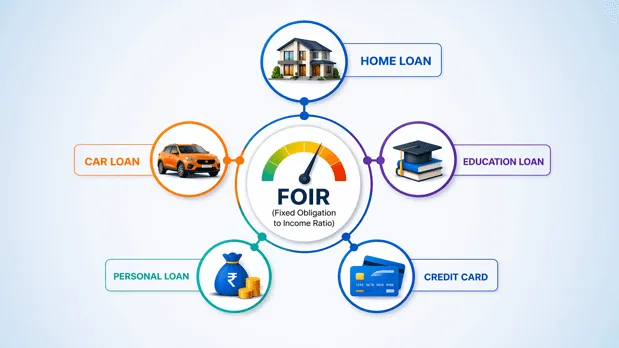
Debt consolidation combines eligible debts into a new repayment arrangement, which may result in one EMI and, depending on the loan terms, a lower monthly outgo. On its own, it does not block a home loan. What matters is timing and your resulting FOIR (Fixed Obligation to Income Ratio, the share of income going to EMIs), which every home loan lender checks before approval.

Mohit Juneja
Reviewed by FREED India, Debt Resolution Specialists
 4.7/5
4.7/5 ₹3,200Cr+
 20,000+
 20,00,000+4.7/5₹3,200Cr+20,000+20,00,000+
KEY TAKEAWAYS

Debt consolidation does not have the same credit-reporting implications as a default or missed payment, but applying for a new loan can result in a credit enquiry and a new account. Your subsequent credit profile will also depend on repayment behaviour and how the accounts are reported.
Home loan lenders assess FOIR, how much of your income already goes to EMIs, before approving a new loan.
Taking a new loan, including a consolidation loan, triggers a hard inquiry, which can cause a small, temporary dip, standard for any new credit account.
Timing matters: consolidating a few months before applying for a home loan, rather than right before, gives your profile time to stabilise.
If the new consolidation loan results in a lower eligible monthly obligation, it may reduce the amount of income committed to debt and potentially improve the affordability calculation used by a lender.
Does Debt Consolidation Affect Buying a Home?
No, not on its own. Debt consolidation itself is not a red flag to home loan lenders. It's simply one more credit event that shows up on your report, alongside your existing accounts. What actually decides whether you get approved, and for how much, is your FOIR (Fixed Obligation to Income Ratio, the share of your income already committed to EMIs) at the time you apply, plus your repayment track record over time.
A lot of people searching this worry that consolidation "counts against" them the same way a missed payment or a default would. It doesn't. These are two different categories on your credit report entirely. A default signals you couldn't pay. Consolidation signals you restructured what you owed into a more manageable form, while still paying it back in full.
That said, timing and sequencing do matter, and that's where most of the confusion actually comes from. Consolidate too close to a home loan application, and you add a fresh account and a fresh inquiry right when a lender is reviewing your file. Consolidate with enough runway, and your profile has time to settle before anyone looks at it.
This guide walks through FOIR, timing, CIBIL, and how to sequence a consolidation loan against a home loan application, so you're not guessing.

See If Consolidation Fits Your Home Loan Plan
Free assessment, no impact on your CIBIL score to check
Check your optionsWhy People Consolidate Debt Before Buying a Home
Most people who consider consolidation before a home loan aren't in trouble. They're doing the math ahead of time.
The most common trigger: someone juggling two to four different EMIs realises their current EMI load would disqualify them from the home loan amount they actually want. The bank does the same FOIR calculation they'd do themselves, and the number doesn't work in their favour yet. Planning out your EMI payments properly before that gap turns into a real problem is usually what brings people to consolidation in the first place.
The second trigger is simpler. They'd rather walk into a home loan application with one clean repayment history than five scattered accounts across different banks and card issuers. One loan is easier for a lender to read quickly, and easier for the borrower to track too.
The third is cash flow. Combining several EMIs into one lower monthly payment frees up money that can go straight into a down payment fund instead of disappearing across multiple due dates every month.
This is a reasonable strategy on its own. But the order you do things in, and how much time you leave between consolidating and applying, matters more than most people expect. That's covered next.
Signs Consolidating Before a Home Loan Application Makes Sense
You're currently juggling three or more unsecured EMIs across different lenders, personal loans, credit cards, or both.
Your combined EMI outgo already feels tight against your income, even if you're not missing payments. Check where that actually stands with your EMI score rather than guessing.
You're planning to apply for a home loan in the future rather than within the next few days. That gap gives consolidation time to work in your favour.
Your credit card utilisation is running high, which tends to weigh on how lenders read your file even when you're paying on time. Keeping your utilisation in a healthy range is worth checking before you assume consolidation is the only fix.
You want a single, clean repayment line that a lender can assess quickly, instead of piecing together several different accounts.
If most of these describe you, consolidating now is a reasonable move before you apply. But if a home loan application is only weeks away, consolidating right before it may not be the right sequence. That's the difference the next section is built around.
See If Consolidation Fits Your Plan
Free assessment, no impact on your CIBIL score to check.
Check your optionsHow Lenders Evaluate Your Loan Profile
A home loan lender never looks at one number in isolation. Four things usually matter most.

Your CIBIL or other credit score is one important part of the assessment. It's the quickest signal of how reliably you've repaid credit in the past, and understanding how that score is actually built helps explain why lenders trust it so much.
FOIR, or Fixed Obligation to Income Ratio, comes next. This is how much of your income is already committed to EMIs before the new home loan is even added. Lenders generally prefer this to stay within a comfortable margin, though the exact threshold varies from lender to lender, and no single figure applies everywhere.
Repayment history and consistency matter beyond just your current status. A lender wants to see months, ideally years, of on-time payments, not just a clean snapshot today.
Employment and income stability, plus your down payment capacity, round out the picture. A lender is trying to answer one question: can this person comfortably carry a home loan EMI on top of everything else they're already paying?
None of these four factors works alone. A strong score with a stretched FOIR can still slow an application down, just as a comfortable FOIR with a thin repayment history can raise questions. Lenders read the whole file together, which is exactly why timing your consolidation matters as much as doing it at all.
When to Consolidate If You're Planning to Buy a Home
This is the part most generic advice skips, because it assumes a different credit system. In India, the FOIR and CIBIL mechanics work a little differently, and the timing question deserves a direct answer.
Consolidate several months before you apply, not the week before. Allowing some time after consolidation can give the new account a repayment history that the lender can consider when reviewing your application. A couple of on-time payments on the books, and any dip from the new account settling, gives a lender a cleaner file to read when they eventually pull your report.
Consolidating right before a home loan application does the opposite. It adds a fresh account and a fresh hard inquiry exactly when a lender is reviewing your file most closely. That doesn't automatically disqualify you, but it can complicate how your application reads, and it's an avoidable complication.
Once you've consolidated, your FOIR usually drops, since your total EMI outgo is now lower than it was across multiple accounts. That's the whole point. But it only helps if you protect it. Taking on new spending or a fresh EMI in the months after consolidating can undo the improvement before your home loan is even sanctioned.
There's no verified universal rule for exactly how many months to wait, and any number claiming to be one isn't based on a real source. Treat this as directional: earlier is safer than later, and later is safer than right before.

Freed Expert Tip
Consolidate a few months before applying for a home loan, not the week before, so your profile has time to settle.
Check My EMI ScoreWhat Are Your Options If You're Over-Leveraged Before a Home Loan
If your EMI load is working against your home loan plans, there are two options worth knowing.

Balance transfer. If the strain is coming from one high-rate loan or card specifically, moving it to a lender offering a lower rate may be enough on its own. No need for full consolidation if the problem really is just one account.
Debt consolidation. If it's multiple loans and cards adding up, merging them into one lower EMI is the more direct route. You end up with one loan, one EMI, one due date, replacing several scattered accounts. Consolidation doesn't carry the same score risk that a default or settlement would. How your score moves from there depends on how consistently you repay the new EMI, not on the act of consolidating itself.
Which of these fits depends on how many accounts are actually behind the strain, one, or several. If several accounts are contributing to the debt burden, consolidation is one option to compare with your existing repayment arrangements. Whether it improves your home-loan position depends on the new loan terms and the lender's assessment.
How FREED Helps
FREED's Debt Consolidation Program, also called the Loan Consolidation Plan or "Reduce My EMI," starts by reviewing your full financial profile: every loan, every card, every EMI you're currently carrying. Based on that, FREED matches you to a suitable lending partner from its network.

That lending partner then disburses one new loan that pays off your existing eligible unsecured debts, personal loans, credit cards, BNPL balances, instantly. You may be left with one EMI that is lower than your previous combined monthly outgo, depending on the approved loan amount, interest rate and tenure. The fee is success-based, charged only once the consolidation is actually completed.
One boundary worth being clear on: FREED's Debt Consolidation Program covers unsecured debt only. It does not process the home loan itself. Once your profile is cleaner, your actual home loan application still goes through a home loan lender, bank, NBFC, or housing finance company, separately. FREED gets you to a stronger starting point. It doesn't arrange or approve the home loan.
What Helps While You Prepare for a Home Loan
Keep new credit applications to a minimum in the months around your home loan application. Every new inquiry adds a small, temporary mark, and stacking several close together reads worse than any one of them alone.
Pay every EMI on time through the transition, including the new consolidated one. Getting the basics of how an EMI is actually structured right helps explain why consistency matters more than the total amount alone. This is the single biggest thing within your control, and it's what actually shapes your score and repayment history over time, not the consolidation event itself.
Keep an eye on your own credit report so nothing surprises you when the lender pulls theirs. Checking it yourself through Credit Insights is a soft check, it won't affect your score, and it lets you catch an error or an old account before a lender does.
Save consistently for your down payment alongside paying down your EMI load. A lender wants to see both a manageable FOIR and evidence you can save, not just one or the other.

Mohit Juneja
Mohit Juneja writes educational content at FREED on debt management, credit scores, loan repayment, and borrowing best practices. His content is shaped by expert insights and industry knowledge, helping readers better understand their financial options and make informed decisions.
mohit.juneja@freed.care

FREED is India's trusted loan management platform. Founded in 2020 and headquartered in Gurugram, FREED has counselled 20 lakh+ people on personal loans, credit cards, and app loans. FREED charges fees only on successful settlement, not upfront. FREED does not handle secured loans (home loans, car loans, gold loans).
Media Mentions