CIBIL: A Complete Guide
CIBIL (Credit Information Bureau India Limited, now TransUnion CIBIL) is India's oldest credit information company. It maintains your credit report, the record of every loan and card you've held, and calculates your CIBIL score, a three-digit number between 300 and 900 that summarises that history for lenders.

Mohit Juneja
Reviewed by FREED India, Debt Resolution Specialists
 4.7/5
4.7/5 ₹3,200Cr+
 20,000+
 20,00,000+4.7/5₹3,200Cr+20,000+20,00,000+
KEY TAKEAWAYS

CIBIL is one of four RBI-licensed credit bureaus in India, alongside Experian, Equifax, and CRIF High Mark, lenders can report to and pull from any of them, and your score can genuinely differ across all four.
Your CIBIL score is calculated from your credit report, payment history, utilisation, credit mix, and account age, not requested or set independently.
You're entitled to one free full CIBIL report per year directly from CIBIL, checking it yourself never lowers your score.
A score below 650 generally makes new credit harder to get, though the exact cutoff varies by lender and loan type.
What Is CIBIL?
CIBIL, formally Credit Information Bureau India Limited, is majority-owned by TransUnion, a stake that reached 92.1% by 2016, and is commonly still called CIBIL, or TransUnion CIBIL in full. It was India's first credit information company, established in 2000, at a time when Indian lenders had no shared, standardised way to check a borrower's history across institutions. That first-mover position is one reason the CIBIL name remains widely recognised by Indian borrowers and lenders.
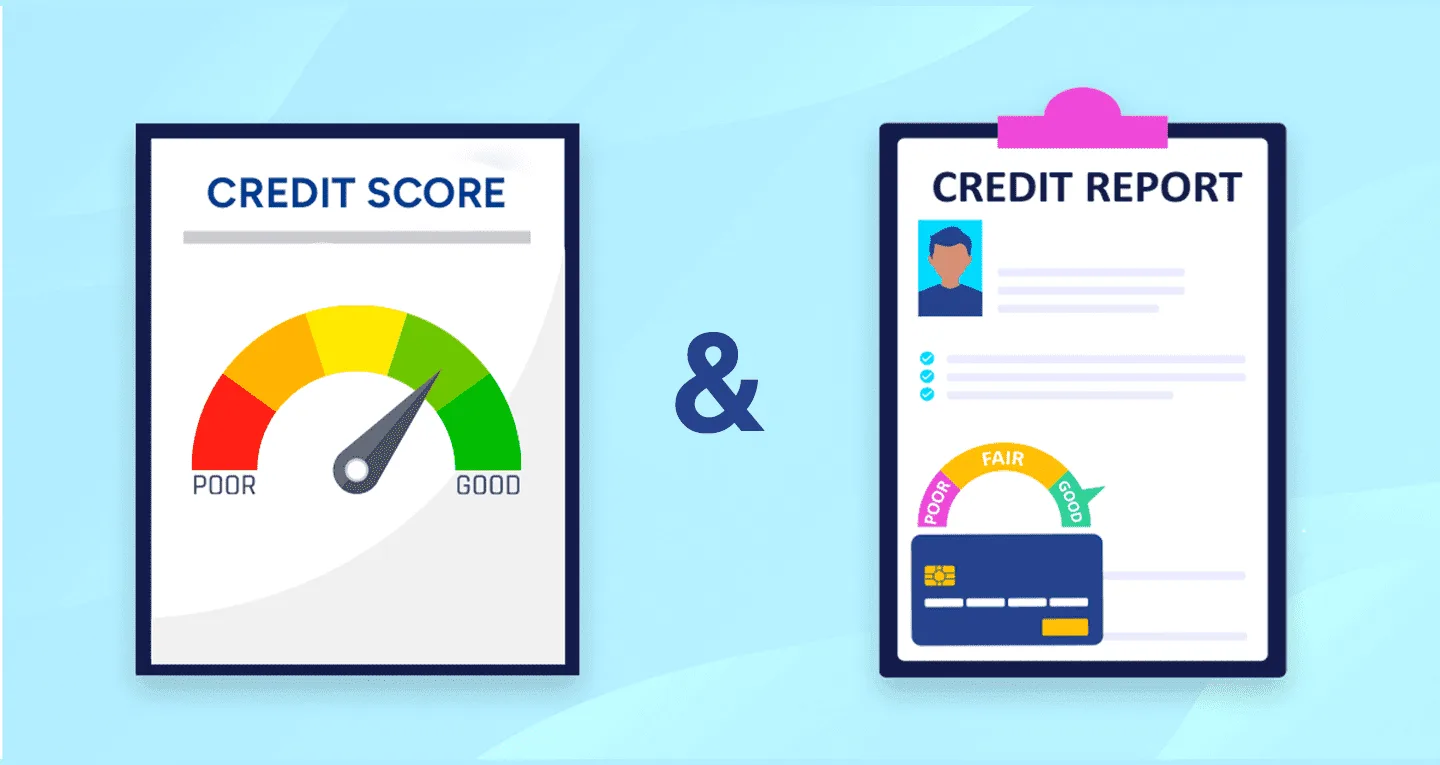
Two distinct things get called "CIBIL" loosely, and conflating them is where a lot of confusion starts. Your CIBIL Report is the full account-level record, every loan and card you've held, active and closed, with its own payment history, balance, and status. Your CIBIL Score is the three-digit summary number derived from that report, a single figure meant to compress everything in the report into something a lender can glance at quickly. These aren't the same thing, and a lender reviewing your application looks at both, not just the headline number. The fuller distinction between the two is worth reading if this split feels unfamiliar, since it explains a lot about why two people with similar scores can be treated very differently by the same lender.
Worth stating plainly: CIBIL doesn't lend money, doesn't approve or reject anyone, and doesn't decide interest rates. It supplies the data and the score, the lender makes the actual lending decision using that information alongside its own internal policies. CIBIL isn't the only bureau in India either, and that matters more than most everyday guides on this topic ever mention.

Freed Expert Tip
If a lender says your "CIBIL" looks different from what you checked yourself, ask which bureau they actually pulled it from, it might not be CIBIL at all.
Check My Credit ScoreCIBIL vs Other Credit Bureaus in India
India has four RBI-licensed credit information companies, CIBIL (TransUnion CIBIL), Experian, Equifax, and CRIF High Mark, all operating under the same Credit Information Companies (Regulation) Act, 2005. None of them is more "official" or more accurate than another in the eyes of the regulator, RBI licenses all four on equal footing.
Lenders choose which bureau or bureaus to report to and pull from, and not every lender uses all four. This is exactly why your score can genuinely differ between them, sometimes by a meaningful margin, not just a few points. Differences can arise because lenders may report to different bureaus, reporting schedules can vary, and the information held by each bureau may not be identical. CIBIL is widely recognised in India, while Experian, Equifax and CRIF High Mark are also used by lenders. Which bureau a lender checks or reports to depends on its own systems and policies.
The practical takeaway here is simple but easy to overlook: if you're only ever checking one bureau, you're seeing one version of your credit history, not the complete picture across every lender you've actually borrowed from. Someone who's only ever pulled their CIBIL score might be entirely unaware of an issue sitting quietly on their Experian or Equifax report instead.
CIBIL Score: Calculation and Ranges
The score ranges from 300 to 900 and is based on information in your credit report, including factors related to repayment behaviour, credit utilisation, credit mix and credit history. None of these bureaus publishes the exact proprietary formula behind their score, what's publicly known is the broad set of categories that feed into it, not the precise weighting applied to each one.
For general consumer guidance, scores are often described using broad bands such as below 600, 600–649, 650–749 and 750+, but lenders may use different internal thresholds. These are general industry conventions that most lenders roughly follow, not fixed thresholds every single lender applies identically, one bank's cutoff for a premium credit card might sit meaningfully higher than another's cutoff for a basic personal loan. The full calculation walkthrough covers the mechanics in genuine depth, including how each factor actually moves the number, worth reading in full rather than repeating that ground here.
The report sitting behind that single number is worth understanding on its own terms too, since that's where the actual detail lives.
CIBIL Report: What It Contains and How to Check It
Your CIBIL report lists every credit account you've held, active and closed, with payment history, current balance, and account status recorded for each one individually. It also includes your personal details, employment information, and a record of credit enquiries reported to the bureau, including the institution and date.
You're entitled to one free full report per year directly from CIBIL's own website, and checking your own report is classified as a soft inquiry, which never lowers your score, a common but genuinely unfounded worry that keeps some people from checking at all. The dedicated reading guide walks through the practical, section-by-section process of actually going through your own report, worth following alongside your own copy rather than skimming it once and moving on.

Want to see yours without digging through a full report?
Get a quick, clear read on your credit score.
Check My Credit ScoreWhat Affects Your CIBIL Score
The main levers, roughly in order of typical impact, are payment history, credit utilisation, length of credit history, credit mix, and recent hard inquiries. Repayment behaviour is an important part of credit assessment, which is why missed or late payments can negatively affect your credit profile.
Changes in reported repayment behaviour or revolving balances can affect your credit profile after the updated information is reported and reflected in the bureau's data. The other two, credit mix and account age, change slowly no matter how deliberately you manage them, since they're a function of time and the variety of credit you've built up, not something you can accelerate through a single decision. The full factors-and-improvement guide covers the practical breakdown of each factor individually, worth reading if you're trying to work on one specific area rather than your score in general. Recognising when your own score genuinely needs attention, rather than just casually checking it, is the next useful step.
Signs Your CIBIL Score Needs Attention
You've been rejected for credit, or offered noticeably worse terms than you expected, given what you assumed your score looked like.
Your score sits below 650 and you haven't actually checked why, rather than just noting the number and moving on.
You've never pulled your full report, only a score summary through an app, which shows you the headline figure but none of the account-level detail behind it.
You're carrying high balances relative to your credit limits on revolving accounts, even if every payment has technically been on time.
You genuinely don't know which of the four bureaus a recent lender actually checked, which means you can't be certain your own number matches what they actually saw.
Drag
What Are Your Options If Your CIBIL Score Is Low
For utilisation-driven issues, paying down revolving balances is usually the fastest lever available, since utilisation is one of the two factors that moves quickly once you actually act on it. For a household juggling several unsecured EMIs and cards at once, consolidation can simplify repayment by replacing several unsecured debts with a single loan and one monthly payment. Its effect on your credit profile depends on the new account, how existing accounts are reported or closed, and your subsequent repayment behaviour.
Only for genuine, sustained inability to repay does settlement become the relevant path, and it's worth being direct about the framing here. Settlement is not something a borrower chooses out of preference, banks only consider it when someone is genuinely unable to repay in full, it's a structured last resort, not a shortcut around a manageable situation.
How FREED Helps Improve Your CIBIL Picture
For readers whose low or stretched score traces back to several unsecured EMIs and cards, still current but genuinely stretched thin managing all of them, FREED's Debt Consolidation Program may combine eligible unsecured debts into one new loan with a single monthly payment through a partner lender, subject to eligibility and approved terms.
For genuine, sustained inability to repay even a consolidated amount, FREED's Debt Resolution Program is the separate, later-stage path built for that specific situation instead. Neither program can promise a specific score-point outcome, or guarantee a particular CIBIL floor for eligibility, since both depend entirely on your own financial profile and the lending partner you're matched to.
See what consolidation could do to your score.
A free assessment shows your real options.
Start My Free AssessmentTips for Maintaining a Strong CIBIL Score
Check your full report from at least two bureaus once a year, not just a single score summary from whichever app happens to be easiest to open.
Keep revolving utilisation low relative to your limits, since this is one of the fastest-moving factors on your entire profile.
Don't close your oldest account just because you stopped using it. Length of credit history matters more than most people expect, and closing an old account shortens that history sooner than necessary.
Space out new credit applications rather than applying to several lenders at once, since each one generates its own hard inquiry. A varied, well-managed credit mix helps too, worth reading in full if that specific factor is unfamiliar to you.
Freed Expert Tip
Set a yearly reminder to check your report across more than one bureau, most people only ever look at one and miss what a second lender might actually see.
Check My Credit ScoreSources
Claim | Source |
Four RBI-licensed credit bureaus in India (CIBIL, Experian, Equifax, CRIF High Mark) | Credit Information Companies (Regulation) Act, 2005 |
CIBIL founded 2000, majority TransUnion ownership reached 92.1% by 2016 | TransUnion CIBIL public company information |
CIBIL score range 300–900 | Standard, widely published CIBIL scoring range |

Mohit Juneja
Mohit Juneja writes educational content at FREED on debt management, credit scores, loan repayment, and borrowing best practices. His content is shaped by expert insights and industry knowledge, helping readers better understand their financial options and make informed decisions.
mohit.juneja@freed.care

FREED is India's trusted loan management platform. Founded in 2020 and headquartered in Gurugram, FREED has counselled 20 lakh+ people on personal loans, credit cards, and app loans. FREED charges fees only on successful settlement, not upfront. FREED does not handle secured loans (home loans, car loans, gold loans).
Media Mentions