Consumer Debt Consolidation: A Guide for Salaried Borrowers
Consumer debt consolidation means taking one new loan to repay several eligible debts, such as personal loans and credit card dues, and then paying one EMI. It does not reduce what you owe, and approval depends on the lender. It may suit salaried borrowers who can still repay but want simpler monthly payments.

Mohit Juneja
Reviewed by FREED India, Debt Resolution Specialists
 4.7/5
 ₹3,200Cr+
 20,000+
 20,00,000+4.7/5₹3,200Cr+20,000+20,00,000+
Key Summary

Consumer debt consolidation puts many EMIs into one. It does not cut what you owe.
EMIs spread across the month can clash with a single salary date, and that is a common cause of late fees.
In the 36-month example below, EMIs fall from 50% to about 21% of take-home pay, but the loan runs longer.
Pick the shortest tenure you can keep without strain.
Plan for a job change before you take the loan.
What Is Consumer Debt Consolidation?
Consumer debt is money you owe for personal use. Think personal loans, credit card bills, buy now, pay later (BNPL) dues and loan app dues. Home loans and car loans are usually counted apart, because the asset itself secures them.
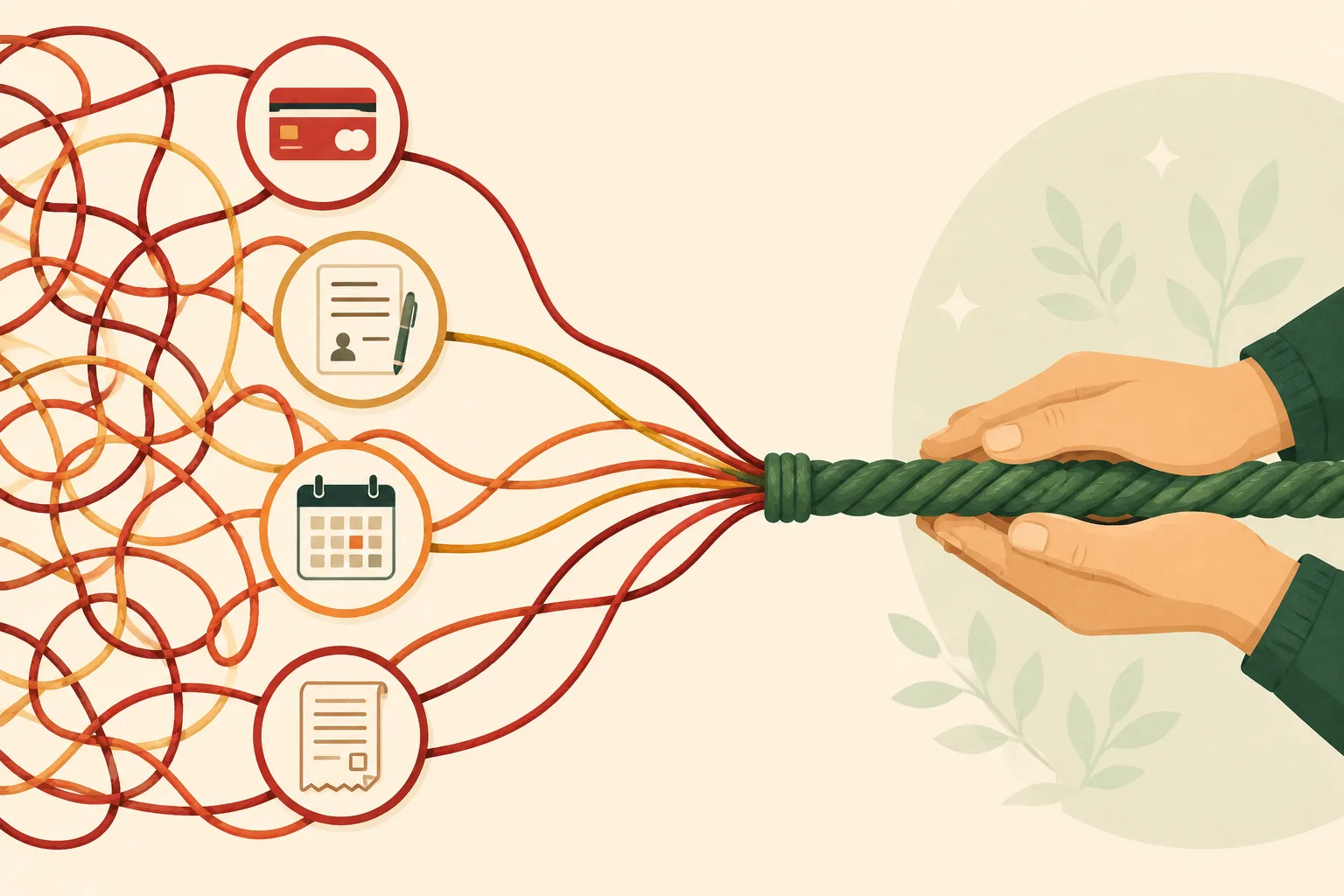
Consumer debt consolidation brings these debts into one place. You take one new loan, and it pays off the old ones. After that, you pay one EMI (your fixed monthly payment) to one lender on one date. Four reminders become one. Four apps become one.
Here is what it is not. It’s not a waiver. Nobody wipes out what you owe, and you still owe the same money. What changes is how you pay it back. The rate, the tenure and the fees on the new loan decide whether the move helps you or just stretches the pain over more months.
This guide is written for salaried borrowers, and that matters. A fixed salary gives you a real advantage. Your income is steady, and a lender can see it on your salary slips and bank statements. But it also gives you a real problem. Your money arrives once a month, while your EMIs fall on many different dates.
Consumer debt consolidation is mainly for people who can still repay. Maybe you pay every EMI on time and it still feels heavy. Maybe your salary reaches the bank on the 1st and is mostly gone by the 20th. If that’s you, you’re far from alone, and it doesn’t mean you handled money badly.
Think of it as a way to take control early, before things get worse. It isn’t meant for people who have already stopped paying. We cover that case in its own section.
Most pages on this topic repeat the same list of age, income and score rules. We’ve kept this guide to one question instead: how does consumer debt consolidation fit around a salary cycle? For the full basics, read our pillar guide on what loan consolidation is. For the eligibility checklist, see debt consolidation eligibility.

Which Debts Count as Consumer Debt in India?
Before you plan anything, you need a clear list of what can go into one loan and what can’t. People often assume every bill is part of it. It isn’t.
Usually included:
- Personal loans. From banks and finance companies, including the ones you took for a wedding, a medical need or a trip.
- Credit card dues. The outstanding balance on one or more cards. Cards often carry some of the highest rates, so they matter most.
- Card EMI conversions. Purchases you turned into monthly instalments on a card.
- BNPL dues. Pay-later balances from apps.
- Loan app dues. Small, short loans from apps, which tend to cost a lot.
Usually not included:
- Home loans and car loans. These are secured loans. An unsecured consolidation plan doesn’t cover them.
- Electricity, water, phone and rent. These are regular costs, not loans.
- School fees and medical bills, unless they sit on a card or a loan.
Consumer debt consolidation can pay off the first group, and only the first group. If household bills are also piling up, a consolidation loan won’t fix that alone. It may free up some cash each month, but the root cause is often that income and costs don’t match. A simple monthly budget helps with that part.
Make your own list before you talk to any lender. Write the lender’s name, the balance, the interest rate, the EMI and the due date for each debt. Add a column for how many months are left. This one sheet does two jobs. It shows which debts the new loan should clear, and it gives you the base figure to compare against later.
Start by comparing the interest rates, outstanding balances, remaining tenures and foreclosure charges on each debt. Credit card balances may carry higher interest, but include a debt in the consolidation only if the new loan offers a meaningful overall benefit after fees and other charges. And if one small debt is almost done, you may choose to leave it out and just finish it.
Our post on the types of debt consolidation lays the options out side by side.
Why Do Salaried Borrowers Struggle With Many EMIs?
It’s rarely carelessness. It’s usually a matter of dates and size.
Each loan and card has its own due date. One falls on the 5th, another on the 10th, another on the 20th. Your salary lands on one day. So the money has to stretch across the whole month with no pause in between.
Here is one month, drawn out. Say your take-home salary of ₹42,000 is credited on the 1st. This is an illustration, not a real case.
| Date | What leaves your account | Amount | Left from ₹42,000 (before rent, food, fees) |
|---|---|---|---|
| 1st | Salary credited | - | ₹42,000 |
| 5th | Personal loan A EMI | ₹6,500 | ₹35,500 |
| 10th | Personal loan B EMI | ₹7,200 | ₹28,300 |
| 15th | Credit card EMI | ₹4,800 | ₹23,500 |
| 20th | BNPL dues | ₹2,500 | ₹21,000 |
By the 20th, half the salary is gone. And rent, food, school fees and travel still need money. If one household bill lands early, an EMI may bounce.
A bounced EMI can bring a late fee from the lender and a charge from your bank. Late payments can also leave a mark on your credit report. That’s how a careful person falls behind without ever deciding to.
Then there’s the share of salary. When EMIs take half your take-home pay, even a small surprise hurts. A medical bill or a family event can tip the balance.
And there’s the cost of juggling. You pay interest on several loans at different rates. You track several dates, several apps and several reminders. One slip, and the fee arrives.
None of this is your fault. Rising costs, a pay cut, a family need or a few easy loans can all lead here. Consumer debt consolidation replaces many dates with one, which is why it fits a monthly salary so well.

How Does Consumer Debt Consolidation Work for Salaried Borrowers?
The idea behind consumer debt consolidation is simple. The money from the new loan goes to your old lenders, and those accounts are closed. You then repay the new loan in EMIs.
Here is the usual flow for a salaried person:
- List your debts. Write the balance, the rate, the EMI and the due date of each one.
- Check your credit report. Each credit bureau gives you one free full report a year (January to December). Fix errors first.
- Gather your salary papers. Salary slips and bank statements show your income.
- Compare offers. Look at the rate, the fees, the tenure and the total you will repay.
- Apply once. Many forms at once can leave several marks on your report.
- Check the payout. Ask how your old lenders will be paid, and keep a payoff letter from each one. Never pay your old dues into an account an agent gives you.
- Set up auto-pay. Link the new EMI to your salary account.
Ask for the Key Facts Statement (KFS) before you sign. RBI asks lenders to give it for loans to individuals. It shows the rate, the fees, the APR (the all-in yearly cost) and the repayment schedule. For loans covered by the RBI’s KFS requirements, the lender must provide the KFS before the loan contract is executed. Review the KFS and its validity period carefully. Charges not disclosed in the KFS generally cannot be imposed during the loan term without your explicit consent, subject to applicable RBI requirements. So read it line by line. The KFS covers term loans, not credit card dues, so keep your card statements separately.
For a salaried borrower, one more detail matters: the EMI date. Many lenders let you choose it. We cover how to choose it in a later section.
After the payout, give it a month or two and check your credit report again. Each old account should show as closed or paid. Keep the payoff letters until you’ve seen that. If one old account still shows a balance, raise it with the new lender and the old one straight away.
If you’d like to see what lenders look at in more detail, our guide on how to qualify for a consolidation loan explains it.

What the Law Says
RBI asks lenders to give a Key Facts Statement before the loan contract is signed. It shows the APR and the repayment schedule, and the lender is bound by its terms if you agree within its validity period.
Read the Pillar GuideWhat Does a Salary-Day Plan Look Like in Rupees?
Numbers make this clearer. Here’s an illustration with example figures. It’s not a real case, and your rates and balances will differ.
Take the same ₹42,000 salary and the same four EMIs from the calendar above. They total ₹21,000, which is 50% of take-home pay. Only ₹21,000 is left for everything else.
Now say the four debts add up to ₹2,50,000, and a new loan of that amount pays them all off at 15% a year. In a consumer debt consolidation like this, here’s what three tenures look like:
| Tenure | New EMI | Share of take-home | Total repaid |
|---|---|---|---|
| 24 months | ₹12,122 | 28.9% | ₹2,90,920 |
| 36 months | ₹8,666 | 20.6% | ₹3,11,988 |
| 48 months | ₹6,958 | 16.6% | ₹3,33,969 |
Rates and ranges shown are indicative. Final terms decided by the lender. FREED is not a Loan Provider. No outcome is guaranteed. Please verify directly with your lender.
At 24 months, EMIs fall from 50% to about 29% of your pay. At 36 months, they fall to about 21%. At 48 months, to about 17%. But the 48-month loan costs ₹43,049 more in total than the 24-month one.
Look at the 36-month row. The EMI is ₹8,666, which is ₹12,334 less than today’s ₹21,000. That gap is your monthly relief. The cost of that relief is a longer loan and a higher total.
Now picture the month again. With one EMI of ₹8,666 on the 5th, your account would show about ₹33,334 after that single payment. Before, it showed ₹21,000 only after the fourth. One date, one drop, then a clear month.
So the longer loan gives more room each month, and it costs more. The right choice depends on how tight your month is. A good rule is to pick the shortest tenure you can keep without strain, and to leave room for surprise costs.
One more check. Work out what you would still pay in total on your old loans if you changed nothing. A new loan clearly helps if its total is lower than that. It can also help if the lower EMI is worth the extra cost to you. Either way, know the price.
Know Your Credit Position Before You Apply
See your score and open accounts first.
Check My Credit InsightsConsumer Debt Consolidation vs Paying Each EMI Separately
Consolidation isn’t always the better choice. Here’s a fair side-by-side, using the same example.
| Paying each EMI separately | One consolidation loan | |
|---|---|---|
| Number of lenders | Four | One |
| Due dates | Four, spread over the month | One, which you can ask to place a few days after salary |
| EMI share of take-home (example) | 50% | About 21% at 36 months |
| Late-fee risk | Higher, since four dates must all be met | Lower, since there’s one date to keep |
| Total cost | Depends on the old rates and the months left | Depends on the new rate and tenure, and can be higher |
| Fees | Whatever you already pay | New loan fees, so read the KFS |
| Effort | Track four accounts | Track one account |
Notice the “total cost” row. It’s the one people skip. A lower EMI is the visible benefit. A higher total can be the hidden price. If your old loans are nearly done, consolidating may cost more than simply finishing them.
When does consolidation tend to make sense? When you have three or more debts, when the new rate is lower than your costliest old one, when you’re paying on time but strained, and when the tenure you can keep is short enough that the total doesn’t balloon.
When might it be better to wait or choose differently? When most of your debts are almost cleared. When you’d use the cleared cards again. When your income is unstable. When the fees on the new loan eat most of the benefit.
Consumer debt consolidation is not always the better choice, and a good lender or counsellor will tell you so. Do the sums on your own numbers. If the sums don’t favour you, there’s no shame in saying no.
For a deeper look at the downsides, our post on the disadvantages of debt consolidation covers them in full.
What Do Lenders Check for Salaried Applicants?
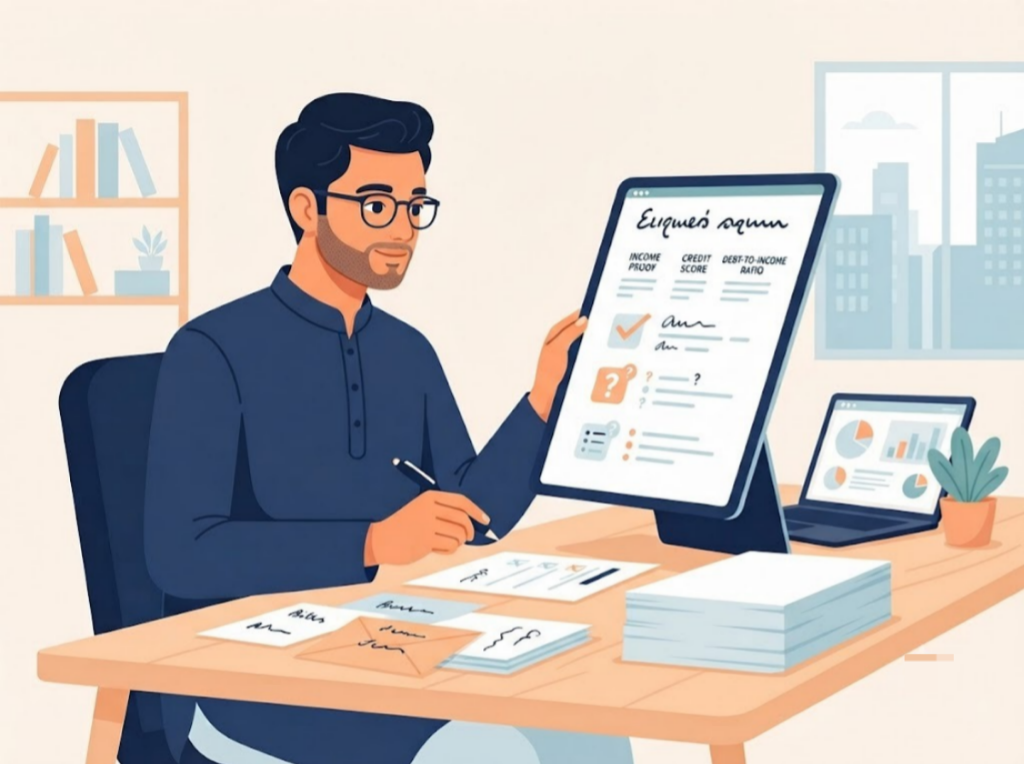
A steady salary helps, but lenders look at more than your pay. These are the main points.
- Income steadiness. Is your salary regular, and does it show in your bank statements?
- Your employer and job length. How long have you been in this job?
- Your credit report. Do you pay on time? Are there errors?
- Your existing EMIs. How much of your take-home pay already goes to loans?
- Recent applications. Many applications in a short time can look like a rush for credit.
- Your papers. Do your name, address and income match across documents?
We don’t set a salary or a score you must have. Each lender has its own view, and you can see the wider list in our eligibility guide.
Here’s how salaried people can line up their case before applying for consumer debt consolidation:
- Keep your salary account active. Salary should reach the same account each month.
- Pause new credit. A new card or loan in the last few weeks can lower your chances.
- Fix small overdue amounts. Clear them if you can.
- Match your details. Use the same name, address and phone number everywhere.
- Get recent salary slips. If you don’t have them, your HR team can help.
- Check the credit report for mistakes. A wrong entry is easier to fix before you apply than after a no.
Don’t worry if you aren’t sure where you stand. Many salaried people find that one small fix makes the difference.
If you work in government service, read our post on debt consolidation loans for government employees. It looks at that case on its own, so we haven’t repeated it here.
And if you’re asking whether your own case qualifies at all, our post on whether you can consolidate your debt is a good next read.

FREED Expert Tip
Ask the lender to set your EMI date a few days after your salary is credited.
Read the Full GuideWhich Papers Do Salaried Borrowers Need?
Keep your papers ready before you apply. It saves days. Lists differ by lender, but these are common.
About you:
- A photo ID and an address proof.
- Your PAN card.
- Recent passport-size photos, if asked.
About your income:
- Salary slips for the last few months.
- Bank statements for the salary account, often for the last three to six months.
- Your latest Form 16 or tax return, if asked.
- An employment letter or ID card, if asked.
About your debts:
- A recent statement for each loan or card you want to pay off.
- A payoff or foreclosure letter from each lender, if asked.
- Your credit report, if the lender wants a copy.
Check that the salary on your slips matches what reaches your bank. A mismatch can cause a delay. If the slip shows one figure and the bank shows another, ask your HR team to explain the gap before you apply. Bonuses, deductions and arrears often cause this.
Keep digital copies on your phone, since many lenders take papers online. But send them only through the lender’s official site or app. Never send your papers to someone who asks on a call or an unknown chat app.
Never pay a fee to get a loan “approved”. A real lender shows every fee in the Key Facts Statement. A request for money before approval is a warning sign.
Salaried people often have an easier paper trail than others, so use that. Keep your slips and statements in one folder, name the files clearly, and share them as soon as the lender asks. Clean papers are one of the simplest ways to avoid delay in consumer debt consolidation.
Not Sure If You Qualify?
Open the FREED app, add your loans and see which plan fits your situation.
See My Options on FREEDHow to Choose a Due Date and Tenure You Can Keep
Two choices shape how the loan feels each month: the due date and the tenure.
The due date. Ask for a date a few days after your salary is credited. If your salary lands on the 1st, a date between the 3rd and the 7th usually works. Your EMI then leaves early in the month, while the money is still in the account, and a late-month shortfall can’t bounce it. Don’t set the date on salary day itself. Salaries are sometimes a day or two late, and a small gap protects you.
The tenure. Use the share-of-salary check. Divide the new EMI by your take-home pay, as the table above does. Only you know how much room you need, because your rent, school fees and family costs are different from anyone else’s.
Then ask yourself four more questions:
- Can I pay this EMI even if my pay falls a little?
- Do I keep a small buffer each month?
- Do I know the total I will repay?
- Is that total worth the lower EMI?
If you answer no to the first or second, pick a longer tenure. If you answer no to the third or fourth, pick a shorter one, or a smaller loan.
If the tenure is long, ask whether you can pay extra later. Some lenders charge a fee for part payment, so ask before you sign and check the Key Facts Statement.
Keep auto-pay linked to the salary account, with enough balance on the due date. A bounced EMI can bring fees and a mark on your report.
Pick the shortest tenure you can keep. If a bonus or an arrear comes in later, you can ask about paying extra.
Our post on the debt consolidation calculator shows how to test your own numbers. You can also use the tool below to see how heavy your EMIs are today.
See How Much of Your Take-Home Pay Your EMIs Take
Before you choose a due date and tenure, see where you stand. FREED’s EMI Score compares your EMIs with your take-home pay. The 50% pointer is FREED’s rule of thumb, not an RBI rule, and results are indicative.
Check My EMI ScoreWhat Does a Consolidation Loan Really Cost?
The EMI isn’t the only number. Look at the full price before you say yes.
- Interest rate. It depends on your profile and the lender.
- Processing fee. Many lenders charge one. It may be taken out of the loan, so you receive less than the loan amount.
- Taxes. Tax can be added on the fee.
- Late payment charges. These apply if you miss a due date.
- Part-payment or early payoff fees. Check whether the new loan charges them, and whether your old loans do when you close them.
- Tenure. A longer tenure lowers the EMI but raises the total cost.
Put all of these on one sheet and add them up. That sum is the real cost of consumer debt consolidation, not the EMI alone.
The most useful paper is the Key Facts Statement. It shows the rate, the fees, the APR and the repayment schedule in one place. Compare the APR across lenders, not just the stated rate. The APR counts the fees too, so it shows the cost more honestly.
Here’s one simple test. Add up what you pay each month today. Add up what you’d pay each month after the loan. Then compare the total you’d repay in both cases. If the new total is higher, ask why. It may be worth it for the lower EMI. But you should know the price.
Don’t borrow more than you need. A bigger loan means more interest and a larger fee. And if the lender takes its fee out of the loan, the money that reaches your old lenders can fall short, so ask how much will actually arrive after all fees.
Also ask what happens if you want to close the new loan early. Get the answer in writing, and check it against the Key Facts Statement. If something in the paper doesn’t match what you were told, ask for it to be corrected before you sign.
What Happens to Your Loan If You Change Jobs?
A job change is common. But the loan has to be paid every month, whatever happens at work. Plan for it before you borrow.
Before you resign. Check how your last salary and your EMI dates line up. Make sure the salary account you use for auto-pay will stay active. If you plan to switch accounts, tell the lender in advance.
During the notice period. A resignation doesn’t change your loan terms. The EMI continues. Your salary continues too, so use this time to build a buffer if you can.
In the gap between jobs. Salary may stop for a few weeks. Your EMI does not stop. A buffer of a few months of EMIs, if you can build one, is the best protection. If you can’t, speak to the lender early.
After you join. Update your auto-pay mandate if the salary account changed. Keep your new offer letter and first salary slips with your loan papers.
Tell the lender early. If you lose your job or your pay falls, speak to the lender before a payment is missed. Some lenders can offer more time or a new schedule, though the decision is theirs. A call before a missed payment is better than a call after one.
Don’t take a new loan to cover the old one. That makes the problem bigger.
If your pay rises, consider paying extra on the loan, after checking the fee rules. If it falls, look at your costs first. A simple monthly budget helps in both cases.
And if you’ve just moved to a new employer, a new lender may ask for a few months in the new role before it looks at an application. That’s common, so keep paying on time and apply later.
None of this means you should avoid consumer debt consolidation. It means you should borrow with your eyes open. Leave a margin in your EMI, so a bump in the road doesn’t become a crisis.
How Do You Stay on Track After Consumer Debt Consolidation?
Getting the loan is only half the work. What you do in the months after decides whether the plan holds.
- Set up auto-pay. Keep enough balance in the salary account on the due date.
- Use cleared cards for emergencies only. If you start spending on them again, you’ll have the new EMI and new card bills together. That’s the most common way this goes wrong.
- Make a simple monthly budget. Write your income, your EMI and your must-pay costs. What’s left is what you can spend.
- Build a small buffer. Even a small emergency fund helps you avoid a new card bill when something unexpected happens.
- Pay extra when you can. Ask first whether the lender charges a fee for part payment.
- Check your credit report now and then. See that the new loan and the paid-off accounts show correctly.
Your credit score tends to improve as you pay on time. Paying every EMI on or before the due date is the biggest help. Lower card balances help too. Don’t expect a quick jump, though. It builds slowly.
It also helps to ask why the bills grew in the first place. It may be a low income, a medical cost or a family need. A plan for that cause helps more than any loan. If you can’t see the whole picture, a counsellor can help you.
Keep your papers in one folder. That means the loan agreement, the Key Facts Statement, the payoff letters and the receipts. If a question comes up months later, you’ll have the answer.
And keep one habit simple: look at your account two days before the due date. If the balance is short, you’ll still have time to fix it. After consumer debt consolidation, that two-day check is a small habit with a large payoff.
How Do You Spot a Fake Loan Offer?
Ads for “instant loan, no documents, no checks” are everywhere. Some are real. Many aren’t. A few simple tests keep you safe.
Warning signs:
- They ask for money first. A real lender doesn’t ask for a fee before the loan is approved.
- They say no documents are needed. Every real lender checks your identity and income.
- They give you an account to pay your old lenders. This is how money gets lost.
- They rush you. “Offer ends today” is a pressure trick.
- They contact you only on chat apps. Check that the lender has an official site and app.
- They can’t show a Key Facts Statement. A real lender gives one before you sign.
RBI’s Digital Lending Directions say you repay directly into the lender’s own account, and the loan is paid into your own bank account, with limited exceptions such as payments made straight to the end beneficiary for a specific purpose. The directions apply to digital lending by banks, co-operative banks and NBFCs. They don’t cover offers from entities outside RBI’s regulation.
Use this as a simple test. Ask: “Which account receives the money, and which account do I repay?” If a stranger’s account is in the picture, stop. If a lender pays your old lender directly, it should be in your written loan terms.
Ask for the lender’s registration details and check them. A lender you can’t find is a warning sign.
If you meet a scam, save the messages and report it to your bank and the cyber crime portal. Don’t pay more money to “recover” what you lost.
What If You Do Not Qualify as a Salaried Borrower?
Not everyone is approved. A lender may say no because of your credit history, your job length or the mix of your loans. A no on consumer debt consolidation doesn’t mean the end. It tells you what to work on.
Try these steps first:
- Ask why. Request the reason in writing, if you can.
- Fix your report. Remove wrong entries, and clear small overdue amounts where you can.
- Reduce card use. Lower balances help your report and your chance of approval.
- Ask for a smaller loan. Clearing only your costliest debts can be easier to get.
- Wait and rebuild. A few months of on-time payments can change the picture.
- Check your credit health. FREED’s Credit Insights shows your Experian credit report and gives step-by-step actions to improve it.
Don’t apply to many lenders at once. Each rejection can leave a mark. Also stay away from apps and agents who promise a loan with no checks. These offers often hide high costs or turn out to be scams.
If your income is on the lower side, our post on debt consolidation with a low income may help.
What if you’ve missed several EMIs, or repaying has become very hard? In that case, a standard consolidation may not be open to you. Talk to FREED’s team. They can look at your whole situation and explain the options that fit. You don’t have to work it out alone.
How Does FREED Help Salaried Borrowers With Consumer Debt Consolidation?
FREED’s Loan Consolidation Plan (the Debt Consolidation Program, also called “Reduce My EMI”) is for people who can still repay but need a smarter way to manage their debt. FREED provides services and support to individuals exploring debt management and loan consolidation options. It helps you take control before your situation gets worse. Here’s how it works:
- FREED assesses your profile. It looks at your loans, income and repayment record.
- FREED matches you to a lending partner from its network.
- The partner disburses one new loan. It pays off your existing eligible unsecured loans and card dues.
- You are left with one loan, one EMI and one due date.
- If one partner declines, FREED tries others that match your profile.
The new loan may reduce your monthly EMI, depending on the approved amount, interest rate and tenure. Applying for or taking a new loan may involve credit enquiries and can affect your credit profile. The application and servicing process may be completed online, depending on the lending partner and the documentation required. FREED facilitates the process, while the lending partner makes the final credit decision and disburses the loan.
The program covers unsecured debt, such as personal loans, credit card dues, BNPL and app loans. It doesn’t cover home loans, car loans or other secured loans.
The checks in this guide still apply to any consumer debt consolidation. Ask for the total amount you’ll repay, read the Key Facts Statement, choose an EMI date that suits your salary, and keep the payoff proof.
Not sure if you qualify? FREED’s team can look at your situation and tell you which options fit. You can also read the Loan Consolidation Plan page for more.
Ready to See Your Options?
Sign up on the FREED app and check how the Loan Consolidation Plan could work for your loans.
Get Started on FREED
Mohit Juneja
Mohit Juneja is FREED’s Content & Communication Lead with 12+ years of experience across content, media, advertising and digital communications. He holds a postgraduate diploma in Communications from Xavier Institute of Communications, Mumbai, and has worked with organisations including NDTV, The Indian Express, McCann Worldgroup and NABARD.
At FREED, he leads content and communication across loan management, debt resolution, debt consolidation and financial well-being. His work combines research, storytelling and consumer-focused communication to make complex financial topics easier to understand and act on. He has also scripted and produced 11 documentaries on rural development and agriculture for NABARD, with film's selected for the Mumbai International Film Festival.
mohit.juneja@freed.care

FREED is India's trusted loan management platform. We help India settle their loans, consolidate their EMIs, improve their credit score, and manage their loans better. Over 20 lakh people trust FREED. We have managed more than ₹3,500 crore in loans and saved our users over ₹450 crore.
Media Mentions