How Much CIBIL Score Is Required for an SBI Credit Card? What SBI Card Publishes and What to Do
SBI Card does not publish a minimum CIBIL score for its credit cards on the pages we read. Its policy says your credit bureau record is part of the assessment, and it states age limits of 21 to 65 for salaried applicants and 25 to 70 for self-employed applicants. Final approval depends on your documents.
Mohit Juneja
Reviewed by FREED India, Debt Resolution Specialists
 4.7/5
 ₹3,200Cr+
 20,000+
 20,00,000+4.7/5₹3,200Cr+20,000+20,00,000+
Key Summary

SBI Card publishes no minimum score, so any exact figure you see elsewhere isn't SBI Card's own.
It states age limits: 21 to 65 salaried, 25 to 70 self-employed.
Your credit bureau record and existing obligations feed into the decision and the limit.
After a decline, SBI Card says you can generally reapply after three months.
Check your report before you apply, and fix errors first.
How Much CIBIL Score Is Required for a Credit Card From SBI Card?
SBI Card does not publish a minimum CIBIL score for its credit cards in the policy and FAQ pages reviewed for this article. It does publish age criteria, document-related requirements and guidance on reapplying after a rejection. Its policy also identifies credit bureau information as an important part of the assessment. This guide covers how much CIBIL score is required for a credit card from SBI in practice, what to check first, how to read your own report, and what to do after a decline.
SBI Card doesn't say. We read its credit card policy, its online application FAQ and its credit bureau FAQ. None gives a minimum score. The application FAQ points you to customer care for specific criteria.
That doesn't mean your score is ignored. SBI Card's policy says the "Credit Bureau plays an important role in establishing a borrower's willingness to repay". So the bureau record counts, and the number just isn't published.
If you're asking how much CIBIL score is required for a credit card from SBI, the honest answer is that SBI Card doesn't say. Anything more exact is a third party's guess, and we don't repeat those here. What you can do is get your report right before you apply. For how scores relate to loans and cards in general, see our score and eligibility guide.
Why Do People Search for the CIBIL Score Required for an SBI Credit Card?
Most people are trying to avoid a decline. A decline can cost you time, and applying again too soon can make it worse. So people look for a number to aim for.
The usual reasons are these.
They're about to apply and want to know if they're ready.
They were declined and want to know what went wrong.
They've seen a figure on a comparison site and want to check it against the source.
They're building a score and want a target.
The last two are where the missing number matters most. A figure on a comparison site isn't SBI Card's. And a target score can mislead, because the bank looks at more than the number. The sections below show what else counts.

Not Sure Which Option Fits You?
Open the FREED app, add your details and see which plan fits your situation.
See My Options on FREEDWho Is SBI Card, and How Is It Different From the Bank?
SBI Card is run by SBI Cards and Payment Services Limited, a separate company from State Bank of India. That matters for one practical reason: your credit card account with SBI Card is separate from your savings account with the bank. A card application is judged by SBI Card against its own policy.
The SBI Card pages reviewed for this article do not identify an SBI savings account as a general application requirement. However, check the eligibility conditions for the specific card you want or confirm directly with SBI Card before applying. For how the bank's own CIBIL route works, see our guide to a free CIBIL score check for SBI customers.
What Does SBI Card Say About Eligibility?
It states age, and says the bureau record, your documents and your obligations matter. Here's what we found.
Item | What SBI Card says | Source |
|---|---|---|
Age, salaried | 21 to 65 years | Credit card policy, Section 3 |
Age, self-employed | 25 to 70 years | Credit card policy, Section 3 |
Credit bureau | Part of credit assessment; limit reflects existing loans and card obligations from the bureau record | Credit card policy, Section 4 |
Minimum score | Not stated | Policy, FAQs |
Documents | "Final approval of your credit card depends on the documents, you provide to us" | Online application FAQ |
Processing time | Up to 21 days after documents | Online application FAQ |
Reapplying after a decline | "Generally" after three months, with exceptions | Online application FAQ |
Notice what's missing. The policy and FAQs reviewed do not specify a general minimum income or CIBIL score. Individual card products may have additional eligibility conditions, so check the relevant product page before applying.
What Is the SBI Card Age Rule in Detail?
The policy says "for salaried segment customer age shall be between 21-65 years and for self-employed it shall be between 25-70 years". It adds that deviations need approval under the bank's internal process.
So age is one of the few firm rules SBI Card publishes. If you're outside the range, the policy allows exceptions, but only with approval, and we don't know how often that happens. The policy has no effective date, so check SBI Card's site for the current version before you rely on it.
How Does SBI Card Set Your Credit Limit?
It looks at your bureau record, and your existing obligations are part of that. The policy says the credit limit reflects "existing loans and Credit Card obligations from the credit bureau record". So the same report that decides whether you're approved also shapes how much you're offered.
What that means for you is practical. If you already carry several EMIs and card balances, they show on your report, and they count against the limit you might get. Paying down balances before you apply can help, and so can closing small dues. We don't know the formula, and SBI Card doesn't publish it.
A limit is not the same as a score. You can have a good record and a modest limit, or a higher limit with a thinner record. The limit follows the whole picture, not one number.
How Does Your CIBIL Score Fit Into the Decision?
It's one input. Your report shows every card and loan you hold, whether payments were on time, and how many recent applications you've made. Here are the things a lender is likely to look at.
Payment history: late or missed EMIs and card payments.
Current obligations: the number of open cards and loans, and their EMIs. SBI Card's policy links the limit to these.
Card use: how much of your limit you're using.
Recent applications: several in a short time can look like a cash squeeze.
Account status: any account marked Settled or Written Off.
SBI Card hasn't said how much weight each gets. So when you wonder how much CIBIL score is required for a credit card from SBI, remember that the number is only the summary. Treat your report as something to get right before you apply, not a number to hit. If you want a score band reference, see the pillar guide, since we don't repeat bands here.
Want Your Full Report, Not Just a Number?
See your Experian report with FREED Credit Insights.
Check My Credit Insights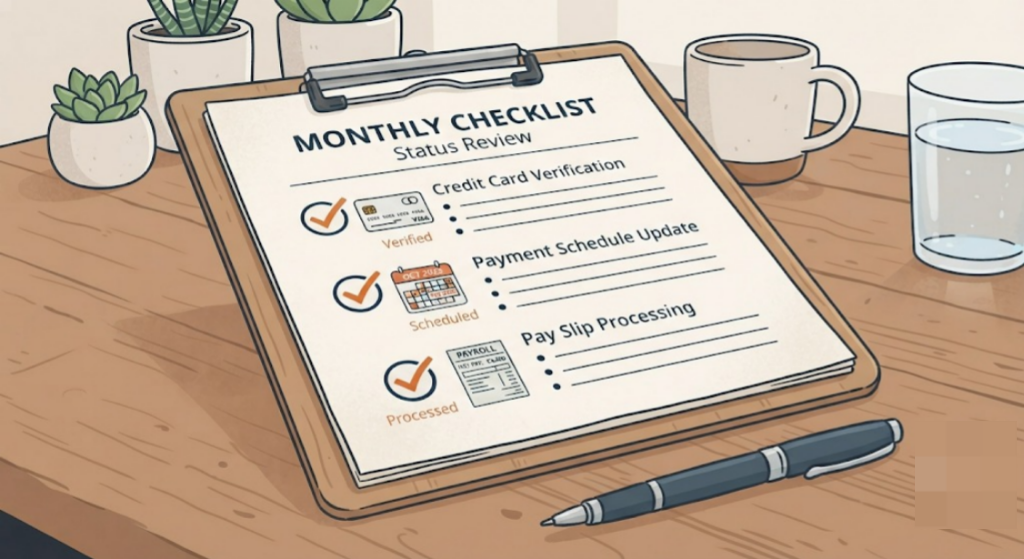
What About Income and Documents?
SBI Card's application FAQ says "Final approval of your credit card depends on the documents, you provide to us", and that processing can take up to 21 days after you submit them. The pages we read don't state a minimum income.
So documents matter as much as the score. A strong report with missing papers can still stall. Here's how to get ready.
Gather identity and address proof before you apply.
Have income proof ready, in the form SBI Card asks for.
Make sure details match: the name and date of birth on your documents should match your PAN and your report.
Allow time. The FAQ says up to 21 days after documents.
SBI Card's application FAQ says it may request information about your other banking relationships. Provide accurate details and ensure that your application is consistent with your supporting documents and credit report.
How Do You Check Your Score Before You Apply for an SBI Card?
Use CIBIL's own website and its free yearly report. CIBIL says it provides "one CIBIL Score and Report without any charge once a year". RBI's directions say the same for bureaus: one Free Full Credit Report, including your score, once during January to December, on request after you verify your identity.
Open the official CIBIL website. Type the address yourself.
Register with your name, PAN and mobile number, and confirm with an OTP.
Choose the free report, not a paid plan.
Save the report and note the date.
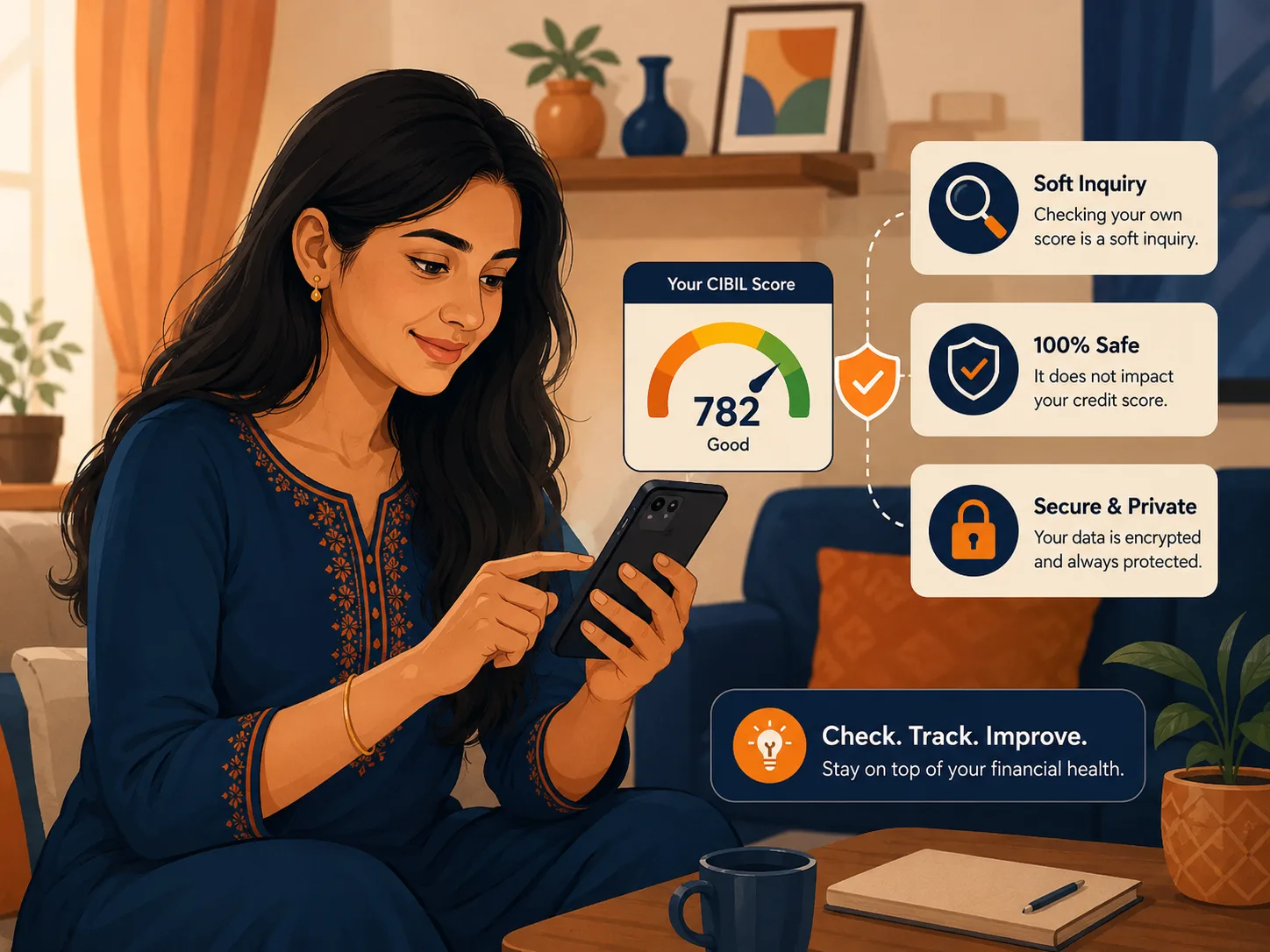
If you already have a myCIBIL account, log in, open "My Account" and click "Get your Free Report". Checking your own score doesn't lower it. CIBIL's free page says "Checking your own credit score doesn't impact it." For more, see our guide to the official CIBIL score check website.

What the Law Says
Checking your own score does not lower it. Each credit bureau must give you one free full credit report with your score every calendar year. If a wrong entry isn't fixed within 30 days of your complaint, you may get ₹100 for each day of delay.
Check My EMI ScoreIs the CIBIL Report Free or Paid? SBI Card's FAQ Says Something Different
SBI Card's credit bureau FAQ states that a fee may be charged for accessing reports, but it does not mention the free annual report entitlement. CIBIL and RBI separately confirm the availability of a free full credit report once per calendar year from each credit information company. Since SBI Card's FAQ is undated, check the latest version before relying on its fee-related information.
Here's how to handle that.
Try the free route first, on CIBIL's own website.
Don't pay before you've checked that the free option isn't available to you.
If a page asks for payment, read what the plan includes, and compare it with the free report.
We attribute each claim to its source. If you want to be certain what applies, ask CIBIL or check its current page.
What Should You Check on Your Report Before Applying?
Go through each account and match it to your papers. A wrong entry can cost you more than a small score gap.
Every account is yours.
Balances match your latest statements.
Days past due show zero for months you paid on time.
Closed accounts show as closed, with a zero balance.
Status is right: Standard, Closed, Settled or Written Off.
Personal details are correct: name, PAN, address, date of birth.
Enquiries are yours. Each should match an application you made.
Note any account that looks wrong, with the month and what it should say. For a guide to each section, see how to read your CIBIL report.
How Do You Fix a Wrong Entry Before You Apply?
Raise it with the bureau and the lender, in writing, and keep every reference number.
Raise a dispute with the bureau online. CIBIL's FAQ says a dispute may take approximately 30 days to resolve.
Write to the lender that reported the entry.
Attach proof: a statement, receipt or no-dues letter.
Check again once the bureau replies.
SBI Card's bureau FAQ says a correction in the report must be confirmed by the bank or financial institution, and that disputes can go to CIBIL or directly to the lender. Start before you apply, because a dispute can take a month. RBI's rule sets the timing: the lender has 21 days to send the corrected details, and the bureau pays ₹100 a day if a complaint isn't resolved within 30 days. Don't count on compensation. It doesn't cover disputes about how a score is calculated. For the full process, read our guide on fixing wrong entries.
Not Sure Which Option Fits You?
Open the FREED app, add your details and see which plan fits your situation.
See My Options on FREEDHow Long Does a Payment Take to Show on Your Report?
SBI Card's credit bureau FAQ states that payment updates may take 45–60 working days to appear in the CIBIL database. RBI's credit information directions prescribe reporting intervals of the 9th, 16th, 23rd and the last day of each month, or shorter agreed intervals. Since SBI Card's FAQ is undated, confirm the current processing timeline with SBI Card before relying on the stated 45–60-working-day period.
What this means for you is simple. Don't apply the day after you clear a late payment, expecting the report to catch up. Give it a few weeks, check your report, and apply once it shows correctly. If it hasn't updated after a month or two, raise a dispute.

FREED Expert Tip
Screenshot your report the day you apply, and save your last payment receipts. If an entry looks wrong after a decline, you'll have what you need for a dispute.
Check My EMI ScoreWhat Can You Do to Improve Your Chances Before You Apply?
Focus on the things you control, and avoid anything that adds noise. This is the practical answer to how much CIBIL score is required for a credit card from SBI: aim to have a clean report, not to hit a number.
Pay every EMI and card bill on time. This matters most.
Lower your card use. Paying balances down before you apply helps.
Clear small dues that sit unpaid.
Avoid new applications in the weeks before you apply.
Check your age fits SBI Card's stated range.
Have your documents ready, since SBI Card says approval depends on them.
Fix report errors before you apply, not after.
None of this guarantees approval. SBI Card decides on its own terms. But a clean report and complete papers make a stronger application. For habits that build a score over time, read our guide on how to build a credit score.
What Happens to Your Score When You Apply?
A lender's check when you apply is a hard enquiry, because the lender is making a decision about you. One or two a year isn't a problem. Several in a few weeks can look like you're short of money.
That's why the number of applications matters as much as the number on your report. If you apply to several cards at once, each can leave an enquiry. Apply once, to the card that fits, after you've checked your report. For the difference between enquiry types, see our guide on soft and hard inquiries.
What If SBI Card Declines Your Application?
A decline isn't a final verdict. Ask what drove it, then fix that.
Ask SBI Card for the reason through its customer care.
Check your CIBIL report for errors, using the steps above.
Fix what you can: disputes, small dues, card balances.
Wait before you apply again.
Apply once, not to several cards at the same time.
Only the lender knows the reason, and it may not share all of it. Don't assume it was your score, because documents, income and obligations count too. For what repeated declines can mean, see our guide on what too many credit card rejections mean.
How Long Should You Wait Before You Reapply?
SBI Card's FAQ says you can generally reapply three months after a previous application, with some exceptions. The FAQ adds: "There are some exceptional circumstances in which you may not be able to re-apply for longer." It tells those applicants to email SBI Card.
Three months is a minimum on the page, not a promise. What matters is that the reason for the decline has changed. If nothing's different when you reapply, you may get the same answer and add another enquiry.
Use the wait well.
Dispute errors and check the result.
Bring balances down and clear small dues.
Put your papers in order.
Check your report again before you apply.
What Mistakes Do Applicants Make?
Most avoidable declines come from a short list of mistakes.
Applying without checking the report, so an error surprises you.
Applying to several cards at once.
Reapplying straight after a decline, with nothing changed.
Mismatched details: a name or date of birth that doesn't match your PAN.
Missing documents, which can stall an otherwise good application.
Paying for a report before trying the free yearly one.
Chasing a score target instead of fixing what's on the report.
Avoid these, and you've covered most of what's in your hands. That's more useful than any single number.
How Does FREED Help You Track Your Score?
FREED Credit Insights shows your credit report and score, and points to what's holding the score back. It reads your Experian report, so the number can differ from your CIBIL score. Each bureau uses its own model, so a gap between two numbers is normal.
Over 30,000 borrowers trust Credit Insights, and over 20 lakh people trust FREED. FREED isn't a loan provider. Credit Insights explains your report, and it doesn't remove entries that are correct. If something is wrong, you still raise the dispute with the bureau and the lender. You can start on the Credit Insights page.
Track Your Score in One Place
Check your Experian report with FREED Credit Insights.
Check My Credit Insights
What If Your Card Dues Feel Too Heavy?
Match the fix to your situation. Here are three routes.
Errors on the report. Dispute them, using the steps above.
Still paying, but stretched. If most of your salary goes towards paying multiple EMIs, FREED's Loan Consolidation Plan helps you combine multiple loans into a single monthly EMI. This can reduce your monthly EMI burden by up to 50%.* It's only for people who haven't missed payments. Read more about the Loan Consolidation Plan.
Cannot pay your SBI Card dues. Settlement is not something a borrower chooses out of preference. If you genuinely cannot repay your loans, FREED negotiates with your lenders to settle them for less than 50%* of your outstanding dues. See how SBI credit card settlement works.
Rates and ranges shown are indicative. Final terms decided by the bank/lender. FREED is not a Loan Provider. No outcome is guaranteed. Please verify directly with your bank.
Outcomes vary by lender and borrower profile. Settlement terms are decided by the lender. No percentage is guaranteed.
Don't take a new card just to move a balance without comparing the full cost. If you're unsure about your minimum due, see our guide on what the SBI credit card minimum due is.
Not Sure Which Option Fits You?
Open the FREED app, add your details and see which plan fits your situation.
See My Options on FREED
Mohit Juneja
Mohit Juneja is FREED’s Content & Communication Lead with 12+ years of experience across content, media, advertising and digital communications. He holds a postgraduate diploma in Communications from Xavier Institute of Communications, Mumbai, and has worked with organisations including NDTV, The Indian Express, McCann Worldgroup and NABARD.
At FREED, he leads content and communication across loan management, debt resolution, debt consolidation and financial well-being. His work combines research, storytelling and consumer-focused communication to make complex financial topics easier to understand and act on. He has also scripted and produced 11 documentaries on rural development and agriculture for NABARD, with film's selected for the Mumbai International Film Festival.
mohit.juneja@freed.care

FREED is India's trusted loan management platform. We help India settle their loans, consolidate their EMIs, improve their credit score, and manage their loans better. Over 20 lakh people trust FREED. We have managed more than ₹3,500 crore in loans and saved our users over ₹450 crore.
Media Mentions