SBI CIBIL Score Check: Free Options for SBI Customers
You can check your CIBIL score free as an SBI customer through the YONO app, SBI Card or SBI General Insurance's website. Without any SBI account, you can use CIBIL's official site with your PAN. YONO and CIBIL also show the full report, so pick one route and stick with it each month.
Mohit Juneja
Reviewed by FREED India, Debt Resolution Specialists
 4.7/5
 ₹3,200Cr+
 20,000+
 20,00,000+4.7/5₹3,200Cr+20,000+20,00,000+
KEY TAKEAWAYS

SBI customers can check their CIBIL score free through the YONO app, SBI Card, or the SBI General Insurance portal.
The YONO app now includes your full CIBIL report and a Score Simulator, integrated with TransUnion CIBIL since February 2026.
The SBI General Insurance route works even if you don't hold an SBI account, using PAN and OTP verification.
A CIBIL score of 750 or above is commonly cited as the range lenders, including SBI, tend to view favourably for loan and credit card approval; check current SBI eligibility criteria directly for any product-specific threshold.
Checking your own score through any of these routes is a soft inquiry (a check that never affects your score, unlike a full credit application).
How Can You Check Your CIBIL Score Free as an SBI Customer?
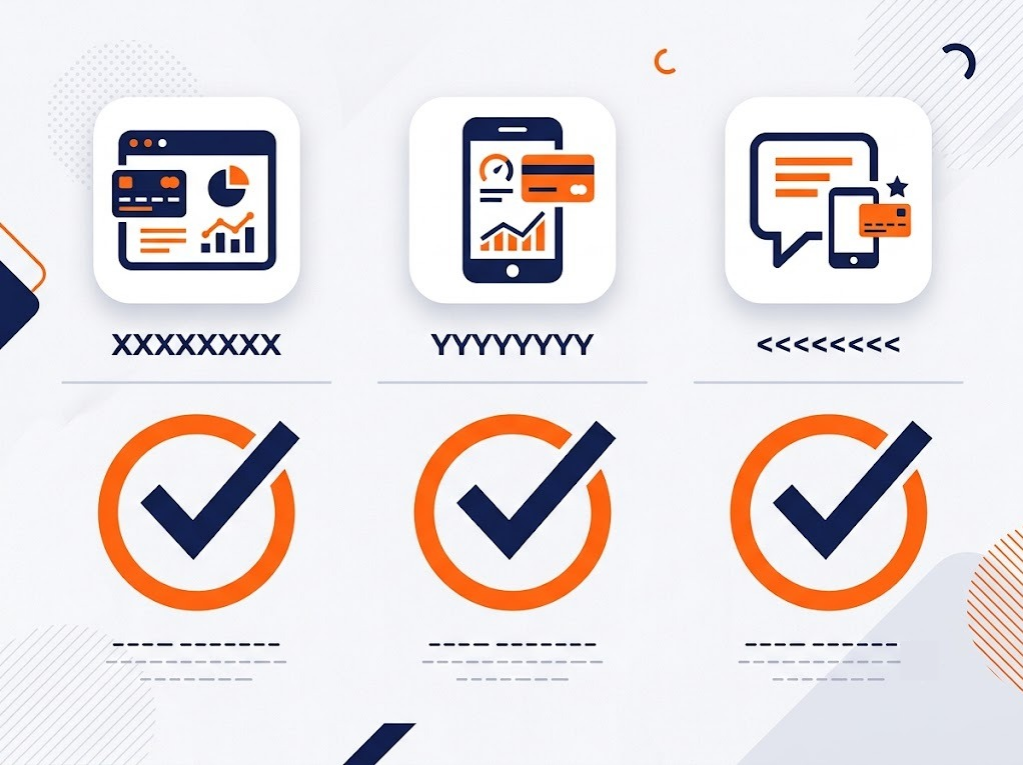
Three official routes exist, and each fits a different kind of SBI relationship. The SBI YONO app, now the most complete option since its integration with TransUnion CIBIL, gives full score, report, and a Score Simulator. The SBI Card app or portal, built for credit card holders specifically, shows the score right under the cardholder profile. The SBI General Insurance portal, open to SBI customers and non-customers alike, works through PAN, basic details, and OTP verification.
None of these require an active loan application. How to check your CIBIL score using just your PAN card covers a related route worth knowing too, outside the SBI ecosystem entirely. Each method below gets its own walkthrough, starting with the one that's changed the most recently.

Method 1: Check Your CIBIL Score on the SBI YONO App
This is the most complete option available, and it's genuinely new. SBI's YONO app now provides access to credit-score information and related credit features for eligible users. Not just a headline number, the underlying report, report analysis, and a Score Simulator feature that models how actions like opening a new loan, closing a card, or a late payment could affect your score before you actually do anything.
Getting there takes a few steps. Log in to YONO with your SBI credentials or mPIN (a numeric PIN used for quick app login, separate from your net banking password). Navigate to the loans or credit section. View your score and report. Run the Score Simulator if you want to model a decision before making it. This requires an existing SBI account or credit card relationship with YONO access, it isn't open to non-customers the way the third method below is.
A lot of older guides on this exact topic still only mention the SBI General Insurance route. This YONO integration is recent enough that it's genuinely the freshest, most complete answer available right now.
Method 2: Check Your CIBIL Score Through SBI Card
For SBI credit card holders specifically, this route sits separate from YONO entirely. Log in to the SBI Card mobile app or the SBI Card online portal, and your score appears right under the cardholder's profile section, no extra navigation needed.
This feature is tied to your SBI Card relationship rather than your broader SBI banking relationship. Useful if you hold an SBI card but don't actively use YONO for day-to-day banking, since it skips the full app entirely and gets you the number faster.
Method 3: Check Your CIBIL Score via the SBI General Insurance Portal
This is the option that works without an SBI account at all. Visit the SBI General Insurance website, find the Credit Score option under the site's navigation, enter your PAN, name, mobile number, and email, and complete OTP (One-Time Password) verification. The score displays on screen once verification clears.
This route is genuinely open to non-SBI-customers too, not limited to existing account holders in any way. It's the most accessible of the three if you don't hold an SBI account or card, and it takes only a few minutes end to end. Understanding what a hard enquiry actually does to your score is worth a look here too, since knowing the difference between this kind of check and a real credit application matters more than most people realise.
No SBI Account? How Can You Check Your CIBIL Score by PAN?
You don't need any SBI product to see your CIBIL score. Every person with a credit history can get one free full credit report a year from CIBIL, using just their PAN.
- Go to CIBIL's official website and choose the free score option.
- Enter your PAN, mobile number, email and date of birth. Use your name exactly as it's printed on your PAN card.
- Verify with the OTP sent to your mobile, and answer the identity questions if asked.
- Open your dashboard to see the score and the full report.
The report shows every loan and card on your PAN, with the payment history for each. That makes it the best place to spot a loan you don't recognise. For the full login steps and what to do if a step fails, see our guide on how to log in to your CIBIL account, or our page on checking your CIBIL score by PAN card.

What the Law Says
RBI requires every credit bureau to give you one free full credit report, including your score, once in every calendar year. You can ask each bureau separately.
Talk to us about your reportDoes Checking Your Score Through SBI Hurt It?
No. When you check your own score, it counts as a soft enquiry, and soft enquiries don't lower your score. That's true whether you check through YONO, SBI Card, SBI General, CIBIL's site or any other app.
What can lower it is a hard enquiry: when a bank checks your report because you applied for a loan or card. One or two of those are normal. Several in a few weeks can make you look hungry for credit. So check your own score as often as you like, and space out your loan applications. Our post on whether checking your CIBIL score reduces it explains the difference in more detail.
Want to know what is pulling your score down?
Credit Insights reads your report and gives you step-by-step actions to improve it.
Check My Credit InsightsWhich Method Should You Use?
| Method | Need an SBI account or card? | What you need to log in | Score only or full report? | How often you can refresh |
|---|---|---|---|---|
| YONO SBI app | Yes, SBI account | YONO login | Score, full CIBIL report and a score simulator | Inside the app, whenever you log in |
| SBI Card app or website | Yes, SBI credit card | SBI Card login | Score view; extras depend on the service | Whenever you log in |
| SBI General Insurance website | No | Mobile number and PAN | Score view; extras depend on the service | Whenever you log in |
| CIBIL's own site, by PAN | No | PAN, mobile number, email, date of birth | Score and full report | One free full report a year; more often on a paid plan |
Use the table to pick one route and stick with it, so you're comparing like with like each month. Services update their features from time to time, so the app or site you use is the final word.

FREED Expert Tip
Check your score through two different routes on the same day and compare them. If the numbers are far apart, read both reports for an account you don't recognise.
Check My Credit InsightsIs Checking Your Score Through SBI Safe?
Yes, directly. Checking your own score through any of these three routes, YONO, SBI Card, or SBI General Insurance, is a soft inquiry. Checking your own credit score is a soft enquiry and does not lower your CIBIL score. This is a common hesitation worth clearing up plainly, since a lot of people confuse checking their own score with applying for new credit.
The portal uses identity and contact verification before displaying the score. Both are legitimate, official channels, not third-party apps of uncertain origin asking for more access than they need.
What Does SBI Consider a Good Score?
SBI doesn't publish one fixed CIBIL cut-off for every loan, and most banks don't. What's commonly reported is that a score of 750 or above puts you in a strong position for a personal loan, while scores in the 600s mean more questions and often a higher rate. Treat these as patterns, not rules.
The CIBIL score runs from 300 to 900. The closer you are to 900, the more comfortable a bank feels lending to you. But the score is only the first filter. Two people with a 760 can get different answers from the same branch, because SBI also looks at income, existing EMIs and the type of loan.
If your score is below where you'd like it, the report usually tells you why. A card that's always near its limit, a late payment from last year or too many loan applications in a short time are the usual reasons. Fixing one of them at a time works better than trying everything at once.
What Does SBI Look At Besides Your CIBIL Score?
Your score opens the door, but these four things decide what happens next:
- Your income. SBI checks your salary slips or ITR to see how much you can comfortably repay each month. A steady salary from a known employer helps.
- Your existing EMIs. If your current EMIs already eat up more than 50% of your take-home pay, a new loan looks risky to any bank, even with a good score.
- Your repayment history. The report shows every month for each loan and card. A clean record over the last 12 to 24 months often matters more than an old blip.
- Your recent enquiries. Many applications in a short time suggest you're under pressure. Space them out.
If the second point is your problem, with several EMIs that leave little at month-end, bringing them into one lower EMI can help before you apply for anything new. If a wrong entry is hurting your score, see how to fix wrong entries in your CIBIL report.
EMIs eating more than half your salary?
See if one lower EMI through the Loan Consolidation Plan fits your loans.
Reduce My EMIHow FREED Helps If Your Score Isn't Where You Want It
FREED's free Credit Insights check offers another way to see your score and report, useful alongside or instead of the SBI routes above. FREED's Debt Consolidation Program may help combine eligible debts into one repayment arrangement. The credit impact depends on the application and subsequent repayment behaviour, so no specific CIBIL outcome should be assumed.
If your report reveals genuine hardship has already made repayment unrealistic, that's a separate, later conversation. Most people checking their SBI CIBIL score are simply informing themselves, this section exists for the smaller group where the number or the report reveals something worth acting on.
What Helps You Use This Check Effectively
- Check more than just the number. Review the full report rather than focusing only on the score, if the report is available through your chosen route.
- Use the Score Simulator before a big decision, not after it's already made.
- Reviewing your report periodically can help you spot unfamiliar accounts, incorrect payment information or other errors early.
- No SBI relationship? The SBI General Insurance route or FREED's own free check both work just as well.
There's no benefit to checking daily or excessively, the value sits in reviewing the report thoughtfully, not in how often you look. The full band-by-band CIBIL score breakdown is worth a read once you've got your number in hand, so you know exactly what it means in context.

Mohit Juneja
Mohit Juneja is FREED’s Content & Communication Lead with 12+ years of experience across content, media, advertising and digital communications. He holds a postgraduate diploma in Communications from Xavier Institute of Communications, Mumbai, and has worked with organisations including NDTV, The Indian Express, McCann Worldgroup and NABARD.
At FREED, he leads content and communication across loan management, debt resolution, debt consolidation and financial well-being. His work combines research, storytelling and consumer-focused communication to make complex financial topics easier to understand and act on. He has also scripted and produced 11 documentaries on rural development and agriculture for NABARD, with film's selected for the Mumbai International Film Festival.
mohit.juneja@freed.care

FREED is India's trusted loan management platform. Founded in 2020 and headquartered in Gurugram, FREED has counselled 20 lakh+ people on personal loans, credit cards, and app loans. FREED charges fees only on successful settlement, not upfront. FREED does not handle secured loans (home loans, car loans, gold loans).
Media Mentions