Does a Bounced Cheque Reduce Your CIBIL Score?
A bounced cheque will reduce your CIBIL score, but only under certain conditions. If the cheque was for an EMI or loan payment and the bank reports the missed payment to the credit bureau, your score drops. If it was a casual personal cheque with no loan linked to it, your score isn't touched. The damage depends entirely on what the cheque was for and what the lender does next.
Mohit Juneja
Reviewed by FREED India, Debt Resolution Specialists
 4.7/5
4.7/5 ₹3,200Cr+
 20,000+
 20,00,000+4.7/5₹3,200Cr+20,000+20,00,000+
KEY TAKEAWAYS

A bounced cheque will reduce your CIBIL score only if it triggers a missed loan or EMI payment reported to the credit bureau.
One EMI bounce handled and cleared within the same month usually has no CIBIL impact.
Three or more missed payments in a row can significantly damage your score.
A personal cheque bounce, with no loan involved, does not appear on your credit report at all.
A bounced cheque EMI can trigger Section 138 of the NI Act. A criminal complaint is possible, with up to 2 years in jail or a fine up to 2x the cheque amount. NACH/ECS bounces take a different legal path, but banks can still act.
When Exactly Does a Bounced Cheque Hurt Your CIBIL Score?
Type of Cheque | CIBIL Impact? | Why |
EMI / loan repayment cheque | Yes, if not cleared quickly | The lender reports a missed payment to the bureau |
Post-dated cheque for a lender | Yes, same as above | Treated as a missed EMI date |
Personal cheque (friend / family / vendor) | No | Not linked to any credit account |
Business payment cheque (no loan) | No | Does not appear on the credit report |
Banks report credit information to bureaus every 15 days, as required under RBI rules.
So the moment your bank flags a missed EMI, that creates a DPD (Days Past Due) entry on your report at the next reporting cycle.
What matters isn't the bounce itself. It's whether a missed payment gets logged. To understand that, you need to know how your bank actually reacts. The exact mechanics behind your score, not just this scenario, are covered in the CIBIL score rules and how your score is calculated.
What Happens at the Bank After a Cheque Bounces
Here's the actual mechanical process, step by step.
The cheque gets presented, and your account has insufficient funds. The bank returns it with a reason code and sends you a formal cheque return memo.
If the cheque was for an EMI, the lender's system auto-flags that EMI as unpaid from that date. Most lenders then give a grace window, typically 2 to 7 days depending on the institution, before logging it as officially missed.
This grace window isn't guaranteed. Some lenders don't offer one at all, or the team handling it simply misses it. Don't bank on it.
Clear it within the grace window, and there's no CIBIL entry for that month's payment. Miss the window, and a DPD entry goes to the bureau at the next monthly reporting cycle. If three consecutive EMIs bounce and stay uncleared, the account moves through SMA-0 (overdue up to 30 days), SMA-1 (31 to 60 days), and SMA-2 (61 to 90 days) classifications, eventually reaching NPA (loan marked as bad debt) after 90 days.
Speed is really what decides the outcome here. For a fuller picture of what actually happens when your EMI bounces, including the charges involved, that breakdown covers it in detail.
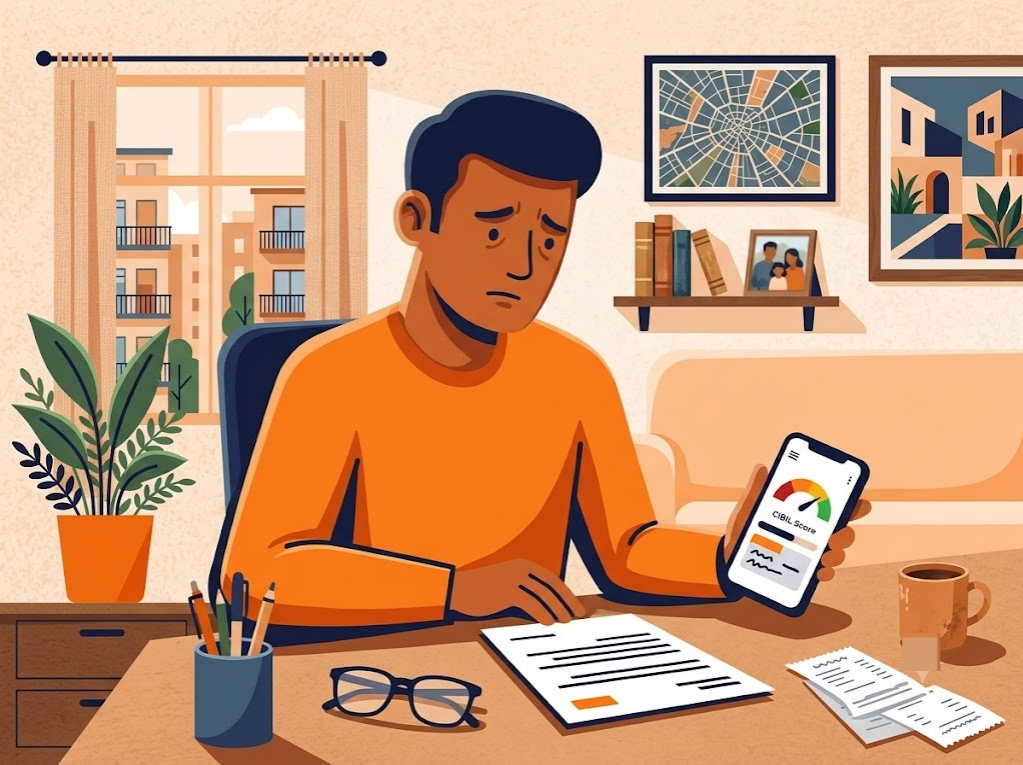
How Much Does a Bounced Cheque Actually Drop Your CIBIL Score?
No bureau publishes a fixed table for this. But lender data and industry patterns give a fairly consistent picture across four scenarios.
One EMI bounced and cleared within the grace window. No CIBIL drop at all. The payment shows as on time in the bureau record because it cleared before the reporting date.
One EMI bounced, cleared within 30 days, but after the reporting cut-off. Likely a 20- to 50-point drop, depending on your current score. Higher scores tend to drop harder for the same missed payment.
Three or more missed EMIs in a row. Score can drop 50 to 150 points. The account may enter SMA classification, and each additional month adds another DPD record on top of the last.
The account goes NPA. Score drop can run 150 to 200+ points, and this is commonly reported as staying on your report for up to 7 years.
These aren't exact figures. Every bureau runs its own model. But the pattern holds: more missed payments mean more damage, and the damage compounds, since each DPD entry adds to the last one. If you want to see where your own patterns might be adding up, common mistakes that can harm your credit score are worth a look.
Now, knowing all this, what should you do immediately after a cheque bounces?
Are You in a Loan Trap? Quick Check
Move the slider to your total EMIs as a % of monthly salary. See your debt stress level instantly.
EMIs as % of Monthly Salary
When a Bounced Cheque Becomes a Legal Problem
A bounced cheque isn't just a financial event. If the cheque was issued for a debt or legal obligation and the bounce doesn't pay within the notice window below, the payee can take it to criminal court.
Here's how it plays out. The trigger is a cheque that bounced due to insufficient funds or a closed account, issued to discharge a debt or liability. First, the payee must send a written demand notice within 30 days of the bounce. The drawer then has 15 days from receiving that notice to pay up. If payment doesn't land within those 15 days, the payee can file a complaint in the Magistrate's Court.
In practice, this means a real criminal case is possible, with imprisonment up to 2 years, a fine, or both, plus a legal process that can run long.
This Section 138 process runs separately from the CIBIL impact. Both can happen together. The credit bureau doesn't wait for the court case to move.

What the Law Says
As provided under Section 138 of the NI Act, a bounced cheque issued for a debt can lead to a criminal case, imprisonment up to 2 years, or a fine.
Book My Free CallDoes the Type of Account Make a Difference?
Most content on this topic treats every cheque the same. It shouldn't, because the account behind it changes what actually happens.
A savings account cheque for EMI repayment is the standard scenario covered above. CIBIL impact follows if the EMI goes unreported.
A current account cheque for business carries no personal CIBIL impact if it isn't linked to a personal loan. But if the business has a loan under the owner's name, through a personal guarantee or a proprietorship structure, the impact runs exactly the same as in scenario one.
Post-dated cheques (PDCs) given to a lender are treated exactly like an EMI. If the PDC bounces on the EMI date, the lender logs it as a missed payment, and the same CIBIL rules apply.
NACH mandate failures, the modern auto-debit rejection, are the current version of a cheque bounce. NACH failures are treated identically to EMI bounces by lenders. The label is different; the bureau impact is not.
The label doesn't matter: cheque, PDC, or NACH. What the bureau sees is one thing: was the EMI paid on time? If not, the DPD goes in.

How to Protect Your CIBIL Score After a Cheque Bounce
Step 1: Clear the bounced amount immediately. Don't wait for a second notice. Transfer the exact amount and call the lender to re-present it, or make an online transfer the same day.
Step 2: Get written confirmation from the lender that the payment is received. An SMS or email confirmation is enough. Keep it, since it becomes your proof if a dispute comes up later about when you paid.
Step 3: Check your CIBIL report 30 to 45 days after clearing. Credit information is updated fortnightly, so a recent payment may take some time to reflect.
Pull your report and check the DPD column for that loan account.
Step 4: Raise a dispute if the report shows an error. If you cleared on time but the bureau shows a missed payment, file a dispute directly on the CIBIL website. Banks are required to respond to disputes within 30 days. It also helps to check your CIBIL report regularly so errors like this get caught early.
Step 5: If multiple EMIs have bounced and remain unpaid, get professional help now. One missed EMI is recoverable. Three or more, heading toward NPA, is a different situation where the options narrow fast. If this is where you are, FREED offers a free confidential assessment to help you understand what your options actually are.
How FREED Helps If Bounced EMIs Have Already Damaged Your Score
If You've Defaulted and Need to Resolve the Loan
Settlement is not something a borrower chooses out of preference. It's for someone genuinely unable to pay, not just stressed about it.
FREED's Loan Settlement Plan, also called the Debt Resolution Program, works like this. FREED assesses your full financial picture, sets up a structured monthly savings plan, and negotiates with your lender once that fund is ready. The bank decides the final terms. Once accepted, a settlement letter gets issued. This takes time; it isn't an instant fix. FREED's fee is success-based, earned only when the settlement is actually done. In short, FREED gets the settlement done for you.
If Recovery Calls Have Started
FREED Shield is available to everyone, including people not enrolled in any FREED program. It helps borrowers document recovery interactions, understand their rights, and avoid unfair collection practices. FREED Shield helps ensure that customers don't have to face recovery-related pressure alone.
If either of these sounds like where you are, a free assessment is the fastest way to see your actual options.

Not Sure Where Your Score Stands?
Speak to a FREED counsellor, no cost, no commitment.
Book My Free CallHow to Fix Your CIBIL Score After Cheque Bounce Damage
Bring all accounts current first. Until every overdue EMI is cleared, the score keeps falling. Nothing else on this list matters until this step is done.
Keep all other EMIs and credit card bills on time, without exception. The bureau scores every account every month. One on-time EMI won't fix a bad record, but consistent on-time payments start reversing it within 6 to 12 months.
Do not apply for new credit while rebuilding. A loan or card application can trigger a hard enquiry, which may affect your score and remain visible in your CIBIL report for up to 36 months. Multiple applications in a short window look desperate to lenders.
Monitor the report every 60 to 90 days. Once dues are cleared and payments have stabilised, watch the DPD column for that account. The negative entry stays, but it ages, and older entries carry less weight over time.
Here's the realistic timeline. A 50-point drop from one bounce can recover in 6 to 12 months if everything else stays clean. A 150-point drop from multiple NPAs may take 2 to 3 years of consistent positive payment history. If settlement is part of your picture, how to improve your credit score after loan settlement covers exactly how that recovery path works.
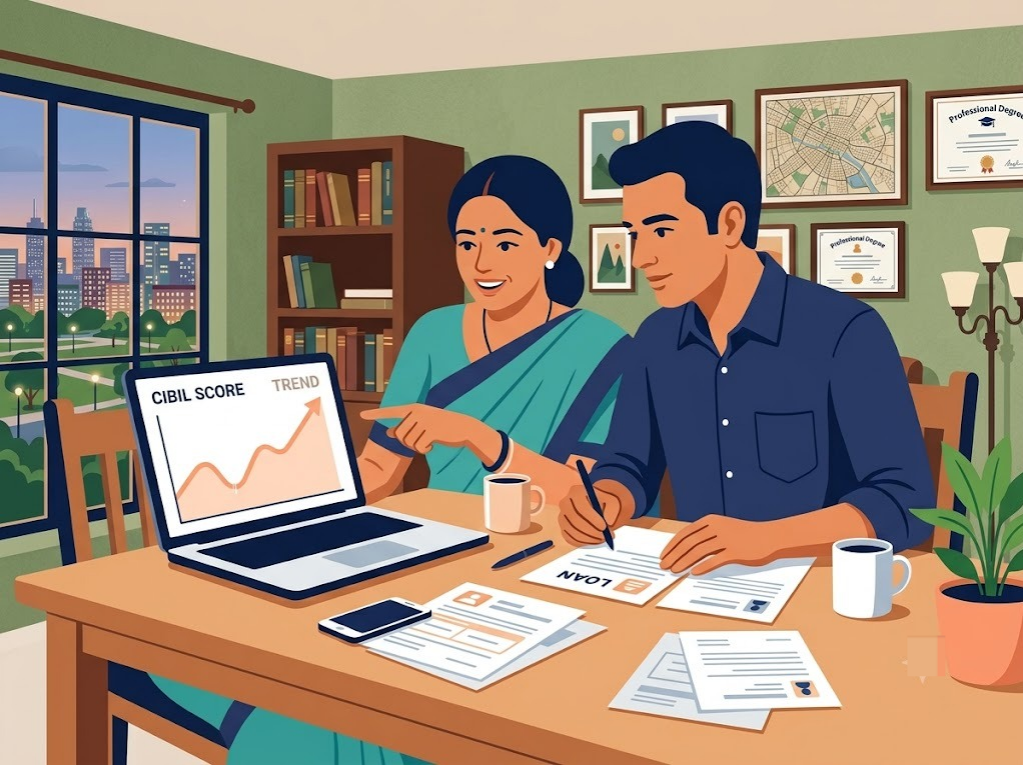
Cheque Bounce Scenarios and CIBIL Impact
Scenario | CIBIL Impact | Severity | Recovery Time |
Cleared before the lender's reporting cut-off | None | - | Immediate |
Cleared after cut-off, within 30 days | Low to moderate | 20 to 50 points | 6 to 9 months |
2 to 3 EMIs unpaid | Moderate to serious | 50 to 100 points | 12 to 18 months |
Account goes NPA (90+ days overdue) | Severe | 100 to 200+ points | 2 to 4 years |
Section 138 case filed | Severe (indirect, credit still damaged) | Depends on the underlying loan status | Depends on resolution |
Score impact figures are indicative. Exact figures depend on your bureau model, current score, and account history. A higher starting score often means a larger point drop for the same missed payment.
Sources
Section 138 NI Act: cheque bounce as a criminal offence, imprisonment up to 2 years | No verified live government URL found. Softened to "as provided under Section 138 of the NI Act," internal link to demand-notice-under-section-138 used instead |
Banks/NBFCs report payment data to bureaus under RBI rules | Softened to "as required under RBI rules," no specific circular linked |
NPA classification after 90 days | Industry standard, softened to "typically after 90 days," no specific circular linked |
CIBIL score range 300–900 | TransUnion CIBIL published standard, softened to a plain statement, no page linked |
freed.care/blog/demand-notice-under-section-138 | Verified live, 200 |
freed.care/blog/cibil-score-rules | Verified live, 200 |
freed.care/blog/emi-bounce-charges-what-happens-when-emi-bounces | Verified live, 200 |
freed.care/blog/common-mistakes-that-can-harm-your-credit-score | Sourced from live sitemap (not given in brief), verified live, 200 |
freed.care/blog/why-its-important-to-review-your-credit-report-frequently | Sourced from live sitemap (not given in brief), verified live, 200 |
freed.care/blog/free-cibil-report-download | Sourced from live sitemap (not given in brief), verified live, 200 |
freed.care/blog/how-to-improve-credit-card-score-after-loan-settlement | Verified live, 200 |
freed.care/blog/steps-to-rebuild-your-credit-score-after-a-loan-default | Verified live, 200 |
freed.care/debt-resolution-program, freed.care/freed-shield | Product pages inside the dedicated "How FREED Helps" section, verified live, 200 |

Mohit Juneja
Mohit Juneja writes educational content at FREED on debt management, credit scores, loan repayment, and borrowing best practices. His content is shaped by expert insights and industry knowledge, helping readers better understand their financial options and make informed decisions.
mohit.juneja@freed.care

FREED is India's trusted loan management platform. Founded in 2020 and headquartered in Gurugram, FREED has counselled 20 lakh+ people on personal loans, credit cards, and app loans. FREED charges fees only on successful settlement, not upfront. FREED does not handle secured loans (home loans, car loans, gold loans).
Media Mentions