CIBIL Score Rules: How Your Score Is Actually CalculatedCIBIL Score Rules: How Your Score Is Actually Calculated
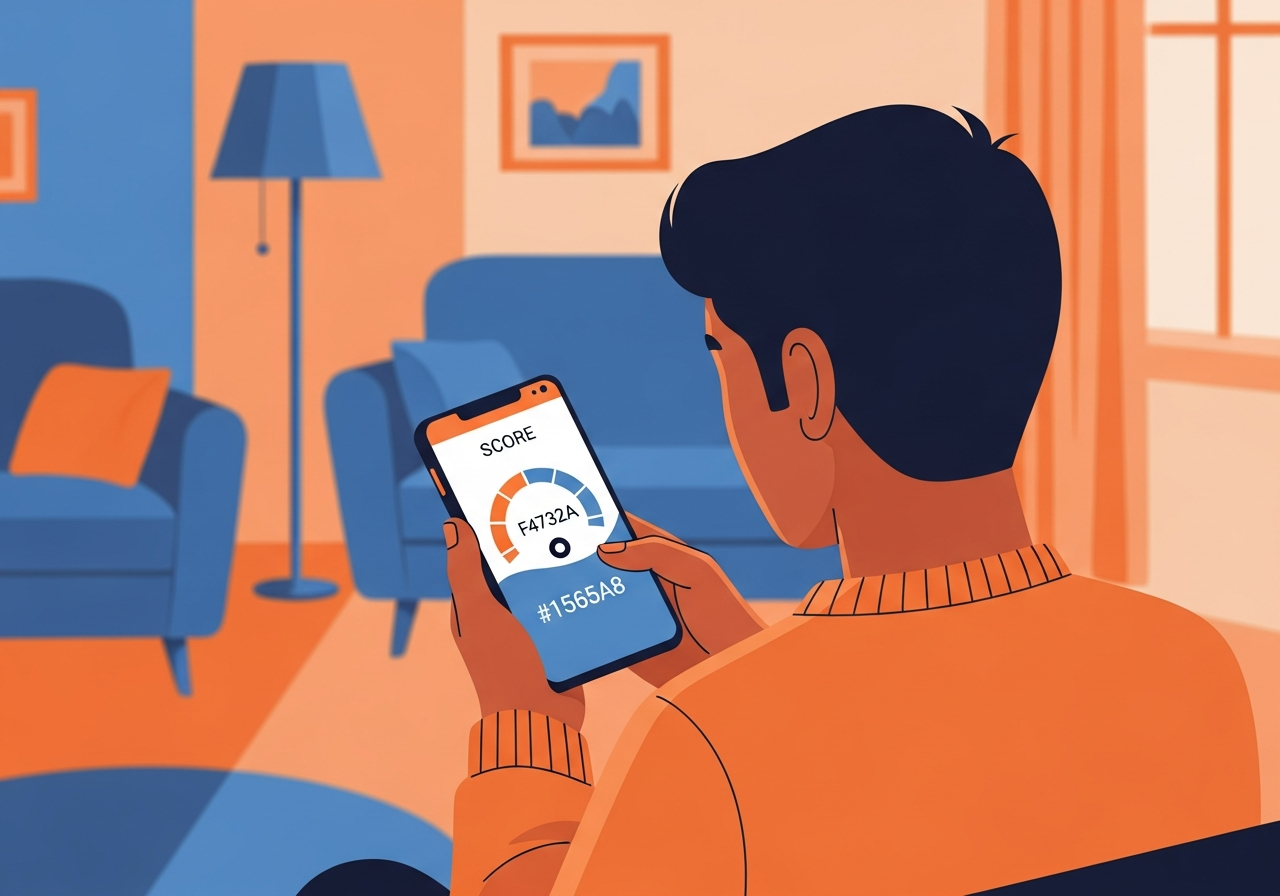
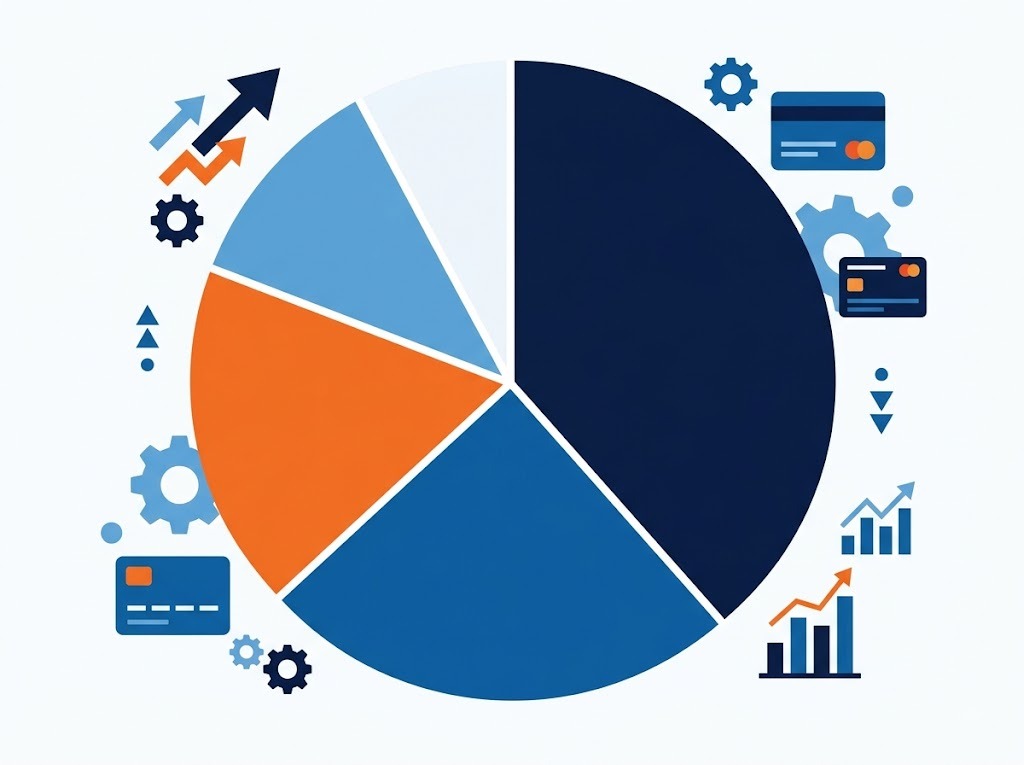
CIBIL score rules are the five factors CIBIL weights to calculate your 300 to 900 score. Payment history, at 35%, is the most important. Credit utilization, 30%, measures how much of your credit limit you're using. History length, 15%, reflects how long you've had credit. Credit mix, 10%, looks at the types of loans you manage. New inquiries, 10%, tracks recent loan applications. These factors are commonly discussed as important influences on credit scores, but the precise contribution of each factor to an individual's CIBIL Score is not publicly disclosed. Scores now update every 15 days, under an RBI rule effective January 2025. Understanding the major factors can help you make better credit decisions, but no one can reliably predict an exact score change from a single action.
Mohit Juneja
Reviewed by FREED India, Debt Resolution Specialists
 4.7/5
4.7/5 ₹3,200Cr+
 20,000+
 20,00,000+4.7/5₹3,200Cr+20,000+20,00,000+
KEY TAKEAWAYS

Five factors, five weights: payment history 35%, utilization 30%, history length 15%, credit mix 10%, new inquiries 10%.
Payment history at 35% is the single biggest factor in your score.
One missed payment damages your score, and the mark stays on your report for years.
Credit utilization, 30%, follows a simple formula: total outstanding divided by total limit, times 100.
CIBIL's algorithm is proprietary. These percentages reflect industry pattern, not an official disclosure from CIBIL itself.
The score runs 300 to 900. CIBIL Scores range from 300 to 900. Higher scores generally indicate lower credit risk, although lenders may use their own cut-offs and underwriting criteria.
Payment History: One of the Most Important Factors
Payment history alone accounts for about a third of your score, and it earns that weight because it's the clearest predictor lenders have. Past behaviour predicts future behaviour, and nothing signals reliability like a clean payment record over time.
This isn't limited to credit cards. It covers loans, EMIs, and any credit account reporting to the bureau. CIBIL's enhanced risk models can use trended credit behaviour over 36 months, including repayment patterns and other account-level attributes. Auto-debit can reduce the risk of forgetting a payment, provided sufficient funds are available and the mandate works correctly.
It's worth reading how your payment history actually impacts your credit score for a closer look at exactly how this factor moves the number month to month.

Wondering How Your Own History Reads?
A clear look at what's actually on your report.
Talk to FREED's TeamCredit Utilization (30%): The "Stress Signal" Rule
Utilization measures how much of your available credit you're actually using, and it's the second biggest factor after payment history.
The formula is simple: total outstanding across all cards, divided by your total combined limit, times 100. A ₹1 lakh limit with a ₹30,000 balance sits at 30% utilization, generally fine. The same limit carrying a ₹90,000 balance sits at 90%, and that reads very differently to a lender. Bureaus interpret high utilization as a stress signal, something closer to being financially stretched than simply spending normally. Roughly 75% utilization tends to signal real stress, while sitting around 25% signals responsible, comfortable use. Reducing unusually high utilisation may support your credit profile once the updated information is reported.

Freed Expert Tip
Think carefully before closing an older credit card, particularly if it has no meaningful cost and contributes to your available credit. Closing an account can affect your overall utilisation and the age/profile of your credit accounts. An old card means a longer credit history, and closing it shrinks both your history length and your total available credit, which raises your utilization percentage on everything else. Keep zero-fee old cards open and use them occasionally to keep them active in the bureau's eyes.
Check your current utilization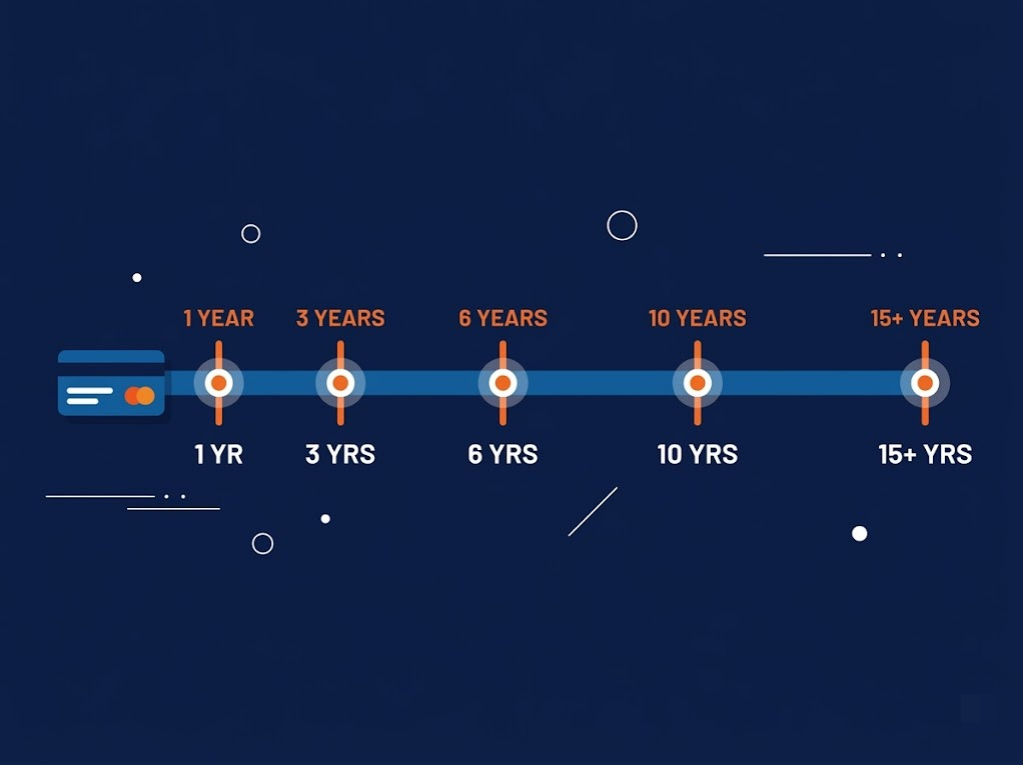
Credit History Length (15%): The "Time in System" Rule
A longer, well-managed credit history can provide more information about your borrowing behaviour. A 5-year-old credit card account carries more weight than a 3-month-old one, since it demonstrates a sustained, proven track record rather than a fresh, unproven one.
The bureau tracks two related figures here, your oldest account's age and your average account age across everything you hold. This is one factor new borrowers genuinely can't game or speed up, there's no shortcut around time itself. The only real fix is patience, paired with keeping older accounts open rather than closing them prematurely. If you're actively building history from scratch or managing several cards at once, it's worth reading how multiple credit cards affect your credit score, since history length and card count interact more than most people expect.
Credit Mix: Different Types of Credit
Credit mix looks at whether you manage both secured and unsecured credit, rather than sticking to just one type. A home loan alongside a credit card demonstrates more versatility than credit cards alone, since it shows you can handle different kinds of risk and repayment structures.
Having experience managing different types of credit can form part of your overall credit profile. However, you should not take on new borrowing simply to diversify your credit mix. That said, this isn't a reason to take on debt you don't need. Taking a new loan purely to diversify your mix rarely makes financial sense, the interest cost usually outweighs whatever small benefit the mix itself provides. If you naturally end up taking a secured loan, a home or auto loan, for a real purpose, that's the right time for it to help your mix. Borrowing specifically to game this 10% isn't worth it.
Talk Through What's Actually Worth Adding
See what would genuinely help your profile.
Talk to FREED's TeamRecent Credit Enquiries: Why Multiple Applications Matter
A lender's credit check associated with a formal application may be recorded as a hard enquiry. Multiple recent enquiries can indicate increased demand for credit and may form part of a lender's risk assessment.
It's worth distinguishing the two types clearly. Soft inquiries, checking your own score, have zero impact. Hard inquiries, triggered when a lender checks your file for an actual approval decision, are what actually count here. Hard enquiries are recorded in your credit report and may affect your credit profile.

Why CIBIL Doesn't Disclose Exact Algorithm (And Why That Matters)
CIBIL treats its exact algorithm as proprietary, and this is deliberate. If the precise math were public, people would start optimising directly for the formula rather than for genuinely healthy credit behaviour, which defeats the entire point of the score as a risk signal. This is standard practice globally, credit bureaus everywhere guard their exact calculations closely, not just in India.
The percentages widely cited, 35% for payment history, 30% for utilization, and so on, are informed industry estimates built from observed patterns, not a leaked internal document or an official CIBIL disclosure. RBI doesn't require bureaus to publish their exact algorithm either, so this gap between broadly known weights and precise mechanics is likely to stay exactly as it is. If you want a plain-language read on what a specific score number actually signals to a lender, the full CIBIL score range explained breaks that down without needing the underlying formula at all.

Mohit Juneja
Mohit Juneja writes educational content at FREED on debt management, credit scores, loan repayment, and borrowing best practices. His content is shaped by expert insights and industry knowledge, helping readers better understand their financial options and make informed decisions.
mohit.juneja@freed.care

FREED is India's trusted loan management platform. Founded in 2020 and headquartered in Gurugram, FREED has counselled 20 lakh+ people on personal loans, credit cards, and app loans. FREED charges fees only on successful settlement, not upfront. FREED does not handle secured loans (home loans, car loans, gold loans).
Media Mentions