CIBIL Score Ranges Explained
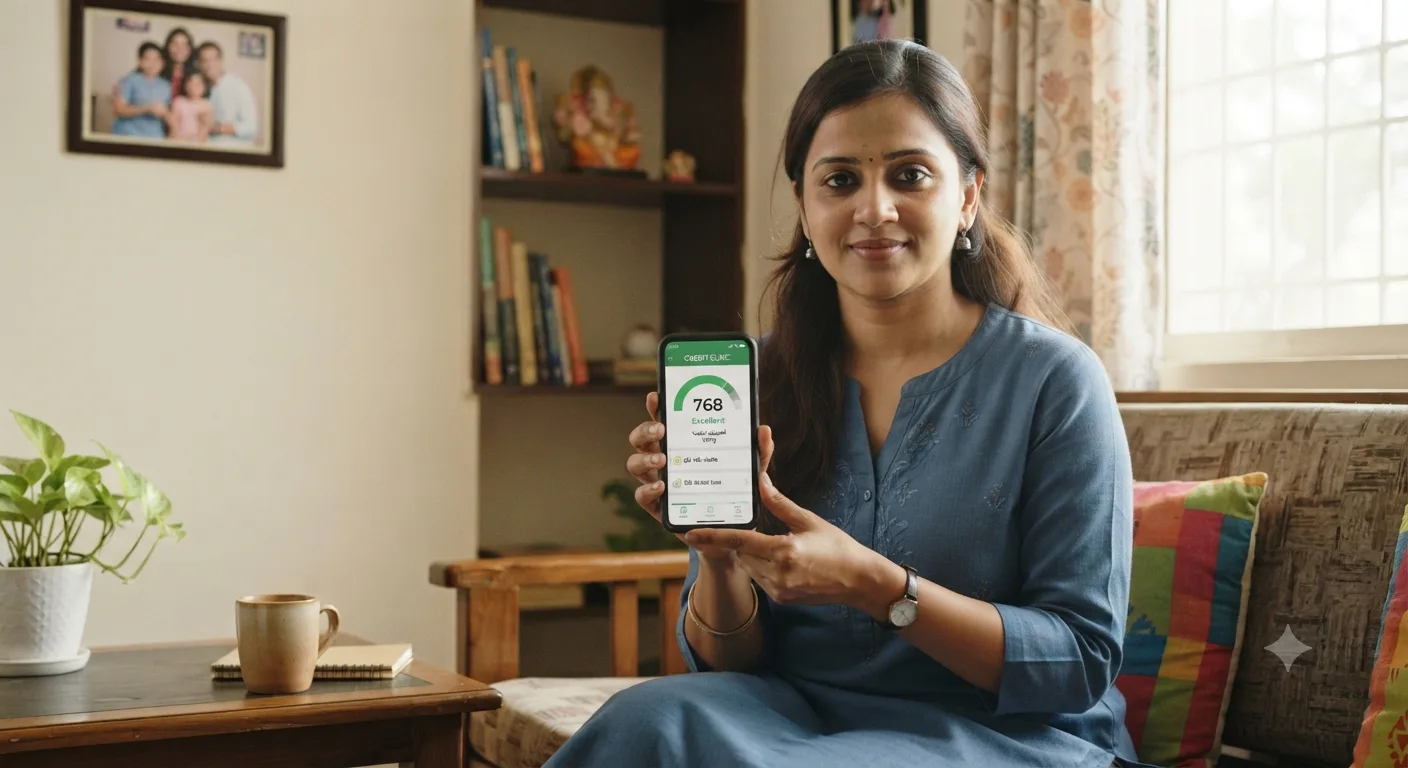
CIBIL score ranges from 300 to 900. Scores below 600 are generally considered high risk to lenders, 650 to 749 is commonly considered good, and 750 and above is considered excellent, as general guidance; exact cutoffs vary by lender and bureau. Most banks offer their best rates and fastest approvals in the higher bands.
Mohit Juneja
Reviewed by FREED India, Debt Resolution Specialists
 4.7/5
4.7/5 ₹3,200Cr+
 20,000+
 20,00,000+4.7/5₹3,200Cr+20,000+20,00,000+
Key Takeaways

CIBIL score ranges from 300 to 900. The closer to 900, the stronger your credit profile.
Below 600 is generally considered poor, 600–649 fair, 650–749 good, 750–900 excellent, as general guidance. Exact cutoffs vary by lender and bureau, so treat these as indicative bands rather than fixed standards.
Payment history is widely considered one of the most important factors influencing your credit score.
A score of -1 or 0 doesn't mean bad credit. It means no credit history exists yet.
Moving from 550 to 650 matters far more to your approval odds than moving from 800 to 850.
What Does CIBIL Score Ranges From 300 to 900 Mean
Your CIBIL score is a 3-digit number, somewhere between 300 and 900, that sums up your credit history in one figure. TransUnion CIBIL generates it using the loan and repayment data banks and NBFCs report to them every month.
The rule is simple: the closer your score sits to 900, the lower the risk a lender sees in you. A score near 300 tells a bank you have missed payments, defaulted, or have very little credit history to judge you by. A score near 900 tells them you have handled credit well over time.
This 300 to 900 scale is specific to CIBIL. India has four RBI-licensed credit bureaus, CIBIL, Experian, Equifax, and CRIF High Mark, and all four use a similar 300-900 range. But each bureau calculates its score using its own formula, and banks don't always report data to every bureau at the same time. So your Experian score and your CIBIL score can differ by a few points, even in the same month. Neither number is "wrong." They're just built from slightly different snapshots of your history.
One more thing worth knowing early: 300-900 isn't a fixed law that every lender treats identically. A public sector bank might set its internal cutoff for a personal loan at 700, while an NBFC might approve at 650 with a higher interest rate to cover the added risk. The range gives you the scale. The bank decides where its own line sits within it.
Once you know where your number falls in that wider scale, the next question is what each band actually means for you, day to day, when you walk into a bank or open a loan app.

CIBIL Score Ranges, Band by Band
What a -1 or 0 Score Actually Means
If your CIBIL report shows -1, 0, or a low single-digit number instead of a real score, don't panic. This does not mean bad credit. It means CIBIL simply doesn't have enough credit history on you yet to calculate a score.
This usually happens if you've never taken a loan or credit card, or if your only credit activity is too recent for the bureau's system to generate a full score. Think of it as an empty file, not a red flag on your file.
This is very different from a genuinely low score like 350. A 350 reflects an actual track record of missed payments, defaults, or serious credit trouble. A -1 or 0 reflects the absence of a track record altogether.
That said, "no score" isn't treated the same as "good score" by lenders either. Someone with a -1 isn't a repayment risk the way someone with a poor score is, but banks still tend to be cautious, simply because there's no history to assess. First-time credit users often get a smaller starting limit or a secured card for this exact reason, not because they're seen as risky, but because they're an unknown quantity.
The good news is this fixes itself with time. Even one credit card, used responsibly for a few months, is usually enough to generate a real score.
What Actually Moves Your CIBIL Score
- Payment history (roughly 30-35% of your score). This is the single biggest factor. Every EMI or credit card bill paid on time builds your score. Every missed or late payment, even by a few days, drags it down, and the effect compounds if it happens more than once.
- Credit utilisation (roughly 25-30%). This is how much of your total credit card limit you're actually using. Using more than 30% of your limit signals to lenders that you may be stretched thin, even if you're paying every bill on time. Maintaining lower credit utilisation supports a healthier credit profile and may improve how lenders assess your application.
- Credit age and mix (roughly 15-25%). Older credit accounts and a healthy mix of loan types (say, a credit card plus a personal loan, rather than five credit cards) tend to help your score. Closing your oldest card to "clean up" your wallet can actually hurt this factor.
- Recent hard enquiries (smaller but real impact). Every time you apply for new credit, the lender pulls a hard enquiry, and too many of these in a short window makes you look credit-hungry, even if each individual application was harmless.
If there's one action that moves the needle fastest, it's this: pay every due, every month, on time. Nothing else on this list compensates for a pattern of late payments.

FREED Expert Tip
Focus on crossing your lender's next cutoff, usually 650 or 700, rather than chasing a perfect 900.
Check Your scoreWhy Moving From 550 to 650 Matters More Than 800 to 850
Your CIBIL score doesn't move in a straight line in terms of what it unlocks for you. Crossing a key threshold, say from 620 to 660, can open up entire categories of credit that were simply closed to you before: a personal loan at a normal rate, a proper credit card, a lower down payment on a big purchase.
Compare that to moving from 800 to 850. You're already in the "excellent" band at 800. Almost every lender already offers you their best rate. The extra 50 points barely changes what's on the table, because you'd already crossed every meaningful cutoff on the way up.
This is worth remembering if you're the kind of person who checks your score every week and feels anxious about small dips. The real goal isn't a perfect number. It's crossing the next threshold that actually changes what banks will offer you. Once you're solidly past 750, further gains are nice to have, but they're not doing the heavy lifting your score is right now if you're closer to 600 or 650.
Are You in a Loan Trap? Quick Check
Move the slider to your total EMIs as a % of monthly salary. See your debt stress level instantly.
EMIs as % of Monthly Salary
When a Falling CIBIL Score Signals a Bigger Problem
A one-off dip in your score, from a single late payment you've already corrected, usually isn't a sign of a bigger issue. But when the score keeps sliding month after month, that's a different story.
Watch for these signs together, not in isolation: your score has consistently dropped over several months, not just one billing cycle. You're carrying high utilisation across multiple loans or credit cards at once. You've been making only the minimum payment on your cards for a while now, instead of clearing the full amount. Any one of these alone might be manageable. All three together usually point to a structural debt problem, not a temporary slip.
If your total EMIs and minimum dues already eat up more than 50% of your take-home salary, that's a strong sign the load itself needs attention, not just the score. A structural issue doesn't get fixed by one on-time payment. It needs a change in how the debt itself is managed.
From here, the path forward splits in two. If you're still managing to pay, even with real effort, that points toward looking at debt consolidation, bringing multiple EMIs down to one. If repaying in full has genuinely become impossible, settlement exists as a structured, last-resort path. These are very different situations, and worth telling apart clearly before deciding what to do next.
How FREED Helps If Your Score Is Slipping From Multiple Loans
If you're still paying your EMIs but juggling multiple loans and credit cards is wearing you down, FREED's Loan Consolidation Plan (LCP), "Reduce My EMI," is built for exactly this. It's for people who can still repay but need a smarter way to manage their debt. FREED assesses your financial profile and matches you to a lending partner from its network. That lending partner disburses one new loan, which pays off your existing eligible unsecured debt instantly. You're left with one loan, one EMI, one due date, and one lender, instead of several. This supports simplified repayments and structured debt management, though eligibility and terms depend on the lending partner.
If repaying in full has genuinely become impossible, and your score reflects real, sustained default rather than a manageable stretch, the Loan Settlement Plan (LSP), "Settle My Loans," is the path built for that. Settlement is not something a borrower chooses out of preference. Banks and financial companies only consider it when you're in genuine financial difficulty and truly unable to repay the full amount. FREED helps you build a structured monthly savings plan, negotiates with the bank once enough funds are built, and works toward the most favourable settlement terms possible, up to 50%* waiver, with the final number always decided by the bank. A settled account carries a "Settled" mark on your CIBIL report for up to 7 years.
These two paths are for very different situations, so it's worth being honest with yourself about which one actually describes you, rather than jumping to whichever sounds easier.
Rates and ranges shown are indicative. Final terms are decided by the bank. FREED is not a Loan Provider. No outcome is guaranteed. Please verify directly with your bank.
How to Improve Your CIBIL Score, Step by Step
- 1
Check your current score.
Pull your free full credit report once a year at cibil.com, or use FREED's Credit Insights for a quicker, more actionable read on what's affecting your score. Knowing your exact starting number tells you which band you're actually working from.
- 2
Find your band.
Match your score against the ranges above: poor, fair, good, or excellent. This tells you not just where you stand, but roughly what kind of interest rate and approval odds to expect right now if you applied for credit today.
- 3
Identify the nearest cutoff.
Most lenders set a threshold, often 650 or 700, above which approval and pricing improve sharply. Find the cutoff just above your current score. That's the number that actually matters, not 900.
- 4
Check the biggest drag first.
Review your payment history and credit utilisation before anything else. These are commonly recognised factors that contribute to a stronger credit profile.
- 5
Act on the structural issue, not just the number.
If multiple EMIs across different loans are the real reason your score keeps sliding, address the debt load itself, through consolidation if you're still paying, or a structured settlement plan if repayment has become genuinely impossible. Chasing the score without fixing the underlying load rarely holds.
Sources
Claim | Source |
|---|---|
CIBIL scale runs 300–900, adapted from FICO (which uses 300–850 in the US) | Paisabazaar |
Band cutoffs for "good" and "excellent" vary meaningfully across the industry no single universal standard | IndiaLends, mymoneymantra, SMFG India Credit, Poonawalla Fincorp, Bandhan Life, Moneyview |
-1/0/NH means no credit history, not a poor score | Wishfin, Paisabazaar |
Checking your own score is a soft enquiry, zero score impact; hard enquiries have small, temporary effect | Bajaj Housing Finance, Airtel |
Payment history ~30–35% weighting (industry estimate, not bureau-disclosed) | Wishfin, Finnable |
Credit utilisation should stay under 30% | Wishfin, Bajaj Housing Finance |
RBI mandates one free full report/year per bureau RBI/2016-17/58, effective Jan 1, 2017 | RBI official notification |
Settled account carries a "Settled" mark for up to 7 years; LSP terms set by the bank | FREED internal brand facts |

Mohit Juneja
Mohit Juneja writes educational content at FREED on debt management, credit scores, loan repayment, and borrowing best practices. His content is shaped by expert insights and industry knowledge, helping readers better understand their financial options and make informed decisions.
mohit.juneja@freed.care

FREED is India's trusted loan management platform. Founded in 2020 and headquartered in Gurugram, FREED has counselled 20 lakh+ people on personal loans, credit cards, and app loans. FREED charges fees only on successful settlement, not upfront. FREED does not handle secured loans (home loans, car loans, gold loans).
Media Mentions