The Best Debt Management Companies in India
The best debt management companies are the ones that fit your situation, state every fee in writing and keep your money safe. No single company is best for everyone, so the right test is total cost, safety and fit, not a star rating.

Mohit Juneja
Reviewed by FREED India, Debt Resolution Specialists
 4.7/5
 ₹3,200Cr+
 20,000+
 20,00,000+4.7/5₹3,200Cr+20,000+20,00,000+
Key Summary

The best debt management companies are best for your situation, not best overall.
We found no neutral data to rank companies, so this guide gives you criteria instead.
In our example, the lowest-rate offer costs ₹15,619 more than a no-fee offer at a slightly higher rate.
RBI says a digital lending app’s place in its directory is not registration, authorisation or endorsement.
Ask the company to put every fee and every exit term in writing.

Paying Several EMIs and Want One?
FREED’s Loan Consolidation Plan combines multiple loans into one EMI.
Reduce My EMIWhat Are the Best Debt Management Companies in India?
There’s no single best company, only the best one for your situation. That’s a less tidy answer than a ranked list. It’s also the honest one.
Here’s why we don’t rank anyone. Search for the best debt management companies and you’ll find lists of named firms in a fixed order. We found no neutral, verifiable data that could rank them fairly, and a “best of” list can be a guess, or even a paid placement. FREED is one of these companies too, so we can’t rank ourselves against others and call it fair. This guide gives you criteria instead, and a worked example to apply them.
Take Priya, 34, who still pays all four of her EMIs but finds them heavy. And Ramesh, 41, who has missed an EMI and is getting calls. They need different things, so the same company can’t be best for both. Searches for top debt management companies tend to hide that.
There are four kinds of provider, and they do different jobs.
Kind | What it offers | Often suits |
|---|---|---|
Counselling centres and advisers | Advice, a look at your money and a plan | People still paying but unsure what to do |
Consolidation platforms and loan matchers | One new loan to replace several | People still paying but stretched |
Settlement companies | Negotiating a smaller payment to close a loan | People who genuinely cannot repay |
Law-based help | Advice on notices, guarantees and courts | Specific legal situations |
Some companies do more than one of these. What matters is that you know which job you need done before you compare anyone. For counselling providers in particular, read our guide on the best debt counseling services in India. Next, let’s build the checklist.
See What Share of Your Salary Goes to EMIs
Check how much of your pay your EMIs take today.
Check My EMI ScoreWhat Makes a Debt Management Company the Best Fit for You?
Judge any company on seven things, using facts you can check. Star ratings tell you how people felt. These seven tell you what you’ll pay and what you risk. Here’s the list, with what to look for.
Does it suit my situation? Look for a clear fit with whether you’re still paying or can’t pay.
Are all fees written, with dates? Look for every fee in rupees, and when each one falls due.
What do I get back if it fails? Look for a stated refund or exit rule.
Does it lower what I owe, lower my rate, or only stretch my plan? Look for a plain answer, because the three are very different.
Who holds my money, if anyone? Look for an account in your own name.
Does it promise a result? A good answer is no, because the bank decides.
How do I leave? Look for a stated way out, with its cost.
Mark each one yes, partly or no. Then add the rule that matters most. A “no” on question two, three or five is a reason to pause, whatever else the company offers.
Why those three? Question two is about what you’ll pay. Question three is about what you risk if it doesn’t work. Question five is about whether your savings are safe. If any of them is a blank, you’re being asked to trust, and a good company doesn’t need that.
We’ve set no pass mark, because a total can hide a serious gap. Treat the checklist as a guide. Use it on every company you consider, and write the answers you were given, not the ones you hoped for. This is the heart of how to choose a debt management company without leaning on a ranking.
For a longer vetting guide, read our article on how to choose a credit card debt relief company. Now let’s see why price alone misleads.
Want Every Loan and Card on One Page?
See your accounts and balances in plain words before you compare companies.
Check My Credit InsightsIs the Lowest Rate or the Lowest EMI the Best Offer?
Neither. Total cost beats both, and a fee can flip the order. A worked example shows how. The offers are invented, and they aren’t any company’s rates, including FREED’s.
Suppose you need ₹5,00,000, repaid over 36 months, and you get three offers.
Offer | Rate | Fee | EMI | Interest | Interest plus fee |
|---|---|---|---|---|---|
X | 15% | 1% (₹5,000) | ₹17,333 | ₹1,23,976 | ₹1,28,976 |
Y | 14% | 4% (₹20,000) | ₹17,089 | ₹1,15,197 | ₹1,35,197 |
Z | 14.5% | None | ₹17,210 | ₹1,19,578 | ₹1,19,578 |
Here’s what the table shows.
Offer Y has the lowest rate and the lowest EMI, and it costs the most. The ₹20,000 fee outweighs its lower interest.
Offer Z costs ₹15,619 less than Y. Its rate is a little higher, but it has no fee.
Offer X sits in the middle. It costs ₹9,398 more than Z.
“Interest plus fee” is the line to ask for. It puts every offer on the same footing.
Look at how a salesperson might present these. Y sounds best, because it has the lowest rate, and the lowest monthly figure looks friendly. Z sounds slightly worse, because its rate is higher. Only the last column shows the truth.
The model is simple. It assumes the same ₹5,00,000 and 36 months for every offer, monthly interest at the yearly rate divided by 12, and the fee paid separately. If a fee is taken out of the loan, you’d receive less than ₹5,00,000, so ask which way it works. Real offers have other terms, so your figures will differ.
This applies only if you’re still paying your EMIs. For who usually qualifies and how companies in this area work, read our guide on debt consolidation companies.
Lower Your EMI With One Loan
FREED's Loan Consolidation Plan may help eligible borrowers combine multiple eligible loans into one monthly EMI. The actual EMI reduction depends on the lender's approved loan terms and the borrower's financial profile.
Reduce My EMI
How Do You Compare Three Written Offers in 30 Minutes?
Get everything in writing, put it in one table, and work out the total cost. It takes about half an hour, and it protects you from the biggest mistake. Here are the steps.
Collect three offers in writing. An email or a PDF counts. A phone call doesn’t.
Compare like with like. Use the same loan amount and the same repayment period for each.
Write down five numbers for each offer. These are the rate, the fee in rupees, the EMI, the number of months and whether the fee comes out of the loan.
Work out the total cost. Multiply the EMI by the number of months, subtract the amount you borrowed, and add the fee.
Add the non-money points. Note the refund rule, the exit rule and who holds your money.
Here’s step four on Offer Z from the example. The EMI is ₹17,210.49. Multiply it by 36 months and you get ₹6,19,578. Subtract the ₹5,00,000 borrowed, and the interest is ₹1,19,578. Z has no fee, so that’s the total cost.
Then do the same for the others. You’ll see the ranking by cost, and it may differ from the ranking by rate. If two offers are close in cost, the non-money points decide. A clear refund rule and an account in your own name can be worth more than a small saving.
Keep a note of anything a company says by phone, and ask them to confirm it by email. If they won’t, that tells you something. Also keep the offers, because they’re your reference if terms change later. For what to expect when you join a program, read our article on what happens when you join a debt relief program.
Check What Your EMIs Take Before You Compare
See how much of your pay your EMIs take today.
Check My EMI ScoreHow Do You Verify a Debt Management Company Before You Trust It?
Check the company, and check who is behind any loan. A friendly voice isn’t a check. These steps are. Here they are in order.
Ask for the company’s registered name and its written terms. A real company can give both.
If a loan is part of the deal, ask which bank or NBFC gives it. An NBFC is a non-banking finance company, and a regulated one is a lender RBI oversees.
For a digital lending app, remember what its listing means. RBI’s Directions say a listing in its directory isn’t registration, authorisation or endorsement by RBI, and RBI doesn’t verify the data.
Ask who pays the company. For digital lending, RBI says fees to a service provider are paid directly by the regulated lender, and aren’t charged to or collected from you separately.
Read every document before you pay. If you don’t understand a line, ask for it in plain words.
Let’s look at points three and four more closely. Under RBI’s Digital Lending Directions, 2025 (RBI/2025-26/36), a regulated lender must report the digital lending apps it uses on RBI’s system, and RBI publishes that data. The Directions say the listing can’t be treated as RBI’s endorsement, and RBI doesn’t verify what the lender submitted (para 17). So a listing is a place to start asking questions, not a stamp of approval.
On fees, para 9 says the lender pays its service provider directly. That protects you in digital lending from a separate charge by the provider. It doesn’t tell you what a debt management company may charge for its own services, and we found no RBI rule that does.
Know the limits. These rules cover regulated lenders and digital lending. They don’t cover every kind of company. So ask each company what applies to it, and don’t accept “RBI approved” as an answer unless it’s true and you can see the proof. For more on vetting, read our guide on how to choose a credit card debt relief company.

What the Law Says
Under RBI’s Digital Lending Directions, 2025, a regulated lender’s listing of a digital lending app on RBI’s directory doesn’t confer registration, authorisation or endorsement by RBI, and RBI doesn’t verify the data submitted.
Check My Credit InsightsAre Debt Management Companies Legit, and Who Regulates Them?
Some are legitimate and some aren’t, and the label doesn’t tell you which. It helps to know who regulates what. Then you can ask the right questions. We keep this section careful.
We found no RBI licence that applies specifically to debt management companies. What RBI regulates is banks, co-operative banks, NBFCs and other regulated lenders, and their digital lending. So when a company says it is “regulated”, ask what exactly is regulated. It might be the lender behind the loan, and not the company itself.
That’s a useful distinction. A company can be small and honest. It can also be large and careless. Size and regulation are separate questions from fairness, so check each one.
Here’s how to read a claim.
“We’re RBI approved.” Ask for the specific approval, and what it covers.
“Our lending partner is regulated.” That may be true, and it tells you about the lender, not the company.
“We have thousands of happy customers.” Ask for the terms, not the count.
“We’re a registered company.” Registration shows a company exists, not that it treats customers well.
None of these is a bad sign by itself. But each one needs a follow-up question, and a good company expects it. If the answers stay vague, treat that as information.
You also have a safety net if a regulated entity is involved. RBI’s Ombudsman scheme covers complaints about banks and certain NBFCs, and we explain how it works later in this guide. For more on how to separate fair providers from poor ones, see our piece on common myths about debt relief.
See Your Accounts in One Place
Your loans, cards and balances in plain words.
Check My Credit InsightsWhich Type of Company Suits Which Situation?
Match the type to where you are, not to the one that sounds best. The order matters, and settlement isn’t a shortcut. Here’s the “if this, then this” table.
Your situation | Where to start |
|---|---|
Still paying every EMI, but stretched | A counselling provider, then a consolidation option |
Missed one or two EMIs | Talk to your bank first, then ask about options |
Genuinely cannot repay in full | Settlement |
A court notice, or you guaranteed someone’s loan | A lawyer |
Here’s how to read each row.
Still paying but stretched. This is Priya. Start with counselling to see the full picture. Then compare a bank plan change with a consolidation offer, using the checklist. Our pillar guide covers choosing a counselling provider in more detail.
Missed an EMI or two. This is closer to Ramesh. Before considering a new loan, speak to your existing lender and assess whether the new borrowing is affordable and genuinely improves your overall repayment position. Talk to your bank first, then ask about your options. FREED’s team can also talk through your options with you before you decide anything.
Genuinely cannot repay. Settlement is for this situation. Settlement is not something a borrower chooses out of preference. It comes after the other options, and the bank decides.
Court notice or guarantee. Don’t wait. A lawyer can tell you which route applies.
Notice the order. Counselling and consolidation come first, settlement is for those who can’t repay, and legal advice is for specific cases. For counselling providers, read our guide on the best debt counseling services in India. For settlement companies and their charges, see loan settlement companies in India.
Can’t Repay Your Loans in Full?
If you are unable to repay your loans in full, FREED may facilitate settlement discussions with your lenders. Any settlement amount is subject to the lender's approval and depends on your circumstances. No particular reduction is guaranteed.
Settle My LoansCan You Trust Reviews and “Best Of” Lists?
Use them as a starting point, not as the answer. A review can help you spot a pattern. A “best of” list can’t tell you what you’ll pay. Here’s how to read both.
Look for reviews that describe a fee and an outcome. “Great service” tells you little. “I paid ₹X in month one and got my refund in 30 days” tells you a lot.
Remember that a list can be paid for. Some “best of” lists are written by the company they rank first, or include paid placements.
Check whether a list says how it ranked. If it doesn’t explain its method, treat the order as an opinion.
Compare two or three sources. A company that looks strong everywhere is a better sign than one that looks strong in one place.
Notice what’s missing. If reviews never mention fees, ask yourself why.
We aren’t saying any particular list is paid, and we aren’t attacking any company. We’re saying that you can’t tell from the outside, so the method matters. That’s also why this blog uses no ranking. We found no neutral data to rank with, and we can’t judge ourselves.
Think of debt management company reviews as one input among several. The seven-point checklist, the cost example and the written terms carry more weight. A company with a few mixed reviews and clear written terms can be a better choice than one with perfect stars and vague terms.
If a review makes a serious claim, such as an unrefunded fee, look for whether the company replied, and what it said. A calm, specific reply is a good sign. For a look at the worries people often raise, read our guide on common myths about debt relief

FREED Expert Tip
Ask a company for its fee terms in writing before you read a single review. If it won’t share them, the reviews don’t matter. Know your EMI share before you compare.
Check My EMI ScoreWhat Red Flags Rule a Company Out?
Some signs are enough to walk away. One alone isn’t proof, but several together are a reason to stop. Here are six, each with the question to ask.
A guaranteed result. Ask why a company can promise what the bank decides.
Pressure to sign today. Ask why the offer can’t wait until tomorrow.
No written terms. Ask for them in writing, and treat anything not written as not agreed.
A full fee upfront with no refund rule. Ask what you get back if it doesn’t work.
A request to stop talking to your bank. Ask why, and what happens if the bank calls.
Money held in the company’s own account. Ask whose name the account is in, and who can take money out.
Notice that each flag comes with a “why”. That’s deliberate. We aren’t saying any of these is illegal, and we found no rule that says so. We’re saying that a fair company can answer the question calmly.
Watch how a company reacts to your questions. A good one welcomes them and answers in plain words. A poor one gets impatient, changes the subject, or says you’re wasting a limited-time offer. The reaction is often more useful than the answer.
If you spot two or three flags, pause. Take the papers home, compare them with another offer, and talk to your bank. You lose nothing by waiting a few days, and a fair offer will still be there. For more support options at this stage, read our guide on debt counselling in India.
Not Sure What Your Salary Can Carry?
Check your EMIs as a share of your salary before you commit.
Check My EMI Score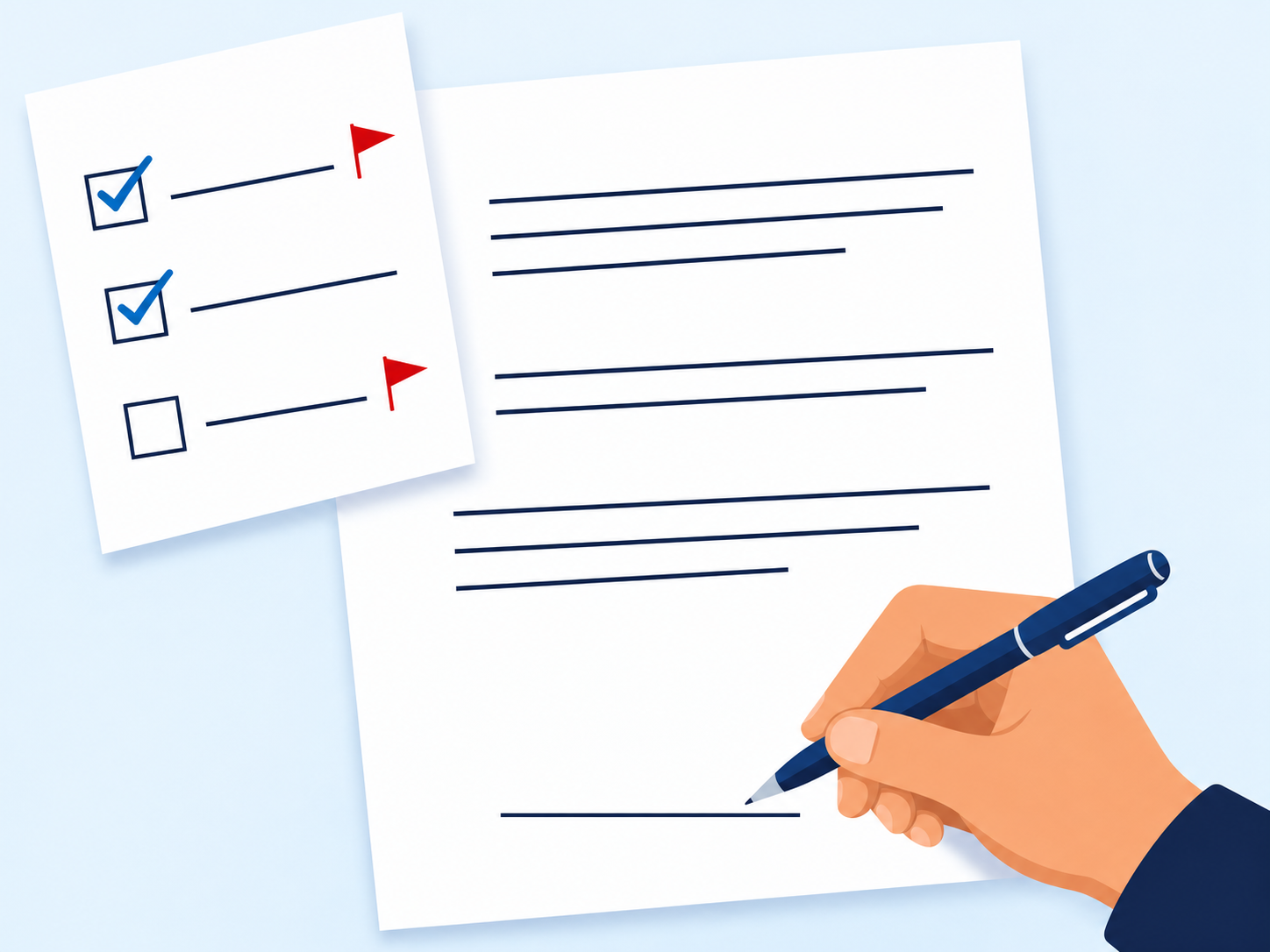
What Can You Do If a Company Lets You Down?
You still have steps, and the first ones are simple. Don’t wait for it to fix itself. A calm paper trail is the strongest thing you can build.
Here are four steps.
Write down what you paid and what you got. Include dates, amounts and receipts.
Ask the company in writing for a fix. Say what went wrong and what you want.
Check your credit report. RBI’s 2016 direction says each credit bureau gives you one full report a year, including your score, at no charge.
If a regulated bank or NBFC was involved, complain to it first. Then you can go to RBI’s Ombudsman.
On step three, the rule is one full report per bureau per calendar year, on request after you verify your identity. It helps you see whether accounts show correctly after you’ve dealt with a company.
On step four, here’s how the Ombudsman route works. Under the Reserve Bank – Integrated Ombudsman Scheme, 2026, you must first approach the regulated entity. If you get no reply in 30 days, or you’re unhappy with the reply, you can go to the Ombudsman. You file within 90 days of when the entity’s timeline ends, and it costs nothing. You can file at cms.rbi.org.in, by email to crpc@rbi.org.in, or by post. The helpline, 14448, can guide you and give your complaint’s status, but it can’t accept a complaint.
Know the limit. The Ombudsman covers banks and certain NBFCs. If the company you paid is outside that scope, your options may include a legal consultation. We can’t promise a refund, and we aren’t giving legal advice.
Strong records give you the best footing. Our pillar guide explains when counselling isn’t enough, and what to look at next. For a closer look at the main alternatives, see our comparison of credit counseling vs debt settlement.
See Your Accounts Before You Complain
Your loans, cards and balances in plain words.
Check My Credit InsightsWhere FREED Fits, and How It Charges
FREED is one of these companies, and it charges for its services. So here’s where it fits, and how it charges, in plain words. FREED is one of the companies operating in India's debt management space. Of all the best debt management companies you might compare, FREED is one option, and you can judge it with the same seven questions.
Consolidation, for people who can still repay. If most of your salary goes towards paying multiple EMIs, FREED’s Loan Consolidation Plan helps you combine multiple loans into a single monthly EMI. This can reduce your monthly EMI burden by up to 50%.*
Here’s how it works:
FREED assesses your financial profile.
FREED matches you to a lending partner from its network.
The partner disburses one new loan that pays off your existing eligible unsecured loans and card dues.
FREED handles the process end to end, 100% online.
You’re left with one loan, one EMI and one due date.
Applying for a consolidation loan may involve a credit enquiry, and taking a new loan can affect your credit profile. Making repayments on time may support your credit history, but an improvement in your credit score is not guaranteed. FREED does not charge customers a separate consolidation service fee, subject to confirmation of the current program terms. The lending partner may charge applicable processing or foreclosure fees, which should be disclosed in the relevant loan documents.
Settlement, for people who cannot repay. Settlement is not something a borrower chooses out of preference. If you genuinely cannot repay your loans, FREED negotiates with your lenders to settle them for less than 50%* of your outstanding dues. The bank decides, no percentage is guaranteed, and the process takes time.
Your settlement savings sit in an account in your own name. That answers question five on the checklist, which asks who holds your money.
Run the same seven questions on FREED as on anyone else. Ask for the fees in writing, ask what you get back if it doesn’t work, and ask how to leave. Not sure which option applies? FREED’s team can assess your situation and tell you what options are available.
You can read about the Loan Consolidation Plan and the Loan Settlement Plan, see what happens when you join a program, or go back to our pillar on what loan consolidation means.
Rates and ranges shown are indicative. Final terms decided by the bank/lender. FREED is not a Loan Provider. No outcome is guaranteed. Please verify directly with your bank.
Outcomes vary by lender and borrower profile. Settlement terms are decided by the lender. No percentage is guaranteed.
Combine Your Loans Into One EMI With FREED
One monthly EMI instead of several, with the process handled for you.
Get Started on FREED
Mohit Juneja
Mohit Juneja is FREED’s Content & Communication Lead with 12+ years of experience across content, media, advertising and digital communications. He holds a postgraduate diploma in Communications from Xavier Institute of Communications, Mumbai, and has worked with organisations including NDTV, The Indian Express, McCann Worldgroup and NABARD.
At FREED, he leads content and communication across loan management, debt resolution, debt consolidation and financial well-being. His work combines research, storytelling and consumer-focused communication to make complex financial topics easier to understand and act on. He has also scripted and produced 11 documentaries on rural development and agriculture for NABARD, with film's selected for the Mumbai International Film Festival.
mohit.juneja@freed.care

FREED is India's trusted loan management platform. We help India settle their loans, consolidate their EMIs, improve their credit score, and manage their loans better. Over 20 lakh people trust FREED. We have managed more than ₹3,500 crore in loans and saved our users over ₹450 crore.
Media Mentions