Bajaj Finserv EMI Card: CIBIL Score Needed
Nov 16, 2026 · @Connect Bajaj Finserv EMI card CIBIL score: Bajaj Finserv's published information on the EMI Card CIBIL score is inconsistent. One page states a minimum score of 720 and recommends aiming for 750 or above. Other Bajaj Finserv pages do not specify a number and refer to Bajaj Finance's internal risk policies. Therefore, 720 should be treated as a published benchmark on one page, not a universal guarantee of eligibility or approval.

Mohit Juneja
Reviewed by FREED India, Debt Resolution Specialists
 4.7/5
 ₹3,200Cr+
 20,000+
 20,00,000+4.7/5₹3,200Cr+20,000+20,00,000+
Key Summary

On the Bajaj Finserv EMI card CIBIL score question, one Bajaj Finserv page states a minimum of 720 for the Insta EMI Card and says a score below 720 makes you ineligible.
Two other Bajaj pages give no minimum. They say the requirement follows Bajaj Finance's risk or internal policies.
The eligibility page lists age 21 to 67, Indian citizenship and a regular source of income, with PAN and Aadhaar for verification.
The same page says your credit rating is the single most crucial consideration, next to age, income and repayment history.
A pre-qualified card loan limit of up to ₹6 lakh is mentioned on one page. Your own limit depends on your profile.
These pages carry different dates or none, so check Bajaj's live page on the day you apply.
What Does Bajaj Finserv Say About the EMI Card CIBIL Score?
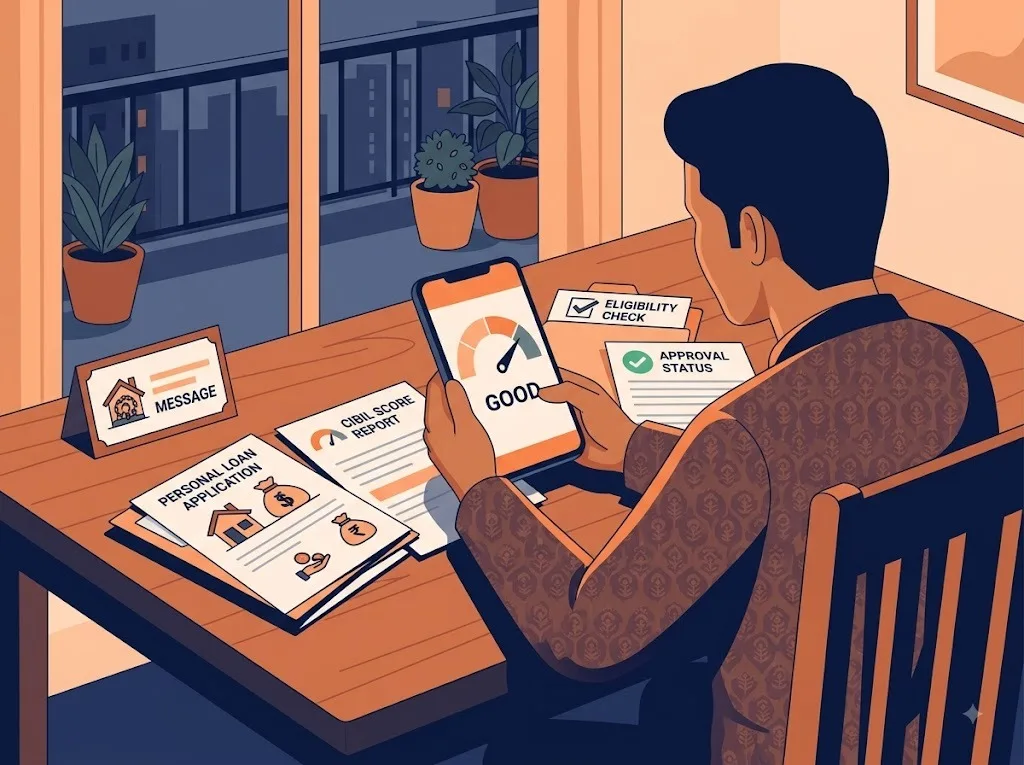
Bajaj Finserv gives more than one answer, and that's the first thing worth knowing. A page on the CIBIL score for the Insta EMI Card, dated May 27, 2026, puts the minimum at 720. It lists "A CIBIL Score of 720 or more" among the eligibility points, recommends aiming for 750 or more, and says a score below 720 makes you ineligible.
The eligibility page tells a different story. It gives no number at all. It says the score requirement is "as per Bajaj Finance risk policies", calls a good credit score necessary and says a better score increases your chances. Its metadata shows two dates, 2024-07-04 and 2026-09-15, but the page doesn't label them. An insights page dated November 12, 2026 says applicants need "a healthy credit score per Bajaj Finance policies" and gives no minimum either.
Bajaj's pages use two names for the product: Insta EMI Card and EMI Network Card. The rest of this guide says "EMI card" and attributes each claim to the page it came from.
Is 720 the Minimum CIBIL Score for the Bajaj Finserv EMI Card?
For the Bajaj Finserv EMI card CIBIL score, it's the only number we found on Bajaj's own pages, so it's the one most people quote. One page treats it as a hard line. Another Bajaj Finserv group page says a minimum score "as per the internal policies of Bajaj Finance" is generally required, then adds that a score slightly below 720 doesn't guarantee rejection and that lenders may also weigh income, repayment history and existing obligations.
These pages present different descriptions of the eligibility requirement. The difference could reflect a policy update or different explanations across Bajaj's pages, but the available information does not establish the reason. So the safe reading is this: 720 is a published benchmark, a lower score may well be declined, and Bajaj hasn't said in the pages we read exactly what happens to someone just below the line.
If you're close to the benchmark, don't apply to see what happens. Each application can leave an enquiry on your report, and CIBIL says too many loan enquiries may have a negative impact on your score.

Who Can Apply for the Bajaj Finserv EMI Card?
Beyond the Bajaj Finserv EMI card CIBIL score, the eligibility page lists a short set of requirements:
- Age: 21 to 67 years.
- Citizenship: Indian citizens only.
- Income: a regular source of income. The page says your card limit is set according to your monthly income, and it states no minimum salary.
- Credit score: no number on this page, only Bajaj Finance's risk policies.
- Documents: PAN is mandatory and Aadhaar is used for identity verification. The FAQ says you don't have to submit physical documents.
The page also mentions a one-time joining fee of ₹530, inclusive of taxes, payable after identity verification. That's a cost, not an eligibility test, but it's worth knowing before you start.
How Does Bajaj Decide Your EMI Card Limit?
Your Bajaj Finserv EMI card CIBIL score sits next to other inputs. Bajaj says it looks at age, regular income, credit rating and repayment history when it decides both eligibility and the card loan amount. The eligibility page goes further and says your credit rating is "the single most crucial consideration". It also says on-time EMI payments raise your score and missed monthly payments lower it.
The insights page mentions a pre-qualified card loan limit of up to ₹6 lakh and says the exact amount depends on your credit score, income and repayment history. It gives no formula and no weighting. So there's no way to work out your limit in advance from a score alone. Two people with the same score can get different limits if their incomes differ.
What Does a CIBIL Score Actually Measure?
The number behind the Bajaj Finserv EMI card CIBIL score question is a three-digit figure from 300 to 900. CIBIL's own explainer lists four things behind it: payment history, credit mix, enquiries and credit utilisation. It says late payments or EMI defaults have a negative impact, a balanced mix of secured and unsecured loans is likely to have a positive impact, too many enquiries may have a negative impact, and a high utilisation limit may also hurt.
CIBIL doesn't publish how much each factor counts, and neither do the Bajaj pages. Be careful with any site that gives you percentages. Bajaj's pages also say "credit rating" in places and "CIBIL score" in others. We haven't confirmed which bureau's number Bajaj reads for this card.
You can read how the report itself is laid out in our guide to how to read your CIBIL report.
What If You're Below the Bajaj Finserv EMI Card CIBIL Score Benchmark?
If your score is below 720, review the current eligibility criteria before applying. One Bajaj page describes scores below this level as ineligible, while another says a slightly lower score does not guarantee rejection. One Bajaj page says a score under 720 makes you ineligible, and even the more flexible page says only that a score slightly below 720 doesn't guarantee rejection. Neither promises approval.
A better use of the next few months is to find out why the score is where it is. Pull your report, look for late payments, high card balances, a run of recent applications and entries that aren't yours. Our guide on how to improve your credit score fast lists the changes that tend to show first.
Bajaj's page says getting the card without an existing CIBIL score may be challenging but is not necessarily impossible. It suggests considering a secured credit card or credit-builder loan to begin building a credit history. It suggests considering a secured credit card or a credit-builder loan to start a history.
See Your Credit Report First
Check your credit report with FREED Credit Insights.
Check My Credit InsightsDoes a Higher CIBIL Score Mean a Higher EMI Card Limit?
On the Bajaj Finserv EMI card CIBIL score, Bajaj's page says a healthier score improves your chances of approval and may bring a larger credit limit. The word to notice is "may". The eligibility page says the card limit is set according to your monthly income, and the insights page says the amount depends on your credit score, income level and repayment history.
So a score is one input, not a ladder. Two people with the same score and different incomes can end up with different limits. And a high score with a low income can still produce a modest one. Bajaj doesn't publish a table linking score to limit, so any such table on another site is a guess.
How Does Applying for the Bajaj Finserv EMI Card Affect Your Score?
The application can leave a hard enquiry on your report. CIBIL's walk-through of the Enquiries section says each entry shows the lender, the date and the type, and that several applications may affect your score. Its explainer says too many loan enquiries may have a negative impact.
Bajaj's own tips say the same: avoid applying for credit you don't need, to limit hard enquiries. One application is a small event. The pattern that hurts is applying to several lenders in a few weeks and getting declined by each.
Checking your own score is different. CIBIL's free score page says checking your own credit score doesn't impact it. If you want the difference explained, read our guide on soft versus hard credit enquiries.
What Does Bajaj Finserv Suggest to Improve Your Score?
The page on the CIBIL score for the Insta EMI Card lists six habits:
- Pay bills on time and in full, consistently.
- Keep credit utilisation at or below 30% of your available limit.
- Keep older credit accounts active.
- Maintain a mix of credit types, such as credit cards, secured loans and personal loans.
- Avoid applying for credit you don't need.
- Review your credit report regularly and dispute any errors promptly.
None of these is unusual, and none comes with a promised score. CIBIL's guide identifies missed payments and high credit utilisation as potential negative factors. However, it does not mean that crossing a particular utilisation percentage guarantees a score reduction. Whether keeping old accounts active helps you is more mixed, so don't open a card you don't need just to follow it.
Your Rights if Something on Your Report Is Wrong
- You're entitled to one Free Full Credit Report, including your score, once during January to December from each credit information company.
- If a complaint about your credit information isn't resolved within 30 days, the company pays ₹100 a day. The lender has 21 days to send corrected details.
- Disputes about how a score is calculated are excluded.
Sources: RBI/DOR/2025-26/378 and cibil.com/freecibilscore
How Do You Check Your CIBIL Score Before Applying for the Bajaj Finserv EMI Card?
Do it before the application, not after. RBI's directions give you one Free Full Credit Report, including your score, once during January to December from each credit information company. CIBIL's free score page says checking your own score doesn't impact it.
When the report arrives, read more than the number. Check the Accounts section for loans or cards you don't recognise, look at repayment history for late markers, and scan the Enquiries section for applications you didn't make. Our guide on checking your CIBIL score walks through the steps.
If your score is under the 720 benchmark, you've lost nothing by checking. You've found out before the lender did.
What Happens if You Miss Payments on the Bajaj EMI Card?
Bajaj's eligibility page says on-time EMI payments raise your score and missed monthly payments lower it. CIBIL says late payments and EMI defaults have a negative impact, and its card-payment guide says a missed payment stays visible for 36 months and can affect the score for as far ahead as the next two years. That page is undated, so confirm the wording before you rely on it.
On your report, a missed payment shows against the month it happened, with Days Past Due as a marker. Our guide on what DPD means in CIBIL explains how to read it.
The lesson for a new card: a missed EMI in the first months can undo the reason you wanted the card. Set up auto-debit on day one.
Is the Bajaj Finserv EMI Card Right for You Even if You Qualify?
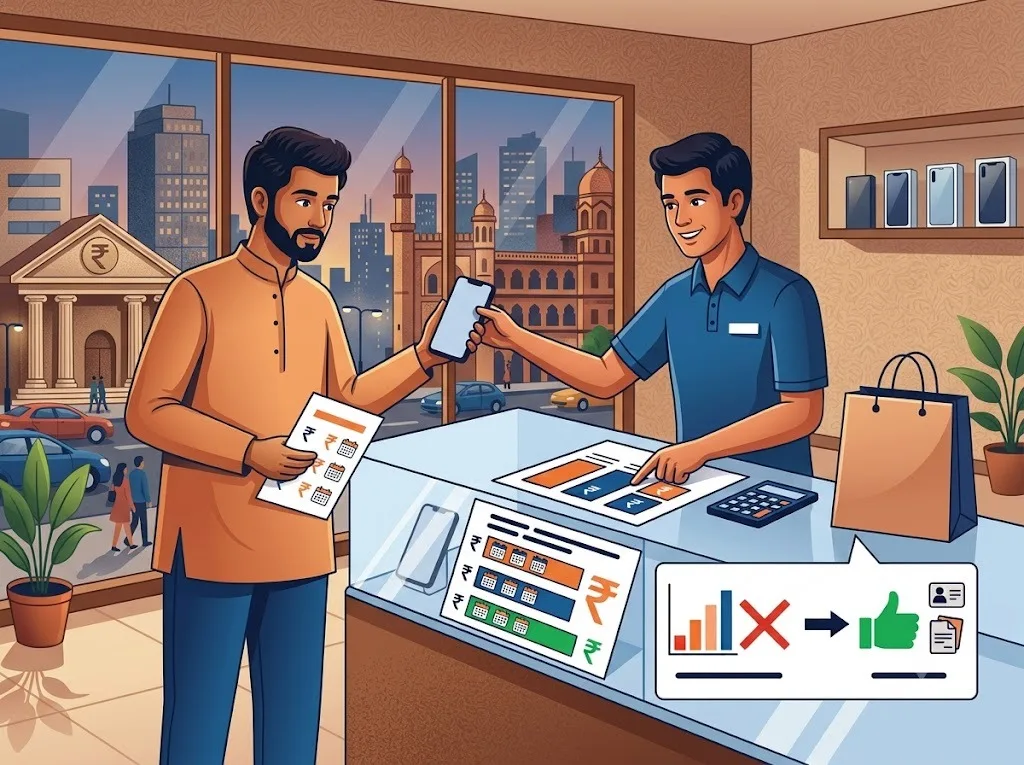
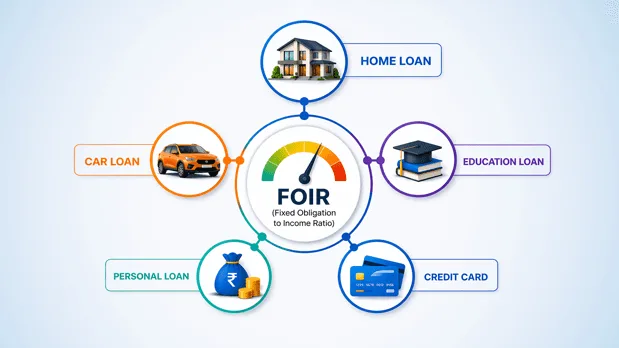
The EMI Card provides access to a purchase-based credit facility. Every transaction converted into instalments creates a repayment commitment. Consider your existing EMIs and monthly income before using the facility. Our guide on FOIR and loan eligibility explains the ratio.
Also count the cost: Bajaj's page mentions a one-time joining fee of ₹530, inclusive of taxes. Before you apply, list every EMI you already pay and check you can add one more without squeezing the month.
What Should You Do Before You Apply for the Bajaj Finserv EMI Card?
A short checklist beats a hopeful application.
- Check your report. Look at your score, but read the accounts and enquiries too.
- Compare yourself to the stated Bajaj Finserv EMI card CIBIL score. One Bajaj page says 720, others give no figure. If you're well under it, wait.
- Add up your EMIs. Bajaj looks at income, and so will you when the new EMI lands.
- Have your PAN and Aadhaar ready. The eligibility page lists both.
- Apply once. CIBIL says too many enquiries may have a negative impact.
This order is our suggestion, not a Bajaj process.

FREED Expert Tip
Before you apply, add up your monthly EMIs and card minimums and divide by your take-home pay. If most of your pay is already spoken for, an EMI card won't fix that. It will add to it.
Check My Credit InsightsHow Do You Use the EMI Card Without Hurting Your Score?
Treat every EMI as a bill that can't be late. Bajaj's eligibility page says on-time EMI payments raise your score and missed monthly payments lower it. So the card helps your history only if each instalment is paid on time.
A few habits make that easier:
- Set auto-debit for every EMI the day you take it.
- Convert only what you'd buy anyway, and only if the EMI fits the month.
- Keep a running list of all your EMIs and their dates.
- Don't stack several EMIs in the first few months, when you don't yet know how the card behaves.
What Mistakes Do People Make With the Bajaj Finserv EMI Card CIBIL Score?
- Treating 720 as a guarantee. It's a published benchmark, and approval also depends on income and policy.
- Believing a number from another site. Only Bajaj's pages tell you Bajaj's rules, and even they differ.
- Applying repeatedly. CIBIL says several applications in a short time may affect the score.
- Skipping the report. A wrong entry could be the whole reason.
- Ignoring existing EMIs. A good score doesn't cancel a heavy load.
- Missing the first EMI. One late payment early on can set you back.
- Paying a service to "guarantee" approval. No one outside the lender controls the decision.
How Does FREED Help You Check Your Bajaj Finserv EMI Card CIBIL Score Before You Apply?
FREED Credit Insights shows your credit report and score and points to what's holding the score back, which helps you see what a lender might see before you apply. It reads your Experian report, so the number can differ from your CIBIL score. Each bureau uses its own model, so a gap between two numbers is normal.
Over 30,000 borrowers have used Credit Insights, and over 20 lakh people trust FREED. FREED isn't a loan provider and doesn't promise a Bajaj Finserv EMI card or any other approval. Credit Insights explains your report. It doesn't change what lenders report, and a wrong entry still has to be disputed with the bureau and the lender.
Use it next to your CIBIL report. If both show an account the same way, you can relax. If they differ, check the dates first. You can start on the Credit Insights page.
What If Your EMIs Are Already Piling Up?
Then another EMI isn't the answer. Match the fix to your situation.
- Still paying, but stretched. If most of your salary goes towards paying multiple EMIs, FREED's Loan Consolidation Plan helps you combine multiple loans into a single monthly EMI. This can reduce your monthly EMI burden by up to 50%.* It's only for people who are still paying. Read more about the Loan Consolidation Plan.
- Cannot repay. Settlement is not something a borrower chooses out of preference. If you genuinely cannot repay your loans, FREED negotiates with your lenders to settle them for less than 50%* of your outstanding dues. Read more about the settlement programme.
Rates and ranges shown are indicative. Final terms decided by the bank/lender. FREED is not a Loan Provider. No outcome is guaranteed. Please verify directly with your bank.
Outcomes vary by lender and borrower profile. Settlement terms are decided by the lender. No percentage is guaranteed.
Settlement leaves a settled status on your report, which CIBIL says will affect your access to credit in the future. Weigh that before you choose it.

Mohit Juneja
Mohit Juneja is FREED’s Content & Communication Lead with 12+ years of experience across content, media, advertising and digital communications. He holds a postgraduate diploma in Communications from Xavier Institute of Communications, Mumbai, and has worked with organisations including NDTV, The Indian Express, McCann Worldgroup and NABARD.
At FREED, he leads content and communication across loan management, debt resolution, debt consolidation and financial well-being. His work combines research, storytelling and consumer-focused communication to make complex financial topics easier to understand and act on. He has also scripted and produced 11 documentaries on rural development and agriculture for NABARD, with film's selected for the Mumbai International Film Festival.
mohit.juneja@freed.care

FREED is India's trusted loan management platform. We help India settle their loans, consolidate their EMIs, improve their credit score, and manage their loans better. Over 20 lakh people trust FREED. We have managed more than ₹3,500 crore in loans and saved our users over ₹450 crore.
Media Mentions