780 CIBIL Score: What It Gets You & What Still Might Block You
Yes, 780 is a good CIBIL score. Lenders usually treat anything from 750 up as strong, and Google Pay's own CIBIL bands put 771 to 790 in the "prime plus or good" group. But a good score isn't a guaranteed yes. Approvals at 780 still fail for three common reasons: your income can't comfortably carry the new EMI, you've applied for credit too often recently, or the lender's own rules rule you out.

Mohit Juneja
Reviewed by FREED India, Debt Resolution Specialists
 4.7/5
4.7/5 ₹3,200Cr+
 20,000+
 20,00,000+4.7/5₹3,200Cr+20,000+20,00,000+
KEY TAKEAWAYS

A 780 CIBIL score sits in the very good band, just short of the 800+ excellent tier.
A 780 score generally represents a strong credit profile and can improve your chances of competitive loan terms, but lenders also consider income, existing obligations, employment, loan type and their own underwriting criteria.
Income, FOIR, and existing loans can still block approval even at a 780 score.
A single missed EMI or high card usage can pull a 780 score down within a few reporting cycles.
Checking your own score does not lower it, only a lender's hard enquiry does.
What Is a 780 CIBIL Score?
A 780 CIBIL score sits within the 300 to 900 range, just below the roughly 800 mark most people consider excellent. What actually separates 780 from the 750 to 779 band just beneath it usually comes down to a slightly stronger, more consistent repayment record over time, not some different kind of financial behavior.
Here's the part worth understanding early: lenders already treat scores from about 750 upward as low risk. So 780 is a comfortable position well inside that low-risk zone, rather than a threshold that changes everything the way crossing from a weaker band into a stronger one would.
Put a 700 next to a 780 and the gap becomes concrete. A 700 usually clears approval too, but often with more paperwork or a slightly higher rate attached. A 780 tends to move through faster, with pricing sitting closer to what a lender actually advertises as its best rate.
Knowing where 780 sits on the scale is step one. Understanding why lenders actually respond to it the way they do is the more useful question, and that's what comes next.
Why Was My Loan Rejected With a 780 Score?
It stings, especially when you've done everything right. Here's what usually goes wrong:
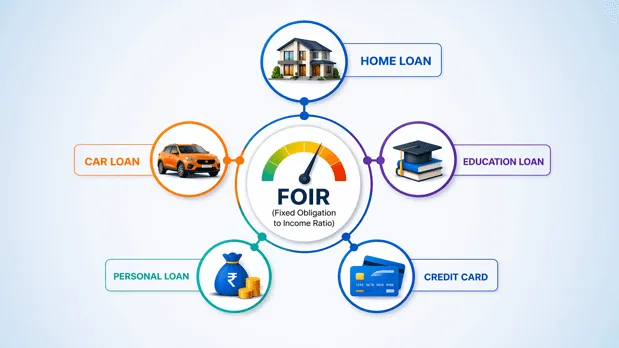
Your EMI load is too high. Lenders check how much of your salary goes to EMIs (FOIR). If your existing EMIs plus the new one would take more than 50% of your take-home pay, many lenders say no, whatever your score.
You've applied too often lately. Every loan or card application adds a hard enquiry. Several in a few weeks can make even a strong profile look stretched.
Your credit file is thin. A 780 built on one card over two years tells a lender less than a 760 built over eight years with a loan and two cards.
The lender's own policy. Some lenders cap loans by employer type, city, age or income band. Your score can't change those rules.
An error on your report. A wrong late payment or an account that isn't yours can trigger a decline even when the score looks fine. Check the full report, not just the number.
Lenders now have to tell you why they rejected you, under RBI's credit information rules. Ask for the reason in writing and work on that first.

FREED Expert Tip
Check your full report for errors before you apply. A wrong entry is the one rejection reason you can fix in days.
Check My Credit InsightsWhy a 780 CIBIL Score Matters
Cross into the 780 range, and three concrete things shift on the lender's side.
The first is speed. A strong credit score can strengthen your application, although the lender's approval process and documentation requirements depend on its internal policies and your overall profile.
The second is pricing. A strong credit score may help you qualify for more competitive pricing, but the rate offered depends on the lender, product and complete borrower profile.
The third is access. A strong credit profile may make you eligible for more favourable pre-approved offers, depending on the lender's internal assessment.
Worth being clear about something here: How much a 780 score helps varies by lender, product and the rest of your financial profile. This isn't about one type of lender favoring 780 over another, it's a general pattern across the market, and understanding how these bands actually work makes clear why that's the case, risk models across lenders tend to weigh the same underlying factors similarly.
None of this means a 780 overrides everything else a lender checks. The advantages are real, but they exist alongside other conditions, income, existing debt, employment stability, that a strong score alone doesn't erase. It helps to think of the score as clearing the first gate, not the entire process. Plenty of files with excellent scores still hit friction elsewhere, which is worth knowing upfront rather than discovering partway through an application. That's covered properly a bit further down, once the basics of building and maintaining this score are out of the way.
Freed Expert Tip
A good score can still get slowed down by a high FOIR (Fixed Obligation to Income Ratio, the share of your salary already going to EMIs). Check what share of your salary is already going to EMIs before you apply.
Check My CreditSigns Your CIBIL Score Is Close to 780
A quick self-check, this isn't a diagnostic quiz with a score attached at the end, just five factual markers worth running through against your own file.
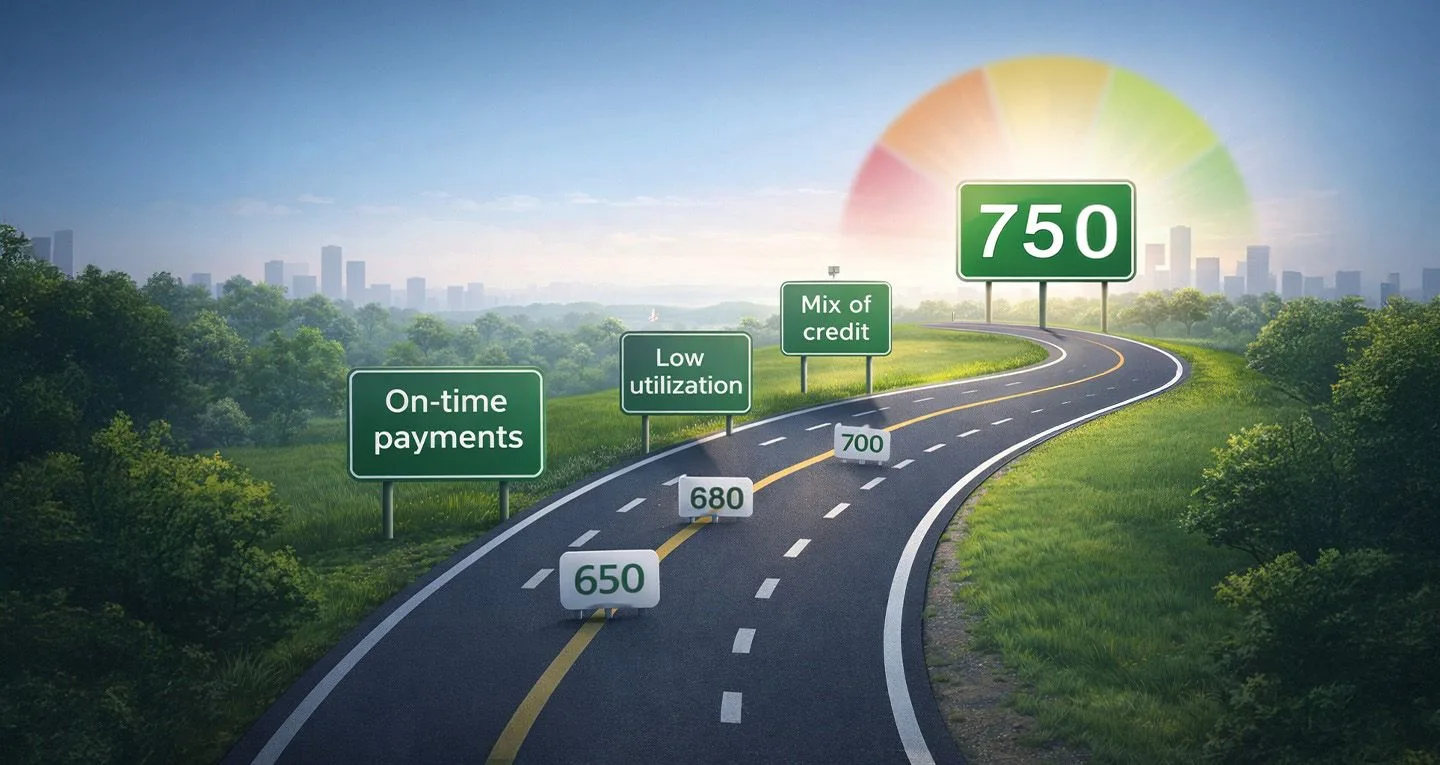
- No missed EMI or card payment in the last 12 to 24 months. This carries more weight than almost anything else on the list, a clean stretch this long signals real reliability.
- Utilisation kept well below your total limit across all cards. Keeping usage well below your total limit reads as financial comfort rather than financial pressure, even when every bill gets paid.
- A mix of loan types reported, not cards alone. A history of responsibly managing different types of credit can contribute to a well-established credit profile. Don't take a new loan solely to create a credit mix.
- Limited new credit applications recently. Recent enquiries can read as actively seeking credit, which nudges risk models slightly, even when nothing's actually wrong.
- An established file, with accounts open for several years. Age adds stability the same way a longer track record adds credibility anywhere else.
How long it takes to reach a particular score depends on your starting profile and the information being reported to the bureau.

How to Reach a 780 CIBIL Score, Step by Step
None of these steps need FREED or any specific product to work, this is the general method anyone can follow with a bit of consistency.
- Pay Every Bill On or Before the Due Date. Set up auto-pay if you've ever missed one. A single late payment can undo months of good history.
- Keep Utilization Under 30%. If you want to keep reported utilisation lower, reducing your outstanding balance before the lender reports account information to the bureau may help. Reporting dates vary by lender.
- Space Out New Credit Applications. Avoid more than one or two new loans or cards in a short window. Each hard enquiry has a small, temporary effect.
- Keep Older Accounts Open. Avoid closing an older credit card solely to chase a higher score, especially if doing so would materially reduce your available credit. But don't keep an account you no longer need just for credit-score reasons.
- Review Your Report for Errors Every Few Months. A wrongly reported late payment can hold the score down for no real reason.
- Let Credit Mix Build Naturally. Don't take a new loan just to diversify credit type, a healthy mix should follow real need rather than an artificial hack.
None of this moves the number overnight. Meaningful movement typically takes several months of consistent behaviour, not weeks, and there's no honest points-per-month figure to quote, since every lender's internal model weighs these factors slightly differently and none publish the exact formula.
What's easy to miss is how much these six steps depend on each other rather than working in isolation. Paying on time while running high utilization barely moves the needle. Keeping an old account open while applying for three new cards in the same month cancels out much of the benefit from the first habit. They compound together, which is also why sticking with all of them matters even after the number starts looking good.
There's also a difference between building toward 780 and staying there once you've arrived. The habits above cover both, but it's worth flagging that the second part, protecting what you've built, gets easier to overlook once the initial goal feels achieved. A single missed payment a year from now can undo more progress than most people expect.
It's also worth setting realistic expectations about the checking habit itself. Reviewing your report every few months is plenty, checking weekly or daily just repeats a number that hasn't had time to change, since most lenders report to bureaus on a monthly cycle rather than continuously.
These steps build the score. What that score actually gets you once you're there, and just as importantly, what it doesn't automatically get you, is worth understanding clearly before assuming the work is done.

Not Sure Where You Actually Stand?
Get a free assessment of your full credit profile.
Book My Free CallWhat a 780 CIBIL Score Gets You
Score Band | Lender's View | Typical Interest Rate Impact | Approval Speed |
750-779 (Good) | Low risk | Close to the lender's lowest advertised rate | Usually fast |
780-799 (Very Good) | Low risk, near top tier | At or very close to the best advertised rate | Fast, often automated |
800-900 (Excellent) | Lowest risk tier | Best rate the lender offers | Fastest, most likely pre-approved |
Rates and ranges shown are indicative. Final terms decided by the bank. FREED is not a Loan Provider. No outcome is guaranteed. Please verify directly with your bank.
Put a rough number to it and the gap feels more real. A small rate difference, even half a percentage point, on a large loan compounds into a meaningful sum over a multi-year term, not life-changing on its own, but real money either way.
These advantages exist, but a good score alone can still run into other blockers a lender checks separately, which is exactly what the next section walks through. None of this is guaranteed by the score alone, and it's worth holding that thought heading into the next part.

What Does a 780 Score Usually Get You?
Score band | Personal loan | Credit card | What lenders usually offer |
|---|---|---|---|
800 and above | Very likely approval | Premium cards likely | Their best advertised rates, often with room to negotiate |
750 to 799 (780 sits here) | Likely approval | Most cards likely | Rates close to the best, sometimes the best |
700 to 749 | Possible | Standard cards | Standard rates |
Below 700 | Harder | Basic or secured cards | Higher rates, or a smaller amount |
Indicative only. Each lender sets its own cut-offs and rates.

What the Law Says
Under RBI's credit information directions, lenders must tell you the reason when they reject a loan or card application. Ask for it in writing.
Book My CallHow Do You Move From 780 to 800?
At 780, you're fine-tuning. Two things do most of the work:
Bring card use down. Keep each card under 30% of its limit, and lower still if you can. Paying the card before the statement date, not just the due date, means a smaller balance gets reported.
Clean up your report. Read every account line. Close out small old dues, and dispute anything that's wrong. A single wrong entry can hold a strong score back.
Then give it time. With on-time payments and low card use, scores in this range tend to edge up over a few months rather than jump. Our page on a CIBIL score of 800 covers what changes at that level.
What Could Still Block You at a 780 CIBIL Score
A strong score is a real advantage, but it's one input among several a lender weighs, not the only one. A few things can still slow down or block an approval even at 780.
A high FOIR. FOIR (Fixed Obligation to Income Ratio, the share of your salary already going to EMIs) can work against you even with an excellent score, if too much of your income is already committed elsewhere, a lender may sanction less than expected or decline outright.
Too many active loans or cards. A high level of outstanding debt or multiple active obligations can affect a lender's assessment of your repayment capacity.
Unstable or recently changed employment. A new job, a recent switch to self-employment, or a gap in steady income adds scrutiny that a good score doesn't offset on its own.
Being a guarantor or co-applicant on someone else's stressed loan. Standing behind someone else's loan affects your own file if that loan runs into trouble, even though the debt technically isn't yours.
A thin file. Very few accounts, or a short overall history, can cap the sanctioned amount even at a high score, simply because there isn't much repayment history for a lender to weigh confidence against.
Every one of these sits alongside the score, not instead of it. A good score is still a real advantage in every one of these situations, it's just not the only thing being checked. A good score paired with a genuinely stable financial profile is what actually clears approval smoothly, and that fuller picture, FOIR, file thinness, existing exposure, is exactly where FREED's Credit Insights can help someone see where they actually stand.
If an application is rejected, ask the lender for the reason so you can understand which eligibility factor affected the decision.
Are You in a Loan Trap? Quick Check
Move the slider to your total EMIs as a % of monthly salary. See your debt stress level instantly.
EMIs as % of Monthly Salary
How FREED Helps You See the Full Picture Beyond the Score
FREED's Credit Insight tool pulls your Experian credit report and shows your score alongside exactly what's currently helping or hurting it, plus step-by-step recommendations for improving it further, going well beyond a single number on its own.
This connects directly to the previous section. A high score on its own doesn't show FOIR, doesn't flag a thin file, and doesn't reveal an existing exposure tied to a guarantor arrangement. Credit Insights gives a fuller view of what a lender might actually be weighing behind the scenes, the kind of detail a bare score number simply can't communicate.
It's open to everyone, no enrollment in any FREED program required, and no minimum income or score threshold to subscribe. The subscription runs 50% off on their subscriptions, which is worth the cost specifically because it addresses the gap covered above: the things a strong score alone doesn't tell you about your own file.
None of this replaces the work of actually managing your finances well. What it does is remove the guesswork, showing you precisely where your file might be vulnerable before a lender finds it for you during an application, which is a considerably better time to discover a problem than after a rejection. For someone already sitting at a strong score and preparing for a real application, that clarity often matters more than chasing the last few points upward. Checking every few months, rather than only right before applying, gives enough lead time to actually fix something if it turns up.
See the Full Picture Behind Your Score
One report. What's helping, what's hurting, and what to do next.
Check My Credit InsightsTips to Protect and Grow a 780 CIBIL Score
A few habits protect what's already working, without needing to change much else.
Keep a small amount of active credit rather than closing every card once it's paid off. An unused card sitting open with a low balance still contributes to your overall limit and account age.
If your spending and outstanding balance stay unchanged, a higher credit limit lowers your utilisation percentage.
Avoid co-signing or guaranteeing a loan for someone else unless you're genuinely comfortable with the risk attached. Their repayment shows up on your file too, and their missed payment becomes your problem on paper.
Set due-date reminders rather than relying on memory. A payment cleared two days early carries zero risk, one missed because you forgot can cost months of otherwise clean history.
Review your credit report every few months, not only when applying for new credit. Catching a problem early is far easier than untangling it after it's already affected an application.
None of these are tricks, they're just the same discipline that got the score here in the first place, applied a little longer. A score like this is built by consistency, and it's protected the same way.

Mohit Juneja
Mohit Juneja writes educational content at FREED on debt management, credit scores, loan repayment, and borrowing best practices. His content is shaped by expert insights and industry knowledge, helping readers better understand their financial options and make informed decisions.
mohit.juneja@freed.care

FREED is India's trusted loan management platform. Founded in 2020 and headquartered in Gurugram, FREED has counselled 20 lakh+ people on personal loans, credit cards, and app loans. FREED charges fees only on successful settlement, not upfront. FREED does not handle secured loans (home loans, car loans, gold loans).
Media Mentions