Your Credit Score Is 740- How Good Is That Really? And What Should You Do Next?
A 740 CIBIL score is a good score. CIBIL scores run from 300 to 900, and most lenders in India treat anything above 700 as low risk. At 740, you should qualify for most personal loans, home loans and credit cards. You may not get the very lowest rate, though. That usually goes to borrowers at 780 and above.

Mohit Juneja
Reviewed by FREED India, Debt Resolution Specialists
 4.7/5
4.7/5 ₹3,200Cr+
 20,000+
 20,00,000+4.7/5₹3,200Cr+20,000+20,00,000+
Key Takeaways

A 740 credit score is good, but not the best. It sits in the "Very Good" range.
You will get approved for most loans and credit cards, but not always at the best interest rate.
The difference between 740 and 800+ can mean thousands of rupees saved on a home loan.
Moving from 740 to 800+ is very achievable with a few simple, consistent habits.
You are closer to excellent credit than you think. A FREED Expert can help you get there faster.
What Does a 740 CIBIL Score Get You?
| Product | What to expect at 740 |
|---|---|
| Personal loan | Approval likely at most banks and NBFCs, at a standard rate |
| Home loan | Approval likely if income and property check out |
| Credit card | Most mid-range cards; premium cards may want a higher score |
| Car loan | Approval likely, rate depends on lender and tenure |
Indicative only. Each lender sets its own score cut-offs and rates, and income, job and existing EMIs matter too.

Want to know what is holding your score at 740?
Credit Insights reads your report and gives step-by-step actions.
Check My Credit InsightsIs 740 Very Different From 780?
Not by much on approvals. Both scores tell a lender you pay on time. The gap shows up on price: a lender may offer a borrower at 780 a slightly lower rate or a higher limit. On a large home loan, even a small rate cut adds up over the years. Our page on the 780 CIBIL score shows what that next band gets you.
Talk to someone about your options
A FREED counsellor can walk you through your report and next steps.
Book My CallWhat Does a 740 Credit Score
Your credit score is a number between 300 and 900.
It is calculated by credit bureaus like CIBIL, Experian, and Equifax, based on your loan repayment history, outstanding debt, credit age, and more.
A score of 740 means you have been managing credit responsibly.
You pay your EMIs on time. You do not max out your credit cards. You have not defaulted on any loan.
In simple terms, banks see you as a reliable borrower.
But here is the nuance most people miss: 740 is good. It is not great. And in the world of credit scores, that gap matters, especially when you are applying for a large loan.
How Does 740 Compare to Other Score Ranges?
Here is the full picture of where 740 sits:
Credit Score Range | Category | What It Means |
300 – 579 | Poor | High risk; Fewer loan approvals |
580 – 669 | Fair | Some loans available, unfavourable terms |
670 – 739 | Good | Moderate approval chances |
740 – 799 | Very Good | Good approval chances, decent rates |
800 – 900 | Excellent | Best rates, best offers, priority treatment |
At 740, you are in the "Very Good" range.
You are just 60 points away from "Excellent."
That gap is smaller than most people think. And it is possible to close the gap
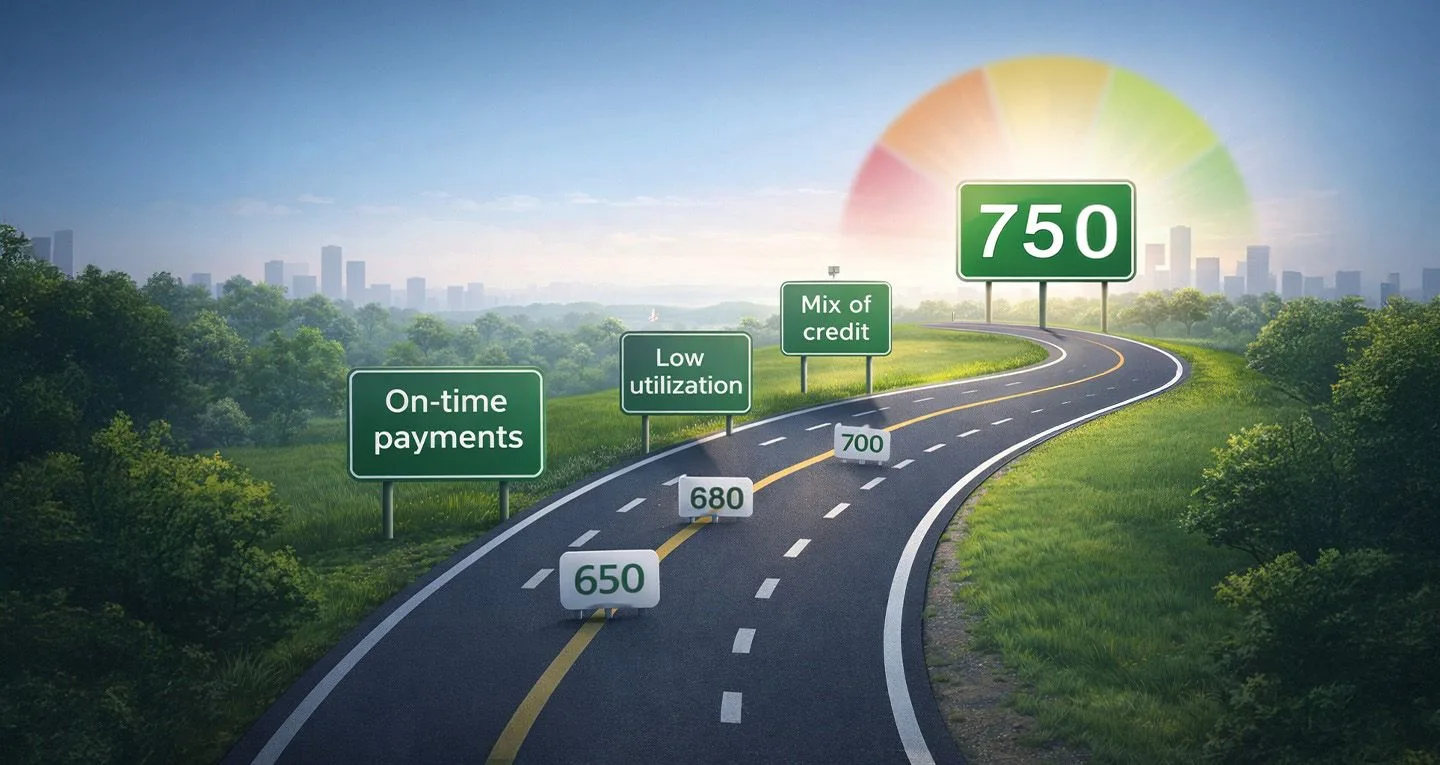
A score of 750 is often the magic number for the best loan deals in In
A score of 750 is often the magic number for the best loan deals in India. If you are at 740, you are just 10 points away. That gap can be closed in as little as 2-3 months with the right habits.
Check Your Credit ScoreWhat Are the Limits of a 740 Score?
Being honest here, because knowing the limits helps you push past them.
You May Not Get the Absolute Lowest Interest Rate
Banks reserve their best offers for borrowers with scores of 800 and above.
At 740, you are close, but not there yet.
On a ₹40 lakh home loan, this could cost you extra money over the loan tenure.
Premium Credit Cards May Still Be Out of Reach
The top-tier cards, with the best rewards, highest limits, and most exclusive benefits often require scores of 780–800+.
Some Lenders May Ask for More Documentation
A few conservative lenders, especially for larger loan amounts, may ask for additional income proof or guarantors at 740 that they would skip for an 800+ applicant.
Any Slip Now Has a Bigger Impact
Here is something not many people think about: at 740, a single missed EMI or a sharp increase in credit card utilisation can pull you down noticeably.
You have worked hard to get here. One bad month can undo several months of progress.
Know Your Full Financial Picture: FREED Financial Health Score Your credit score is just one part of your financial health. Check your complete FREED Financial Health Score, free, in 2 minutes and see what else might be holding you back from the best loan deals.
How Can You Move From 740 to 780?

FREED Expert Tip
Change one thing at a time, like lowering card use, then recheck your score after 45 days. That way you know what actually moved it.
Check My Credit InsightsWhat NOT to Do When Your Score Is 740
You are in a good place. These mistakes can push you back, fast.
Do NOT max out your credit card, even if you pay it in full later. High utilisation during the billing cycle still gets reported.
Do NOT apply for multiple loans or cards in a short time, even just to "check what offers you get."
Do NOT close your oldest credit card. It reduces your average credit age and can drop your score.
Do NOT co-sign or guarantee someone else's loan carelessly. If they miss a payment, your score takes the hit too.
Do NOT ignore your credit report. an error left unchecked can quietly pull you down for months.
Do NOT assume 740 is good enough for big financial goals like a home loan. Pushing to 800+ can save you significant money.
Are You in a Loan Trap? Quick Check
Move the slider to your total EMIs as a % of monthly salary. See your debt stress level instantly.
EMIs as % of Monthly Salary

Mohit Juneja
Mohit Juneja writes educational content at FREED on debt management, credit scores, loan repayment, and borrowing best practices. His content is shaped by expert insights and industry knowledge, helping readers better understand their financial options and make informed decisions.
mohit.juneja@freed.care

FREED is India's trusted loan management platform. Founded in 2020 and headquartered in Gurugram, FREED has counselled 20 lakh+ people on personal loans, credit cards, and app loans. FREED charges fees only on successful settlement, not upfront. FREED does not handle secured loans (home loans, car loans, gold loans).
Media Mentions