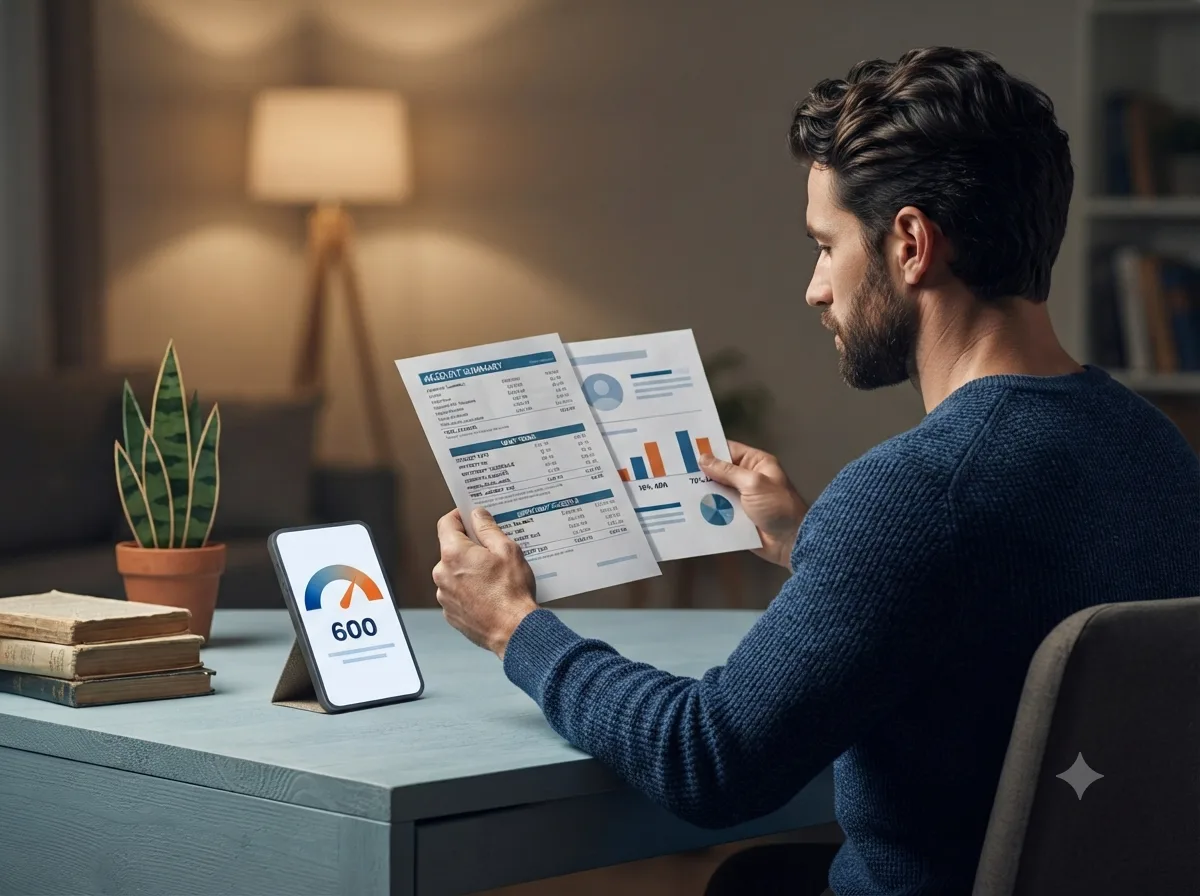
630 CIBIL Score: Can You Get a Loan?
CIBIL scores run from 300 to 900, and lenders set their own cut-offs. A 630 score does not automatically stop a loan application, but it can mean more checks, fewer options and less competitive rates.

Mohit Juneja
Reviewed by FREED India, Debt Resolution Specialists
 4.7/5
 ₹3,200Cr+
 20,000+
 20,00,000+4.7/5₹3,200Cr+20,000+20,00,000+
Key Summary

A 630 CIBIL score does not rule out a loan, but it does not help either. Lenders weigh income, existing EMIs, overdue amounts and repayment patterns alongside the score.
The "Fair" label comes from one lender's page. It is not a CIBIL band, and other lenders draw their lines elsewhere.
Published lender thresholds differ a lot. Some pages state a minimum and some state none, and minimums for cards are not loan thresholds.
A 630 score may lead to less competitive interest rates. Ask for the exact rate and all fees in writing before you accept.
The steps that move a score are the plain ones: clear overdue amounts, pay on time, bring card balances down and avoid applying everywhere at once.
A rejection is not a blacklist. CIBIL's FAQ says it does not maintain a defaulters list.
Can You Get a Loan With a 630 CIBIL Score?
Possibly, and the honest answer depends on the lender and the loan. A lender's page on a 630 score says it does not automatically prevent you from applying for a personal loan, and adds that lenders may apply stricter eligibility checks and that options may be limited.
That's a long way from "yes" and a long way from "no." A score is one input. The same page says lenders may review current overdue amounts, your recent repayment pattern, monthly income and existing EMIs.
So with a 630 CIBIL score, you're not shut out. You're likely to face more checking, fewer options and possibly a higher rate. The rest of this guide shows what is behind each of those and what you can do before you apply.
What Does a 630 CIBIL Score Mean?
CIBIL scores run from 300 to 900. That range is also the one RBI's directions describe. Beyond the range, the labels aren't official. Each lender and website draws its own bands.
One lender's page puts 630 in a band it calls "Fair" and says that is below the good range, which it starts at 650. Another explainer says a score above 700 is generally considered good, citing TransUnion CIBIL, and adds that this is not an approval rule. Two pages, two different lines for "good."
We are not giving you our own bands, because there are no official ones to give. What matters is the line your target lender uses, and whether it publishes one. CIBIL's score explainer lists four factors behind the number: payment history, credit mix, enquiries and utilisation. It does not publish how much each counts.

Not Sure Where You Stand?
Look at your credit report and score so you know what a lender will see before you apply.
Check My Credit InsightsWhat Do Lenders Publish About Minimum Scores?
Very little that agrees. Some lender pages state a minimum score for a particular product. Others, including some personal loan pages, list age, income, documents and tenure but state no minimum score at all.
Two cautions apply. First, a minimum published for a credit card or an EMI card is not a threshold for a personal loan, so do not borrow a number from one product and apply it to another. Second, a lender that does not publish a minimum may still assess your credit history, repayment behaviour, income and existing debt before approving.
Before you rely on any figure, check the live page for the exact product you want. These pages change, and their dates are often unclear.
What Do Lenders Look at Besides a 630 CIBIL Score?
The checklist lenders describe is a good one, whatever lender you choose:
- Current overdue amounts. An open overdue is a bigger red flag than an old, cleared one.
- Recent repayment pattern. A clean last few months counts for more than a messy past.
- Monthly income. Lenders want to see you can carry the EMI.
- Existing EMIs. Your current load, set against income, decides how much more you can take.
Our guide on what FOIR means shows how lenders weigh debt against income. If most of your pay is already spoken for, even a strong score may not get you a new loan.
What Interest Rate Can You Expect at 630?
A lender's page on a 630 score says it may lead to less competitive personal loan rates, and that the final rate depends on income, employment, existing EMIs, loan amount and tenure. We are not quoting a rate range here. Published ranges are for all borrowers, not a quote for a 630 score, and the pages we read were not consistent with each other on loan amounts.
The practical point: ask the lender for the exact rate and all fees, in writing, before you accept. A lower EMI on a longer tenure can cost more in total.
See Your Credit Report First
Check your credit report and score with FREED Credit Insights before you apply.
Check My Credit InsightsWhy Does FOIR Matter as Much as Your 630 CIBIL Score?
FOIR is the share of your monthly income that already goes to fixed obligations such as EMIs. Lenders look at it because a score tells them how you have repaid, and FOIR tells them how much room you have left.
A simple example. Your income is ₹50,000 a month and your EMIs total ₹20,000. That is 40%. Add a new EMI of ₹6,000, and it is ₹26,000, which is 52%. Whether 52% is acceptable depends on the lender, and we have not found a published ceiling that applies across lenders.
The lesson is that with a 630 CIBIL score, clearing an existing EMI can help your application more than waiting for the score to move. Our guide on FOIR and loan eligibility explains it in full.
Should You Apply Now or Improve Your Score First?
That depends on how urgent the loan is, and on what the lender says up front.
- If it is urgent and your income is steady, one well-chosen application is reasonable. Pick a lender whose page states what it needs.
- If it can wait, a few months of clean payments and lower card balances can help the next application.
- Either way, do not apply to many lenders at once. CIBIL says each application triggers a hard enquiry and that multiple applications can look riskier.
Our guide on the minimum CIBIL score for a personal loan shows how lenders differ.
Is Your EMI Load Too High?
See how your EMIs compare with your income before you take on another loan.
Check My EMI ScoreHow Can You Improve a 630 CIBIL Score, and How Long Does It Take?
A lender's improvement list is a sensible start, and CIBIL's guidance backs the same ideas.
- Clear overdue EMIs and card dues. It is the first step most lenders recommend.
- Pay all upcoming bills before their due dates.
- Reduce outstanding card balances in manageable instalments. CIBIL says utilisation above 30% can drag a score down.
- Do not apply everywhere. Multiple applications can look riskier.
- Check your report for errors. A wrong entry is the quickest thing to fix.
Our guide on how to improve your credit score fast goes through each step.
Nobody can give you an honest number for how long it takes. The lender advice is to build a clean record over several reporting cycles, without saying how many. CIBIL's guidance says the impact of overdue payments fades as newer positive actions are added, and that a missed payment stays visible for 36 months. So recent behaviour counts, and old marks fade rather than vanish. Expect months, not days, and treat any promise of a fast jump with suspicion.
What If a Lender Rejects Your Application, or Your Report Has an Error?
A rejection is not a blacklist. CIBIL's loan-rejection FAQ says it maintains no defaulters list. Ask the lender for the reason, and fix what you can. Card issuers commonly say you can reapply after three months or so, and some non-bank lenders say three to six. Those are card-lender rules, and your lender may differ. Our guide on CIBIL score 600 and personal loans covers what lenders say to borrowers in a similar spot.
An error on your report could also be holding you back, and it is worth ruling out before you blame the score. Look for accounts you do not recognise, wrong balances, payments marked late that you made on time, and closed accounts shown as open. Our guide on fixing wrong entries in your report shows the steps.

What the Law Says
You can get one free full credit report, including your score, each year from every credit information company. If a complaint about your credit information is not resolved within 30 days, the company pays ₹100 a day, and the lender has 21 days to send corrected details. Disputes about how a score is calculated are excluded.
Check My Credit InsightsDoes a Co-Applicant or a Small Loan Help With a 630 CIBIL Score?
A co-applicant depends on the lender, and we have not found a published rule that applies across lenders. Some lenders weigh a co-applicant's income and score, but we can't point to a source that says how. What CIBIL does say, in its mistakes guide, is that co-signing can hurt your own score if the other person misses payments. So if someone offers to co-sign for you, or you are asked to, remember that the loan shows on both reports.
On small credit lines, CIBIL's first-time guide lists a consumer durable loan and a pay-later facility as starting products. That is for people building a first history. If you are already at 630, you have history. The same logic applies, though: a small credit line paid on time shows a repayment pattern. Do not borrow just to build a score, and do not take a loan you do not need. Each application also triggers a hard enquiry.
Check Your Report Before You Apply
See what is holding your score back with FREED Credit Insights.
Check My Credit InsightsWhat Does a Sensible 90-Day Plan Look Like With a 630 CIBIL Score?
If you are sitting on a 630 CIBIL score and can wait, a short plan beats a rushed application. This is our suggestion, not a lender's process, and nobody can promise where the score will land.
- Week 1: check the report. Look for errors, overdue accounts and accounts you do not recognise.
- Week 1: dispute errors. Start any dispute now, since resolution takes time.
- Weeks 1 to 4: clear overdue amounts. An open overdue is the biggest drag.
- Every month: pay every bill before its due date, with auto-debit as a safety net.
- Every month: bring card balances down, aiming under 30% utilisation.
- Week 12: check the report again. See what changed before you apply.
- Apply once, to a lender whose page fits your profile.
Our guide on building a credit score has more on each step.

FREED Expert Tip
Before you apply, list your EMIs against your monthly income. If the total is above what you can comfortably carry, clearing one small loan first can help more than waiting for the score to move.
Check My Credit InsightsWhat Mistakes Do People Make, and How Does FREED Help?
Common mistakes with a 630 CIBIL score:
- Applying to many lenders at once. CIBIL says multiple applications can look riskier.
- Believing the "Fair" label is official. It is one lender's band, not CIBIL's.
- Ignoring existing EMIs. A heavy EMI load can sink an application at any score.
- Not checking the report for errors. A wrong entry can hold the score down.
- Accepting the first offer. Compare rates, fees and tenure, since a 630 score may lead to less competitive rates.
- Borrowing to pay off other loans without a plan. It can add to the load.
- Missing a payment while you wait. A missed payment stays visible for 36 months.
FREED Credit Insights shows your credit report and score and points to what is holding the score back, so you can see whether it is overdue accounts, high balances or something else. The score can differ from the one you see elsewhere, since each bureau uses its own model, and a score of 630 on one does not mean 630 on another.
FREED is not a loan provider and does not promise a loan approval. Credit Insights explains your report. It does not change what lenders report, and a wrong entry still has to be disputed with the bureau and the lender.
Need Help Planning Your Next Step?
Find out where you stand and what to fix before you apply for a loan.
Check My EligibilityWhat If Your EMIs Are the Real Problem?
If the score is only part of the story and your EMIs are what is squeezing you, a new loan may not help. Match the fix to your situation.
- Still paying, but stretched. If most of your salary goes towards multiple EMIs, FREED's Loan Consolidation Plan helps you combine multiple loans into a single monthly EMI. It is only for people who are still paying. Read more about the Loan Consolidation Plan.
- Cannot repay. Settlement is not something a borrower chooses out of preference. If you genuinely cannot repay your loans, FREED helps negotiate with your lenders. The outcome depends on the lender's approval and your circumstances, and no result is guaranteed. FREED charges a success-based fee, and the evaluation fee is non-refundable. Read more about the settlement programme.
Settlement leaves a settled status on your report, which CIBIL says will affect your access to credit in the future. Weigh that before you choose it. FREED is not a loan provider, and final terms are decided by the lender.
Need a Plan for Your EMIs?
Combine several EMIs into one monthly payment, with the process handled for you.
Reduce My EMI
Mohit Juneja
Mohit Juneja is FREED’s Content & Communication Lead with 12+ years of experience across content, media, advertising and digital communications. He holds a postgraduate diploma in Communications from Xavier Institute of Communications, Mumbai, and has worked with organisations including NDTV, The Indian Express, McCann Worldgroup and NABARD.
At FREED, he leads content and communication across loan management, debt resolution, debt consolidation and financial well-being. His work combines research, storytelling and consumer-focused communication to make complex financial topics easier to understand and act on. He has also scripted and produced 11 documentaries on rural development and agriculture for NABARD, with film's selected for the Mumbai International Film Festival.
mohit.juneja@freed.care

FREED is India's trusted loan management platform. Founded in 2020 and headquartered in Gurugram, FREED has counselled 20 lakh+ people on personal loans, credit cards, and app loans. FREED charges fees only on successful settlement, not upfront. FREED does not handle secured loans (home loans, car loans, gold loans).
Media Mentions