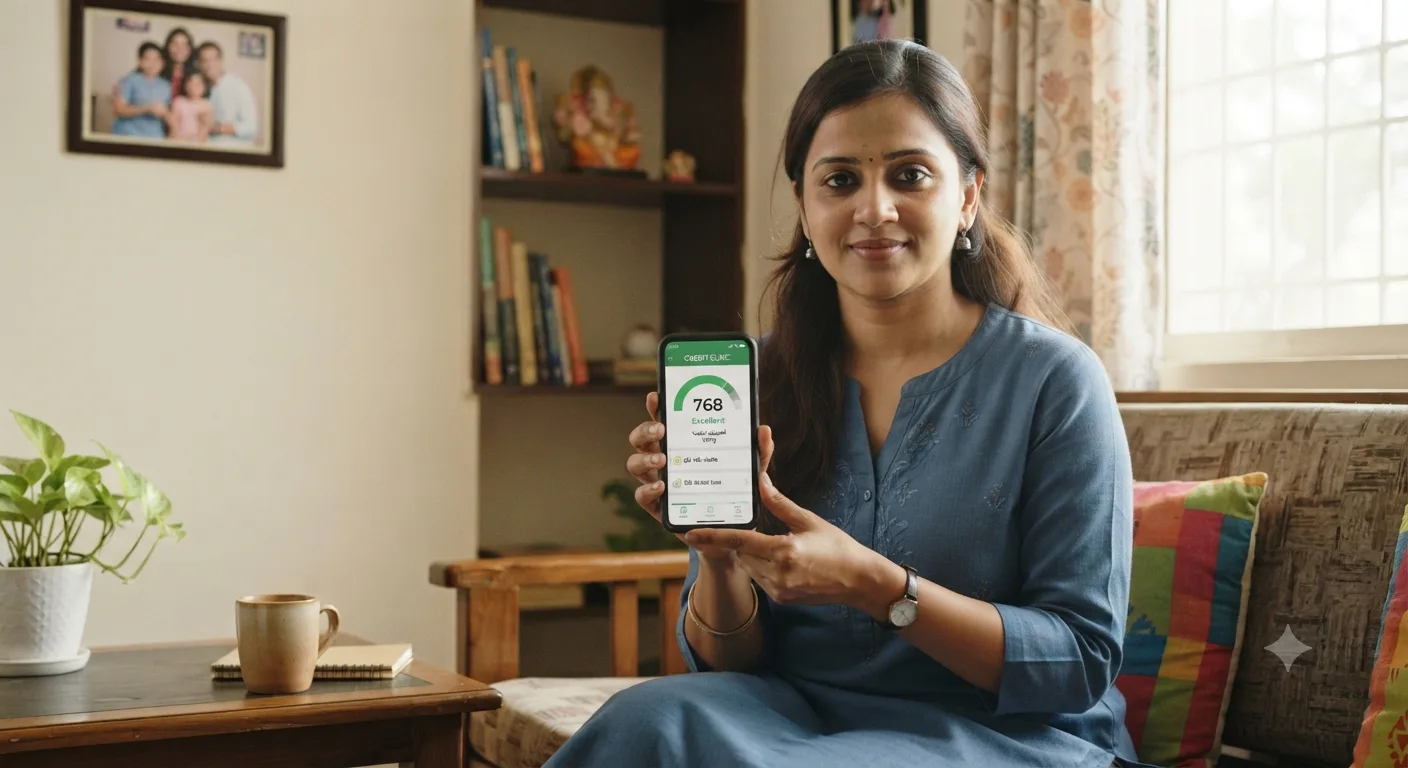
My CIBIL Score Is 600, Can I Get a Personal Loan?
Yes, you can get a personal loan with a 600 CIBIL score, but approval isn't guaranteed and terms will be stricter. A 600 score sits in the fair range, so most banks hesitate while some NBFCs and digital lenders still approve based on your income and repayment stability.

Mohit Juneja
Reviewed by FREED India, Debt Resolution Specialists
 4.7/5
4.7/5 ₹3,200Cr+
 20,000+
 20,00,000+4.7/5₹3,200Cr+20,000+20,00,000+
Key Takeaways

Direct answer: a 600 CIBIL score does not rule out a personal loan, but it narrows your options.
Many banks generally prefer applicants with stronger credit profiles, although eligibility varies by lender.
Expect a higher interest rate and possibly a smaller approved amount than a higher-score borrower.
Getting rejected once does not permanently block future applications, but reapplying immediately everywhere makes it worse.
If the 600 score is from unpaid EMIs rather than a thin file, the real fix may not be a new loan at all.
Is 600 a Good or Bad CIBIL Score for a Personal Loan?
Short answer: most lenders treat 600 as fair, not bad, and not good either. There's no single official classification here, but lenders broadly group scores into indicative bands, and where you land in that range changes how they respond to your application before they've even looked at anything else about you.
As a general market pattern rather than a universal rule, scores below 600 tend to be treated as the weakest band and can make approval genuinely difficult with many lenders, since they read this as a strong signal of past repayment trouble. A score between 600 and 649 is generally seen as fair, workable but cautious territory, exactly where you are right now. 650 to 749 usually reads as moderate, opening up more lenders and noticeably better terms than fair. And 750 and above is what most banks tend to prefer, the range that typically gets faster approvals and better interest rates, often with pre-approved offers rather than a full manual review. Treat these bands as indicative lender preferences, not fixed CIBIL classifications. Every lender applies its own underwriting criteria, so two lenders can read the same score differently.
To make this concrete, here's a purely illustrative example, not a prediction of actual outcomes for anyone with these scores: picture three people applying for the identical ₹3 lakh personal loan on the same day. One has a score of 780 and might get a pre-approved offer at 11% interest within hours through their salary account bank. A second has a 620 score and might get approved through an NBFC, but at 19-20% interest and for ₹2 lakh rather than the full ₹3 lakh requested. A third has a 540 score and might get rejected outright by three different lenders before finding anyone willing to even review the application closely. In this illustration, the 600 range sits much closer to the second scenario than the third, workable, but with real trade-offs on rate and amount.
So, Can I Actually Get a Personal Loan With a 600 Score?
Yes, you can, but the honest answer needs a "through whom" attached to it, because the lender type you approach changes the outcome more than almost any other single factor at this score band.
Many traditional banks generally prefer applicants with stronger credit profiles for unsecured personal loans. It means a straightforward walk-in application at a large bank with a 600 score often ends in a polite rejection, an offer far smaller than requested, or a request for a co-applicant to strengthen the file. Banks tend to run more standardised, less flexible underwriting for unsecured lending, partly because they're managing risk across an enormous loan book and rely heavily on score thresholds to filter volume efficiently.
NBFCs and fintech lenders operate quite differently. Many of them are specifically built to serve the middle of the score spectrum, borrowers who aren't in the "poor" range but haven't hit the bank-preferred 750+ either. They tend to weigh your current income, employment stability, and existing repayment behaviour more heavily than the score number in isolation, running a more individualised assessment rather than a blanket cutoff. This is exactly what makes 600 a workable, if not effortless, starting point with the right lender type.
What you should genuinely expect, though, and this is worth internalising before you apply rather than discovering it mid-negotiation: a higher interest rate than someone with a stronger score would get on the identical loan amount, and possibly a smaller approved amount or shorter tenure than you were hoping for. On a ₹2 lakh loan, the difference between a bank's 11% rate for a strong-score borrower and an NBFC's 20% rate for a 600-score borrower can add up to tens of thousands of rupees in extra interest over a 3-year tenure. This isn't a lender being unreasonable, it's the lender pricing in the extra risk a 600 score genuinely represents compared to a 750 one. Going in with realistic expectations on rate and amount, rather than hoping for the same terms a stronger applicant would get, makes the entire process smoother and reduces the disappointment of comparing your offer to a friend's very different one.
Are You in a Loan Trap? Quick Check
Move the slider to your total EMIs as a % of monthly salary. See your debt stress level instantly.
EMIs as % of Monthly Salary
What Will Lenders Check Besides My Score?
Your CIBIL score is one input among several, not the entire decision, and understanding the other factors can genuinely work in your favour if they happen to be strong even while your score is only fair.
Income stability matters as much as the number itself. A steady salary with 1-2 years in your current job reassures a lender far more than a higher income that's only three months old, even if the raw rupee figures look identical on paper. Lenders are ultimately trying to predict the next 2-3 years of your repayment capacity, not just today's paycheck.
FOIR (Fixed Obligation to Income Ratio), the percentage of your monthly income already committed to existing EMIs and fixed payments, is a number most lenders check explicitly and calculate the same way: total monthly obligations divided by gross monthly income. Consider someone earning ₹50,000 a month who already pays ₹15,000 across a car loan and credit card minimum due, a FOIR of 30%, comfortably within range. Now consider someone at the same income already paying ₹24,000 in existing obligations, a FOIR of 48%, right at the edge most lenders find acceptable. Add a new personal loan EMI on top of that second scenario, and the FOIR likely crosses 50-55%, into territory where many lenders will either reject it outright or approve only a much smaller amount. There's no universal cut-off every lender applies, but many lenders grow cautious when a significant share of your income is already committed to existing EMIs. The lower your FOIR, the easier it is to convince a lender you can absorb one more EMI comfortably, no matter what the three-digit number says.
Employment type plays a role too. Salaried applicants at established employers are generally viewed as lower risk than self-employed or gig-income applicants, purely because the income is easier to verify through salary slips and bank credits, and less prone to sudden fluctuation.
Existing EMI load and bank statement patterns round out the picture. A bank statement showing consistent balances and no bounced payments tells a lender more about your actual day-to-day financial discipline than the score alone ever could, since the score is a lagging summary while the statement shows current, real behaviour.

What the Law Says
Under the RBI's Fair Practices Code for Lenders, banks and financial institutions are required to convey in writing the main reason for rejecting a loan application, a requirement the RBI extended in 2007 to all categories of loans irrespective of the loan amount, rather than a vague "does not meet policy" response. If your application is rejected, you're entitled to ask for the reason in writing, and the lender is expected to provide it. Source: RBI Guidelines on Fair Practices Code for Lenders
Check your optionsWhat If My Application Gets Rejected?
A rejection at 600 isn't rare, and it isn't the end of the road either, but what you do in the days right after matters more than most people realise, and it's exactly where a lot of borrowers unintentionally make things worse for themselves.
The single most damaging instinct is applying to five more lenders that same week, hoping one of them says yes where the last one said no. Each formal loan application creates a hard enquiry that future lenders may consider when assessing subsequent credit applications. Picture someone rejected on a Monday who then applies to four more lenders by Friday. By the time a fifth lender reviews the file the following week, they see not just a 600 score but five fresh hard enquiries clustered within days of each other, a pattern lenders specifically read as "credit-hungry" or financially desperate, which can tank approval odds even further than the original score alone would have. That rushed round of reapplications can genuinely leave someone with a lower effective score and worse odds than if they'd simply paused after the first rejection.
The better first move is finding out exactly why you were rejected, rather than guessing and reapplying blind. Under the Fair Practices Code covered above, you're entitled to a written reason for loans up to ₹2 lakh, and even beyond that threshold, most lenders will tell you if you ask directly and persistently. Common reasons at a 600 score include a high FOIR from existing obligations, unstable or recently changed income proof, too many recent enquiries already sitting on your file from earlier applications, or a specific negative entry the lender's underwriting flagged during review.
Once you know the actual reason, address that specific gap rather than reapplying with the identical profile and hoping for a different outcome elsewhere. If FOIR was the issue, consider a smaller loan amount that fits more comfortably within your income, or wait until an existing loan closes and frees up headroom. If it was thin income documentation, gather stronger proof, updated salary slips, a longer bank statement history, before trying again. If a co-applicant or guarantor with a stronger score is available to you, adding one at your next application meaningfully improves your odds rather than applying solo again against the same underwriting concern.

Freed Expert Tip
Getting rejected once and reapplying everywhere right away only adds more hard enquiries, which lenders may read as credit-hungry behaviour. Fix the specific reason first.
Check your optionsHow Long Should I Wait Before Reapplying?
There's no single universal number here, and be wary of any source that gives you one confidently, since the right waiting period genuinely depends on what caused your rejection and how quickly you can realistically fix it. The right approach is sequencing based on your specific gap, not a fixed countdown pulled from a generic article.
Start by addressing the specific rejection reason first, whichever it turned out to be. If it was a documentation gap, gathering stronger income proof or an updated bank statement might take just a week or two. If it was a high FOIR from existing EMIs, meaningfully improving that number takes considerably longer, often several months of paying down balances, waiting for an existing loan to close naturally, or both together. Applying again before that underlying number has actually shifted just repeats the same rejection with an extra hard enquiry added on top.
Once you've genuinely addressed the underlying issue, space your next application out rather than treating it as round two of the same rushed attempt from before. Applying to a single, well-matched lender, one whose typical approval profile you've actually researched, rather than five at once, keeps your enquiry count low and gives that one application a fair, uncrowded look. Avoid submitting multiple loan applications within a short period unless your financial profile has materially changed.
Understand Exactly What's Behind Your 600 Score
See what's helping or hurting it before you apply again.
Subscribe NowHow FREED Helps If Debt, Not Your Score, Is the Real Issue
Here's a question worth asking honestly before applying again, because the answer changes everything about what you should actually do next: is 600 the real obstacle, or is it a symptom of something bigger, existing EMIs or credit card balances that are genuinely stretching your income thin every single month? If it's the latter, a new personal loan often isn't the fix at all, it can quietly add more pressure onto a situation that's already tight, even in the scenario where you do get approved somewhere.
Think of it this way: if your FOIR is already sitting near 50% before a new loan, adding another EMI on top doesn't solve the underlying imbalance between your income and your obligations, it just adds one more monthly payment competing for the same limited income. The loan might get you through this month's specific cash need, but it doesn't touch the structural problem underneath it.
This is worth separating into two different paths depending on where you actually stand today. If you're still managing your current EMIs, even if it feels uncomfortably tight every single month, and the real issue is simply too many loans stacked across too many different lenders and due dates, FREED's Debt Consolidation Program may help simplify your repayments by merging them into a single EMI with one lender, provided you're eligible. How your score moves after that depends on your repayment behaviour and how your lender reports to the bureau, though a simpler repayment pattern is generally easier to sustain consistently. If repaying in full has become genuinely difficult, not just tight but truly unmanageable given your current income and expenses, FREED's Loan Settlement Plan is built for that harder, later-stage situation instead, working toward a negotiated resolution rather than continued strain. For a full breakdown of both paths and which one fits which situation more precisely, see Personal Loan Options for a 600 Credit Score.
Rejected Because of Existing Debt, Not Just Your Score?
Talk to FREED before applying again.
Book My Free Call
Mohit Juneja
Mohit Juneja writes educational content at FREED on debt management, credit scores, loan repayment, and borrowing best practices. His content is shaped by expert insights and industry knowledge, helping readers better understand their financial options and make informed decisions.
mohit.juneja@freed.care

FREED is India's trusted loan management platform. Founded in 2020 and headquartered in Gurugram, FREED has counselled 20 lakh+ people on personal loans, credit cards, and app loans. FREED charges fees only on successful settlement, not upfront. FREED does not handle secured loans (home loans, car loans, gold loans).
Media Mentions