Let’s talk
about Loans
















75,000+
Customers served

₹450 Cr+
Total savings

4.8/5
Google rating
Browse Topics
5 CategoriesLoan Harassment

SBI SARFAESI: Auction SARFAESI Guide
Whether your own property has reached this stage, or you're researching how SBI's e-auction process actually works, here's what happens, step by step, and what a borrower can still do before the auction date.

SARFAESI Explained: What It Means for Borrowers
SARFAESI, in plain terms, is a law that lets a bank take back a specific asset, like a house or property, that was pledged against a loan, if that loan hasn't been repaid, without first going to court. SARFAESI enforcement generally relates to debt backed by a security interest. Unsecured personal loans, credit cards, and BNPL balances do not, by themselves, allow a lender to enforce an unrelated asset under SARFAESI.

SARFAESI Section 13 Explained: What It Means for Borrowers
When a borrower defaults on a secured debt and the account is classified as a non-performing asset, the secured creditor may initiate the process under Section 13(2), subject to applicable legal requirements. It's the core enforcement mechanism of the Act, covering the 60-day demand notice (13(2)), your right to raise objections (13(3A)), and what the bank can do if dues remain unpaid (13(4)). Together, these provisions explain important stages of the SARFAESI enforcement process, from the demand notice and borrower representation to the enforcement measures that may follow.

Section 34 of the SARFAESI Act: Meaning & Process (Part 1)
Section 34 of the SARFAESI Act bars civil courts from hearing any matter that the Debt Recovery Tribunal (DRT) is empowered to decide under the Act. Section 34 generally bars civil courts from deciding matters that the DRT or Appellate Tribunal is empowered to determine under the SARFAESI Act. Borrowers commonly challenge measures under Section 17 before the DRT, subject to the nature of the dispute and applicable legal requirements.

Rule 8(6) SARFAESI Explained: What It Means for Borrowers
Rule 8(6) requires the authorised officer to provide a 30-day sale notice containing specified details and any other information considered material for a purchaser to assess the nature and value of the property. Courts have interpreted this requirement to include relevant encumbrances in appropriate circumstances. Courts have made clear that the standard "as is where is" disclaimer doesn't let a bank hide a known problem with the asset.
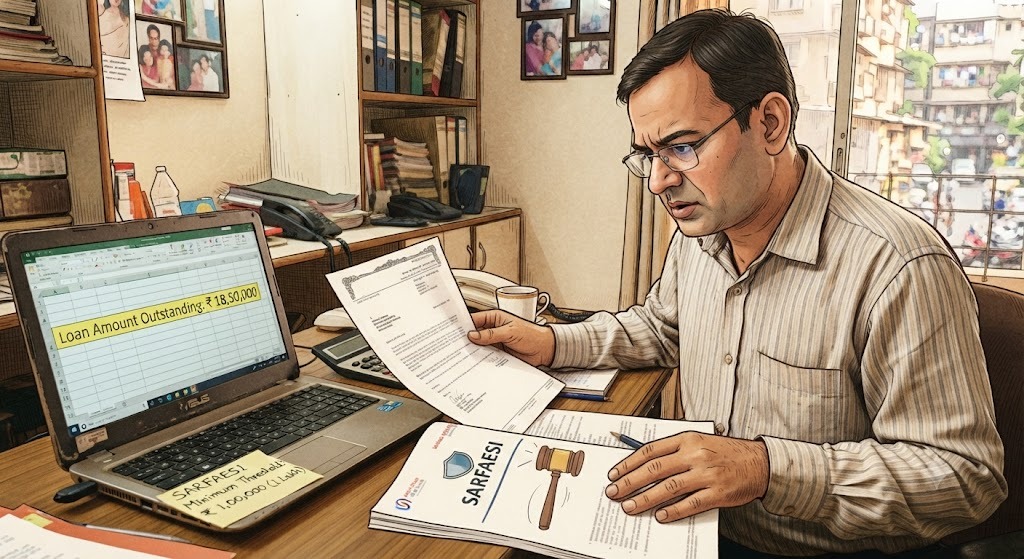
SARFAESI Minimum Amount: What It Means for Borrowers
SARFAESI minimum amount refers to the smallest loan size a bank can enforce against using SARFAESI's fast-track powers. Below this threshold, the law simply doesn't apply, regardless of how long you've defaulted, and the lender has to use a different legal route entirely.

SARFAESI Amount Limit: What It Means for Borrowers
SARFAESI amount limit actually refers to two separate rules: a minimum loan size below which SARFAESI can't be used at all, and a separate rule that blocks its use once your remaining balance drops below a certain share of the original loan.

SARFAESI 13(4) Explained: What It Means for Borrowers
Yes, cooperative banks can invoke Section 13(4) of the SARFAESI Act. A five-judge Constitution Bench of the Supreme Court settled this in 2020, after years of conflicting High Court decisions had left the question genuinely unclear. If you took a loan from a cooperative bank and assumed SARFAESI didn't apply to you, this piece explains why that assumption doesn't hold.


Make smarter financial decisions.
Loan Settlement | Loan Consolidation | Credit Insights | FREED Shield
Get Started