SBI Loan Recovery: Process, Notices and Settlement Options
SBI loan recovery is how State Bank of India gets back money that is overdue on a loan or card. It starts with reminders and calls and can move to written notices. For loans backed by security, such as a home loan, the bank can go further under the SARFAESI Act. RBI sets the rules for how the bank and its agents may contact you.
Mohit Juneja
Reviewed by FREED India, Debt Resolution Specialists
 4.7/5
 ₹3,200Cr+
 20,000+
 20,00,000+4.7/5₹3,200Cr+20,000+20,00,000+
Key Summary

SBI loan recovery usually starts with reminders after a missed EMI. RBI labels overdue term loans SMA-0 (up to 30 days), SMA-1 (31 to 60 days) and SMA-2 (61 to 90 days). After that, the bank can mark the loan as bad (NPA).
A written 60-day notice under the SARFAESI Act is for loans backed by security, such as a home loan, that the bank has marked NPA. It isn't the usual route for an unsecured personal loan or card.
Today, RBI's August 2022 instructions bar intimidation and calls before 8 am or after 7 pm. From 1 January 2027, RBI/2026-27/223 adds a one-day notice of the agency before the first visit, call recording kept for six months, and the grievance officer's details in every recovery message.
SBI's own template for empanelling resolution agents says they must not harass anyone, must follow the Fair Practices Code and the BCSBI Code, and must hold the IIBF certificate. The template is undated.
RBI's 2025 directions say a compromise settlement is not available to a borrower as a matter of right. The bank decides. A settlement paid over more than three months is treated as restructuring.
If recovery crosses the line, complain to the bank in writing first. If it isn't solved in 30 days, you can take it to RBI's complaint scheme, which is free.
What Is SBI Loan Recovery?
SBI loan recovery is how State Bank of India gets back money that is overdue on a loan or card. It starts with reminders and calls and can move to written notices. For loans backed by security, such as a home loan, the bank can go further under the SARFAESI Act. RBI sets the rules for how the bank and its agents may contact you.
SBI loan recovery is the set of steps the bank takes when an EMI or card bill isn't paid on time. It isn't one event. It starts small, with a reminder, and grows only if the dues stay unpaid.
Two things decide how far it goes. One is how many days the account is overdue. The other is whether the loan has security. A home loan has the house as security. A personal loan or a credit card has none.
Recovery doesn't wipe out what you owe. It's the bank asking for repayment. RBI's rules decide how the bank may ask, and we cover them below, including the changes that start on 1 January 2027.
How Does SBI Loan Recovery Work, Step by Step?
RBI's labels are fixed. What the bank does at each step differs by loan and branch. We couldn't find a day-by-day script published by SBI, so the last column shows what commonly happens, not a promise.
Days overdue | RBI label | What commonly happens |
|---|---|---|
1 to 30 | SMA-0 | Reminder messages and calls |
31 to 60 | SMA-1 | More calls, maybe a letter |
61 to 90 | SMA-2 | Calls continue, a formal notice becomes more likely |
More than 90 | NPA | Loan marked as bad; stronger steps such as a legal notice |
SMA (special mention account) is an early-warning label. It means you've missed payments, but the loan isn't yet marked as bad. NPA (non-performing asset) is the bank's label for a bad loan, usually after 90 days of missed payments. The 90-day line sits in RBI's separate asset-classification rules, which the 2025 Directions refer to.
The table follows RBI's rules for term loans. Credit card dues follow the card's own due-date rules, so check your statement.

Not Sure Where You Stand?
Open the FREED app, add your details and see which plan fits you.
See My Options on FREEDWhat Notices Can You Get During SBI Loan Recovery?
Notices come in a rough order. You may not get all of them.
Reminder messages and calls. These come first, often within days of a missed date. They ask you to pay or to say when you will.
A demand letter. This is a written request from the bank, or from a law firm on its behalf, to pay the overdue amount.
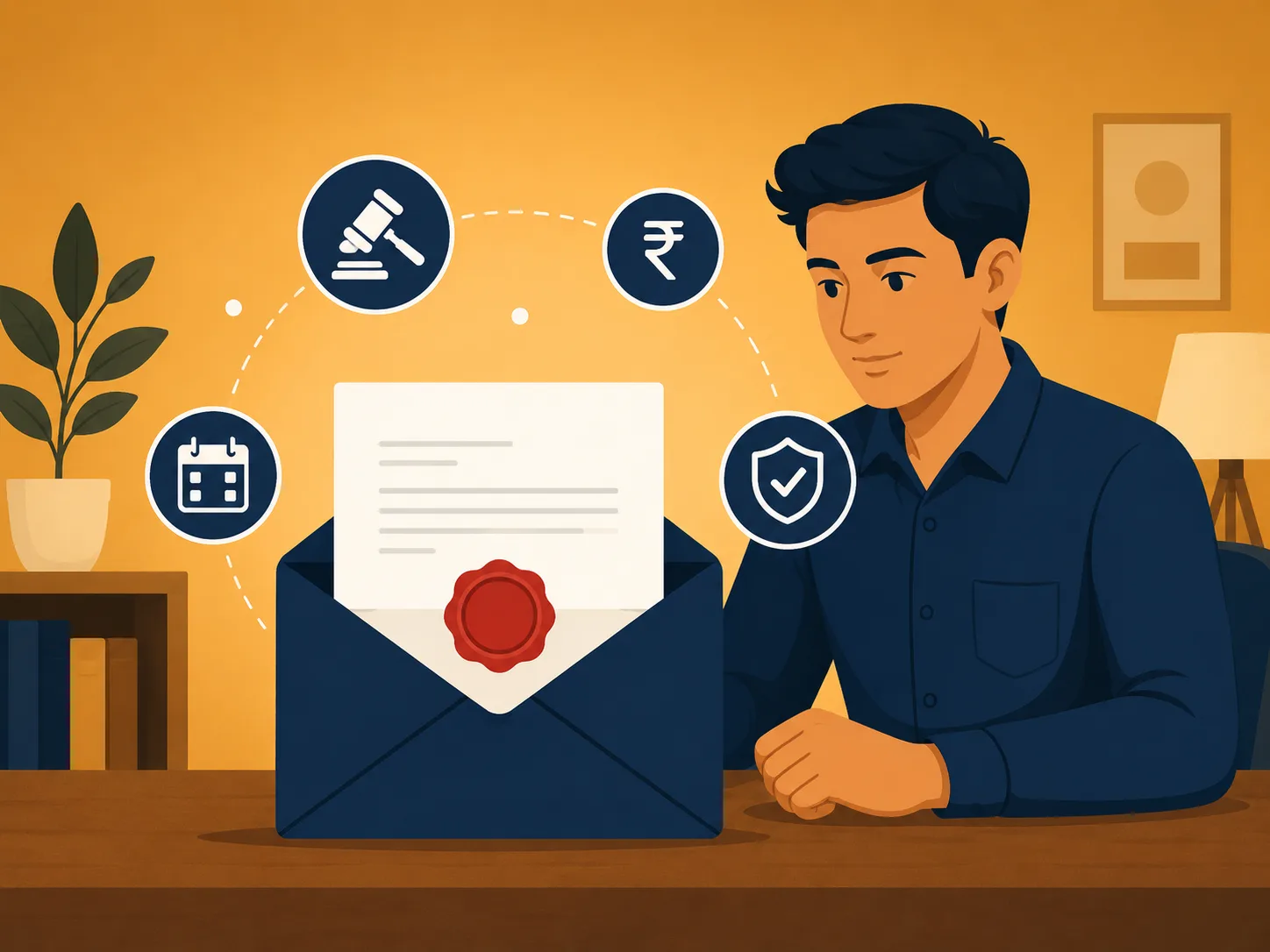
A SARFAESI notice under section 13(2). This is only for secured loans the bank has marked NPA. It asks you to pay in full within sixty days. If you don't, the bank can take steps listed in section 13(4), including taking possession of the secured asset.
A legal notice. This is a lawyer's letter. Read all of it and reply on time.
Court or Lok Adalat papers. RBI's 2025 directions encourage banks to use Lok Adalats for personal loans, credit card loans and housing loans under ₹10 lakh.
If you get a SARFAESI notice, you can send a written objection. The bank must consider it, and if it rejects it, the bank must tell you its reasons within fifteen days (section 13(3A)). Keep every paper and write the date you got it on the first page.
Does SARFAESI Apply to an SBI Personal Loan or Credit Card?
Not in the usual way. SARFAESI is a law about enforcing security. It lets a bank act on a house, a shop or a vehicle that was pledged for the loan.
A personal loan or a credit card has nothing pledged. So there's no asset for the bank to take under that Act. For these loans, banks commonly use calls, legal notices and civil routes such as a recovery case or a Lok Adalat. That's our plain reading of the Act's scope. Check it with a lawyer for your case.
If you have an SBI home loan or vehicle loan, the 60-day notice in section 13(2) is the one to watch. Don't ignore it.
Who Is Allowed to Contact You for SBI Loan Recovery?
SBI uses its own staff and outside agents. SBI's template for empanelling resolution agents (Annexure II/B, undated and not meant for borrowers) shows what it expects of them:
Follow up with borrowers and guarantors for the bank's dues.
Bring borrowers to the negotiating table and help with a one-time settlement.
Not take part in "any intimidation or harassment of any kind either verbal or physical against any person."
Follow the Fair Practices Code, the BCSBI Code and the bank's code for collecting dues.
Use only staff who have 100 hours of training and the IIBF certificate.
The same document says empanelment doesn't mean an agent has been given your account. So ask who is calling, which agency they work for and whether they have the bank's authorisation.
What Can SBI Recovery Agents Do and Not Do Today?
The rules in force today come from RBI's instructions of 12 August 2022. A Business Standard report on them says banks must make sure they and their agents don't use intimidation or harassment of any kind, verbal or physical. It also says agents can't call borrowers before 8 am or after 7 pm.
The same report says agents must not send inappropriate messages, make threatening or anonymous calls, or give false or misleading information. It says the instructions cover commercial banks, cooperative banks, NBFCs and asset reconstruction companies.
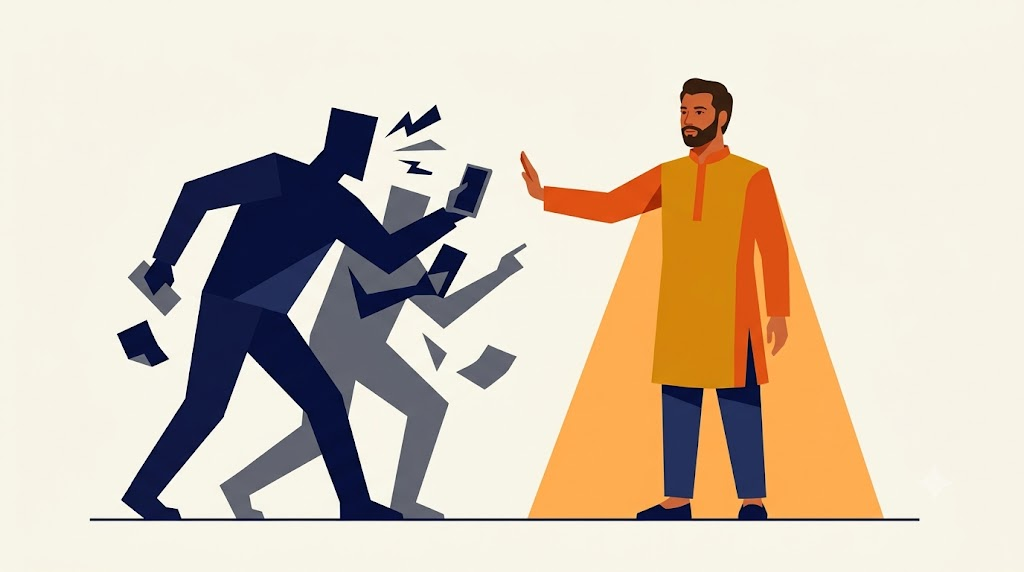
So an SBI agent can remind you, ask when you can pay and talk about a plan. An agent can't shout, threaten you or call at 10 pm. That's the line, and the bank is answerable for it.
See Your Credit Report First. Check your credit report with FREED Credit Insights
.
Check My Credit Insights
What Changes in SBI Loan Recovery From 1 January 2027?
On 6 August 2026 RBI issued the Commercial Banks – Responsible Business Conduct Fourth Amendment Directions, 2026 (RBI/2026-27/223). SBI is a commercial bank, so it's covered. These rules start on 1 January 2027. Until then, the 2022 rules above apply.
Here is what the text adds:
Fixed hours. Contact or visits only between 08:00 and 19:00, unless you ask or allow otherwise. If you ask not to be contacted at a certain time, the bank should honour it in normal circumstances.
A notice before the first visit. The bank must give you the recovery agency's details at least one day before the first visit.
Recorded calls. Calls are logged and recorded, and kept for six months. The bank should take reasonable steps such as telling you the call is recorded.
A public list of agencies. The bank must publish its list of recovery agencies on its website and update it within seven days of any change.
Trained agents. Agents must hold the IIBF certificate.
Grievance details in every message. Every recovery message must carry the grievance officer's name, email, phone number and address.
Limits on phone locking. For a financed device, restrictions can start only after 30 days past due, and outgoing calls can't be restricted before 60 days. Incoming calls, SMS and emergency SOS must stay on.
The bank also has to write a recovery policy with a code of conduct and a way to handle complaints.

What the Law Says
From 1 January 2027, recovery agents may call or visit only between 8 am and 7 pm, and discuss dues only with you or your guarantor. Threats, abuse and harassing your family are not allowed.
Get FREED ShieldCan SBI Contact Your Family or Employer?
RBI's 2027 text says loan dues may be discussed only with the borrower or the guarantor. So a recovery agent has no reason to discuss your loan with your parents, your boss or your neighbours.
The same text lists harassment of "relatives, referees, friends, or co-workers" among harsh practices, including public humiliation and invading your privacy. The text doesn't add a separate ban on every contact with a third party. It treats pressure on them as the problem.
A guarantor is different. A guarantor signed for the loan, so the bank can talk to them about the dues. If someone has given your number as a reference, a call to confirm your address is one thing, and a call to shame you is another.
How Should You Handle an SBI Recovery Call?
A calm call goes better for you. These steps work on any recovery call, and each one has a reason.
Ask who is calling. Get the name, the agency and the number. You need these to complain later.
Ask what amount they say you owe. Ask them to send it in writing. This lets you check it against your own statement.
Say when you can talk. Say, "Please call me between 10 and 12." RBI's hours are the outer limit, and you can set a narrower window.
Don't promise a date you can't keep. A broken promise makes the next call harder.
Write it down. After the call, note the date, time, number and what was said.
End an abusive call. Say, "I will end this call now. Please send everything in writing." Then end it.
None of this changes what you owe. It keeps the conversation fair.

FREED Expert Tip
After any recovery call, send a short message to the number or the bank saying "Please send the dues and your agency details in writing." It slows things down and builds your record.
Check My EMI ScoreWhat Papers Should You Keep During SBI Loan Recovery?
Keep one folder, on paper or on your phone. It should hold:
Your loan agreement and the latest loan statement.
Every notice, with the date you got it.
A list of recovery calls with date, time, number and agent name.
Screenshots of messages.
Call recordings, where you have them.
Proof of every payment you've made.
Any reply you've sent, with its date.
This folder is what lets you complain well or talk to a lawyer. It also helps if the bank's records and yours don't match.
How Do You Check What SBI Has Reported to the Credit Bureau?
Get your credit report and read the SBI line. You're entitled to one Free Full Credit Report, including your score, once during January to December from each credit information company.
CIBIL says a missed payment stays visible on your report for 36 months. It also says a status such as Settled or Written-off affects your access to credit in the future. Our guide on reading your CIBIL report shows where each item sits.
If an entry is wrong, ask SBI to correct it and raise a dispute. RBI's directions give the lender 21 days to send corrected details after a complaint.
Your SBI Loan Recovery Checklist
Get your full loan statement and check what SBI says you owe.
Open a folder for every notice, message and call log.
Note the days overdue, so you know which stage you're in.
Ask in writing who the agent is and which agency they work for.
If you have a home or vehicle loan, read any SARFAESI notice the day it arrives and note the 60-day date.
Work out what you can pay each month without borrowing again.
Write to SBI with that figure and ask for a reply in writing.
This list is our planning aid, not an SBI document.
Tips for a Smoother SBI Loan Recovery Process
Reply to every notice. A short, dated reply shows you're engaging, and it keeps your record clean.
Ask for amounts in writing. Written figures let you check the interest and fees.
Offer a plan you can keep. One monthly figure you can honour is better than a big promise you'll break.
Keep calls short and calm. Say what you'll send in writing, then end the call politely.
Use RBI's hours as your limit. Calls before 8 am or after 7 pm are outside the rules.
Keep every payment proof. A receipt settles most arguments later.
Ask about options before the loan turns bad. Early talks give you more choices than late ones.
Not Sure Where to Start?
Add your details in the FREED app and see your options in minutes.
See My Options on FREEDHow Does FREED Help If SBI Loan Recovery Has Started?
FREED isn't a loan provider. It's a platform that helps you understand your credit and manage your loans. Over 20 lakh people trust FREED.
If you are facing recovery agent harassment, FREED helps you understand your legal rights as a borrower, report inappropriate recovery practices, and raise complaints with your lender. Where harassment is frequent, our experts speak to recovery agents on your behalf. And if you receive a legal notice about your loan, FREED helps you understand your options and draft a suitable reply.
FREED Shield helps ensure that customers don't have to face recovery-related pressure alone. It's open to anyone facing recovery pressure, even if you haven't joined a FREED programme.
Here's how it works in practice. FREED steps in when a recovery call turns abusive or threatening, or when an agent visits your home or office without following the right protocol. You report it in the FREED app with proof, such as call recordings, screenshots and messages. For a live harassment call, you can call the FREED helpline. FREED doesn't step in for every ordinary recovery call, and calls continue until the loan is repaid or settled. Legal notice support is pre-litigation only.
Credit Insights reads your Experian report and shows your accounts, enquiries and payment history in one place. Over 30,000 borrowers have used it.
What If SBI Loan Recovery Is About Too Many EMIs?
If most of your salary goes towards paying multiple EMIs, FREED's Loan Consolidation Plan helps you combine multiple loans into a single monthly EMI. This can reduce your monthly EMI burden by up to 50%.* It's only for people who are still paying. Read more about the Loan Consolidation Plan.
Rates and ranges shown are indicative. Final terms decided by the bank/lender. FREED is not a Loan Provider. No outcome is guaranteed. Please verify directly with your bank.
Settlement is not something a borrower chooses out of preference. If you genuinely cannot repay your loans, FREED negotiates with your lenders to settle them for less than 50%* of your outstanding dues. Read more about the settlement programme.
Outcomes vary by lender and borrower profile. Settlement terms are decided by the lender. No percentage is guaranteed.
Settlement leaves a settled status on your report, which CIBIL says will affect your access to credit in the future. Weigh that before you choose it.
If you'd rather talk to SBI first, our guides on SBI loan restructuring and an SBI EMI break explain what to ask.

See Your Credit Report First
Check your credit report with FREED Credit Insights.
Check My Credit Insights
Mohit Juneja
Mohit Juneja is FREED’s Content & Communication Lead with 12+ years of experience across content, media, advertising and digital communications. He holds a postgraduate diploma in Communications from Xavier Institute of Communications, Mumbai, and has worked with organisations including NDTV, The Indian Express, McCann Worldgroup and NABARD.
At FREED, he leads content and communication across loan management, debt resolution, debt consolidation and financial well-being. His work combines research, storytelling and consumer-focused communication to make complex financial topics easier to understand and act on. He has also scripted and produced 11 documentaries on rural development and agriculture for NABARD, with film's selected for the Mumbai International Film Festival.
mohit.juneja@freed.care

FREED is India's trusted loan management platform. We help India settle their loans, consolidate their EMIs, improve their credit score, and manage their loans better. Over 20 lakh people trust FREED. We have managed more than ₹3,500 crore in loans and saved our users over ₹450 crore.
Media Mentions