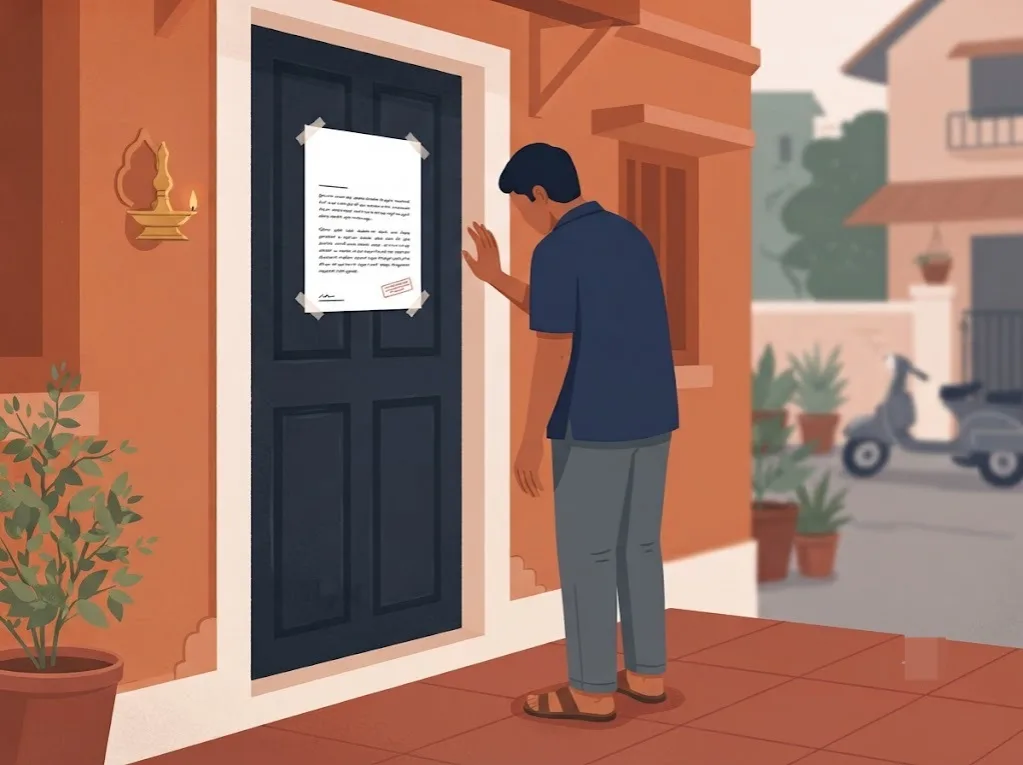
Enforcement Agencies Under SARFAESI, Explained: What It Means for Borrowers
Not just the bank, and not just the magistrate. Here's the full set of enforcement bodies that can actually get involved in a SARFAESI matter, how a separate law, the RDB Act, can run alongside it at the same time, and how new parties get added to a pending case.

Mohit Juneja
Reviewed by FREED India, Debt Resolution Specialists
 4.7/5
 ₹3,200Cr+
 20,000+
 20,00,000+4.7/5₹3,200Cr+20,000+20,00,000+
KEY TAKEAWAYS

SARFAESI and the RDB Act (Recovery of Debts and Bankruptcy Act, 1993) are concurrent, complementary remedies, a bank can pursue both at the same time, there's no legal requirement to choose one exclusively.
Beyond the bank and the DRT, an Asset Reconstruction Company can also step into a case as a separate enforcing party, with its own SARFAESI powers once it acquires the debt.
The DRT's Recovery Officer is a distinct role from the bank's own authorised officer, with independent powers to attach property, appoint receivers, and issue recovery certificates under the RDB Act.
The DRT's pecuniary jurisdiction under the RDB Act generally covers applications involving debts of ₹20 lakh or more, subject to the Act's current provisions.
Parties can generally be added to a pending Section 17 application where they have a genuine, direct stake in the outcome, following ordinary principles of proper party joinder.
Enforcement Isn't Just the Bank: The Different Roles Involved
The bank's own authorised officer drives the notice-and-possession process directly. That's the enforcement most borrowers actually see first, a notice, a follow-up, eventually a possession attempt.
Two more bodies can enter the same matter, each under its own set of rules. A magistrate can assist with physical possession under Section 14, when a borrower won't hand over an asset voluntarily. And separately, operating under a completely different statute, the DRT's own Recovery Officer can get involved too, a role that has nothing to do with the bank's internal process at all.
Understanding this split matters for a practical reason. A borrower dealing with SARFAESI enforcement may find themselves also facing action from one of these additional bodies, on the same underlying debt, following entirely different rules. Two notices citing two different laws call for two different responses, and treating them as interchangeable is exactly how a deadline gets missed.
What each of these roles actually does, and how a bank ends up bringing more than one into the same matter, is where this gets specific.

Freed Expert Tip
If you're facing action from more than one direction on the same debt, identify exactly which law each notice comes under before responding. They follow different rules.
Talk to FREED's TeamThe Magistrate's Role: Assisting Physical Possession Under Section 14
A bank's authorised officer can issue a possession notice on its own authority, but actually walking in and taking possession is a different matter when a borrower refuses to cooperate. That's where Section 14 comes in.
Under Section 14, a bank can approach the Chief Metropolitan Magistrate or the District Magistrate, depending on jurisdiction, and ask for assistance in taking physical possession of a secured asset. Under Section 14, the secured creditor can apply to the Chief Metropolitan Magistrate or District Magistrate for assistance in taking possession of the secured asset. The magistrate deals with the statutory requirements for providing possession assistance rather than deciding the underlying debt dispute on merits.
Section 14 is not the forum for a full adjudication of the underlying debt dispute. A person aggrieved by measures taken under Section 13(4) can challenge the secured creditor's action before the DRT under Section 17. The magistrate's function under Section 14 is closer to enforcement logistics: making sure a bank that's already followed the correct process can actually take the asset, without needing a fresh civil suit for possession. Borrowers sometimes assume a magistrate's involvement means the matter has escalated legally in some deeper sense. In practice, it mostly means the bank needed a physical hand getting into the property, and the bank's recovery rules still govern what can and can't be done even with a magistrate's order in hand.
The DRT's Recovery Officer: A Distinct Enforcement Role
Once a Debt Recovery Tribunal issues a recovery certificate, following a successful application by a bank or financial institution, someone has to actually execute it. That's the Recovery Officer's job, and it's a specific, named role under the Recovery of Debts and Bankruptcy Act, 1993, not a title the bank assigns internally.
The powers attached to this role go further than most borrowers expect. A Recovery Officer can attach and sell property to satisfy the certificate. They can appoint a receiver to manage assets in the meantime. In genuinely extreme cases, involving wilful non-compliance rather than a genuine inability to pay, the powers extend as far as arrest and detention of the debtor.
Here's the part that trips people up: this role connects to SARFAESI enforcement without being the same thing as it. A bank pursuing a SARFAESI action against one specific secured asset can, separately, also proceed against the same borrower through the RDB Act's Recovery Officer route, for the same or a related debt. These aren't alternative paths where choosing one rules out the other. A bank can run both at once, against the same person, over the same underlying default.

What the Law Says
SARFAESI and RDB Act remedies are concurrent and complementary. Courts have confirmed there's no legal bar to a secured creditor invoking both simultaneously against the same borrower.
Understand My RightsHow a Recovery Certificate Actually Gets Issued
The Recovery Officer doesn't act on a whim, and a certificate doesn't appear the moment a bank feels like escalating. The DRT recovery process starts with the bank filing an Original Application before the Tribunal, laying out the debt, the default, and the amount claimed.
The borrower gets an opportunity to respond and contest the claim, this is a full adjudication on the merits of the debt itself, not a rubber stamp. If the Tribunal is satisfied the amount is due, it passes an order determining the debt, and it's this order that gets converted into a recovery certificate. Once the Tribunal has passed the relevant order and a recovery certificate is issued, the matter can proceed to execution by the Recovery Officer in accordance with the RDB Act.
This sequence matters because it explains why RDB Act proceedings can run for months before anyone sees a Recovery Officer at all. The adjudication phase, evidence, arguments, the Tribunal's own order, happens first. Execution is the second, separate phase, and it's the one that actually brings attachment, receivers, and in rare cases arrest into play.
Asset Reconstruction Companies: Another Party That Can Step In
There's a third kind of enforcing party worth knowing about, beyond the original bank and the DRT system: the Asset Reconstruction Company, or ARC.
Banks sell distressed loans, particularly ones already classified as non-performing assets, to ARCs as a way of clearing bad debt off their own books. Once an ARC acquires a loan, it doesn't just inherit a claim, it steps into the original secured creditor's shoes for SARFAESI purposes too. The ARC can issue its own Section 13(2) notice, pursue possession, and proceed exactly as the original bank could have.
For a borrower, this means the entity you're dealing with can change partway through, sometimes without much warning beyond a notice announcing the assignment. The underlying loan terms don't change because an ARC bought the debt, but the point of contact, and often the tone and pace of enforcement, frequently does. Checking who currently holds a charge on your asset, rather than assuming it's still the original bank, is worth doing before responding to any notice that looks unfamiliar.
How the RDB Act Actually Runs Alongside SARFAESI
The RDB Act does more than create the Recovery Officer role. It established the entire Debt Recovery Tribunal system, and it generally applies to debts of ₹20 lakh or more owed to banks and financial institutions. Below that figure, a civil suit is the relevant route instead, the DRT simply isn't the forum for smaller claims.
There's a structural point worth getting right here, because it's easy to assume otherwise. SARFAESI itself doesn't hand the DRT any power to decide a money-recovery claim from scratch. That original jurisdiction comes from the RDB Act. SARFAESI's Section 17 gives the DRT a different job entirely, reviewing challenges to enforcement measures a bank has already taken. One is a forum for deciding what's owed. The other is a forum for checking whether enforcement followed the rules.
Put together, this means a bank can file an RDB Act recovery application before the DRT for the underlying debt, while separately pursuing SARFAESI enforcement against the secured asset, at the same time, through two different mechanisms under two different sections of two different statutes. Both tracks run toward recovering the same overall debt, just through separate legal doors.
SARFAESI vs the RDB Act: Side by Side
The two mechanisms overlap enough to confuse anyone facing both at once. Laid out next to each other, the actual differences are easier to hold onto.
SARFAESI | RDB Act (via DRT) | |
What it does | Lets a secured creditor take possession and sell an asset directly | Adjudicates the debt itself and issues a recovery certificate |
Court involvement upfront | None, unless challenged under Section 17 | Full adjudication before the Tribunal from the start |
Who executes it | Bank's authorised officer, magistrate if needed | DRT's Recovery Officer |
Minimum debt threshold | No fixed minimum | Generally ₹20 lakh or more |
Can run alongside the other | Yes | Yes |
Reading this table, one thing should stand out: nothing here forces a choice between the two. A bank facing a large, secured default has a genuine incentive to run both, SARFAESI for speed on the asset itself, the RDB Act for a formal, adjudicated determination of the full amount owed, including any shortfall the asset sale doesn't cover.

Facing both a SARFAESI notice and a separate DRT recovery matter?
Talk to FREED about your full situation.
Talk to FREED's TeamAdding Parties to a Pending Section 17 Application
DRT proceedings under Section 17 work like civil proceedings generally on one point: a genuinely necessary or proper party, someone with a direct, real stake in the outcome, a co-owner, a guarantor, another affected third party, can usually be added to an already-pending application rather than needing to start an entirely separate filing.

Why this matters is fairly practical. If you discover partway through a pending case that your own genuine interest wasn't originally represented, asking to be added as a party is often the more direct route than filing fresh and waiting for it to be heard on its own timeline. Where permitted, participation in the existing proceeding may allow the person's relevant interests to be addressed within the pending matter.
One honest caveat belongs here. The DRT's specific procedural rules, and its own discretion, govern exactly when and how this is permitted. This is a genuinely fact-specific, procedural question, not one with a fixed, universal answer, and it's worth raising directly with qualified legal counsel rather than assuming it works the same way it would in an ordinary civil court.
What Are Your Options If You Also Have Unsecured Debt
FREED does not act on RDB Act recovery proceedings, Recovery Officer matters, ARC-related disputes, or party-addition applications. All of these require qualified legal representation, someone who can actually appear before the DRT on your behalf.
If separate unsecured debt exists alongside a secured loan or DRT matter, personal loans, credit cards, that's a genuinely different problem with its own path forward. One thing needs to be said plainly here: settlement is not something a borrower chooses out of preference. Whether a lender will consider a settlement depends on the lender's policies, the account circumstances and the borrower's ability to repay.
For that separate piece, FREED's Debt Resolution Program works with your banks toward a settlement once repaying in full has become genuinely difficult.
How FREED Helps With Your Unsecured Debt
FREED doesn't handle secured loans, RDB Act proceedings, Recovery Officer matters, or ARC-related enforcement, all of that sits with qualified legal counsel, not a debt resolution platform.
What FREED does help with is unsecured debt sitting alongside a situation like this. For borrowers still able to pay but stretched across multiple EMIs, FREED's Debt Consolidation Program merges everything into one lower payment. For borrowers who genuinely cannot repay in full, the Debt Resolution Program negotiates a settlement through a structured savings plan.
Tips If Multiple Enforcement Routes Apply to Your Situation
Identify exactly which law, SARFAESI or the RDB Act, each specific notice or action falls under before you respond to anything.
Don't assume resolving one route automatically resolves the other. They're legally separate proceedings, even against the same underlying debt.
If a distressed loan gets sold to an ARC, confirm the new party's identity and authority directly rather than assuming the original bank is still involved.
Get qualified legal representation early once more than one enforcement track is active at the same time, and raise a party-addition question with that lawyer if it applies to you.
Freed Expert Tip
Keep every notice you receive organised by which specific law it cites, SARFAESI or the RDB Act. This alone makes it much easier for a lawyer to quickly understand your full situation.
Talk to FREED's TeamSources
Claim | Source |
SARFAESI and RDB Act remedies are concurrent and complementary, not mutually exclusive | George Joseph v. Recovery Officer, Debts Recovery Tribunal; consistent judicial interpretation |
DRT Recovery Officer's powers under the RDB Act (attachment, receiver appointment, recovery certificate execution) | Recovery of Debts and Bankruptcy Act, 1993 |
RDB Act pecuniary jurisdiction generally ₹20 lakh or more | Recovery of Debts and Bankruptcy Act, 1993, as amended |
SARFAESI's Section 17 gives DRT review jurisdiction, not original money-recovery jurisdiction | Judicial interpretation of the interplay between SARFAESI and the RDB Act |
ARCs step into a secured creditor's position under SARFAESI once they acquire a distressed loan | SARFAESI Act, 2002, Section 5 (asset reconstruction provisions) |
Disclaimer
Rates, fees, tenures, and other loan-related information shown are indicative in nature and based on publicly available information and market inputs available at the time of publishing. The actual applicable interest rates, processing fees, eligibility criteria, loan amounts, repayment terms, and approval decisions are solely determined by the respective bank, NBFC, or financial institution based on the applicant’s individual profile, credit assessment, and prevailing internal policies.
FREED does not act as the lender and does not guarantee loan approval, final sanction terms, or accuracy of lender-specific policies that may be revised without prior notice. Financial institutions may modify their products, rates, and eligibility criteria from time to time at their sole discretion.
Users are advised to independently verify all applicable terms and conditions directly with the respective lender before making any financial decision or submitting an application. FREED shall not be held responsible for any discrepancy, rejection, revision, or decision taken by the lender in this regard.

Mohit Juneja
Mohit Juneja writes educational content at FREED on debt management, credit scores, loan repayment, and borrowing best practices. His content is shaped by expert insights and industry knowledge, helping readers better understand their financial options and make informed decisions.
mohit.juneja@freed.care

FREED is India's trusted loan management platform. Founded in 2020 and headquartered in Gurugram, FREED has counselled 20 lakh+ people on personal loans, credit cards, and app loans. FREED charges fees only on successful settlement, not upfront. FREED does not handle secured loans (home loans, car loans, gold loans).
Media Mentions