Possession Notice Under SARFAESI: Everything You Need to Know
Once the 60-day period under the demand notice expires without the borrower discharging the liability, the secured creditor may take enforcement measures available under Section 13(4), including taking possession of the secured asset. That's what a possession notice under SARFAESI actually is. In cases involving symbolic possession, the secured creditor takes possession in the manner provided by the SARFAESI framework, while the borrower or occupant may remain physically in the property until further enforcement steps are taken. Others mean the bank is coming to physically take the property.
Mohit Juneja
Reviewed by FREED India, Debt Resolution Specialists
 4.7/5
4.7/5 ₹3,200Cr+
 20,000+
 20,00,000+4.7/5₹3,200Cr+20,000+20,00,000+
KEY TAKEAWAYS

After the 60-day demand notice period expires without the liability being discharged, a secured creditor may take enforcement measures under Section 13(4), including issuing a possession notice where applicable.
Symbolic possession hands the bank legal control on paper, you may keep living there for a stretch afterward.
Physical possession means an actual takeover, and it's usually the second move, tried only once the symbolic route hasn't resolved things.
The notice gets affixed at the property and published. You still have time to respond before whatever comes next.
What Is a Possession Notice Under SARFAESI?
Sixty days. That's how long the demand notice under Section 13(2) gives you before the bank's next formal step kicks in, and a possession notice is exactly that next step, not the opening move. If you're reading one now, a prior notice and a prior deadline have already come and gone.
This isn't an informal heads-up. The Security Interest (Enforcement) Rules prescribe how a possession notice is to be delivered, affixed and published. These procedural requirements are important when assessing whether the possession process was properly carried out. One thing worth separating in your head right now: this notice and an auction notice are two different documents that arrive at different stages. The full SARFAESI sequence covers where this fits if you're trying to place it against everything else.
Two very different things can happen once a notice like this lands, and the difference matters more than most people expect going in.

Want to understand where you stand right now?
Talk to FREED about your full financial picture.
Talk to FREEDSymbolic Possession vs Physical Possession: What's the Difference?
Picture two households that both received a possession notice last month. In the first, the family is still living in the flat, cooking dinner, sending kids to school, even though the bank now legally controls the property on paper. This is commonly described as symbolic possession: the secured creditor has taken possession in the manner recognised under the SARFAESI framework, while physical possession may follow through further enforcement steps.
In the second household, the bank shows up with a magistrate's order and takes the property in fact, not just on paper. Getting there usually means the bank went to a Chief Metropolitan Magistrate or District Magistrate under Section 14 of the SARFAESI Act, asking for help because the occupant hadn't vacated on their own. That magistrate step is deliberately narrow, it's there to help carry out possession, not to referee a dispute, any real disagreement about whether the bank followed the rules correctly goes to the DRT instead.
In many cases, a secured creditor may first proceed through symbolic possession before seeking assistance for physical possession. Physical possession is the fallback, used when the account still hasn't resolved and the first route hasn't worked. What actually unfolds after either notice arrives is worth walking through in order.

What Happens After You Receive a Possession Notice?
Here's roughly how it plays out, step by step, once the notice is actually issued.
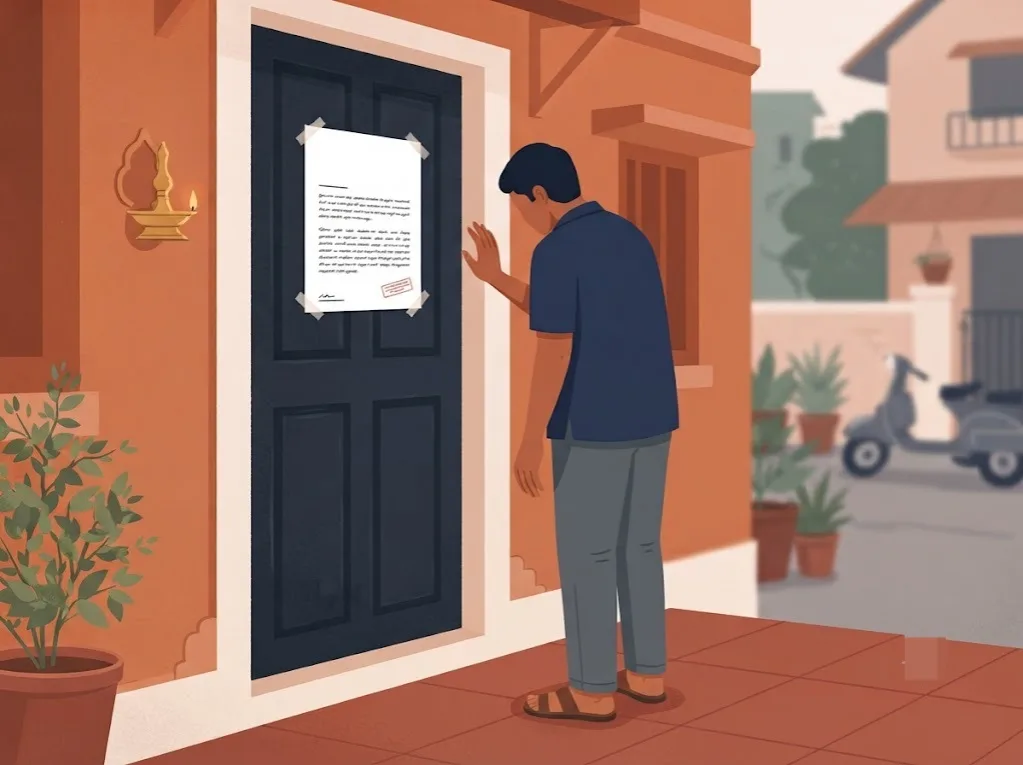
- Notice Served and Affixed. The bank puts the notice up at the property and publishes it as the rules require, this specific step is what makes it legally binding.
- Symbolic Possession Takes Effect. Legal control shifts to the bank first. You might still be living there while this happens, it's usually the opening move, not the final one.
- Valuation of the Property. An approved valuer looks at the property and sets the numbers that any eventual sale or auction would run on.
- Physical Possession, If Needed. Where physical possession cannot be obtained directly, the secured creditor may apply under Section 14 for assistance from the Chief Metropolitan Magistrate or District Magistrate in taking possession.
- Next Steps Toward Sale. Possession wraps up, and the process usually heads toward a valuation-based sale, a separate stage covered in its own detail elsewhere.
Nobody can tell you exactly how long this whole sequence takes, it genuinely varies case by case. What matters more is this: getting a possession notice doesn't mean the property's already gone. There's usually still a real window to do something about it.
What Rights Do You Have at This Stage?
Depending on the stage of enforcement, you may still be able to discharge the secured debt and prevent the matter from progressing to sale. Act promptly and confirm the current position with the lender or a lawyer.
If you believe the lender did not follow the required procedure, including issues concerning notice, valuation or other enforcement steps, obtain legal advice on the appropriate representation or remedy. And if you genuinely believe the process itself was flawed, the Debt Recovery Tribunal is where that argument goes, a separate legal track with its own clock, worth pursuing with a lawyer rather than winging it alone. Before a secured asset is sold, the applicable enforcement rules require the lender to follow prescribed valuation and reserve-price procedures.
What your rights actually cover as a borrower goes well beyond just this one stage, worth a proper read if you want the fuller picture. Now, what's actually in front of you to decide.

Freed Expert Tip
A possession notice doesn't mean the property is already gone, you typically still have a window to pay, negotiate, or sell privately before the next stage.
Understand Your TimelineWhat Are Your Options Once You've Received This Notice?
If you can clear the outstanding amount, do it, that stops nearly everything short of an actual completed sale.
If you can't clear it outright, call the bank's recovery desk directly. Depending on the lender's policy and the stage of enforcement, you may be able to discuss repayment arrangements, settlement or other resolution options with the secured creditor. If a private sale is legally and practically available, discuss the option promptly with the lender and obtain independent advice on valuation, because the outcome can differ from an auction. And whatever you decide, get a lawyer to check whether the bank actually followed the process correctly, a real procedural gap changes what's still open to you. Where your account sits in the NPA timeline is worth checking too, since it explains how things reached this point.
Here's the part a lot of people miss while they're focused entirely on the property: separate unsecured debt doesn't pause for any of this, and it's often building pressure quietly in the background.
What About Your Other Loans During This Process?
A possession notice relates to the secured credit facility and the secured asset. Your separate personal loans and credit cards remain subject to their own repayment obligations and reporting.
This is exactly where things get harder for a lot of people, legal costs pile up on the property matter while EMIs elsewhere keep coming due, unbothered by any of it. FREED's Loan Settlement Plan exists specifically for that separate unsecured side, never the secured loan, never the SARFAESI process itself, that line doesn't move no matter what stage the property matter has reached.
Are You in a Loan Trap? Quick Check
Move the slider to your total EMIs as a % of monthly salary. See your debt stress level instantly.
EMIs as % of Monthly Salary
What to Do the Moment You Receive This Notice
Start by actually reading it, not skimming it. Is it symbolic or physical? Is there a date on it that matters? Don't shrug it off as a scare tactic either, it's a real legal document with real consequences, and treating it like bluff eats up time you don't have to spare. If a private sale is even a possibility, get an independent valuation done before you talk numbers with anyone. Call the bank's recovery desk yourself rather than assuming the door's already shut, it often isn't. And separately, take stock of whatever other debt you're carrying, so it isn't quietly piling up while all your attention is on the house.
Sources
Claim | Source |
A possession notice follows the lapse of the 60-day demand notice period under Section 13(2) | SARFAESI Act, 2002, Section 13(2), India Code (Government of India) |
Physical possession generally requires the bank to seek assistance from a Chief Metropolitan Magistrate or District Magistrate under Section 14, a ministerial, non-adjudicatory step | SARFAESI Act, 2002, Section 14, India Code (Government of India) |

FREED is India's trusted loan management platform. Founded in 2020 and headquartered in Gurugram, FREED has counselled 20 lakh+ people on personal loans, credit cards, and app loans. FREED charges fees only on successful settlement, not upfront. FREED does not handle secured loans (home loans, car loans, gold loans).
Media Mentions