Loan Settlement Apps: How to Check One Before You Trust It
Loan settlement apps are mobile apps that offer to negotiate with your bank or NBFC so you can pay less than you owe. They do not lend money. A genuine app explains fees in writing and never takes your login details. Some apps are fake and only collect advance fees or personal data.
Mohit Juneja
Reviewed by Shweta, FREED India Debt Resolution Specialists
 4.7/5
 ₹3,200Cr+
 20,000+
 20,00,000+4.7/5₹3,200Cr+20,000+20,00,000+
Key Summary

Loan settlement apps negotiate for you. They do not lend, and they cannot promise a bank’s decision.
RBI’s Digital Lending Directions, 2025, restrict access to sensitive phone data, including contacts, call logs and files, by digital lending apps covered under the framework. However, independent loan settlement service apps are not automatically covered by these requirements. Borrowers should review permissions carefully and avoid sharing unnecessary personal information, regardless of the app’s regulatory status.
Under RBI’s 2023 framework, your bank or NBFC sets settlement terms, not the app.
A Settled status can stay on your credit report for up to 7 years.
Never pay a personal account or share OTPs, UPI PINs, or net banking logins.
What Are Loan Settlement Apps and What Do They Actually Do?
A borrower gets daily recovery calls. At night, they search “settle my loan online” and see a dozen apps. Every one of them promises relief.
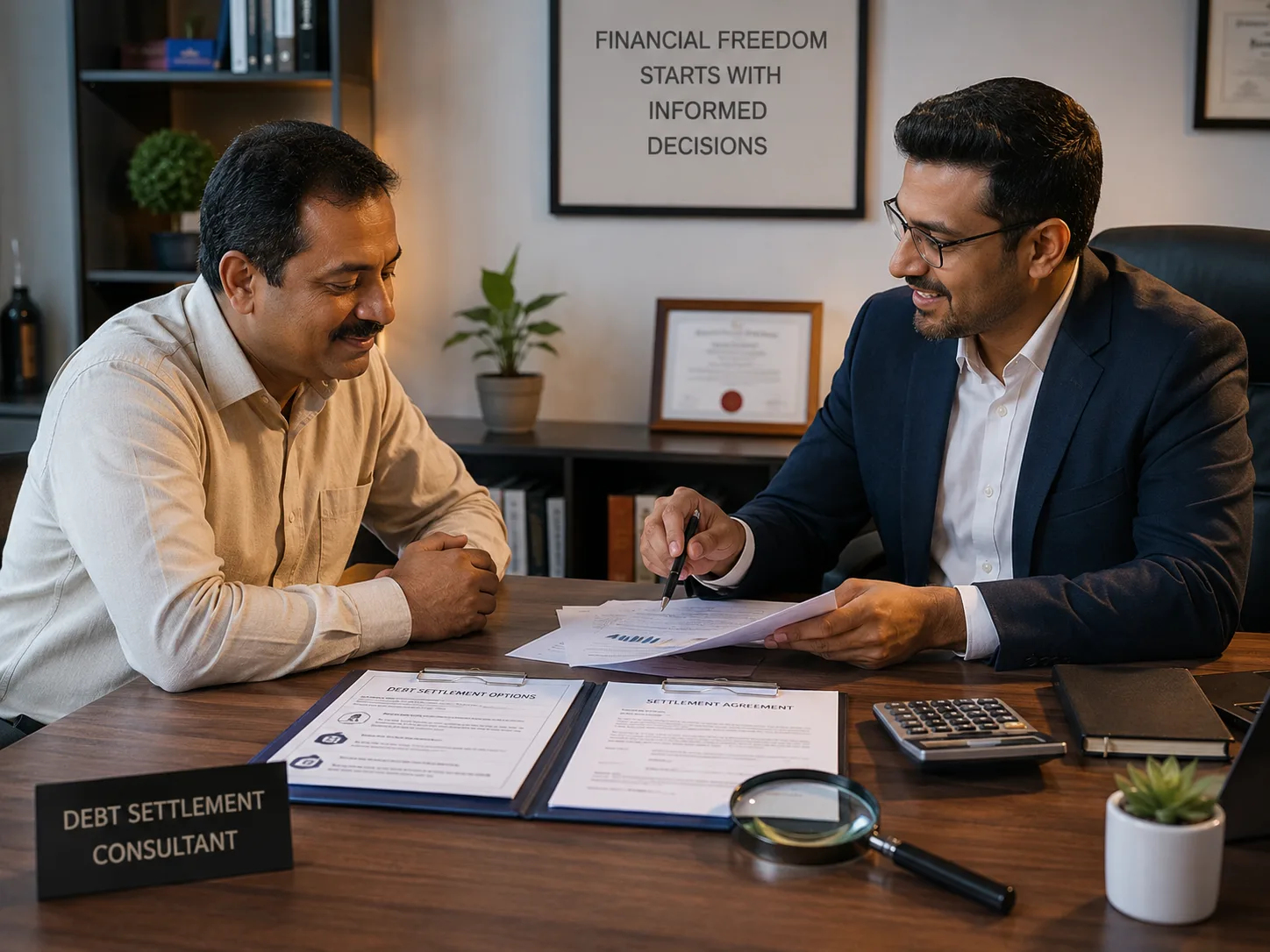
So what are these apps? A loan settlement app is a front door to a service. That service talks to your bank or NBFC (non-bank loan company) for you. It tries to agree a lower full-and-final amount.
There are 3 kinds of apps in this space.
- Apps run by real settlement companies. They handle negotiation and paperwork for a fee.
- Apps or portals run by banks themselves. They let you view dues or request a one-time settlement (OTS).
- Fake apps and WhatsApp links posing as either. They copy the look of real ones.
An app is only a way to reach a service. It does not lend money. It is not a government body. The bank or NBFC makes the final call on any settlement.
Most of the confusion comes from the word “app”. A bank’s own app and a private settlement company’s app can look almost the same on a phone screen. Both show a logo, a login, and a button that says “settle now”. The difference is who stands behind the screen, and what happens to your money and data once you tap.
So before you download anything, ask 2 plain questions. Who runs this? And what exactly will they do for me, in writing? If either answer is vague, stop there.
No app can promise a result. If one does, treat that as the first warning sign. Next, why fake apps exist at all.
For a company-level view, read our guide to loan settlement companies in India. For the programme itself, see the Debt Resolution Program.

Not Sure If Your Loan App Is Genuine?
Share your loan details and get a free assessment from FREED’s counsellors.
Start My Debt AssessmentWhy Do Fake Loan Settlement Apps Target Borrowers in Default?
Missed EMIs and daily calls leave people tired. They want relief fast. Fake apps sell exactly that. This is not a lapse in judgement. It is what the pressure is built to cause.
Four things are commonly reported.
- Urgency. Recovery calls push people to act before they check anything.
- Big promises. Ads say “settle for a fraction” or “guaranteed waiver”.
- Isolation. Some apps tell people to stop talking to their bank.
- A money trail that ends nowhere. They ask for advance fees to a personal account or UPI ID.
No app can guarantee a bank’s decision. That one fact undoes most of these pitches. If the promise sounds certain, the source is not.
Think about the timing. A person who has missed 3 EMIs and is getting calls every morning is not reading terms and conditions. They are scanning for the fastest way out. A fake app is designed for exactly that moment, with a bright button, a countdown, and a reassuring name.
There is also a quieter risk. Some apps collect documents, PAN, Aadhaar, and bank statements “to check eligibility”. That data can be misused long after the settlement promise has gone quiet. So the loss is not only the advance fee.
You are not at fault for being targeted. Fake apps look for borrowers in default because those borrowers are the ones searching.
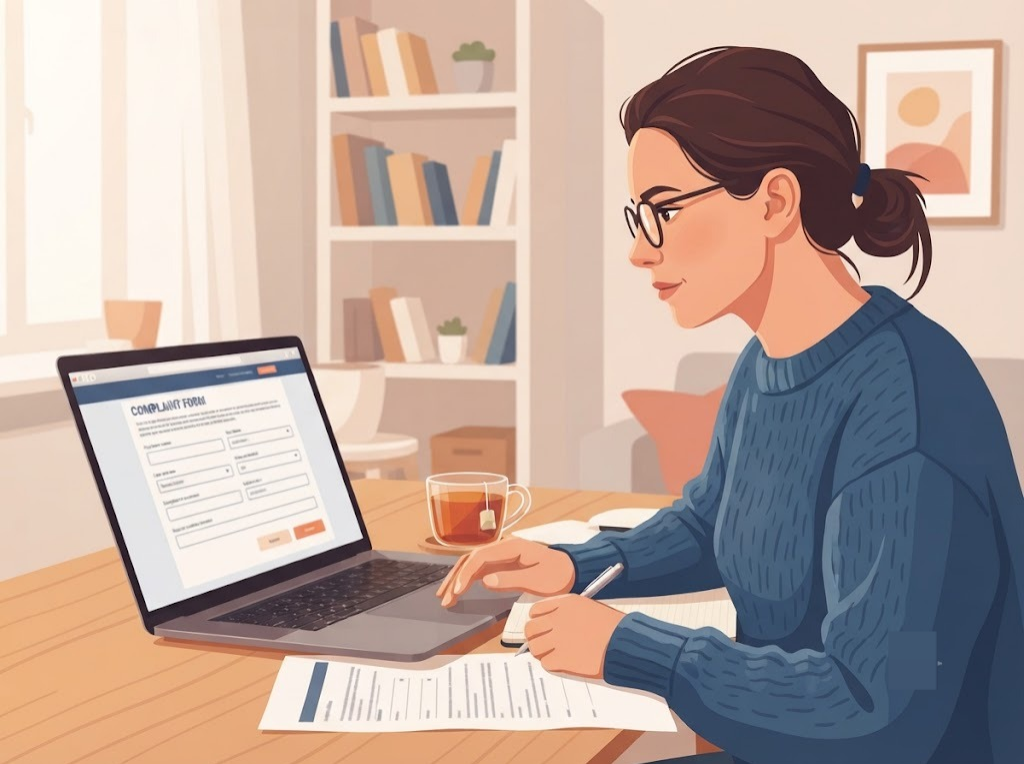
If you already face a fake lending app, our fake loan app complaint guide covers where to report it. So what do fake apps look like?
What Are the Warning Signs of a Fake Loan Settlement App?
Look for these 7 red flags. Each one is something you can spot on your phone.
- It promises a fixed waiver percentage before looking at your case. No one can know your outcome before the bank reviews it.
- It wants a large fee upfront, or asks you to pay into a personal account. Fees should be written down and tied to a result.
- It asks for contacts, gallery, SMS, or call-log permissions. Negotiating a loan does not need any of these.
- It asks for OTPs, UPI PIN, card PIN, or net banking password. A real service never needs them.
- It tells you to stop all EMIs and calls with no written plan. Going silent can make your position worse.
- It has no named company, address, or working support number. If you cannot find who runs it, you cannot hold anyone to account.
- It pushes a countdown or “offer ends today” message. Pressure is a sales tool, not a settlement tool.
A real app can fail one of these through poor design. A fake app usually fails several.
For comparison, RBI’s Digital Lending Directions, 2025 (RBI/2025-26/36) say apps of regulated banks and NBFCs must not access phone files and media, contacts, call logs or telephony functions. There are narrow one-time exceptions for camera, microphone or location at onboarding, with your consent (para 12). Settlement apps are not covered by these Directions, so use this only as a yardstick for what a lending app may ask.
For company-level red flags, see how to evaluate a loan settlement agency before signing.
How to Check a Loan Settlement App in 7 Steps?
These checks take about 10 minutes. You need only your phone. Do them before you upload a single document, because once your PAN and bank statements are shared, you cannot take them back.
- Find the company behind the app. Search its legal name and check its registration on the MCA website.
- Read the store listing carefully. The developer name should match the company, and reviews should look varied, not copied.
- Check every permission it asks for. Contacts, gallery, SMS, and call logs are not needed to negotiate a loan.
- Request a written breakdown of all fees before enrolling, including registration charges, evaluation fees, monthly payments, service fees, and applicable refund conditions. Confirm when each payment becomes due, whether any charges are refundable, and what happens if the lender rejects the settlement proposal. Avoid providers that demand unexplained upfront payments or refuse to disclose their complete fee structure.
- Ask what it does to your credit report. A genuine app tells you about the Settled status up front.
- Never share OTPs, PINs, or login details.
- Confirm any offer with your bank. Use the number on your loan statement, not one the app gives you.
For deeper company checks such as CIN, office, and reviews, read the debt settlement company vetting checklist. Keep a short note of what you find for each step, with screenshots. If the app fails even 2 of the 7, walk away. If it passes all 7, you still have not been promised anything, because only your bank can confirm a settlement. Now, one habit that beats all 7.

FREED Expert Tip
Before paying anyone, call your bank on the number printed on your loan statement and ask if the offer is real.
Book My CallAre Loan Settlement Apps Regulated by RBI?
RBI regulates banks and NBFCs and their digital lending apps. It does not run a separate approval list for settlement apps. Here is how that breaks down.
What RBI regulates. Banks and NBFCs, and the digital lending apps (DLAs) they deploy. RBI publishes a public directory of those DLAs. It is built from what regulated entities report, and RBI does not separately validate it. You can find it on RBI’s website under Citizen’s Corner.
What that directory means for you. It helps you check a lending app. A settlement app does not lend, so it will not appear there. Do not treat “not in the list” as proof of fraud. Do not treat any “RBI approved” claim as proof of safety. Even a listing does not mean RBI has registered, authorised, or endorsed the app.
Who decides settlement terms? Under RBI’s 2023 framework (RBI/2023-24/40), each bank or NBFC has a Board-approved policy and sets its own terms. Settlements are made in cash. If payment stretches beyond 3 months, the arrangement is treated as restructuring. After a compromise settlement, a cooling period of at least 12 months applies before fresh exposure for non-farm credit.
So an app cannot override a bank’s policy. Any app promising a guaranteed result is selling hope.
Should You Use a Loan Settlement App or Talk to Your Bank Directly?
Start with where you stand. The right route depends on whether you can still repay.
Still paying but stretched. Consolidation may fit better than settlement. See the Debt Consolidation Program and what debt consolidation is. The EMI Score shows whether your EMIs are too heavy for your pay.
Genuinely cannot pay. Settlement is not something a borrower chooses out of preference. Banks only consider it when repayment has become impossible. If that is you, compare 3 routes.
| Route | Who does the talking | Typical cost | Main risk |
|---|---|---|---|
| Talk to your bank directly | You | No service fee | Takes time; you handle paperwork and follow-up |
| Genuine settlement app or company | The company, for you | Fee tied to a successful settlement | Fees and outcomes vary; verify first |
| Fake app or link | Nobody real | Advance fee, data theft | Lost money, misuse of your details |
Rates and ranges shown are indicative. Final terms decided by the bank. FREED is not a Loan Provider. No outcome is guaranteed. Please verify directly with your bank.
Going direct has one real advantage: nobody sits between you and the bank. The cost is your time. You will need to write to the bank, ask for a settlement letter, track replies, and keep every email. Many people find the follow-up harder than the negotiation itself.
A genuine company takes that load off you, but it charges for it. So the question is not “app or no app”. It is “who will do the follow-up, and what will it cost me in writing?”
If you go direct, read how to negotiate a personal loan settlement with your bank. It shows what to say and what to ask for in writing.
How Does FREED Handle Loan Settlement?
The FREED Loan Settlement Plan, also called the Debt Resolution Program or “Settle My Loans”, is for borrowers who genuinely cannot repay in full. It works in 4 beats.
- Assessment. FREED looks at your full financial situation.
- A personalised plan. You get a plan built around your numbers.
- A monthly savings fund. You save into a Special Purpose Account (SPA) held by an independent trustee, in your name. FREED cannot touch it without your approval.
- Negotiation. Once the fund is large enough, FREED negotiates with the bank. You accept or decline the offer.
This takes time. Savings build first, then negotiation. It is never instant, and no outcome is guaranteed.
A genuine service lets you check all of this in writing before you pay. FREED provides borrowers with details of its programme fees, payment schedule and applicable refund conditions during enrolment. Before joining, borrowers should review the written agreement to understand which charges apply, when they become payable and whether any amounts are refundable if a settlement is not completed. Settlement outcomes remain subject to the lender’s approval.
A Settled status can stay on your report for up to 7 years. Waivers can be up to 50%*, and the bank decides.
If recovery calls turn abusive, FREED Shield is available to everyone. Nothing is promised about stopping calls.
FREED has settled 20,000+ accounts, counselled 20,00,000+ customers and managed ₹3,200 Cr+ in debt. Rates and ranges shown are indicative. Final terms decided by the bank. FREED is not a Loan Provider. No outcome is guaranteed. Please verify directly with your bank.
Cannot Repay Your Loans in Full?
Get a free assessment and a clear plan, with no pressure.
Start My Debt AssessmentWhat Does a Loan Settlement Do to Your CIBIL Score?
A genuine app tells you this on day one. That makes it a trust test.
- A Settled status can stay on your report for up to 7 years.
- A settled account is not the same as a fully repaid one.
- Future banks can see it, so a new loan may be harder or costlier for a while.
- Settlement still ends the recovery cycle for the account once the bank confirms it in writing.
Think of it this way. A settlement closes the recovery cycle, but it does not erase the history of missed payments. Banks reading your report later will see both facts. That is why a genuine app or company should explain this before you sign, not after.
If an app says settlement will “clean” or “fix” your credit report, that is another red flag. Nobody can promise that.
No score-drop figure is given here, because it varies by report. For the full picture, read loan settlement meaning, process, and CIBIL impact. To see where your report stands today, use Check Credit Insight.
What Helps If You Already Paid or Shared Data With a Fake App?
It is not too late to act. Take these 6 steps, in this order.
- Stop all further payments to the app.
- Save screenshots of chats, receipts, and the app listing.
- Report the payment quickly on the National Cyber Crime Reporting Portal (cybercrime.gov.in) or call 1930.
- Tell your bank and ask about the transaction.
- Change passwords and remove the app’s permissions, or uninstall it after saving your screenshots.
- Keep dealing with the real bank or NBFC in writing.
Speed matters most for money sent through UPI or net banking. The sooner your bank hears about it, the better the chance of tracing the transfer. Even if the amount is small, report it. Reports help others avoid the same app.
If you shared Aadhaar, PAN or a selfie, watch your credit report and bank alerts over the next few weeks. Any loan or account you do not recognise should be raised with the bank at once.
1930 is the national cybercrime helpline, and the portal is cybercrime.gov.in. Both are listed in a PIB release of 18 December 2024.
If fake app agents or the real recovery team harass you, FREED Shield can help you document and report. You do not have to do this alone.
Sourcing and Verification
| Claim | Source |
|---|---|
| Apps must not access contacts, files, media, call logs (para 12); DLAs reported by REs by June 15, 2025 (para 17); repayment into the regulated entity’s account (para 9); listing is not RBI endorsement | RBI (Digital Lending) Directions, 2025, RBI/2025-26/36, May 8, 2025 |
| Public directory of digital lending apps; built from RE submissions without further validation by RBI; findable under Citizen’s Corner | RBI press release, May 8, 2025 |
| Board-approved settlement policy; terms set by the regulated entity; cash settlement; 3-month rule; 12-month cooling period (paras 1, 2, 3, 7, 11) | RBI/2023-24/40, Framework for Compromise Settlements and Technical Write-offs, June 8, 2023 |
| Check if a company is a registered NBFC | RBI list of registered NBFCs |
| Report fake apps and file complaints | RBI Sachet portal |
| National Cyber Crime Reporting Portal; helpline 1930 | PIB, Government of India, Dec 18, 2024 |

Mohit Juneja
Mohit Juneja writes educational content at FREED on debt management, credit scores, loan repayment, and borrowing best practices. His content is shaped by expert insights and industry knowledge, helping readers better understand their financial options and make informed decisions.
mohit.juneja@freed.care

FREED is India's trusted loan management platform. Founded in 2020 and headquartered in Gurugram, FREED has counselled 20 lakh+ people on personal loans, credit cards, and app loans. FREED charges fees only on successful settlement, not upfront. FREED does not handle secured loans (home loans, car loans, gold loans).
Media Mentions