IDFC FIRST EMI Bounce: What Happens and How to Fix It
IDFC EMI bounce charges apply when your EMI auto-debit fails because of low balance or a mandate problem. IDFC FIRST Bank’s published schedule lists 12% of the bounced EMI, with a minimum of ₹400 and a maximum of ₹1,000, before GST. A late payment charge can apply too. Pay quickly to stop the cost from growing.

Mohit Juneja
Reviewed by FREED India, Debt Resolution Specialists
 4.7/5
 ₹3,200Cr+
 20,000+
 20,00,000+4.7/5₹3,200Cr+20,000+20,00,000+
Key Summary

IDFC FIRST Bank lists a bounce charge of 12% of the EMI, between ₹400 and ₹1,000, before GST.
The bank’s page also lists a late payment charge of 1% a month or ₹300, whichever is higher.
A technical bounce (mandate rejection) is charged from the 3rd consecutive bounce month, per the same page.
RBI says penal charges must be disclosed and cannot attract further interest.
A bounce can be reported as overdue, so pay quickly and keep proof.
What Happens When Your IDFC FIRST Bank EMI Bounces?
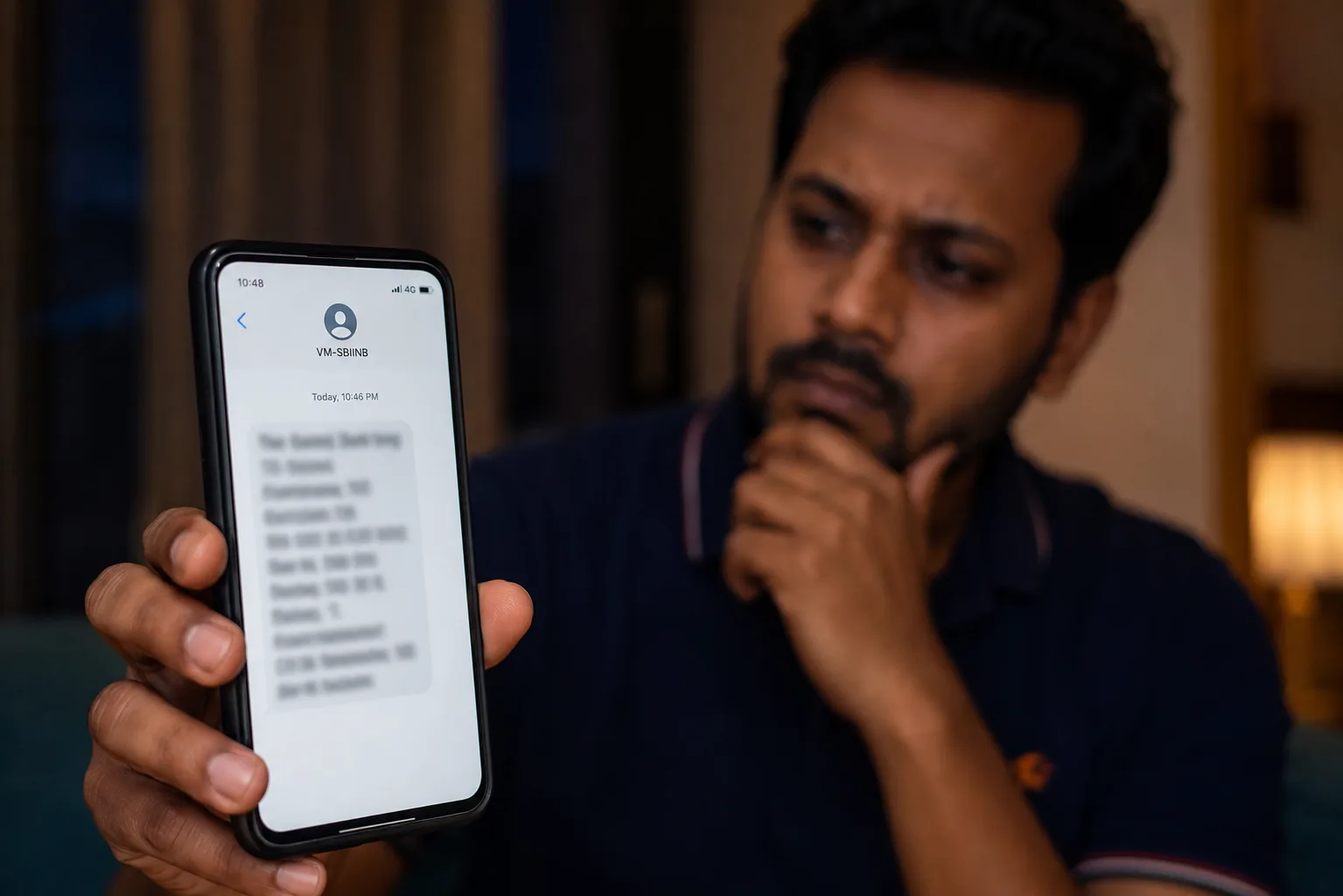
Your salary comes two days late this month. The EMI date arrives first. The bank tries to collect, the account has too little money, and the debit fails. An SMS lands on your phone. Your stomach drops. You wonder what the charge will be, and whether this will hurt your score. This is one of the most common money problems in India, and it is usually fixable if you act early.
An EMI bounce means the bank tried to collect your EMI, but the account could not pay, so the payment failed. That is all it means. It does not mean you have become a defaulter on day one. What matters is how quickly you fix it.
What usually follows, in order
- Bounce alert. You get an SMS, email or app message saying the debit failed.
- Bounce charge added. The bank adds its bounce charge to your loan account, plus GST.
- Late payment charge if unpaid. If the EMI stays unpaid after the due date, a late payment charge can apply on top.
- Reminders. The bank sends SMS alerts and may phone you.
- Reporting to the credit bureau. If the EMI stays overdue, the bank can report it, and your credit report can show the delay.
How the cost and risk grow with time
| Stage | What you may face | What you can do |
|---|---|---|
| Day of the bounce | Alert and a bounce charge | Pay the EMI the same day |
| A few days later | Late payment charge may apply; reminder calls | Pay and save proof |
| Weeks later | Overdue may reach the credit bureau; more calls | Pay, then check your report |
| Repeated bounces | Charges stack up; recovery contact; harder to get credit | Fix the cause or change the plan |
Each stage gives you a chance to act. Pay at the first or second stage, and the damage stays small. Wait through the later stages, and costs and stress grow.
We do not quote a CIBIL point drop here, because it varies from person to person. We explain how the effect works in a later section. For the general picture across banks, read our guide on what actually happens when your EMI bounces.
Why this guide sticks to IDFC FIRST Bank figures
Bounce charges differ from bank to bank. The numbers in this guide come from IDFC FIRST Bank’s own published fee page. They are as listed on the bank’s website and can change. Always confirm the current figure with the bank before you pay or dispute anything.
Why do bounces happen in the first place? The next section looks at six common reasons. Most of them are about timing and set-up, not about carelessness.

Why Does an IDFC FIRST Bank EMI Bounce?
Most bounces are small, boring problems. They are not signs of a bigger failure. Here are six causes, each with a plain example.
- Not enough balance on the debit date. The account held less than the EMI when the bank tried to collect. Say your EMI is ₹8,000 and the account shows ₹7,500 after a bill payment. The debit fails.
- Salary credit arrived after the EMI date. Your pay comes on the 5th, but your EMI date is the 2nd. The money is not there yet.
- The auto-debit mandate was rejected or not registered. A mandate (NACH, the auto-payment permission) is what lets the bank collect each month. If it failed to register, every debit can fail.
- The mandate limit is lower than the EMI. If you raised your EMI or took a top-up, the old limit may be too small.
- The account was changed or closed. A new account number or a closed account will stop the debit.
- A bank holiday or technical glitch delayed the debit. Sometimes the system, not you, is the cause.
What is a technical bounce?
A technical bounce is a failed debit caused by a mandate problem, not by your balance. You may have enough money in the account. The debit still fails because the mandate was rejected, expired or set up wrongly.
IDFC FIRST Bank’s fees page treats this separately. It lists technical bounce charges “from the 3rd consecutive bounce month until the mandate is registered.” In plain words, if the mandate stays broken for three months in a row, the bounce charge starts to apply. So fixing the mandate early matters.
Balance bounce versus technical bounce
| Balance bounce | Technical bounce | |
|---|---|---|
| Cause | Not enough money in the account | Mandate problem |
| Your balance | Too low | May be fine |
| Fix | Add money and pay | Re-register the mandate |
| Charge, per the bank’s page | EMI bounce charge | Charged from the 3rd consecutive bounce month until the mandate is registered |
Why the EMI amount itself matters
A heavy EMI is easier to miss. If you want to understand how the amount is set, see how banks calculate your EMI. When EMIs take a big share of your pay, small delays in salary can break the whole month.
Please remember this: a bounce does not make you careless. Salaries arrive late. Mandates fail. Banks have glitches. What counts is what you do next.
How to Know If Your IDFC FIRST EMI Has Bounced?
Sometimes the signs are loud, sometimes they are quiet. Look for these five.
- An SMS or email about a failed debit. This is the most direct sign. Check your spam folder too.
- A bounce charge line on your statement. Check your loan statement for a new charge entry.
- An overdue status in the loan section of the app. The app may show the EMI as due or overdue.
- A reminder call from the bank. A call asking about the EMI usually means the debit failed.
- Your account balance did not drop on the due date. If the money is still there, the debit did not go through.
What the reminder must say
RBI says reminders must state the applicable penal charges and the reason for any charge (RBI/2023-24/53, para 3(vii)). In plain words, the bank should tell you what it is charging and why. If your reminder does not say, ask for the breakup in writing.
Where to confirm your status
The safest place to confirm is the bank’s own app, website, or the customer care hotline listed on the bank’s website. We do not list a number here because contact details change. Take the number from the bank’s website on the day you call.
A quick self-check
| Question | If “yes” |
|---|---|
| Did you get a failed-debit SMS? | The EMI has bounced |
| Does your statement show a bounce charge? | The charge has been applied |
| Does the app show the EMI as overdue? | Pay the amount due now |
| Did the money leave your account? | The EMI has probably gone through |
What to say when you call the bank
Keep the call short and clear. A simple structure works:
- Give your loan number.
- Say: “My EMI of [amount] due on [date] shows as failed.”
- Ask: “What is the exact amount I must pay today, including charges?”
- Ask: “Please send the charge breakup to my registered email.”
- Note the date, time, and name of the person you spoke to.
Once you are sure it bounced, move to the fix. The next section gives six clear steps.
How to Fix an IDFC FIRST Bank EMI Bounce Step by Step?
Follow these six steps in order. Do the first two on the same day if you can.
1. Find the reason for the bounce. Check if it was balance, limit, or mandate. Your bank statement and the failure SMS usually say which.
2. Pay the overdue EMI. Use the bank’s app, website, or branch. Pay the amount the bank shows as due, which may include charges.
3. Save proof of payment. Keep the receipt or screenshot. Put it in a folder with the bounce alert.
4. Check your auto-debit mandate. Re-register it if it was rejected. Make sure the limit covers your EMI.
5. Ask for a charge breakdown in writing. The bank must show what it charged and why. Compare it with the figures in this guide.
6. Check your credit report later. Make sure the overdue mark is cleared. Our guide on how to check your CIBIL score on mobile shows how.
A mandate checklist
Before you re-register, check these four points:
- The account number is correct and active.
- The mandate limit is at least your EMI, with a small margin.
- The start and end dates cover the whole loan period.
- You received a confirmation of registration.
If the bank does not respond
Write to the bank’s grievance officer and quote your loan number and the dates. If you still get no answer, you can escalate to the RBI Ombudsman. Keep every reference number.
Asking for a charge waiver
You can ask the bank to waive a bounce charge. It is the bank’s choice, so keep the request polite and short. Include:
- Your loan number.
- The date of the bounce.
- One line on the reason, such as a late salary or a bank-side glitch.
- Proof that you paid soon after.
- A clear ask: “Please review and waive the bounce charge.”

FREED Expert Tip
Keep your EMI amount plus the bounce charge in the account 2 days before the due date. Action: Fund the account 2 days early.
Book My CallHow Much Are IDFC FIRST Bank EMI Bounce Charges?
Here is what IDFC FIRST Bank lists on its personal loan fees and charges page. All figures are before GST unless stated. They are as listed on the bank’s website and can change, so confirm them with the bank before you rely on them.
| Charge | As listed by IDFC FIRST Bank (before GST) |
|---|---|
| EMI bounce | 12% of the bounced EMI, minimum ₹400, maximum ₹1,000 |
| Technical bounce (mandate rejection) | Charged at the EMI bounce rate from the 3rd consecutive bounce month until the mandate is registered |
| Late payment | 12% a year (1% a month) or ₹300, whichever is higher; the page says no GST applies |
| GST | Applies on service charges (the bank’s FAQ states 18%) |
Worked examples for the bounce charge (GST at 18%)
| EMI | 12% of EMI | Charge applied | GST | Total |
|---|---|---|---|---|
| ₹3,000 | ₹360 | ₹400 (minimum) | ₹72 | ₹472 |
| ₹5,000 | ₹600 | ₹600 | ₹108 | ₹708 |
| ₹10,000 | ₹1,200 | ₹1,000 (cap) | ₹180 | ₹1,180 |
How to read the table
The minimum of ₹400 applies when 12% of your EMI comes to less than ₹400. That happens for EMIs below about ₹3,333. The cap of ₹1,000 applies when 12% comes to more than ₹1,000. That happens for EMIs above about ₹8,333. In between, you pay exactly 12% of the EMI.
How to work out your own charge
- Multiply your EMI by 0.12.
- If the answer is below ₹400, use ₹400. If it is above ₹1,000, use ₹1,000.
- Add 18% GST to that amount.
For example, with an EMI of ₹6,500: 12% is ₹780. That is between the minimum and the cap, so the charge is ₹780. GST at 18% is ₹140.40. The total is ₹920.40.
Adding the late payment charge
For a ₹10,000 EMI, the published bounce charge would be ₹1,000 plus applicable GST, subject to the loan’s terms. A separate late-payment charge may also apply. However, the exact charge depends on the calculation base, overdue period, and applicable fee schedule. Borrowers should request an itemised statement from IDFC FIRST Bank rather than assume that the late-payment charge is calculated directly on the EMI amount. We say “if both apply” because the bank decides how to levy them. Confirm with the bank.
What a bad stretch could cost
Say you have a ₹5,000 EMI and the bank levies the bounce charge each time it fails. Three failed debits in a row would mean ₹708 × 3 = ₹2,124, before any late payment charge. This is an illustration, not a promise of how your bank will bill you. It shows why fixing the cause early saves real money.
Other things to check
- Your own bank may also charge a separate auto-debit return fee, so check its schedule.
- The base on which the 1% late charge is calculated is not stated on the page. Ask the bank.
- Charges on credit cards follow separate rules.
Rates and ranges shown are indicative. Final terms decided by the bank. FREED is not a Loan Provider. No outcome is guaranteed. Please verify directly with your bank.
What If You Keep Missing IDFC FIRST Bank EMIs?
One bounce is a blip. Several bounces in a row need a plan. Take the options in this order.
1. Fix the cause first. Most repeat bounces come from a date and balance mismatch. Pick a debit date a few days after your salary arrives. Then keep a buffer in the account. This costs nothing and solves many cases.
2. Ask the bank about a plan change. If your income has dropped, talk to the bank early. Our guide on IDFC loan restructuring explains what to ask for. Put your request in writing, say why you cannot pay now and when you expect to recover. Approval is the bank’s decision, and it is not guaranteed.
3. If you are still paying, consider consolidation. If you have several EMIs on different dates and you can still pay each month, the FREED Debt Consolidation Program may help. It merges eligible unsecured loans into one EMI on one date.
4. Settlement, only as a last resort. For readers who genuinely cannot repay, read how IDFC FIRST Bank loan settlement works. FREED’s Debt Resolution Program is the related product. If a borrower is genuinely unable to repay the outstanding loan, a negotiated settlement may be considered, subject to the lender’s approval and internal policies. The lender decides whether to accept a reduced payment and how much, if anything, may be waived. A settled account may negatively affect future credit eligibility, and the reporting period depends on applicable credit-information practices. Borrowers should understand these consequences before accepting an offer.
Which option fits whom
| Your situation | The usual first step |
|---|---|
| One bounce, salary was late | Pay now and move the EMI date |
| Mandate keeps failing | Re-register the mandate |
| Income dropped, still paying | Ask the bank about a plan change |
| Many EMIs, still paying, stretched thin | Consider consolidation |
| Cannot repay, genuine hardship | Understand settlement as a last resort |
What repeated bounces can lead to
- Charges add up with each bounce.
- The account can be reported as overdue.
- Recovery calls can start.
- It can become harder to get a new card or loan.
- If you paid by cheque, a bounced cheque can attract legal action under Section 138 of the NI Act (a law on cheque bounce).
If recovery calls turn harsh
Recovery contact has limits. Read our note on RBI recovery agent rules to know where the line is. FREED Shield is open to everyone and helps you document and report harassment. It is not legal representation, and it does not stop calls.
How Can FREED Help If EMIs Keep Bouncing?
Think of Priya. She pays on time most months. But she has several EMIs on different dates, and her salary often lands a few days late. One EMI falls on the 2nd, another on the 8th, another on the 15th. Every month feels like a small race. When one date slips, one EMI bounces, and charges follow.
Many bounces come from too many dates and too much outgo. The fix is one EMI on one date.
That is what FREED’s Loan Consolidation Plan (Debt Consolidation Program, “Reduce My EMI”) does. It works in three steps:
- Share your loans. You add your existing loans, income, and EMI details on the FREED app.
- Get matched. FREED assesses your profile and matches you to a suitable lending partner from its network. If one partner says no, FREED tries others that suit your profile.
- Pay one EMI. A new loan pays off your eligible unsecured loans and card dues. You pay one EMI to one bank on one date.
Eligible borrowers may be able to combine multiple unsecured loans into a single repayment, subject to lending partner approval. The monthly EMI may decrease depending on the new loan’s interest rate, repayment tenure and applicable charges. However, a lower EMI could also increase the total interest paid over time. Consistent repayments may support credit-score improvement, but neither a lower EMI nor a particular credit-score outcome is guaranteed. The application and documentation process should be confirmed with FREED.
What does not change
- Consolidation helps prevent new bounces. It does not erase old ones.
- Charges already paid stay paid, and a past overdue entry that is correct stays on your report.
- The new loan can only be used to pay off your existing eligible debts.
FREED charges a success-based fee, and only when the consolidation is completed.
Who it is for. The Debt Consolidation Program is for people who are still paying but stretched thin. If you have already missed several EMIs, talk to FREED’s team. They will look at your situation and tell you what fits.
To learn more, read what debt consolidation is or see the Debt Consolidation Program. Not sure your EMIs are too heavy? The EMI Score tool scores affordability from 0 to 100 using your income, savings, existing EMIs and the monthly EMI you plan to commit to.
Rates and ranges shown are indicative. Final terms decided by the bank. FREED is not a Loan Provider. No outcome is guaranteed. Please verify directly with your bank.
How Much Does an EMI Bounce Affect Your CIBIL Score?
The honest answer is: it depends. We do not quote point drops, because they differ from person to person and from report to report.
Three things matter most
- How long the EMI stays unpaid. A bounce that you pay within a few days matters far less than one left overdue for weeks. The longer the delay, the stronger the signal to a future bank that repayment was difficult.
- How often it happens. One bounce among many on-time payments is a small mark. Repeated bounces form a pattern.
- How recent it is. A bounce from last month counts for more than one from years ago. Newer on-time payments carry more weight as time passes.
Why speed matters more now
RBI is moving banks and NBFCs toward weekly incremental credit data submission (RBI press release, 4 Dec 2025). In plain words, an overdue mark can reach the credit bureau faster than before. So paying promptly matters even more. The release does not give an effective date, so treat this as a direction of travel.
What to do to protect your score
- Pay the bounced EMI as soon as you see the alert.
- Keep proof of payment.
- Check your report a few weeks later to confirm the overdue is cleared.
- If an entry stays wrong, raise a dispute with the bureau and the bank.
- Keep card use low and avoid new loan applications while you recover.
A bounce is not a ban
A bounce does not lock you out of credit. Banks and NBFCs look at the whole picture, including your recent record. A clean run of on-time EMIs after a bounce helps.
For a full explanation, read the impact of a late payment on your credit score.
How to Stop EMI Bounces in Future?
You can make bounces rare with a few small habits. Each one has a reason.
- Move the EMI date to just after your salary day if the bank allows it. If your pay comes on the 1st, an EMI date of the 5th is safer than the 1st.
- Keep the EMI amount in the account 2 days early. This protects you from late-credit surprises.
- Check that your mandate limit is at least the EMI. If your EMI went up, the old limit may block the debit.
- Turn on SMS and app alerts for debits. You will know within minutes if a debit fails.
- Set a calendar reminder before the due date. A two-day-early nudge is enough.
- Keep proof of every payment. Receipts decide disputes, and they protect you if the bank’s record is wrong.
A simple monthly routine
| When | What to do |
|---|---|
| 3 days before the due date | Check the balance and the mandate |
| 2 days before | Top up the account if needed |
| On the due date | Confirm the debit went through |
| After 1 day | Save the payment proof |
| Once a quarter | Review your credit report for errors |
If your income is uneven
If your pay changes from month to month, keep one full EMI as a standing buffer in the debit account. Treat it as untouchable. It costs a little in idle cash, but it saves you the charges.
On recovery calls
If you are behind and the calls turn abusive, FREED Shield is open to everyone. It helps you document and report the behaviour. It does not stop the calls.
Do not lose heart. One bounce is fixable, and steady habits keep the next one away.
Sourcing and Verification
| Claim | Source |
|---|---|
| EMI bounce: 12% of EMI, min ₹400, max ₹1,000 (excl. GST); technical bounce from the 3rd consecutive bounce month; late payment 12% a year (1% a month) or ₹300; GST on service charges. The page is undated | IDFC FIRST Bank, FIRSTmoney personal loan fees and charges page |
| Penal charges not penal interest; no further interest on them; disclosure in agreement, KFS and website; reminders must state charges; credit cards excluded (paras 3(i), 3(vi), 3(vii), 5) | RBI/2023-24/53, Fair Lending Practice, Penal Charges in Loan Accounts, 18 Aug 2023 (effective 1 Jan 2024) |
| Weekly incremental credit data submission and faster error rectification | RBI press release, 4 Dec 2025 |

Mohit Juneja
Mohit Juneja writes educational content at FREED on debt management, credit scores, loan repayment, and borrowing best practices. His content is shaped by expert insights and industry knowledge, helping readers better understand their financial options and make informed decisions.
mohit.juneja@freed.care

FREED is India's trusted loan management platform. Founded in 2020 and headquartered in Gurugram, FREED has counselled 20 lakh+ people on personal loans, credit cards, and app loans. FREED charges fees only on successful settlement, not upfront. FREED does not handle secured loans (home loans, car loans, gold loans).
Media Mentions