IBC and SARFAESI: A Beginner's Guide
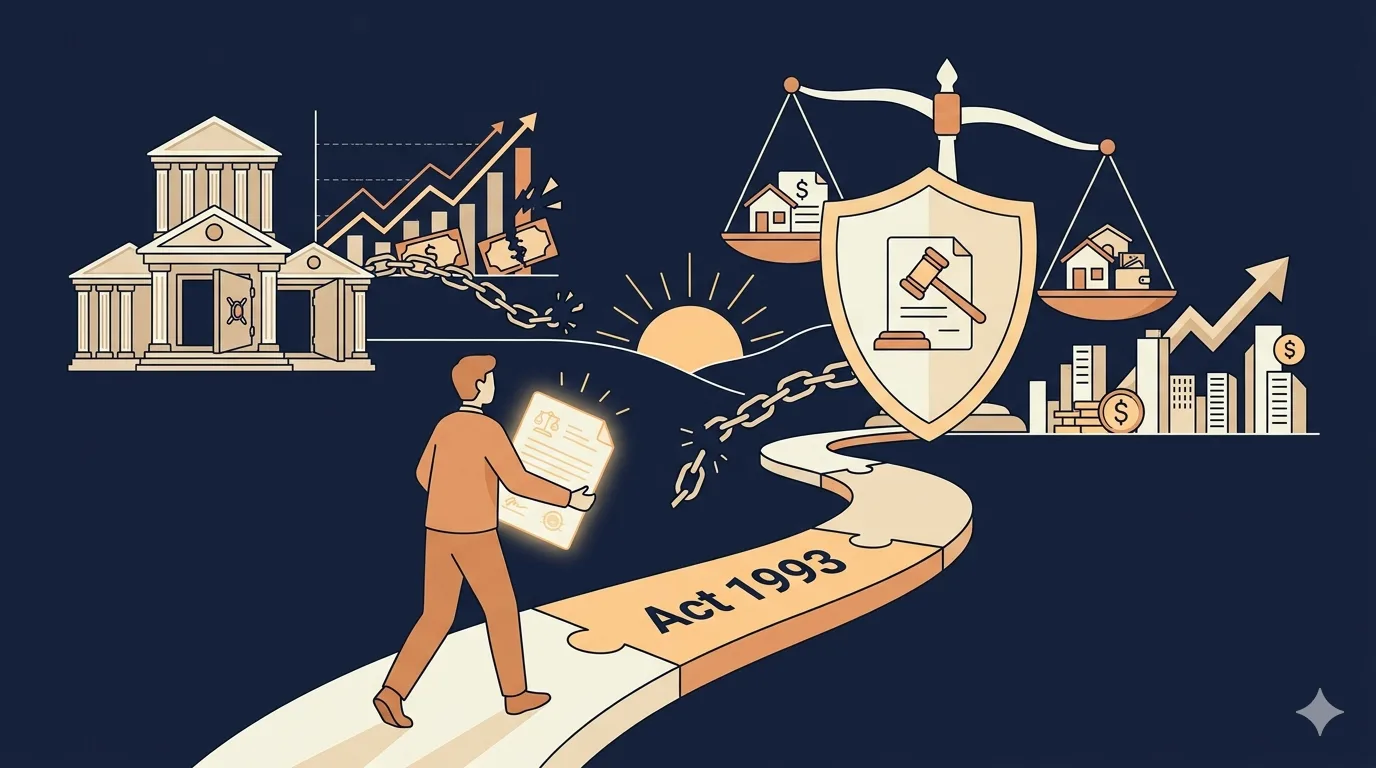
IBC provides a framework for insolvency resolution and related proceedings, while SARFAESI allows eligible secured creditors to enforce specified security interests without first obtaining a court order, subject to the Act and applicable rules.

Mohit Juneja
Reviewed by FREED India, Debt Resolution Specialists
 4.7/5
4.7/5 ₹3,200Cr+
 20,000+
 20,00,000+4.7/5₹3,200Cr+20,000+20,00,000+
What Are IBC and SARFAESI?
IBC is the law that lets creditors collectively resolve a debtor's insolvency through a formal process, it applies to companies, and separately, to individuals and personal guarantors. SARFAESI, by contrast, lets a single secured lender act on its own to recover a specific pledged asset. The full SARFAESI concept is worth reading in depth if you need that foundation first, this piece assumes it and focuses on the IBC connection.
The core distinction is that IBC provides a collective insolvency framework involving the debtor and its creditors, whereas SARFAESI primarily enables a secured creditor to enforce its security interest. SARFAESI is unilateral, one secured lender, acting alone, against one specific asset. Understanding insolvency versus bankruptcy as separate concepts is also worth reading, since IBC covers both, and the two words get used loosely in everyday conversation in ways that don't map cleanly onto the legal framework.
How this plays out differently in practice is worth walking through concretely.

Want to talk through your specific situation?
Get a free, honest read on your full financial picture.
Get a Free AssessmentHow Are IBC and SARFAESI Actually Different?
Who initiates each process differs meaningfully. IBC can be triggered by the debtor themselves, by a creditor, or, in personal insolvency cases, filed voluntarily or by a creditor against a guarantor. A secured creditor can initiate the statutory SARFAESI enforcement process without first filing an application before the DRT, although a borrower can subsequently challenge measures before the DRT under Section 17.
What's actually at stake differs too. IBC can lead to restructuring, resolution, or in personal cases, discharge of debt under court supervision, a comprehensive resolution of the debtor's overall position. SARFAESI focuses on enforcement of a secured creditor's security interest rather than providing a collective resolution of all of the debtor's debts.
Oversight differs as well. Corporate insolvency runs through the NCLT, with a resolution professional appointed to manage the process. Personal insolvency, including cases involving personal guarantors, runs through the DRT instead, the Debt Recovery Tribunal, which under IBC's personal insolvency framework serves as the Adjudicating Authority. SARFAESI has no such oversight body built into the process itself, unless and until it's actually challenged before a tribunal.
Which one is actually relevant to your situation is worth checking carefully, rather than assuming.
When Does Each One Apply to You?
- SARFAESI applies if you have a secured loan, property, gold, an FD-backed facility, and have defaulted on it specifically.
- IBC's personal insolvency process can apply if you're an individual with debt you genuinely can't service, secured or unsecured, though as a practical matter, it's currently notified mainly for personal guarantors to corporate debtors, not for the general salaried or self-employed borrower carrying ordinary personal loans and credit cards.
- It also applies if you personally guaranteed a business loan and the business has defaulted. This is a common, often overlooked trigger that catches people off guard specifically because they assumed the business's troubles were separate from their own.
- IBC's corporate process applies to companies, not individuals directly, relevant to you mainly if you're a director or guarantor of a defaulting company, rather than a direct party to the corporate proceeding itself.
Personal insolvency under IBC is covered in full elsewhere if you want the fuller eligibility picture, worth reading before assuming either process applies to your specific situation.
What Happens When Both Apply at the Same Time?
This is genuinely one of the more legally contested areas in this piece, and it's worth being precise rather than smoothing it into a simple rule.
Once corporate insolvency proceedings, CIRP, formally begin against a company, a moratorium under Section 14 of the IBC comes into effect. In Indian Overseas Bank v. RCM Infrastructure Ltd. (2022), the Supreme Court held that the Section 14 moratorium prevents continuation of SARFAESI proceedings against the corporate debtor's assets during CIRP.
What's genuinely more contested, and where courts have drawn a sharper line, is personal guarantors. In State Bank of India v. V. Ramakrishnan (2018), the Supreme Court held that the Section 14 moratorium is confined to the corporate debtor and does not cover its personal guarantors, so a creditor can still act against a guarantor even while CIRP is on. The Court held to that reasoning again in Tejas J. Shah v. Mantri Technology Constellations Pvt. Ltd. (2026), ruling that the moratorium shields only the corporate debtor, not its promoters, directors, guarantors, or related parties. So a corporate debtor's Section 14 moratorium does not automatically stretch to cover a guarantor's personal assets. Whether a specific SARFAESI action against the guarantor can go ahead still turns on the facts of that case.
There's a separate protection specifically for personal guarantors, though. Section 96 provides an interim moratorium in specified personal insolvency applications. Courts have differed in how this moratorium interacts with particular recovery measures, so its effect on SARFAESI should be assessed against the current case law and the facts of the case. At least one High Court ruling has held this can extend to SARFAESI action on the guarantor's own mortgaged property. This is an actively evolving area of law, with genuine doctrinal disagreement in how far it reaches, and it should not be treated as a settled, reliable protection without current legal advice specific to your facts.

What the Law Says
An IBC moratorium restricts specified legal and recovery actions against the relevant debtor or assets during the applicable insolvency process, subject to the scope and exceptions of the relevant provision. , though how this applies to an already-initiated SARFAESI action, and whether it extends to a personal guarantor rather than just the corporate debtor, remains a genuinely contested and evolving legal question.
Understand the MoratoriumThe Personal Guarantor Scenario
Personal guarantors of business loans are the group most likely to face both IBC and SARFAESI in practice, and understanding why matters more than treating this as a rare edge case.

A guarantor can be pursued personally through IBC's individual insolvency process even while the underlying business also goes through corporate insolvency separately, the two proceedings run on their own tracks. And if the guarantor pledged personal property, their own home, for instance, as security for the loan, SARFAESI can apply to that property independently of whatever's happening to the business itself. The Recovery of Debts and Bankruptcy Act, a related but genuinely distinct recovery law that also runs through the DRT, is worth knowing about too, since it governs a different category of recovery action a guarantor might separately face.

Freed Expert Tip
If you've personally guaranteed a business loan, don't assume the company's insolvency filing protects you, check your personal exposure separately and early.
Understand Your ExposureComparing IBC and SARFAESI
Feature | IBC | SARFAESI |
Who initiates | Debtor, creditor, or (personal cases) voluntary/creditor filing | The secured lender alone |
Applies to | Companies, individuals, and personal guarantors | Only secured loans (property, gold, FD-backed, etc.) |
Oversight body | NCLT (companies) or DRT (individuals/guarantors), with a resolution professional | None initially, DRT only if challenged |
What it resolves | Overall debt position, possible restructuring or discharge | One specific secured asset |
Effect on other recovery actions | Triggers a moratorium pausing other actions (contested how far this extends to SARFAESI and to guarantors, see above) | No moratorium effect on other proceedings |
FREED is not a legal service and does not handle IBC or SARFAESI matters. Figures and legal positions above are conceptual and subject to case-specific interpretation, verify against current legal sources before relying on any of it.
What Are Your Options If You're Facing Either Process?
Get legal advice early. Both IBC and SARFAESI contain important procedural requirements and deadlines, and the applicable timeline depends on the stage and type of proceeding.
Understand which process actually applies to you before assuming the worst. Many people conflate the two, or assume one automatically shields them from the other, when the actual position, as covered above, is considerably more specific than that. If IBC or personal insolvency is being considered because of overwhelming unsecured debt specifically, know that it's usually treated as a last resort, with serious long-term credit and legal consequences that extend well beyond the immediate relief it might offer. Exploring alternatives to bankruptcy before that stage is genuinely worth doing, rather than treating formal insolvency as the first option on the table.
How FREED Helps Before It Gets to This Point
Worth stating plainly: FREED doesn't handle SARFAESI or IBC filings, those are legal processes requiring a lawyer, not a debt resolution platform.
What FREED does help with is different. If unsecured debt, personal loans, credit cards, is the real driver pushing someone toward considering personal insolvency, FREED's Loan Settlement Plan negotiates that debt down directly, often avoiding the need to go that far in the first place. Weighing debt settlement against bankruptcy as two genuinely different paths is worth reading if you're trying to figure out which applies to your situation. This only applies to the unsecured side of things, never the secured loan or a SARFAESI matter itself, that boundary doesn't shift regardless of how the two debts happen to intersect in your own situation.
Are You in a Loan Trap? Quick Check
Move the slider to your total EMIs as a % of monthly salary. See your debt stress level instantly.
EMIs as % of Monthly Salary
A Few Things Worth Knowing
Sources
Claim | Source |
Once CIRP moratorium under Section 14(1)(c) is ordered, SARFAESI proceedings against the corporate debtor's assets cannot continue | Indian Overseas Bank v. RCM Infrastructure Ltd. (2022 SCC OnLine SC 634), decided May 18, 2022 |
Section 14 moratorium protects only the corporate debtor, not personal guarantors, directors, or promoters | Supreme Court ruling, July 2026 (case name to be confirmed against a current legal database before publish); consistent with multiple earlier High Court rulings |
Section 96 interim moratorium (personal insolvency, against a personal guarantor) is "debt-centric" and has been held by at least one High Court to extend to SARFAESI action on the guarantor's own mortgaged property | Sanjay Dhingra v. IDBI Bank Limited and Ors., Delhi High Court; this remains a genuinely contested and evolving area, |
IBC, Section 17, "Application against measures to recover secured debts," and Section 18, "Appeal to Appellate Tribunal" | SARFAESI Act, 2002, India Code (Government of India) |
DRT serves as the Adjudicating Authority for personal insolvency proceedings under IBC Part III | Insolvency and Bankruptcy Code, 2016, Part III, Section 79(1) |
Disclaimer
Rates, fees, tenures, and other loan-related information shown are indicative in nature and based on publicly available information and market inputs available at the time of publishing. The actual applicable interest rates, processing fees, eligibility criteria, loan amounts, repayment terms, and approval decisions are solely determined by the respective bank, NBFC, or financial institution based on the applicant’s individual profile, credit assessment, and prevailing internal policies.
FREED does not act as the lender and does not guarantee loan approval, final sanction terms, or accuracy of lender-specific policies that may be revised without prior notice. Financial institutions may modify their products, rates, and eligibility criteria from time to time at their sole discretion.
Users are advised to independently verify all applicable terms and conditions directly with the respective lender before making any financial decision or submitting an application. FREED shall not be held responsible for any discrepancy, rejection, revision, or decision taken by the lender in this regard.

Mohit Juneja
Mohit Juneja writes educational content at FREED on debt management, credit scores, loan repayment, and borrowing best practices. His content is shaped by expert insights and industry knowledge, helping readers better understand their financial options and make informed decisions.
mohit.juneja@freed.care

FREED is India's trusted loan management platform. Founded in 2020 and headquartered in Gurugram, FREED has counselled 20 lakh+ people on personal loans, credit cards, and app loans. FREED charges fees only on successful settlement, not upfront. FREED does not handle secured loans (home loans, car loans, gold loans).
Media Mentions