Debt Settlement vs Bankruptcy in India: Which One Is Right for You?
Debt settlement vs bankruptcy: both are paths out of a debt crisis, but they work completely differently. Debt settlement (also called OTS, or One Time Settlement) is a private negotiation where you pay a reduced lump sum to settle a loan. Bankruptcy, or personal insolvency under the IBC (Insolvency and Bankruptcy Code, 2016), is a court process where a tribunal manages your debts and assets. Settlement is faster, private, and keeps your assets intact. Insolvency is slower, public, and can involve losing property.
Mohit Juneja
Reviewed by FREED India, Debt Resolution Specialists
 4.7/5
4.7/5 ₹3,200Cr+
 20,000+
 20,00,000+4.7/5₹3,200Cr+20,000+20,00,000+
KEY TAKEAWAYS

Debt settlement and personal insolvency follow very different processes, and the time they take varies depending on the individual case.
After settlement, your credit report will generally show the account as "Settled," which may affect future borrowing decisions. Formal insolvency is widely cited as affecting your credit standing for considerably longer, often 10 or more years.
Under a settlement, your assets are not touched. No court has jurisdiction over your home or vehicle, because no collateral was pledged on an unsecured loan.
India's personal insolvency framework (IBC Part III) is still not fully operational for most individual borrowers. As of mid-2026, it is only fully in force for personal guarantors to corporate debtors.
Settlement is private, with no public record created. Insolvency filings are court proceedings and become part of the public record.
What Is Debt Settlement and How Is It Different From Bankruptcy?
Debt settlement and bankruptcy are not two versions of the same thing. They are legally different processes.
Debt settlement, or OTS (One Time Settlement), is a voluntary negotiation between you and your bank or NBFC (non-bank financial company). You propose a reduced lump sum, the bank agrees to accept it as full and final payment, and the loan is marked as settled. No court is involved.
Bankruptcy, or personal insolvency, is a formal court proceeding. In India, this falls under Part III of the IBC (Insolvency and Bankruptcy Code, 2016) where it has been notified, or under the older Presidency Towns Insolvency Act, 1909, and Provincial Insolvency Act, 1920, where it has not. A Resolution Professional, a court-appointed official, takes charge of cataloguing your debts and assets, and the process runs through a tribunal.
The two also differ sharply in speed. Industry data suggests settlement typically resolves in 4 to 12 months. Personal insolvency, by contrast, can take 2 to 5 years to work through the courts.
One more thing worth knowing: India's personal insolvency framework under IBC Part III is still not fully operational for most ordinary individuals. As of mid-2026, it has been notified mainly for personal guarantors to corporate debtors, not for the general salaried or self-employed borrower. We'll explain exactly what this means for you further down.
What Happens to Your CIBIL Score in Each Case?
This is usually the first question on every borrower's mind, so let's answer it directly. Both options hurt your CIBIL score. The severity and how long it lasts are very different.
With settlement, your account is marked "Settled" instead of "Closed." Settlement can affect your credit profile and may influence future borrowing decisions.
The good news: you can start rebuilding the moment the settlement is final. You don't have to wait out the full 7 years to see improvement.
With personal insolvency, the impact is broader and more lasting. Banks treat a formal insolvency filing as something closer to total financial failure, not just one bad loan. It is widely cited as effectively shutting you out of mainstream lending for a decade or more, since the process itself, and the assets it may touch, become part of the public record that any bank can see.
Recovery after settlement is realistic and faster than most people expect. Responsible credit behaviour over time can help strengthen your credit profile, although outcomes vary from person to person.e. FD-backed credit cards (cards secured against a fixed deposit) are usually the fastest tool for starting that climb, since approval doesn't depend on your CIBIL score.
What Happens to Your Assets: Will You Lose Your Home or Car?
This is usually the second biggest fear, right after the credit score question. Let's answer it directly, too.
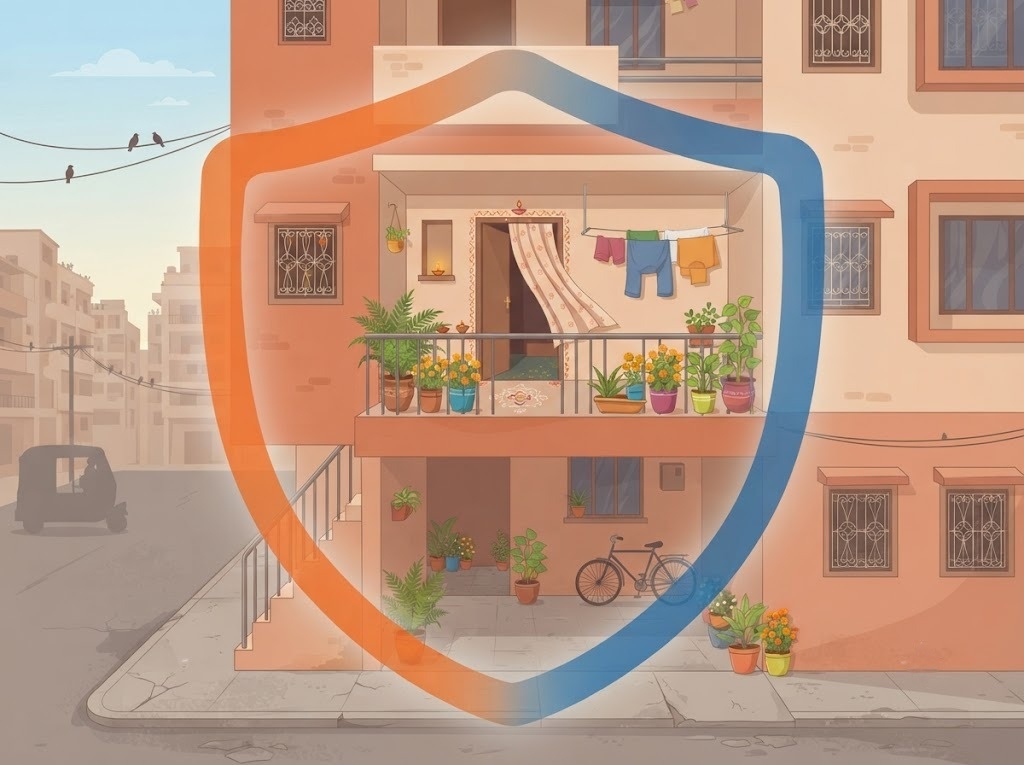
For unsecured loans, credit cards, personal loans, BNPL (buy now, pay later), and loan apps, settlement does not touch your assets at all. The bank never had a claim on your home or car in the first place, because no collateral was pledged when you took the loan. Settling a credit card bill cannot put your apartment at risk.
Personal insolvency works differently. A court-appointed Resolution Professional is legally required to list every asset you own. Anything that isn't exempt, including a second property or a high-value vehicle, can potentially be sold to repay creditors. Exempt assets are limited to things like basic clothing, essential household items, and the tools of your trade.
This matters: this entire comparison applies only to unsecured debt. FREED does not handle secured loans like home loans, car loans, or loans against property, and a secured loan settlement works on entirely different terms, set by the bank, not covered here.
How Does Personal Insolvency Actually Work in India?
Online forums often throw around "just file for bankruptcy" as quick advice. It's worth correcting that, gently but honestly, because the reality in India is more complicated.
The IBC, 2016, created a personal insolvency framework under Part III. But as of mid-2026, these provisions are not fully notified to ordinary individuals. They are fully in force only for personal guarantors to corporate debtors, people who personally guaranteed a company's loan. For everyone else, including most salaried and self-employed borrowers, the relevant law is still the Presidency Towns Insolvency Act, 1909, and the Provincial Insolvency Act, 1920, both dating from British-era India.
There is one narrow exception inside the IBC: the Fresh Start Process. It exists for borrowers in genuine extreme hardship, but the eligibility bar is strict. To qualify, your annual income must be under ₹60,000, your assets under ₹20,000, and your qualifying debts under ₹35,000. These thresholds exclude most urban salaried borrowers, whose income and debt levels are typically far higher.
Where personal insolvency does apply, filing happens through the DRT (Debt Recovery Tribunal), and a court-appointed Resolution Professional manages the process from there.
None of this is meant to alarm you. It's meant to be honest: for most Indian borrowers today, bankruptcy is not a simple checkbox solution. It is a narrow, slow, court-driven path that applies to a smaller group of people than online advice often suggests.
Which Option Is Right for Your Situation? A Clear Decision Guide
Rather than more prose, here is a straightforward way to think about where you stand.
Consider settlement if:
- Your debts are unsecured: credit cards, personal loans, BNPL, or loan apps
- You can arrange a lump sum from savings, family support, or selling a non-essential asset
- You want the matter to stay private
- You want to protect your home, car, and other assets
- You are looking for the faster route out
Consider insolvency if:
- Your debts span both secured and unsecured loans, and a secured creditor has already initiated legal action
- You genuinely qualify under the IBC Fresh Start criteria
- You are facing business insolvency rather than personal consumer debt
For most people reading this with unsecured loan distress in India, the honest answer is that settlement is often the more practical option for borrowers dealing with unsecured debt, depending on their individual circumstances. We're not going to push you toward FREED here, just toward clarity: if your situation matches the settlement column above, that route is usually worth exploring first.

Find Out If Settlement Is the Right Exit for You.
Free assessment. No commitment. Real numbers on your debt.
Get My Free AssessmentDebt Settlement vs Bankruptcy at a Glance
Feature | Debt Settlement | Personal Insolvency (IBC) |
Legal nature | Private voluntary agreement | Court proceeding (DRT) |
Resolution time | 4 to 12 months | 2 to 5 years |
CIBIL impact | A "Settled" status may remain visible on your credit report for an extended period. | Widely cited for 10+ years |
Asset risk | None, for unsecured loans | The court may liquidate non-exempt assets |
Privacy | Private, no public record | Public court record |
Availability | Available now for most borrowers | IBC Part III is not fully operational for most individuals |
Who controls the outcome | You, FREED, and the bank | Court and Resolution Professional |
This table applies to unsecured loans only. Secured loans (home loans, car loans) work differently. FREED does not handle secured loans.
What to Do When You Can't Pay: Steps Before Choosing Either Path
If you've already missed several EMIs by the time you're reading this, here is a grounded place to start, before you decide on either path.
First, stop taking new loans to pay off old ones. This always makes things worse, never better, since it just adds a new debt on top of the old one.
Second, write down every outstanding balance: the original loan amount, the current overdue balance, the EMI, and how many months you've missed. This single list becomes the foundation for whatever comes next.
Third, know that you don't have to handle recovery calls alone. Under RBI guidelines, you have rights around how and when agents can contact you, and you have the right to ask for time before responding and to seek guidance if needed.
Fourth, get a free debt assessment before you approach any bank yourself. Preparing before speaking with your lender can help you make a more informed decision.
FREED offers this assessment for free, with no obligation, as one option among others.
Finally, remember that settlement is something to explore only when repaying in full has genuinely become impossible, not simply because it feels more convenient than sticking to your EMIs.

What the Law Says
Under RBI guidelines, you have the right to written notice before any recovery action begins, and recovery agents cannot contact you before 8 AM or after 7 PM.
Learn Your Borrower RightsHow Debt Settlement Actually Works, and Where FREED Comes In
Settlement is not something a borrower chooses out of preference. Banks and financial companies only consider it when you are in genuine financial difficulty and are truly unable to repay the full amount.
Here is what the process actually looks like, in plain steps: you approach the bank with evidence of your hardship, both sides negotiate on how much of the principal can realistically be reduced, you agree on a lump sum, and once it's paid, the account is marked settled, a No Objection Certificate (NOC) is issued, and your CIBIL report is updated to show "Settled."
This is where FREED's role fits in.FREED can help you understand your options, organise documents, and support you through the settlement process where appropriate. FREED supports borrowers throughout the settlement process, with guidance tailored to their individual circumstances. Fees are success-based only. You are never charged unless the settlement actually goes through.
To be clear: FREED is one way to settle a loan, not the only way. FREED helps eligible borrowers settle unpaid or overdue loans at up to 50% less.* *, though the exact figure always depends on your bank and your specific situation.
*Rates and ranges shown are indicative. Final terms are decided by the bank. FREED is not a Loan Provider. No outcome is guaranteed. Please verify directly with your bank.
How Debt Settlement Works: Step by Step
Step 1: Stop Borrowing to Pay Old Debts. Continuing to take new loans to make minimum payments increases your total debt load without reducing what you owe. The first real step is recognising that the current repayment plan is no longer sustainable.
Step 2: List Every Outstanding Debt Write down each loan: the original amount, the overdue balance, the monthly EMI, and how many months you've missed. This single document is the foundation of any settlement negotiation.
Step 3: Get a Free Assessment First. Before contacting any bank, understand your full picture. A debt counsellor can help you understand your options and the factors that may affect settlement.
, and in what order. FREED offers this for free, with no commitment.
Step 4: Start Negotiation With the Bank or NBFC. Approach the bank with hardship documentation, such as medical records, salary slips, or proof of lost income. Propose a one-time lump sum you can realistically arrange. The bank assesses your ability to pay and decides whether to accept.
Step 5: Get the Settlement Letter and NOC Once agreed, the bank issues a settlement letter and, after payment, a No Objection Certificate (NOC). Keep both permanently. The lender will update your credit report as part of its reporting process. Timelines may vary.
Step 6: Start Rebuilding Your Credit. A "Settled" status may remain visible on your credit report for some time.
But credit rebuilding starts immediately. Secured credit cards, FD-backed instruments, and consistent repayment on any active accounts can help strengthen your credit profile over time.
Sources
Topic / Claim in Content | Source Link |
IBC 2016, Part III personal insolvency framework | |
Fresh Start Process thresholds (income ≤₹60,000; assets ≤₹20,000; debt ≤₹35,000) | https://www.indiacode.nic.in/bitstream/123456789/15479/1/the_insolvency_and_bankruptcy_code,_2016.pdf (Section 80) |
Presidency Towns Insolvency Act 1909 / Provincial Insolvency Act 1920 still governing most individuals | https://www.indiacode.nic.in/handle/123456789/2454 (Presidency Towns Insolvency Act, 1909) |
Debt Recovery Tribunal (DRT) as adjudicating forum | https://www.indiacode.nic.in/handle/123456789/1397 (Recovery of Debts and Bankruptcy Act, 1993) |
RBI guidelines recovery agent hours 8 AM–7 PM, written notice before recovery action | https://rbi.org.in/Scripts/NotificationUser.aspx?Id=12378&Mode=0 |
"Settled" CIBIL status visible for an extended period | Same flag as Blog 100 — recommend confirming exact retention period directly with TransUnion CIBIL rather than citing a statute. |

Mohit Juneja
Mohit Juneja writes educational content at FREED on debt management, credit scores, loan repayment, and borrowing best practices. His content is shaped by expert insights and industry knowledge, helping readers better understand their financial options and make informed decisions.
mohit.juneja@freed.care

FREED is India's trusted loan management platform. Founded in 2020 and headquartered in Gurugram, FREED has counselled 20 lakh+ people on personal loans, credit cards, and app loans. FREED charges fees only on successful settlement, not upfront. FREED does not handle secured loans (home loans, car loans, gold loans).
Media Mentions