How to Manage Bad Debts as an Individual
Managing bad debts means knowing which of your loans are hurting you, working out how much you can pay each month, and picking a next step that matches where each loan stands. The right step differs for loans you still pay and loans that have gone bad.
Mohit Juneja
Reviewed by FREED India, Debt Resolution Specialists
 4.7/5
 ₹3,200Cr+
 20,000+
 20,00,000+4.7/5₹3,200Cr+20,000+20,00,000+
Key Summary

How to manage bad debts: sort them by stage first, then pick a step for each group.
In our example, EMIs take ₹24,500 of a ₹38,000 salary, leaving a ₹6,500 monthly gap.
A bank usually marks a loan as bad after 90 days of missed EMIs.
RBI’s recovery-agent directions prohibit covered regulated entities from using recovery agents to contact borrowers before 8 am or after 7 pm. They also prohibit persistent calling, intimidation, harassment and threatening or anonymous calls.
Consolidation is for loans you still pay; settlement is for those you genuinely cannot repay.

Paying Several EMIs and Want One?
FREED’s Loan Consolidation Plan combines multiple loans into one EMI.
Reduce My EMIHow to Manage Bad Debts as an Individual
Sort your debts by stage, then act on each group. That’s the whole method, and it works because the right step for a loan you still pay is different from the right step for a loan that has gone bad. Doing nothing is the costly choice, since interest and charges keep growing while you wait.
Here are four steps.
List every debt. Write the balance, the interest rate and the status of each one, such as on time, missed or overdue.
Find your monthly gap. This is your salary, minus essentials, minus EMIs.
Sort your debts into three groups. The groups are by stage, and the next section shows how.
Pick a step for each group. Each group has its own first move.
Take Priya, 34, who has a card, a loan app, a BNPL (buy now, pay later) bill and a personal loan. She’s still paying everything on time, but her salary is gone by the 12th. And Ramesh, 41, who missed two EMIs and is getting calls. They both have “bad debts” in a loose sense, and they need different steps.
Be kind to yourself at this stage. Most people reach this point because of a medical bill, a job change or a few months of tight cash, not because they’re careless. What helps is a clear picture and a plan. Our pillar guide explains when debt needs a plan and how counselling fits in.
One quick note. “Bad debt” also means unpaid customer invoices in business, and that’s a different topic. This guide is about a person’s loans and cards. Next, let’s look at what counts as bad debt.
See What Share of Your Salary Goes to EMIs
Check how much of your pay your EMIs take today.
Check My EMI ScoreWhat Counts as Bad Debt for an Individual?
The term has two meanings, and the answer to each is different. Mixing them up leads people to the wrong step. Here are the two.
Costly debt you still pay. This includes credit cards, BNPL and stacked high-rate loans. You pay on time, but the cost is heavy.
Loans that have gone bad. These are loans with missed EMIs, which the bank has marked as bad after a period of non-payment.
The first kind is often fixable with a better plan. You’re still in control, and you have more options, such as a new plan with your bank or one combined EMI. The second kind needs more care, because the lender has stepped in and the choices narrow.
This matters because advice for one can hurt the other. A tip like “combine your loans” suits someone still paying. It doesn’t suit someone who has stopped, and we’ll be clear about that boundary throughout this guide.
For a full definition and ways to prevent bad debt in the first place, read our guide on what bad debt is and how to prevent it. This guide starts after you already have the debt. Its job is to help you decide what to do next. Let’s sort yours.
Want Every Loan and Card on One Page?
See your accounts and balances in plain words before you decide.
Check My Credit InsightsHow Do You Sort Your Bad Debts Into Three Groups?
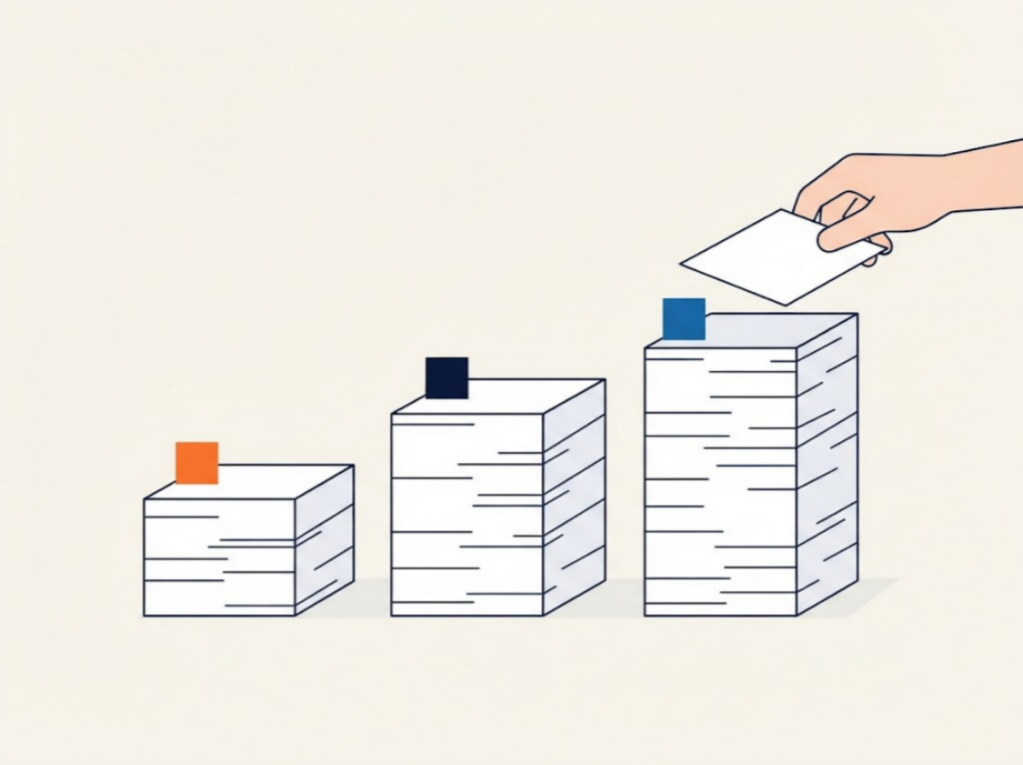
Stage decides the step. So the first job is to sort each loan by where it stands today. Here are the three groups.
Group | What it looks like | First step |
|---|---|---|
1. Still paying, but stretched | Every EMI is on time, but they take most of your pay | A plan change with your bank, or consolidation |
2. Missed one or two EMIs | A payment or two is late, but the loan isn’t yet marked bad | Call your bank and ask about your options, before anything else |
3. Loan gone bad, or recovery calls have started | Usually after about 90 days of missed EMIs | Know your rights, then your options |
Here’s how to read the table.
Group 1 is the largest, and it has the most choices. You haven’t missed anything, so the goal is to make the monthly load lighter and cheaper.
Group 2 is the one where speed matters. A missed EMI is easier to handle in the first week than in the third month.
Group 3 is where the lender has changed its approach. Banks use stage names such as SMA and NPA, and we explain them elsewhere. A bank usually marks a loan as bad after 90 days of missed EMIs, though your bank’s own terms apply.
One person can have debts in more than one group. Priya might have a card and a BNPL bill in group 1, and a loan app that’s two months behind in group 2. So sort loan by loan, not person by person. For the stages in detail, read our guide on NPA, SMA and recovery stages.
How Do You Work Out Your Monthly Gap?
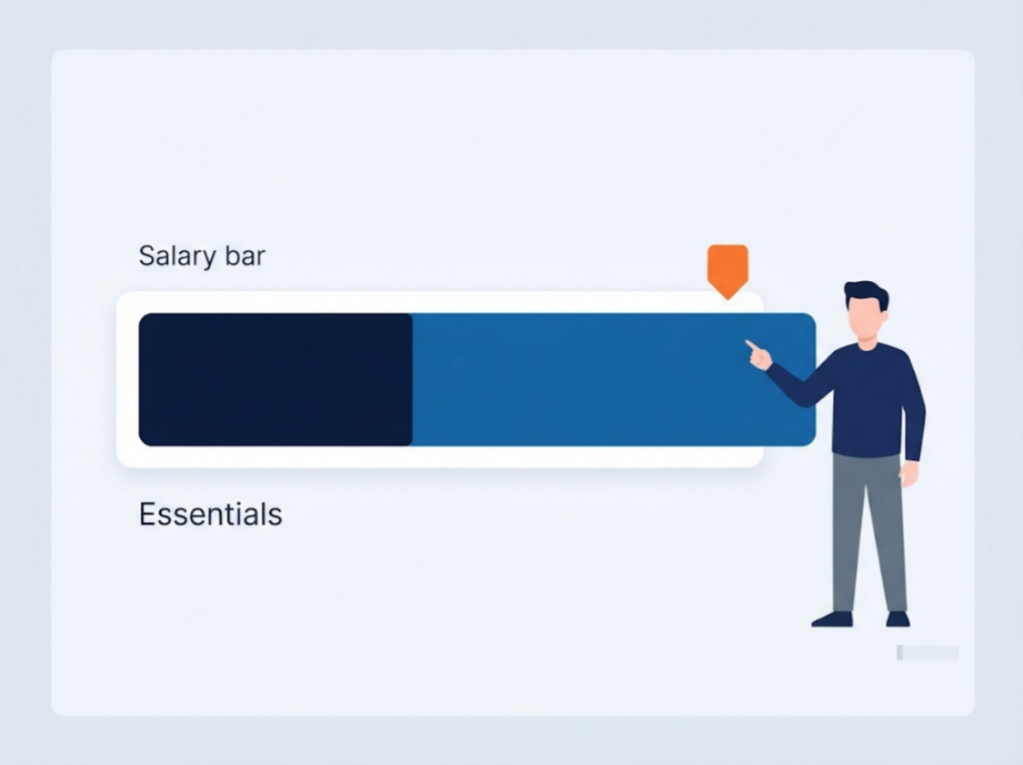
Your monthly gap tells you how big the problem is. It’s one line of arithmetic, and it turns a vague worry into a number. Here’s the formula.
Salary minus essentials minus EMIs equals your gap.
Here’s an illustrative example. The figures are invented, and they aren’t any real person’s numbers.
Item | Monthly amount |
|---|---|
Salary | ₹38,000 |
Essentials (rent, food, bills, transport) | ₹20,000 |
EMIs | ₹24,500 |
Gap | −₹6,500 |
The gap is ₹38,000 − ₹20,000 − ₹24,500, which is minus ₹6,500 a month. Over six months, that’s ₹39,000 that doesn’t exist. The EMIs alone take 64.5% of the salary.
Here’s what the number tells you.
A negative gap means something has to change. Either the payments, the costs or the income.
Borrowing to cover it makes the gap grow. A new card or app loan adds a new EMI to the pile.
The size of the gap helps you pick a step. A small gap may need a plan change. A large one may need more.
Essentials are your choice of words, so be honest with them. Include rent, food, bills, medicines, school fees and transport. Leave out anything you could pause for a few months. If you’re unsure, our guide on what loan consolidation means explains how a combined EMI changes the monthly figure.
We aren’t giving a pass mark. The 50% figure is sometimes used as an illustrative reference, but it is not a universal financial benchmark or an RBI-prescribed limit. Whether your EMI burden is manageable depends on your essential expenses, household responsibilities and other financial commitments. In this example, the negative monthly gap is the more important indicator.

FREED Expert Tip
Write down your gap before any call with a bank. A number makes your ask clear and shows you’ve looked at the problem. Check your EMI share in minutes.
Check My EMI ScoreWhat Can You Do If You’re Still Paying but Stretched?
This group has the most choices, and the best chance of fixing things early. Here are three, in the order to try them. Each one costs more effort than the last.
Ask your bank for a new plan, in writing. Options include a longer tenure, a lower rate or a short break. Ask what each would do to your total cost.
Count the cost of stretching. More months means a lower EMI, and it usually means more interest overall. Ask for the total you’d repay, not just the new EMI.
If several loans make it hard to manage, combine them into one EMI. Consolidation replaces several loans with one, so you have a single payment and a single due date.
Take the first one seriously. A bank that agrees to a change gives you relief without a new loan. Write down the date of the call and the name of the person, and ask for the new terms by email. We can’t promise your bank will agree, but asking costs nothing.
On the third option, here’s the boundary. Consolidation fits people who are still paying on time. It’s a way to lighten and tidy a load you’re carrying. It isn’t a way to fix missed payments, and we’ll say more about that in the next section.
FREED’s approach is covered in the last section of this guide. For who usually qualifies, read our guide on whether you can consolidate your debt. Next, let’s look at what to do after a missed EMI.
Combine Your Loans Into One Lower EMI
FREED’s Loan Consolidation Plan can reduce your monthly EMI burden by up to 50%.*
Reduce My EMIWhat Should You Do After Missing an EMI or Two?
Act in the first week. A missed EMI is easier to handle early, and banks tend to be more open when you call before things pile up. Here are four steps.
Call your bank before the next due date and say why. A short, honest reason helps, such as a delayed salary or a medical cost.
Ask what options it can offer, in writing. Ask for the answer by email.
Pay what you can, if the bank agrees. A part payment may show good faith, but ask first.
Keep a note of every call. Write the date, the person’s name and what was said.
Here’s what not to do.
Don’t ignore calls. Silence usually makes the next step harder.
Don’t borrow on a card to pay the EMI. You’d move the problem and add a new one.
Don’t take a new loan from an app you haven’t checked. A quick loan can come with heavy charges.
We aren’t saying a missed EMI always leads to default. Many people recover with one honest call. But the longer it sits, the fewer choices you keep.
If you’ve missed payments, talk to your bank first. FREED’s team can also talk through your options with you. We don’t suggest a self-service plan here, because the next step depends on your whole picture. For the full steps on overdue loans, read our guide on what to do when a loan becomes overdue.
Not Sure What Your Salary Can Carry?
Check your EMIs as a share of your salary before you call your bank.
Check My EMI ScoreWhat If the Loan Has Already Turned Bad?
Settlement is not something a borrower chooses out of preference. It’s an option for people who genuinely cannot repay in full, and it comes after the other options. If you can still pay, a bank plan change is usually a better first move.
For many term loans, an account is generally classified as an NPA when interest or principal remains overdue for more than 90 days. The applicable classification rules may differ by loan category. After that, the lender may step up its recovery efforts. This is the stage where choices narrow, and where clear information matters most.
RBI’s framework on compromise settlements (RBI/2023-24/40, dated 8 June 2023) requires covered regulated entities to maintain Board-approved policies for compromise settlements. It also provides for a cooling period before fresh exposure to the borrower, with a minimum period of 12 months for non-farm credit exposures. The applicable requirements depend on the regulated entity and the nature of the settlement.
There are real consequences, and you should know them before you go further.
The loan is marked “Settled” on your credit report. An account settled for less than the full outstanding amount may be reported as ‘Settled’ rather than ‘Closed’, depending on the lender’s reporting and the applicable credit-reporting requirements. This status can affect how future lenders assess your credit application.
Future loans can be harder. The cooling period above is one reason.
The bank decides. Terms differ from one bank and one borrower to another.
It takes time. Settlement is rarely quick, and no result is guaranteed.
We don’t suggest consolidation here. A new loan to cover loans that have gone bad doesn’t fit, and it can make things worse. Our pillar guide covers help beyond a counselling session for people in this position. For what default means and what your rights are, read our guides on what happens if you default on a loan and the rights of a borrower on unsecured loans.
Can’t Repay Your Loans in Full?
If you genuinely cannot repay your loans, FREED negotiates with your lenders to settle them for less than 50%* of your outstanding dues.
Settle My LoansHow Do You Handle Recovery Calls While You Sort This Out?
You have rights, even when you owe money. Knowing them lets you stay calm and clear on the phone. Here’s what RBI says, and what you can do.
RBI’s direction on recovery agents (RBI/2022-23/108, 12 August 2022) says regulated entities must not have recovery agents call before 8 am or after 7 pm. It also bars persistent calling, intimidation or harassment, and threatening or anonymous calls. The direction applies to banks, NBFCs, co-operative banks and similar entities, and it doesn’t apply to microfinance loans covered by a separate direction.
Here’s how to act on it.
Note the time of every call. A call outside the hours above is worth recording.
Ask the caller’s name and company. The direction doesn’t say agents must identify themselves, but asking is sensible, and you can write it down.
Stay calm and keep a record. Write the date, the number and what was said.
Complain to the bank if calls are threatening, harassing or outside the hours. Raise it in writing first, and keep a copy.
If the bank doesn’t resolve it, RBI’s Ombudsman scheme covers complaints about banks and certain NBFCs. You approach the entity first, and if you get no reply in 30 days, or you’re unhappy with the reply, you can go to the Ombudsman at cms.rbi.org.in, by email or by post. It costs nothing.
FREED Shield is available to everyone. If you are facing recovery agent harassment, FREED helps you understand your legal rights as a borrower, report inappropriate recovery practices, and raise complaints with your lender. Where harassment is frequent, our experts speak to recovery agents on your behalf. And if you receive a legal notice about your loan, FREED helps you understand your options and draft a suitable reply. You can read more on the FREED Shield page.
For the rules in detail, read our guides on RBI guidelines for loan recovery and the loan recovery agent harassment complaint process.

Not Sure Which Option Fits You?
Open the FREED app, add your details and see which plan fits your situation.
See My Options on FREEDWhat Should You Never Do With Bad Debt?
A few habits make bad debt worse, and they’re easy to avoid once you know them. Here’s the short list, for every group.
Don’t hide from it. Unopened letters and unanswered calls tend to grow into bigger problems.
Don’t pay one debt with another. Moving a balance from one card or app to another adds fees and doesn’t reduce what you owe.
Don’t pay an upfront fee to anyone who guarantees a result. Ask why a promise is possible, and ask for the terms in writing.
Don’t sign anything you haven’t read. If a line isn’t clear, ask for it in plain words.
Don’t give up essentials to pay a loan. Rent, food and medicines come first, and a plan has to leave room for them.
Don’t stop talking to your bank. Even a short call can open a choice you didn’t know about.
Each of these has a simple opposite. Open the letters, write down the numbers, ask your questions and keep a record. These aren’t dramatic steps, and they work because they’re small enough to do today.
Pay particular attention to the second. Many people fall into a loop where each new loan pays the last one. The monthly load grows, the dates multiply, and the gap gets wider. If you notice yourself doing this, it’s a sign that the plan needs to change, not that you need to try harder.
For a wider look at your options, read our debt relief in India guide. And if you’re ever unsure about a company’s offer, ask for everything in writing before you pay.
See What Your EMIs Take Today
Check your EMIs as a share of your salary before you decide.
Check My EMI ScoreHow Do You Keep an Eye on Your Credit Report While You Fix This?
Your credit report shows what lenders see, so check it early and again later. It also helps you catch mistakes. Here’s how to use it while you work through your debts.
RBI requires each credit information company to provide an individual with one free full credit report, including the credit score, once per calendar year, on request after identity verification.
Here are three habits.
Read it once now. Check that every loan and card on the report is yours, with the right balance.
Note the status of each account. It should match what you know, such as on time, missed or closed.
Read it again after about three months. See whether the changes you made have shown up.
If something looks wrong, such as a loan you don’t recognise or a balance that’s too high, raise it with the lender and the bureau, and attach your proof. Keep copies of your payment receipts and any closure letters. They’re your best evidence if a dispute drags on.
Don’t expect the report to improve overnight, and don’t count on a particular score. The report shows what’s recorded, and your job is to make sure it’s accurate. For how to request it, read our guide on the annual credit report.
See Your Accounts Next to Your Report
Your loans, cards and balances in plain words.
Check My Credit InsightsWhat Does a 30-60-90 Day Plan Look Like, and Where Does FREED Fit?
A plan with dates is easier to follow than a good intention. Here’s a simple one, in three blocks. It works for most people, and you can adjust it.
Days 1 to 30: Get the picture.
List every debt with its balance, rate and status.
Work out your monthly gap.
Sort your debts into the three groups.
Call your bank, and ask for options in writing.
Days 31 to 60: Put the plan in place.
Get the agreed plan in writing.
Start it, and set auto-pay for every EMI you can.
Keep a note of every call.
Days 61 to 90: Review.
Check your gap again.
Read your credit report.
If the gap hasn’t closed, change the plan, and consider the next step for each group.
Be honest at day 90. If the gap has closed, keep going. If it hasn’t, that’s useful information, and it points to the next step in the groups above.
Now, where FREED fits. FREED is a company that charges, and its work matches the stages in this guide. Over 20 lakh people trust FREED, India’s trusted loan management platform. For many readers, the question of how to manage bad debts comes down to which stage they’re in.
For people still paying. If most of your salary goes towards paying multiple EMIs, FREED’s Loan Consolidation Plan helps you combine multiple loans into a single monthly EMI. This can reduce your monthly EMI burden by up to 50%.*
Here’s how it works:
FREED assesses your financial profile.
FREED matches you to a lending partner from its network.
The partner disburses one new loan that pays off your existing eligible unsecured loans and card dues.
FREED handles the process end to end, 100% online.
You’re left with one loan, one EMI and one due date.
Your credit score isn’t hurt by consolidation, and it tends to improve as you pay on time. FREED doesn’t charge you a fee for consolidation. The lending partner’s processing or foreclosure fees may apply, so check the Key Facts Statement. This is only for people who are still paying. If you’ve missed payments, don’t use it.
For people who cannot repay. Settlement is not something a borrower chooses out of preference. If you genuinely cannot repay your loans, FREED negotiates with your lenders to settle them for less than 50%* of your outstanding dues. The bank decides, no percentage is guaranteed, and the process takes time.
Your settlement savings sit in an account in your own name.
For recovery pressure. FREED Shield is described in the recovery-calls section above, and it’s open to everyone.
Not sure which stage you’re in? FREED’s team can assess your situation and tell you what options are available. You can read about the Loan Consolidation Plan and the Loan Settlement Plan, see what happens when you join a program, or go back to our pillar on what loan consolidation means.
Rates and ranges shown are indicative. Final terms decided by the bank/lender. FREED is not a Loan Provider. No outcome is guaranteed. Please verify directly with your bank.
Outcomes vary by lender and borrower profile. Settlement terms are decided by the lender. No percentage is guaranteed.
Combine Your Loans Into One EMI With FREED
One monthly EMI instead of several, with the process handled for you.
Reduce My EMI
Mohit Juneja
Mohit Juneja is FREED’s Content & Communication Lead with 12+ years of experience across content, media, advertising and digital communications. He holds a postgraduate diploma in Communications from Xavier Institute of Communications, Mumbai, and has worked with organisations including NDTV, The Indian Express, McCann Worldgroup and NABARD.
At FREED, he leads content and communication across loan management, debt resolution, debt consolidation and financial well-being. His work combines research, storytelling and consumer-focused communication to make complex financial topics easier to understand and act on. He has also scripted and produced 11 documentaries on rural development and agriculture for NABARD, with film's selected for the Mumbai International Film Festival.
mohit.juneja@freed.care

FREED is India's trusted loan management platform. We help India settle their loans, consolidate their EMIs, improve their credit score, and manage their loans better. Over 20 lakh people trust FREED. We have managed more than ₹3,500 crore in loans and saved our users over ₹450 crore.
Media Mentions