What is bad debt and how can you prevent it
Not all borrowing is a mistake. A home loan, an education loan, even a reasonable business loan can genuinely build your financial future. Bad debt is a specific, narrower category, borrowing that costs more than the value it delivers, and it is worth understanding exactly what defines it, because that clarity is what actually prevents it.
Mohit Juneja
Reviewed by FREED India, Debt Resolution Specialists
 4.7/5
4.7/5 ₹3,200Cr+
 20,000+
 20,00,000+4.7/5₹3,200Cr+20,000+20,00,000+
Key Takeaways

Bad debt is not a moral failing, it is a specific, identifiable category, borrowing at high interest for something that depreciates, gets consumed, or does not build future value, where the cost of borrowing exceeds the benefit gained.
The clearest test is asking two questions before borrowing: will this purchase or asset still hold value later, and could I realistically pay this off quickly without straining my budget? Debt that fails both is generally bad debt.
Common examples include credit card balances for consumed purchases, high-interest personal loans for discretionary spending, stacked BNPL commitments, routine cash advances, and borrowing to sustain a lifestyle beyond actual income.
Prevention comes down to a small number of specific habits, applying the test before borrowing rather than after, maintaining an emergency fund, and setting a clear, personal rule for what credit is genuinely for.
If bad debt has already accumulated to a level that feels difficult to manage, FREED can help through consolidation or settlement, rather than continuing to service debt that offers no lasting value in return.
Defining Bad Debt in Practical, Not Moral, Terms
"Bad debt" can sound like a judgement on the person carrying it, but it is more useful, and more accurate, to think of it as a specific financial category rather than a character trait. Bad debt is borrowing where the cost, generally high interest, is not matched by any lasting value gained in return, the asset or purchase it funded depreciates, gets consumed, or disappears, while the obligation to repay, with interest, remains.
This distinction matters because it shifts the conversation away from blame and towards something genuinely useful, a specific test that can be applied before any borrowing decision, rather than a vague sense that some debt is simply "irresponsible."

Want an honest read on whether your current debt is good, bad, or somewhere in between?
Talk to a FREED Expert for free.
Connect with FREED ExpertGood Debt vs Bad Debt: The Test That Actually Matters
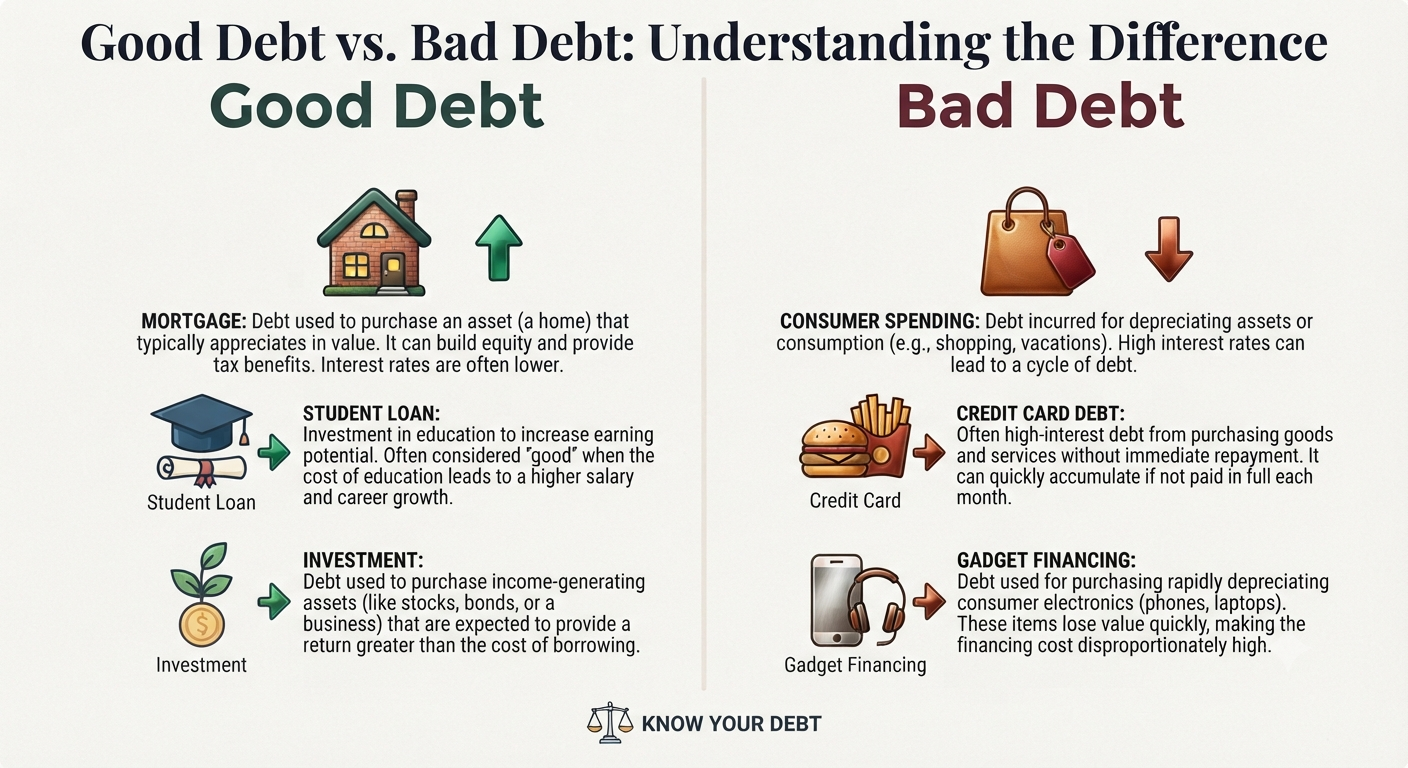
A practical way to sort any specific debt is to ask two questions. First, does this borrowing fund something that holds or builds value over time, an education, a reasonably priced home, a business investment, or does it fund something that depreciates immediately or gets consumed entirely, a meal, a gadget bought on impulse, a vacation. Second, does the interest rate and repayment structure genuinely fit your budget, or does it stretch your finances to a point where a single unexpected expense would derail the repayment plan entirely.
Debt that funds lasting value at a reasonable, manageable cost tends to fall on the "good" side, a home loan, a well-considered education loan. Debt that funds something with no lasting value, at a high interest rate that already strains the budget, is the specific combination that defines bad debt.
Example 1: Credit Card Debt for Depreciating, Consumed Purchases
The most common form of bad debt in India is a credit card balance carried over specifically because of spending on groceries, dining, clothing, or gadgets, purchases that are consumed or depreciate quickly, financed at 36 to 42% annual interest.
This is a clear example of the test failing on both counts, the purchases themselves hold no lasting financial value once made, and the interest rate is high enough that carrying any balance meaningfully increases the total cost far beyond the original purchase price, often for months or years after the item itself has been used up or lost most of its value.
Example 2: High-Interest Personal Loans for Non-Essential Spending
A personal loan taken specifically to fund a large discretionary expense, an elaborate celebration, an expensive gadget, a vacation, at a typical unsecured interest rate of 12 to 24%, is another common example, particularly when the loan amount is large relative to income.
Unlike a credit card used for small, routine purchases, this kind of loan is often taken deliberately and consciously, which makes it worth flagging specifically, the deliberateness of the decision does not change whether it passes the underlying test. If the amount borrowed funds something with no lasting value, the loan is bad debt regardless of how carefully it was planned.
Example 3: BNPL Stacked Across Multiple Small Purchases
BNPL used occasionally, for a single, planned purchase, paid off within its interest-free window, does not typically qualify as bad debt. The specific pattern that does is stacking several BNPL commitments simultaneously, each individually small, for purchases that are consumed or depreciate quickly, where the combined monthly obligation across several plans becomes a meaningful strain, and where missed deadlines begin triggering fees and interest on what was originally marketed as interest-free credit.
Example 4: Cash Advances Used as a Routine Cash Flow Fix
A credit card cash advance, used occasionally in a genuine emergency, is a specific, understandable exception. Cash advances used repeatedly, as a routine way to bridge a monthly cash flow gap, are a clear example of bad debt, since they carry no grace period, a separate fee of 2.5 to 3% charged immediately, and an interest rate typically higher than standard purchases, all for cash that is generally used for consumption rather than anything holding lasting value.
Recognise one or more of these patterns in your own spending?
Talk to a FREED Expert for free.
Talk to a FREED ExpertExample 5: Borrowing to Fund a Lifestyle Income Cannot Support
A broader, less transaction-specific example is a general pattern of borrowing, across credit cards, personal loans, and BNPL together, to sustain a lifestyle, dining out, travel, shopping, that current income does not actually support without that ongoing borrowing.
This is arguably the most consequential form of bad debt, since it is rarely a single decision but an accumulated pattern across many small ones, each individually similar to the examples above, that together represent a structural mismatch between actual income and actual spending, bridged continuously by high-interest credit rather than addressed directly.
Why Bad Debt Is So Easy to Fall Into Without Noticing
Bad debt rarely feels like bad debt at the moment it is being taken on. A credit card swipe for dinner, a BNPL plan at checkout, a small personal loan for a celebration, each individual decision is small, socially normal, and easy to justify in isolation, "it's just this once," "I'll clear it next month," "everyone does this for a wedding."
It is the accumulation of many individually small, easily justified decisions, rather than any single dramatic one, that typically produces significant bad debt over time. This is precisely why the specific test described earlier is useful, it gives a concrete, repeatable way to evaluate an individual decision in the moment, rather than relying on a vague, after-the-fact sense that something has gone wrong only once the total has already grown large.
Prevention Step 1: Apply the Test Before You Borrow, Not After
The single most effective prevention habit is applying the two-question test, does this hold or build value, and does the cost genuinely fit my budget, before a borrowing decision is made, not as a reflective exercise afterward. This means pausing specifically at the moment of a credit card swipe for a non-essential purchase, a BNPL checkout, or a personal loan application, and asking these two questions directly, rather than assuming the decision is fine simply because it feels manageable in the moment.
Prevention Step 2: Build an Emergency Fund So Bad Debt Never Becomes the Default
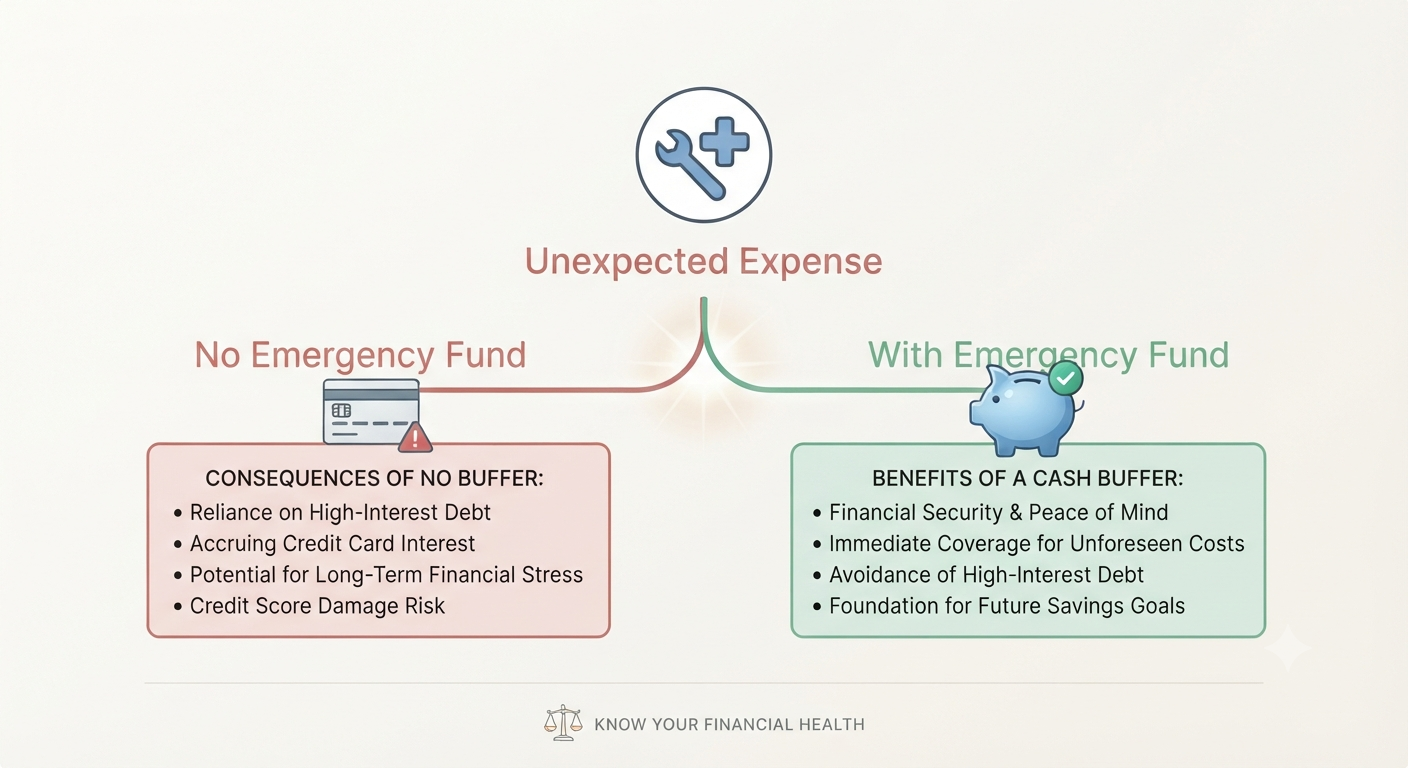
A significant share of bad debt exists specifically because an emergency fund does not, an unplanned expense arrives, and the fastest available option, a credit card balance, a cash advance, a quick personal loan, becomes the default response. A starter emergency fund of even one month of essential expenses removes this default option entirely for a genuine emergency, meaning the fastest, most convenient credit is no longer the only available choice at the exact moment it is most likely to be reached for.
Prevention Step 3: Separate Wants From Needs Before Reaching for Credit
A specific, practical habit is pausing before any non-essential purchase to honestly categorise it as a want or a need, and applying a stricter standard to financing a want on credit specifically. A need, a genuine medical expense, an essential repair, may reasonably justify borrowing if no other option exists. A want, a discretionary purchase that could reasonably be delayed or saved for instead, generally should not be financed through high-interest credit, since delaying it costs nothing beyond patience, while financing it costs real, compounding interest on something that will not hold its value.
Are You in a Loan Trap? Quick Check
Move the slider to your total EMIs as a % of monthly salary. See your debt stress level instantly.
EMIs as % of Monthly Salary
Prevention Step 4: Set a Personal Rule for What Credit Is and Is Not For
A specific, written personal rule, decided in advance rather than in the moment of a purchasing decision, removes much of the ambiguity that leads to bad debt. For example, a rule that credit cards are used only for purchases that can be paid in full within the same billing cycle, or that a personal loan is only ever taken for something that will still hold value in five years, gives a clear, consistent standard to apply, rather than evaluating each decision fresh, under whatever pressure or excitement is present at that specific moment.
Want help setting up a personal framework that fits your specific spending patterns?
Talk to a FREED Expert for free.
Talk to a FREED ExpertPrevention Step 5: Review Existing Debt Honestly Against the Same Test
Prevention is not only about future decisions, it also means applying the same test honestly to any debt you currently carry. List each existing debt and ask which category it falls into. This exercise does not undo debt that has already been taken on, but it clarifies priority, bad debt, high interest with no lasting value gained, deserves priority for extra repayment or restructuring specifically because it offers no ongoing benefit to weigh against its cost, unlike a reasonable home or education loan that may be worth maintaining on its normal schedule.

What the Law Says
Under RBI's Fair Practices Code, all lenders, including credit card issuers, personal loan providers, and BNPL platforms, are required to disclose the full cost of credit, the effective annual interest rate and all applicable fees, clearly before extending it. Reviewing this disclosure directly, specifically for any borrowing intended for a non-essential, depreciating purchase, is a concrete, practical way to apply the test in this blog using the lender's own required numbers, rather than an estimate.
Check Your Credit Score FreeWhen Bad Debt Has Already Taken Hold
For many people, recognising the specific pattern described in this blog is enough to change future decisions meaningfully, applying the test consistently, building a starter emergency fund, and setting a clear personal rule. For others, bad debt has already accumulated across several accounts, credit cards, BNPL, personal loans, to a total that feels genuinely difficult to manage through better future decisions alone.
In this situation, the priority shifts specifically to addressing the existing bad debt directly, since it offers no ongoing value to weigh against its continuing cost. FREED's Debt Consolidation Program combines multiple bad-debt accounts into one lower interest loan with a single, manageable EMI, directly reducing the ongoing cost of debt that is not building any value in return.
FREED's Debt Resolution Program negotiates a reduced settlement for bad debt that cannot realistically be repaid in full, on average 56% less than the original outstanding, removing the obligation rather than continuing to service it indefinitely.
A free consultation can review your specific debts honestly against the test in this blog, and recommend the most effective path forward.
Ready to stop paying for debt that offers nothing lasting in return?
Talk to a FREED Expert for free.
Talk to a FREED Expert
Mohit Juneja
Mohit Juneja writes educational content at FREED on debt management, credit scores, loan repayment, and borrowing best practices. His content is shaped by expert insights and industry knowledge, helping readers better understand their financial options and make informed decisions.
mohit.juneja@freed.care

FREED is India's trusted loan management platform. Founded in 2020 and headquartered in Gurugram, FREED has counselled 20 lakh+ people on personal loans, credit cards, and app loans. FREED charges fees only on successful settlement, not upfront. FREED does not handle secured loans (home loans, car loans, gold loans).
Media Mentions