Debt Relief Counseling: How It Works and Who Should Consider It
When multiple EMIs start competing with everyday expenses, it can be difficult to know whether you need a different repayment structure or a more serious debt-resolution option. Debt relief counseling is designed to help you understand where you stand before you choose a path.
Mohit Juneja
Reviewed by FREED India, Debt Resolution Specialists

 4.7/5
4.7/5 ₹3,200Cr+
 20,000+
 20,00,000+4.7/5₹3,200Cr+20,000+20,00,000+
KEY TAKEAWAYS

Debt relief counseling starts with a free session reviewing your full loan picture.
It suits two groups: borrowers stretched but still paying, and borrowers who may no longer be able to repay in full.
The outcome depends on your ability to repay. Consolidation may simplify repayment and support credit recovery with consistent payments, while settlement can negatively affect your credit profile and may result in a 'Settled' status.
The counseling session is free. If you choose to proceed with a program, applicable fees and terms will be explained before enrolment.
What Is Debt Relief Counseling?
Debt relief counseling is an assessment, not a fix by itself. It exists to tell you honestly which path applies to your specific situation, not to hand you generic advice.
This is different from general budgeting guidance. Debt relief counseling specifically deals with existing debt already causing strain, loans and cards you're currently repaying or struggling with, not future money habits or saving tips.
FREED's model works like this: The counsellor reviews your FOIR, total debt exposure, income, repayment history and overall ability to repay before assessing the available options. FREED may consider a high EMI-to-income ratio a caution signal when assessing repayment stress. From there, the counsellor recommends either consolidation or settlement, whichever genuinely fits.
This isn't advice-only either. FREED may facilitate the process of connecting eligible borrowers with lending partners for consolidation, or guide eligible borrowers through its settlement process and negotiations for settlement, rather than just pointing you toward a path, a distinction worth understanding since not every debt counseling service actually follows through this way. FREED has counselled 20,00,000+ people through this process to date.
Who Should Consider Debt Relief Counseling?
Two groups genuinely benefit here, and these situations may call for different approaches, depending on eligibility and the lender/program assessment.
Group 1: Still paying, but stretched.
- An EMI burden above 50% of your take-home pay, which FREED treats as an internal caution signal.
- Juggling 3 or more loans or cards at once.
- Using one card to pay off another's due.
- Constant financial anxiety, even though you haven't missed a payment.
Group 2: Genuinely struggling to repay.
- One or more missed EMIs or signs that repayment is no longer sustainable.
- Recovery activity has already started.
- Recently rejected for new credit.
- No realistic way to repay in full given your current income.
Both groups benefit from a counseling session, there's no wrong reason to check where you stand. If you're weighing whether a free consultation is worth your time at all, that hesitation itself is common, and it's exactly what the first call is built to resolve. But what happens after that session looks very different depending on which group you're actually in, which is exactly what the process below is built to figure out.
How Does Debt Relief Counseling Work? Step by Step
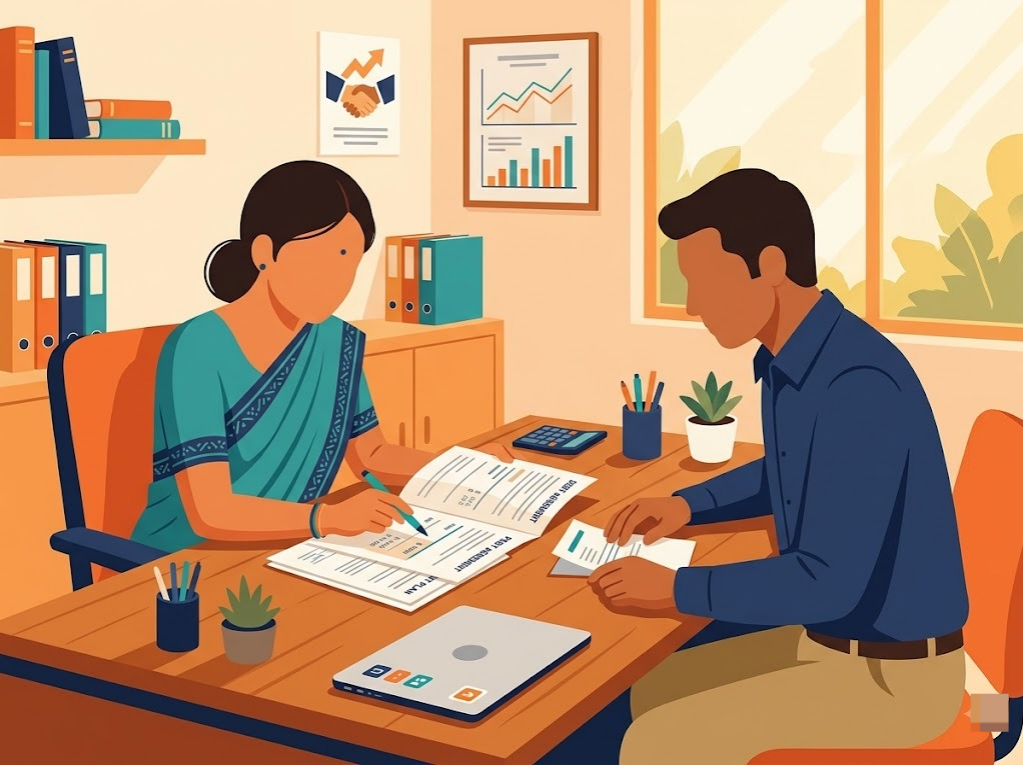
- Free consultation. You share your loans, income, and expenses with a counsellor, no cost, no obligation.
- FOIR and exposure calculation. The counsellor works out your Fixed Obligation to Income Ratio and total exposure across all your debts.
- Eligibility mapping. Your situation gets mapped against the two groups above, still-paying-but-stretched, or genuinely struggling.
- Clear recommendation. You get a direct answer, consolidation or settlement, with no pressure to decide on the same call.
- Execution, if you proceed. For consolidation, this means matching you to a lending partner. For settlement, it means starting structured savings into an SPA (Special Purpose Account).
The first session focuses on understanding your financial situation and available options. It's worth being clear about what this is and isn't: counseling is diagnostic, it tells you where you stand and what's realistic, it doesn't pay off your debt instantly on the call itself. This distinction is also what separates a genuine financial counseling service from one that pushes a single product regardless of your situation.
Once you know which group you're in, the next question is what actually qualifies you for each path.
Debt Relief Counseling Eligibility, What Actually Qualifies You
For consolidation: you need to be current on payments, or close to it, under FREED's current eligibility criteria (personal loans, credit cards, BNPL, payday, peer-to-peer), and have income sufficient to support a new single EMI at the lender's assessment.
For settlement: Settlement is generally considered when full repayment is no longer realistically sustainable, subject to lender and program eligibility. Missed EMIs or default status generally strengthen this case.
Under FREED's current program eligibility, secured loans such as home, car, gold, education and bike loans are not eligible. If that's what you're carrying, you'll be redirected elsewhere, this isn't the right tool for that kind of debt.
If you're genuinely unsure which group you fall into, that's exactly what the counseling call is for, FREED's team assesses and confirms eligibility directly, rather than asking you to guess.

Get Your Free Debt Assessment
Find out if consolidation or settlement fits you.
Start My Debt AssessmentHow Much Does Debt Relief Counseling Cost?
The session itself is free. Zero cost to get assessed, no matter which group you end up in.
Cost only enters the picture if you enrol in a program afterward. Both FREED programs, consolidation and settlement, charge a success-based fee only, no upfront cost, charged only once the process actually completes.
If you're wondering about an exact number: it depends entirely on your specific loan profile, there's no single flat figure that applies across every borrower. This transparency matters, since not every provider claiming "free counseling" is actually free of hidden costs once you look closer. FREED's team can walk you through what your exact fee would look like once your situation is assessed.

What the Law Says
RBI requires regulated entities to have Board-approved policies governing compromise settlements, including the process and conditions for approving them. Source: RBI's regulatory guidelines on compromise settlements and technical write-offs for banks
Talk to FREED About Your OptionsWhat Happens After Debt Relief Counseling
Factor | Debt Consolidation | Loan Settlement |
Who it's for | Still paying, over-leveraged | Genuinely unable to repay |
CIBIL impact | Score improves | Score drops, "Settled" up to 7 years |
How it works | New loan pays off existing loans | Bank accepts reduced lump sum |
EMI | One lower EMI | No EMI, lump sum via SPA savings |
FREED fee | Success-based | Success-based |
Settlement waiver up to 50%* depends on your specific case and the lender's assessment, not guaranteed for every borrower. FREED has settled 20,000+ accounts and managed ₹3,200 Cr+ in debt to date.

Tips Before Your Debt Relief Counseling Session

Freed Expert Tip
List every loan, card, and app-loan balance before your session, accurate numbers get the right recommendation faster. If you're not sure where to start, FREED's team can walk you through it on the call itself.
Talk to a Counsellor FreeSources
Claim in Blog | Source |
|---|---|
Regulated entities must have Board-approved policies governing compromise settlements, including process and conditions for approving them | RBI/2023-24/40, DOR.STR.REC.20/21.04.048/2023-24, "Framework for Compromise Settlements and Technical Write-offs," June 8, 2023 rbi.org.in link |

Mohit Juneja
Mohit Juneja writes educational content at FREED on debt management, credit scores, loan repayment, and borrowing best practices. His content is shaped by expert insights and industry knowledge, helping readers better understand their financial options and make informed decisions.
mohit.juneja@freed.care

FREED is India's trusted loan management platform. Founded in 2020 and headquartered in Gurugram, FREED has counselled 20 lakh+ people on personal loans, credit cards, and app loans. FREED charges fees only on successful settlement, not upfront. FREED does not handle secured loans (home loans, car loans, gold loans).
Media Mentions